 Custer
 Marietta's Roofs Work Harder Than Most
Marietta sits close to the water in northern Whatcom County, just down the road from Custer, and that shoreline location shapes everything about how a roof ages here. Homes in this part of the county deal with a steady flow of salt-laden marine air, long stretches of driving rain off the water, and a moss season that can run from October well into spring. None of that is unusual for coastal Washington, but it adds up faster than most homeowners expect. A roof that might get twenty-five years of service further inland can start showing real trouble at fifteen or eighteen in a marine-exposed spot like Marietta, especially if it was installed without that exposure in mind.
A new roof installation here isn't just about swapping old shingles for new ones. It's about building an assembly — decking, underlayment, flashing, ventilation, and the finish material — that's matched to salt air corrosion, wind-driven rain, and moss growth from day one. That's the lens we bring to every Marietta project.
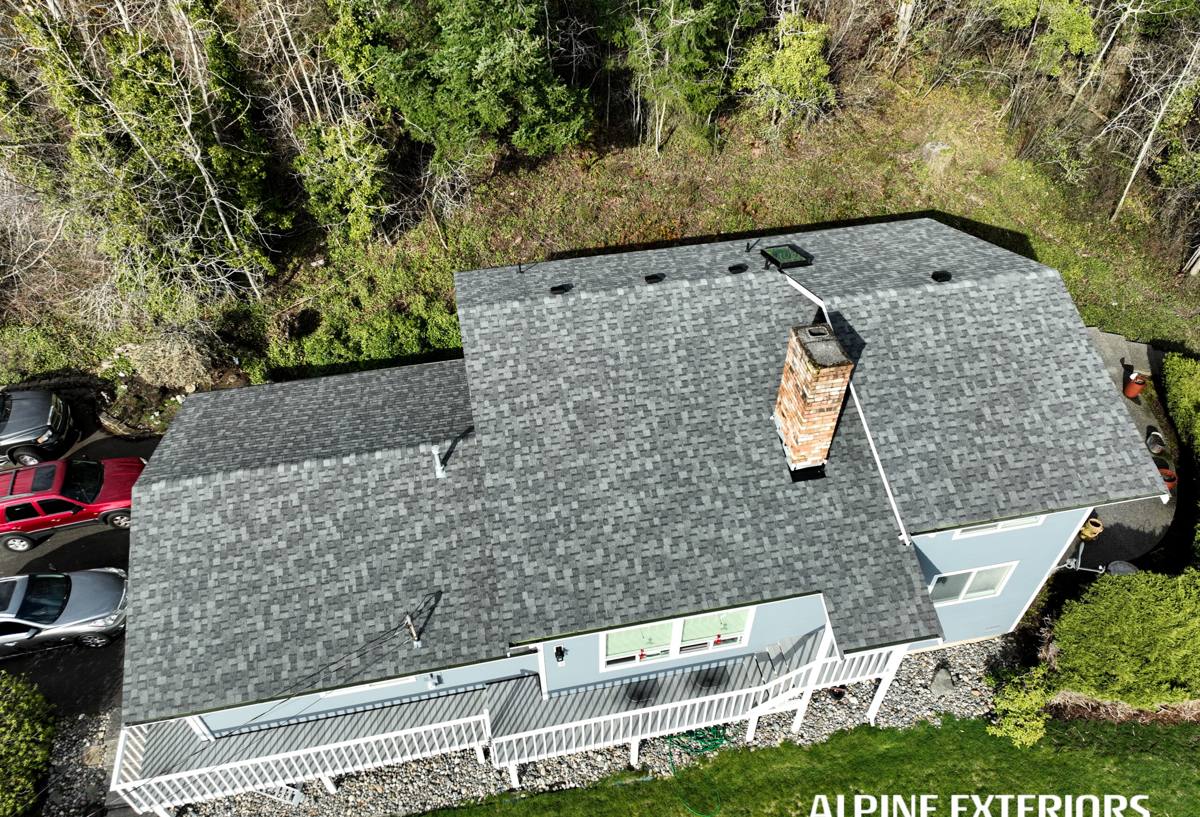
What Actually Happens During a Full Roof Replacement
A correct new roof installation is a sequence, and skipping or rushing any step is where most premature failures start. Here's what a proper job includes, in order:
- Tear-off and deck inspection. Old roofing comes off down to the sheathing so we can actually see the deck, not guess at its condition from the attic. Soft spots, rot, or delaminated plywood get replaced before anything new goes down.
- Deck repair and preparation. Any damaged sheathing is cut out and replaced with matching thickness material, fastened to code. A roof is only as good as the deck underneath it.
- Ice and water barrier at vulnerable points. Eaves, valleys, and low-slope transitions get a self-adhering waterproof membrane, not just felt. This is where wind-driven rain most often finds its way in.
- Synthetic underlayment across the field. A full synthetic underlayment layer adds a secondary water barrier under the whole roof, which matters when horizontal rain is pushing under the shingle tabs during a winter storm.
- New flashing at every penetration and transition. Chimneys, skylights, sidewalls, valleys, and vent pipes all get new metal flashing, not reused or patched flashing from the old roof.
- Ventilation correction. Intake and exhaust venting gets balanced so the attic can actually dry out between rain events, which is one of the biggest factors in moss and rot prevention.
- Finish material installation. Shingles, metal panels, or another finish material goes down to manufacturer spec, including proper nailing patterns and exposure — details that affect wind rating and warranty validity.
- Cleanup and final inspection. Magnetic sweep for nails, debris removal, and a walk-through so you know exactly what was done and where.
Why Salt Air and Rain Change the Math
Marine air carries fine salt particles that accelerate corrosion on anything metal — fasteners, flashing, and exposed hardware. A roofing nail or flashing piece that would last decades in a dry inland climate can start pitting and weakening years earlier near the water. That's why we use corrosion-resistant fasteners and flashing on Marietta homes as a baseline, not an upgrade.
Driving rain is the other half of the equation. When wind pushes rain sideways or uphill under shingle edges, a roof needs redundant water barriers — not just a single layer of felt and hope. That's the reasoning behind the ice-and-water membrane and full synthetic underlayment described above. It's cheap insurance against the specific way weather behaves this close to the water.
Moss: The Slow Damage Most Homeowners Underestimate
Whatcom County's wet, mild winters are ideal moss conditions, and Marietta's proximity to the water only extends the wet season. Moss isn't just a cosmetic issue. Its root structures lift shingle edges, trap moisture against the roof surface, and hold water against fasteners and decking long after a storm passes. Over several seasons, that constant dampness rots decking and shortens the life of the roofing material itself, even if the shingles look intact from the ground.
A new roof installation is the right time to address this at the source — proper ventilation reduces the temperature and moisture differential that moss thrives on, and some finish materials shed moss growth more easily than others.
Choosing the Right Roofing Material for a Marietta Home
There's no single "best" roofing material for every home — it depends on your roof's slope, your budget, and how much long-term maintenance you're willing to do. Here's how the common options stack up for a shoreline-exposed home like those in Marietta:
| Material | Typical Lifespan Here | Moss Resistance | Maintenance Notes |
|---|---|---|---|
| Architectural asphalt shingle | 20-30 years | Moderate — benefits from zinc/copper strips | Most affordable; needs periodic moss treatment |
| Standing seam metal | 40-60 years | High — sheds moss more effectively | Higher upfront cost; corrosion-resistant fasteners essential near water |
| Cedar shake | 20-30 years with upkeep | Low — retains moisture, needs regular treatment | Highest maintenance burden in a wet marine climate |
| Synthetic/composite shingle | 30-50 years | Moderate to high depending on product | Impact and moisture resistant; verify manufacturer warranty terms |
For most Marietta homeowners, architectural asphalt shingle remains the most practical balance of upfront cost and performance, especially when paired with proper ventilation and a zinc or copper strip near the ridge to slow moss regrowth. Metal roofing is a strong long-term option for homeowners planning to stay put and wanting to minimize moss maintenance over the decades. We'll walk through the honest trade-offs for your specific roof rather than pushing one product across the board.
Flashing and Water Management Details That Matter Most
Most roof leaks don't come from the shingle field — they come from flashing failures at transitions: where a roof meets a chimney, where two roof planes meet in a valley, around skylights, or where a roofline meets a sidewall. In a driving-rain climate, these details need to be done correctly the first time, because a poorly flashed valley or step flashing that's been reused instead of replaced is a slow leak waiting to happen, often not visible until interior damage shows up.
On every new roof installation, we replace flashing rather than reuse it, and we pay particular attention to valley design and step flashing at sidewalls — the two spots that see the most water volume during a heavy Pacific Northwest storm.
Signs a Marietta Roof Needs Replacement, Not Just Repair
- Granule loss heavy enough that you're finding grit in gutters or at the base of downspouts
- Shingles that are curling, cupping, or cracking across large sections rather than isolated spots
- Persistent moss growth that returns within a season or two of cleaning
- Soft or spongy spots on the roof deck, or sagging visible from the ground
- Daylight visible through the roof deck from inside the attic
- Water stains on interior ceilings, especially near chimneys, valleys, or skylights
- A roof already past 20-25 years old with no major work done
- Rising energy bills that may point to failed attic ventilation or insulation tied to roof condition
If you're only seeing one or two of these, a repair may still be the right call. Multiple items on this list, especially deck softness or interior staining, usually mean it's time to talk about full replacement rather than another patch.
Our Process, Start to Finish
We keep the process straightforward because a new roof is disruptive enough without added confusion:
- On-site inspection and honest assessment. We get on the roof, check the deck condition where accessible, and tell you plainly whether you need replacement or just repair.
- Written estimate with material options. You'll see the trade-offs between material choices in plain language, not just a single number.
- Scheduling around the weather. Roofing in a rainy climate means watching forecasts closely — we plan tear-off days for realistic dry windows and protect the deck if conditions shift mid-project.
- Daily site cleanup. Nails, debris, and old material don't sit around your property overnight during the job.
- Final walk-through. We show you the finished work and go over care and maintenance before we consider the job done.
Cost Factors Worth Understanding Upfront
Every roof is priced individually, but the same handful of factors drive most of the variation between a modest quote and a larger one:
| Factor | Why It Affects Price |
|---|---|
| Roof size and number of planes | More material and labor hours; complex rooflines take longer to flash correctly |
| Deck condition | Rotted or soft sheathing found during tear-off requires replacement before new roofing goes down |
| Material choice | Asphalt, metal, and synthetic products vary widely in material cost and installation time |
| Roof pitch and accessibility | Steep or hard-to-access roofs require more safety setup and slow the work |
| Ventilation upgrades | Adding or correcting intake/exhaust venting is worth the added cost for moss and moisture control |
We'll break down which of these apply to your home specifically, rather than handing you a number with no explanation behind it.
Why a Crew That Already Works Marietta Makes a Difference
A roofing crew based in Custer and working this shoreline area regularly isn't guessing about how salt air, wind-driven rain, and moss behave here — we see it on roof after roof. That local familiarity shows up in small but meaningful decisions: which fastener grade to spec, where extra membrane is worth the added cost, and how aggressively to plan for moss prevention rather than treating it as an afterthought. It also means we're a known, reachable crew if a question comes up after the job is done, not a company that worked the area once and moved on.
Caring for a New Roof After Installation
A new roof still needs some attention to hit its full expected lifespan in this climate. Keep gutters clear so water isn't backing up under the roof edge, especially during the heavier fall and winter rain months. Have moss growth treated before it establishes rather than after, since prevention is far less invasive than removal once roots take hold. A quick visual check after major windstorms — looking for lifted shingles or displaced flashing — catches small issues before they become interior damage. And a periodic professional inspection, particularly as the roof approaches the ten-year mark, is worth the modest cost to catch anything that isn't visible from the ground.
If you're weighing a new roof for a Marietta home, we're happy to take a look and give you a straightforward assessment — no pressure, no pushy sales pitch, just an honest read on your roof's condition and what it would take to do the job right. Reach out for a free estimate using the form below.