 Custer
 Metal Roofing in Sumas: Built for Whatcom County Weather
Sumas sits right up against the Canadian border in Whatcom County, and homes out here take a real beating from the weather that rolls through this corner of the state. Long stretches of driving rain, damp air moving in off the Salish Sea, and a moss season that can feel like it never fully lets up all put steady stress on a roof. Metal roofing has become one of the most reliable answers to that stress, but only when it's installed with this specific climate in mind — not just dropped on like it would be in a drier region.
We install and replace metal roofing on homes throughout the Sumas area, and most of what separates a metal roof that performs for decades from one that causes headaches after year five comes down to details most homeowners never see: fastener choice, underlayment layering, and how the panels are flashed at every transition. That's what this page walks through.
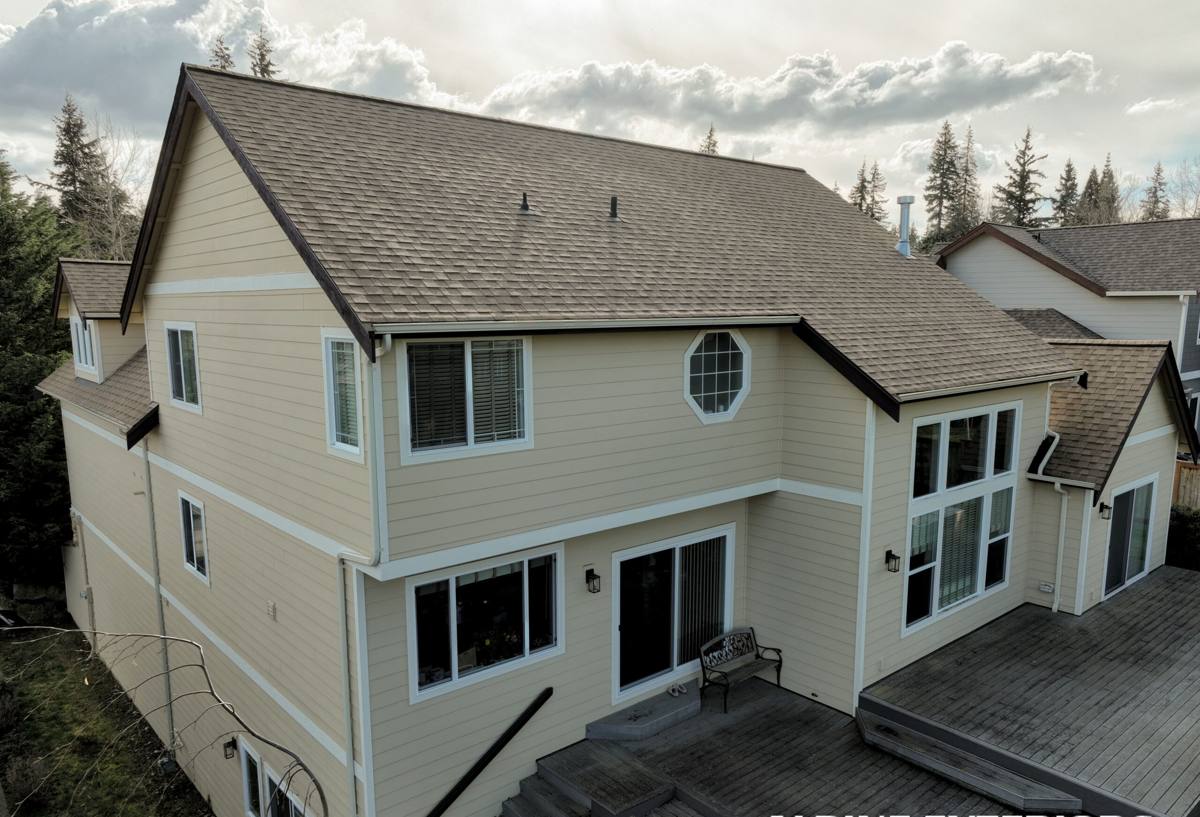
What Sumas Homes Need From a Metal Roof
Rain That Doesn't Let Up
Whatcom County doesn't usually get dramatic downpours — it gets long, steady, wind-driven rain that finds every weak seam and lap joint over time. A metal roof's biggest advantage is how fast it sheds water, but that advantage only holds if the panel laps, ridge caps, and valley flashing are installed to actually direct water off the roof instead of letting it back up under a panel edge during a hard blow.
Moss Season That Never Fully Ends
Shade, moisture, and mild temperatures are exactly what moss needs, and this area gives it all three for most of the year. Moss doesn't take hold on bare metal the way it does on asphalt shingles, but it will absolutely colonize in the debris that collects in valleys, around vent boots, and anywhere two roof planes meet. A metal roof reduces the problem; it doesn't eliminate the need to keep those spots clear.
Salt Air and Metal Fatigue
Salt-laden air moving inland off the water accelerates corrosion on anything metal that isn't properly coated or fastened with the right hardware. This shows up first at fasteners, exposed cut edges, and any spot where dissimilar metals touch. It's a slow process, but it's exactly why we don't treat fastener and flashing selection as an afterthought on any roof in this region.
Temperature Swings and Panel Movement
Metal expands and contracts with temperature more than shingles do. Whatcom County's swings aren't extreme, but they're constant, and over enough cycles a panel that wasn't allowed room to move will work its fasteners loose or oil-can (that visible waviness in flat panel sections). Good installation plans for this movement from day one.
Metal Roofing Systems We Install
Not every metal roofing profile behaves the same way in a wet, moss-prone climate. Here's how the main options compare for a Sumas home:
| System | Best For | Typical Lifespan | Maintenance Notes |
|---|---|---|---|
| Standing Seam (concealed fastener) | Most homes in this climate; steeper or complex rooflines | 40–70 years | Lowest maintenance; no exposed screws to fail over time |
| Exposed Fastener Panel | Outbuildings, shops, budget-conscious projects | 25–40 years | Screw washers need periodic inspection and eventual replacement |
| Metal Shingle / Shake Profile | Homes wanting a traditional look with metal's durability | 40–60 years | More seams than standing seam; flashing detail is critical |
For most primary residences in the Sumas area, we recommend standing seam. The concealed fastener design removes the single most common failure point on metal roofs in wet, salt-influenced air — exposed screws that loosen or corrode over the decades. Exposed fastener panels still have their place, especially on outbuildings or where budget is the deciding factor, but we're upfront that they carry a longer-term maintenance commitment.
What a Correct Metal Roofing Installation Actually Involves
A metal roof is only as good as what's underneath it and the details at every edge and penetration. On every install we treat these as non-negotiable:
- Ice-and-water membrane at eaves, valleys, and penetrations — the spots most exposed to wind-driven rain and the last place any water should be allowed to sneak under a panel
- A synthetic underlayment across the full deck — a second line of defense and a slip surface that also protects the deck during install
- Corrosion-resistant fasteners rated for this climate — mismatched or bargain hardware is one of the fastest ways a metal roof fails early near salt-influenced air
- Proper flashing at every penetration and roof-to-wall transition — chimneys, vents, and dormers are where most metal roof leaks actually originate, not in the field of the panels
- Room for thermal movement — panels and fasteners installed to allow expansion and contraction instead of fighting it
- Balanced ventilation — intake and exhaust that keeps moisture from condensing on the underside of the deck, which matters even more under a material that doesn't breathe like shingles do
Our Process, Start to Finish
- On-site evaluation. We walk the roof, check the deck condition, note pitch, penetrations, and any problem areas from past leaks or moss buildup.
- Written scope and estimate. You get a clear breakdown of the system, materials, and work involved — no vague allowances buried in the fine print.
- Tear-off and deck inspection. We remove the old roofing down to the deck and address any soft or damaged sheathing before anything new goes down, since covering a bad deck just hides a bigger problem.
- Underlayment and flashing first. All the water-management layers go in before a single panel is set.
- Panel installation. Panels go on with proper fastening, spacing, and trim work at every edge, ridge, and valley.
- Final walk-through. We go over the finished roof with you, confirm cleanup is complete, and explain the manufacturer and workmanship warranty coverage in plain terms.
What Affects the Cost of a Metal Roof in Sumas
We don't quote a job until we've seen the roof, but these are the factors that move the price up or down on most projects:
| Factor | Why It Matters | Cost Impact |
|---|---|---|
| Panel system chosen | Standing seam requires more labor and specialized tooling than exposed fastener panels | Medium–High |
| Roof complexity | More valleys, dormers, and penetrations mean more flashing and cut work | Medium–High |
| Tear-off vs. new construction | Removing old roofing and repairing deck damage adds labor | Medium |
| Roof pitch and access | Steep or hard-to-access roofs slow the work and affect safety setup | Low–Medium |
| Accessory work | Gutter replacement, added ventilation, or skylight flashing add to scope | Low–Medium |
Metal roofing costs more upfront than asphalt shingles in most cases. Where it earns that difference back is in lifespan — a well-installed metal roof commonly outlasts two or more shingle roofs, with far less maintenance in between.
Metal Roofing vs. Asphalt Shingles in This Climate
Asphalt shingles are a proven, affordable product, and we're not going to tell you they don't have a place in this market. But in Whatcom County's damp, moss-friendly, salt-touched climate, the trade-offs are worth being honest about. Shingles give moss and algae a rough, granular surface to grab onto, which means more frequent cleaning and a shorter realistic lifespan before granule loss and moisture damage set in. Metal's smooth surface sheds water and resists moss colonization far better, and it doesn't absorb moisture the way an aging shingle mat can.
The trade-off runs the other way on upfront cost and on repair simplicity — a damaged shingle is a quick, cheap fix, while a damaged metal panel sometimes means matching and replacing a full panel run. For homeowners planning to stay in their home long-term, most find metal's lower lifetime maintenance and longer service life the better value. For a shorter hold or a tighter budget, shingles remain a reasonable, honest choice. We'll give you our real read on your specific roof rather than steering you toward whichever system pays better.
Maintenance and Longevity in Whatcom County's Climate
Metal roofing is low-maintenance, not no-maintenance. A little attention once or twice a year keeps a well-installed system performing for its full lifespan:
- Clear leaves, needles, and debris from valleys and behind chimneys before fall rains set in
- Rinse off any visible salt film or grime buildup, especially on lower roof sections
- Check exposed-fastener sections for loose screws or worn rubber washers
- Look for moss or algae starting at flashing edges and low-slope transitions, and remove it before it spreads
- Inspect flashing around chimneys, vents, and skylights annually — this is where the vast majority of any roof leaks actually start
- Keep gutters clear so water leaving the roof edge doesn't back up under the drip edge
A quick annual look, or a call to us if something looks off, catches small issues while they're still small.
Why Hire a Crew That Already Works in Sumas
Metal roofing installation isn't forgiving of shortcuts, and a crew unfamiliar with this specific climate can make mistakes that don't show up as a leak for a year or two — long after the job is finished and forgotten. Working regularly in and around Sumas and the rest of Whatcom County means we've seen how wind-driven rain behaves against these roof pitches, how quickly moss establishes itself in this particular mix of shade and moisture, and which fastener and flashing details actually hold up to years of this weather rather than just looking right on installation day.
It also means straightforward answers when something comes up mid-project, and a crew that's still reachable years down the road if a warranty question comes up. That local accountability is worth as much as the materials themselves.
If you're weighing a metal roof for your Sumas home, we're glad to take a look and give you an honest read on what your roof actually needs — no pressure, no hard sell. Reach out for a free estimate using the form below.