 Custer
 Why Siding in the Meridian Area Has to Work Harder
Homes in and around Meridian, near Custer in Whatcom County, sit in a climate that is genuinely tough on exterior siding. It isn't dramatic weather — no hurricanes, no hailstorms — it's the slow, steady kind of exposure that wears materials down over years instead of days. Salt-laden air moving in off the water accelerates corrosion on fasteners and trim. Driving rain, pushed sideways by wind more often than it falls straight down, finds every gap in a poorly detailed installation. And the long, gray moss season that runs from fall through spring keeps siding damp for weeks at a stretch, which is exactly the condition organic growth and rot need to take hold.
None of that means siding is a lost cause here. It means the material and the installation both have to be chosen and executed with this specific climate in mind, not a generic one. That's the difference between siding that looks good for five years and siding that performs for thirty.
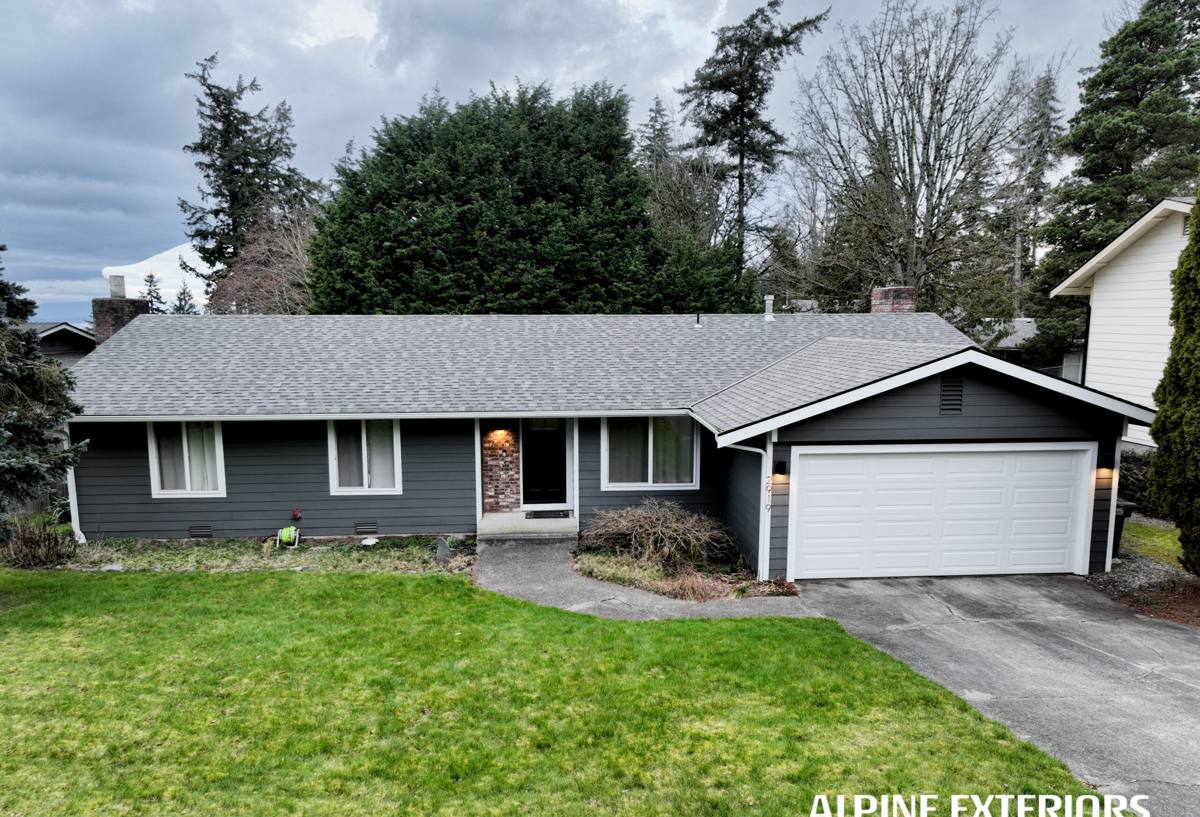
What "Correct" Siding Installation Actually Means Here
A lot of siding problems homeowners deal with in this area weren't caused by bad material — they were caused by shortcuts during installation that don't show up until the second or third wet season. Getting it right involves several layers working together, not just nailing boards to a wall.
A Real Water-Resistive Barrier and Drainage Path
Behind every board, there needs to be a weather-resistive barrier that's lapped correctly — upper layers over lower layers, so water sheds down and out instead of behind the sheathing. In a climate with this much sustained moisture, we also build in a drainage gap so any water that does get behind the cladding has somewhere to go besides your wall framing.
Flashing at Every Penetration
Windows, doors, hose bibs, light fixtures, deck ledgers — every place something interrupts the siding plane is a place water will try to get in. Proper step flashing, head flashing, and kick-out flashing at rooflines aren't optional extras; they're the difference between a wall that sheds driving rain and one that slowly saturates from the inside.
Manufacturer-Spec Fastening and Clearances
Fiber cement siding has specific nailing patterns, fastener types, and minimum clearances from grade, roofing, and decks that are documented by the manufacturer for a reason. Skipping them doesn't just risk a warranty claim — it creates the wicking points where moss and rot get started.
Why We Install Only James Hardie Fiber Cement
We don't install vinyl, LP SmartSide, Cemplank, Allura, or bare cedar or spruce siding. That's a deliberate standard, not a lack of options, and it's worth explaining honestly rather than just asserting it.
Vinyl is inexpensive and low-maintenance in the short term, but it's a thin plastic product that can warp in heat, crack in cold, and fade — and it has no real defense against the kind of driving, wind-pushed rain this area gets, since it depends entirely on a good drainage plane behind it rather than the material itself resisting moisture. LP SmartSide and other engineered wood products perform reasonably well when kept dry, but they're wood-based, and wood-based siding in a climate with a long moss and mildew season needs near-perfect maintenance to avoid edge swelling and rot. Bare cedar and primed spruce are attractive but demand ongoing sealing, staining, or painting to survive sustained damp exposure — skip a cycle or two and the clock starts running.
James Hardie fiber cement is cement, sand, and cellulose fiber — it doesn't rot, it isn't a food source for moss and mildew the way bare wood is, and it's non-combustible. The ColorPlus factory finish is baked on under controlled conditions rather than field-applied, which matters a lot in a climate where you can lose weeks of paintable dry weather in a row. That's the honest case for why we standardized on it and stopped installing the alternatives.
How the Options Compare
| Material | Moisture Behavior in This Climate | Maintenance Burden | Typical Lifespan Here |
|---|---|---|---|
| James Hardie fiber cement | Doesn't absorb and swell like wood; factory finish sheds rain well | Occasional wash; repaint on trim only, decades out | 30+ years with proper install |
| Vinyl | Relies entirely on the drainage plane behind it; can warp/crack | Low, but limited repair options if damaged | 15-25 years, shorter in salt air |
| LP SmartSide / engineered wood | Needs to stay dry at edges and cuts to avoid swelling | Field-sealed cuts and edges required, periodic recoating | 15-20 years with diligent upkeep |
| Cedar / primed spruce | Absorbs moisture readily; prone to rot without upkeep | Regular staining/painting, highest ongoing cost | Highly variable, often under 15 years without upkeep |
Our Installation Process for Meridian-Area Homes
The process doesn't change dramatically from house to house, but the sequencing and attention to detail matter more here than in a drier climate.
- On-site walk-through to assess existing siding, trim, moisture damage, and any rot in the sheathing before a single board comes off.
- Removal of old siding and inspection of the wall assembly underneath — this is where hidden moss, mildew staining, or soft sheathing gets caught before it's covered up again.
- Repair or replacement of any compromised sheathing or framing, because new siding over damaged substrate just hides the problem.
- Installation of a lapped weather-resistive barrier and a drainage gap behind the cladding.
- Flashing installed at every window, door, and penetration before siding goes up around it.
- James Hardie panels or lap siding installed to manufacturer-specified fastening patterns, clearances from grade and roofing, and joint treatment.
- Trim, caulking at appropriate joints only, and final detail work at corners and transitions.
- Final walk-through with the homeowner before we consider the job finished.
Moss, Mildew, and Salt: What They Actually Do to a Wall
It's worth being specific about why these three things matter so much here, since they're easy to dismiss as cosmetic.
Moss and mildew growth on siding isn't just an appearance issue — sustained organic growth holds moisture against the surface longer than bare siding would otherwise stay wet, which is a problem for any material that can absorb water or that has fasteners that can corrode underneath the growth. Salt air accelerates corrosion on exposed metal fasteners and flashing, which is why fastener choice and coverage matter as much as the siding material itself. None of this is unique to any one house near Custer — it's a regional condition that any installation in Whatcom County's coastal band has to account for, and it's a big part of why we're particular about the drainage details described above rather than just the visible product.
Cost Factors for a Meridian-Area Siding Installation
We won't quote a number without seeing the house, but the variables that actually move the price are consistent enough to lay out honestly.
| Factor | Why It Matters |
|---|---|
| Condition of existing sheathing | Hidden rot or soft spots found during removal require repair before new siding goes on |
| House size and wall complexity | More corners, dormers, and penetrations mean more flashing and cutting time |
| Siding profile chosen | Lap siding, panel siding, and shingle-style Hardie products differ in material and labor cost |
| Trim and accessory scope | Full trim replacement alongside siding changes the total more than siding alone |
| Access and site conditions | Tight lots, slopes, or landscaping close to the house can add setup time |
Signs Your Current Siding Is Already Losing the Fight
Because damage from this climate builds slowly, a lot of homeowners don't notice until it's further along than they'd like. Worth checking for:
- Soft or spongy spots when you press on the siding, especially near the bottom courses
- Persistent moss or dark streaking that comes back within weeks of cleaning
- Paint or finish that's peeling or bubbling rather than just fading
- Visible gaps, warping, or separation at seams and corners
- Rust staining running down from fasteners or metal flashing
- A musty smell near exterior walls inside the house, which can point to moisture already past the siding
Any one of these on its own might be minor. Several together usually means the wall assembly behind the siding has been taking on moisture for a while.
Why Hiring a Crew That Already Works in This Area Matters
Siding installation isn't a one-size-fits-all trade. A crew that mostly works drier inland regions can install a technically correct assembly that still underperforms here, simply because the margin for error on drainage and flashing is smaller in a climate this consistently wet. A crew that already works Meridian and the surrounding Custer area has seen how these houses age, knows which details actually get tested by this weather, and isn't guessing at how much drainage capacity or flashing overlap is enough. That local pattern recognition is worth more than it sounds — it's the difference between a spec sheet followed on paper and an installation that's actually built for what this part of Whatcom County throws at a wall every winter.
If you're weighing a siding replacement or repair on a Meridian-area home, we're happy to take a look and give you a straightforward, no-pressure estimate — just fill out the form below.