 Custer
 Roofing in Meridian Means Building for the Weather, Not Around It
Meridian sits close enough to the water and the lowland fog belt that its roofs take on a specific kind of punishment: salt-laden air drifting in off the Strait, long stretches of driving rain that comes in sideways as much as straight down, and a moss season that can run from late fall through spring in a wet year. None of that is exotic for Whatcom County, but it does mean a roof that would hold up fine in a drier inland climate can start failing here years ahead of schedule if it wasn't built with this exposure in mind. An asphalt shingle roof done right for Meridian isn't a different product than what goes on a roof anywhere else — it's the same shingle, installed with more attention to the details that matter when a roof spends most of the year damp.
This page is specifically about asphalt shingle roofing for homes in and around Meridian. If you're comparing materials or just want a general overview of shingle roofing, that's a different conversation. Here we're talking about what actually keeps a shingle roof performing on this particular stretch of Whatcom County.
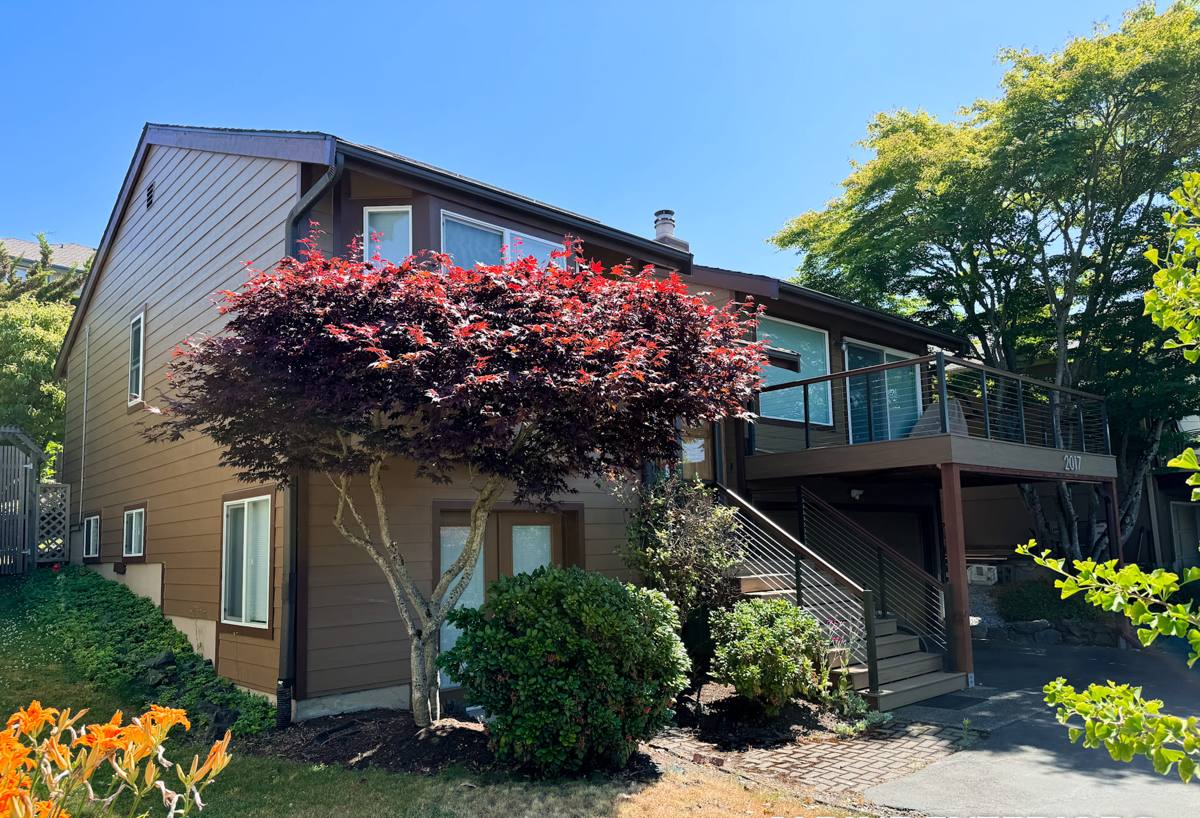
What Salt Air, Rain, and Moss Actually Do to a Roof
Salt Air
Airborne salt doesn't rot shingles the way it corrodes metal, but it does accelerate wear on exposed fasteners, flashing, and any unprotected metal components on the roof — vents, drip edge, valley metal, and nail heads. Over time, salt-laden moisture speeds up oxidation on lower-grade metal and can shorten the effective life of hardware that wasn't rated for coastal exposure.
Driving Rain
Meridian doesn't just get a lot of rain — it gets wind-driven rain that hits roof planes at an angle instead of falling straight down. That matters because it pushes water sideways under shingle tabs, into valleys, and against flashing in ways that a calm, straight-down rain never would. A roof that's watertight in a light shower can still leak in a sideways storm if the underlayment, flashing laps, and shingle nailing pattern weren't done to handle it.
Moss
Shaded, north-facing, and low-slope roof sections in this area can stay damp for days after a storm, and that damp, shaded environment is exactly what moss needs to take hold. Once moss establishes itself, it holds moisture against the shingle surface, works its way under tab edges, and can lift shingles enough to let water in — all while looking, from the ground, like a fairly minor cosmetic issue.
What a Correct Asphalt Shingle Roof Needs in This Climate
None of this requires exotic materials. It requires a standard, quality asphalt shingle system installed with the right underlayment, flashing, and ventilation choices for a wet coastal climate. The pieces that matter most here:
- A synthetic or self-adhered underlayment rated for extended wet exposure, not just a basic felt layer
- Ice-and-water shield at eaves, valleys, and around every penetration — the places wind-driven rain and moss-related moisture concentrate
- Corrosion-resistant flashing and fasteners suited to a salt-air environment, not the cheapest galvanized option available
- Algae-resistant (AR) shingles where moss and algae growth is a known local issue
- Balanced intake and exhaust ventilation so the attic isn't trapping the moisture this climate already throws at the roof from outside
- Proper nailing pattern and tab sealing so shingles can actually resist uplift and sideways-driven water instead of just sitting there
Skip any one of these and the roof will probably still look fine for a while. The problems that show up from cutting corners in a climate like this — soft decking, moss undermining shingle edges, leaks at valleys and penetrations — tend to surface years down the road, after the workmanship is out of warranty and the damage has already spread into the decking below.
Signs a Meridian Roof Needs a Closer Look
Because moss and wind-driven rain damage don't always announce themselves with an obvious leak, it helps to know what to watch for from the ground and from inside the attic:
- Moss or dark streaking concentrated on north-facing or shaded roof planes
- Granules collecting in gutters or at downspout outlets
- Shingle tabs that look lifted, curled, or out of line with the row around them
- Soft or spongy spots when the roof is walked (a job for a roofer, not a homeowner on a ladder)
- Water stains, musty smell, or visible daylight in the attic near vents, valleys, or the chimney
- Rust streaking below metal flashing or vent boots
- Higher-than-usual heating or cooling bills, which can point to failing attic ventilation
Any one of these on its own isn't necessarily an emergency, but they're worth a professional look before the next wet season, not after.
How We Approach a Shingle Roof in Meridian
1. Inspection and Assessment
We start by walking the roof and the attic, not just looking from the driveway. That means checking decking condition, existing ventilation, flashing points, and how the current roof has actually held up against Meridian's rain and moss exposure — which tells us a lot about what the replacement or repair needs to do differently.
2. Tear-Off and Deck Check
On a full replacement, we remove the old roofing down to the deck and check for soft, delaminated, or moisture-damaged sheathing before anything new goes down. Installing new shingles over compromised decking just locks the problem in under a fresh surface.
3. Underlayment and Ice-and-Water Shield
This is where a lot of the climate-specific work happens — extended underlayment coverage, ice-and-water shield at eaves and valleys, and careful attention to laps and seams so wind-driven rain has nowhere to get underneath.
4. Flashing and Ventilation
We install or upgrade flashing at valleys, chimneys, and wall intersections, and we make sure intake and exhaust ventilation are balanced — not just present. Ventilation that isn't balanced can trap moisture in the attic even when the roof surface itself is doing its job.
5. Shingle Installation
Shingles go down with the nailing pattern and exposure spec the manufacturer requires, not a shortcut version. In a high-wind, high-rain area, following the exact fastening spec is the difference between a roof that stays sealed and one that starts lifting at the tabs within a few storm seasons.
6. Final Walkthrough
We walk the finished roof and go over what was done, what to expect from it, and what basic upkeep looks like going forward.
Choosing a Shingle for This Climate
Most homeowners are choosing between a standard three-tab shingle and a heavier architectural (laminate) shingle, and the right call usually comes down to budget versus long-term performance in a wet, moss-prone area.
| Factor | 3-Tab Shingle | Architectural Shingle |
|---|---|---|
| Upfront cost | Lower | Higher |
| Wind resistance | Good, lower rated | Better, higher rated |
| Moss/algae resistance (AR option) | Available | Available, often standard |
| Typical warranty length | Shorter | Longer |
| Appearance | Flat, uniform | Dimensional, heavier look |
In a climate that throws driving rain and moss at a roof for a good part of the year, the higher wind rating and heavier construction of an architectural shingle usually earns its cost difference back in fewer callbacks and a longer service life — but a well-installed 3-tab roof with the right underlayment and AR treatment is still a legitimate option for homeowners working within a tighter budget. We'll walk through the honest trade-offs for your specific roof rather than steering everyone toward the same product.
What Affects the Cost of a Meridian Roof
| Factor | Why It Matters Here |
|---|---|
| Roof size and pitch | More surface area and steeper pitches take longer and require more safety setup |
| Number of valleys, penetrations, chimneys | Each one is a flashing detail that needs to be done right for wind-driven rain |
| Deck condition | Rotted or soft sheathing found at tear-off adds repair cost before shingles go on |
| Shingle tier chosen | 3-tab vs. architectural changes material cost and expected lifespan |
| Ventilation upgrades needed | Older homes often need intake or exhaust vents added or corrected |
| Access and site conditions | Tree cover, tight lots, or difficult staging can add labor time |
We don't publish blanket pricing because these variables swing the number too much to make a flat rate honest. What we can say is that a roof priced well below everyone else usually means underlayment, flashing, or ventilation got trimmed somewhere — and in this climate, those are exactly the wrong places to cut.
Why It Matters That a Roofer Already Works Meridian
A crew that regularly works this part of Whatcom County isn't guessing at how a roof will hold up here — they've seen which roof orientations moss over first, where wind-driven rain finds gaps, and what a few winters of salt air and rain actually do to different flashing and fastener choices. That local track record shows up in the details: where ice-and-water shield gets extended, how ventilation gets balanced for a coastal microclimate, and which corners never get cut because we've seen what happens when they are. It also means faster response if a storm causes damage and you need someone who already knows the area, not someone traveling in from out of the region.
Keeping a Meridian Roof Performing Long-Term
Even a well-built roof benefits from basic upkeep in this climate:
- Keep gutters and downspouts clear so water isn't backing up under the eaves
- Have moss treated or removed before it spreads under shingle edges — don't wait until it's visible from the street
- Trim back overhanging branches that keep roof sections shaded and damp
- Schedule a roof check after major windstorms, especially if you notice granules in the gutters
- Have attic ventilation checked periodically, since blocked vents can undo a lot of the roof's moisture resistance from the inside
None of this is complicated, but it's easy to skip until there's a problem — and moss and hidden moisture damage are both a lot cheaper to deal with early than after they've worked into the decking.
If you're dealing with an aging roof, visible moss, or you're just planning ahead before the next wet season hits, we're happy to take a look and give you a straight assessment. The estimate is free, there's no pressure attached to it, and you can request one using the form below.