 Custer
 Siding Built for Marietta's Coastal Edge
Marietta sits close enough to the water that homes here take a different kind of weather beating than a house a few miles inland in Custer or Blaine. Salt-laden air off the bay works into every seam and fastener hole on a wall. Driving rain off Georgia Strait doesn't fall straight down — it hits siding sideways, under eaves, and around window trim where a lot of installations quietly fail. And Whatcom County's long, wet, shaded winters give moss and algae months at a time to take hold on anything that stays damp. A siding installation here isn't just a cosmetic upgrade; it's the single biggest factor in whether a home stays dry, warm, and low-maintenance for the next 30-plus years.
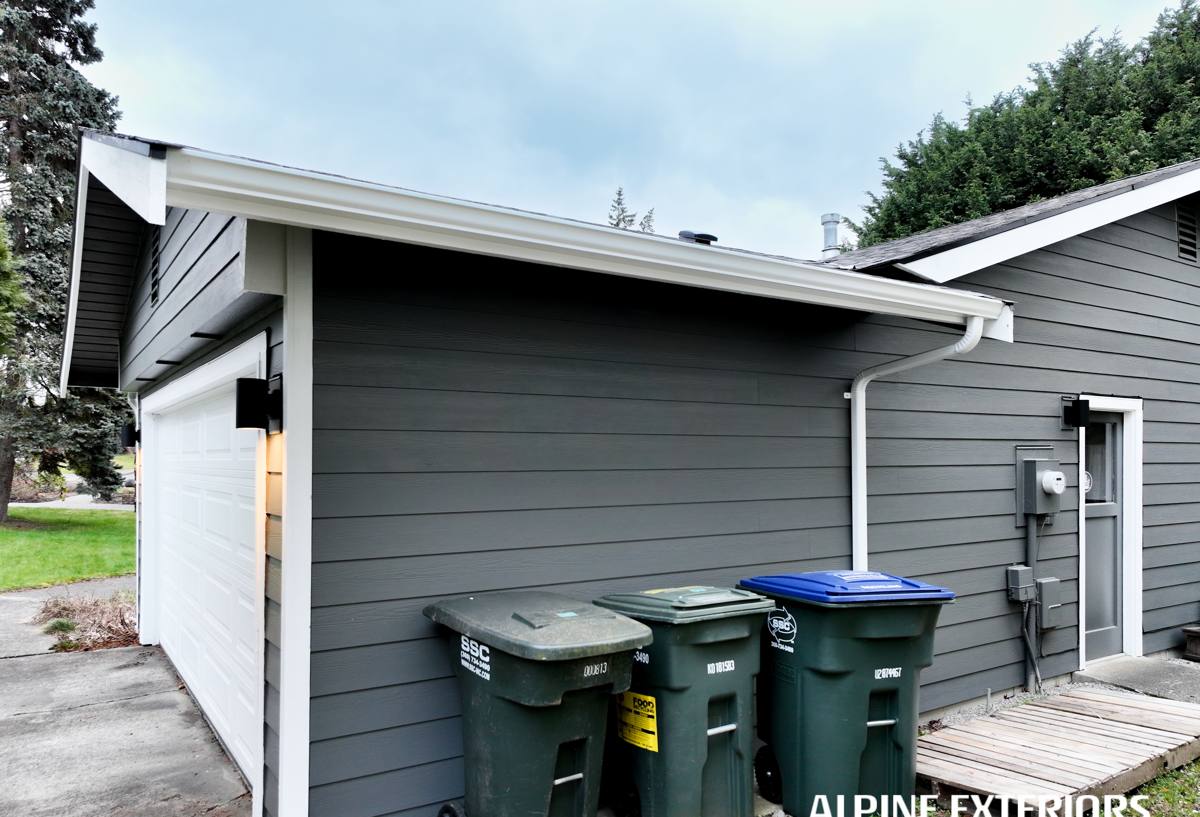
We install James Hardie fiber cement siding exclusively, and on Marietta homes specifically, that choice comes down to how the material handles moisture and salt exposure compared to the alternatives. This page covers what that installation actually looks like — what's under the siding, how it's fastened, and why the details matter more here than almost anywhere else in the county.
What Marietta's Climate Actually Does to a Wall
Salt Air and Metal Fasteners
Salt in the air accelerates corrosion on anything metal — nail heads, flashing, trim fasteners. Once a fastener starts to rust, it weakens, and water finds its way in around it. This is why fastener choice and flashing detail matter more in Marietta than in a drier inland town, and it's a big part of why we're strict about installation spec, not just product choice.
Driving Rain and Wind-Driven Moisture
Wind off the water pushes rain sideways and up under laps, trim, and eaves that would stay dry in a calmer climate. A siding system here needs properly lapped joints, correctly flashed penetrations, and a drainage plane behind the cladding — not just a face that looks good from the street.
Moss, Algae, and Shade
Long wet seasons combined with mature tree cover mean north-facing and shaded walls stay damp for extended stretches. Anything porous — bare wood, some composite products — gives moss and algae a foothold. A factory-finished, non-organic surface resists that growth far better and stays cleaner longer without homeowner upkeep.
What a Correct Hardie Installation Involves
James Hardie fiber cement is engineered for exactly this kind of exposure, but the material only performs as promised if it's installed to Hardie's published specifications. On a Marietta home, that means:
- A weather-resistive barrier installed correctly behind the siding, with proper laps and sealed penetrations
- Rainscreen or drainage gap where conditions call for it, so any moisture that does get behind the cladding can drain and dry
- Correct fastener type, length, and spacing — under-driven or over-driven nails are one of the most common causes of early siding failure
- Proper flashing at every window, door, and roof-to-wall intersection, not just caulk covering a gap
- Minimum clearance from grade, decks, and roof lines so siding isn't sitting in standing water or snow load
- Factory-cut and sealed edges wherever field cuts are unavoidable, since Hardie's ColorPlus finish and moisture protection depend on all cut edges being treated
Skip any one of these and the wall can look fine for a year or two while moisture works in behind it. That's the trap with siding in a climate like this — problems build slowly and quietly, then show up as soft trim, stains, or interior damage well after the mistake was made.
Our Process on a Marietta Job
1. Walk and Assess
We look at the existing cladding, sheathing condition where accessible, drainage around the foundation, roofline transitions, and how exposed each elevation is to wind and rain. Salt-air exposure and shade patterns both factor into the plan.
2. Tear-Off and Sheathing Check
Old siding comes off and we inspect the sheathing underneath. Any rot or soft spots get addressed before anything new goes up — covering a moisture problem with new siding just hides it for another few years.
3. Weather Barrier and Drainage Plane
A new weather-resistive barrier goes on with correct lapping, and we add a drainage gap where the wall assembly and exposure call for it. This is the layer that actually keeps a home dry — the siding is the second line of defense, not the first.
4. Flashing and Trim
Windows, doors, and roof intersections get properly flashed before trim and siding close them in. This is the step most likely to be rushed on a lower-bid job, and it's the step most responsible for leaks five or ten years down the road.
5. Hardie Installation to Spec
Siding goes up with correct fastener placement, proper overlaps, and factory or field-sealed cut edges, following Hardie's published fastening and clearance requirements for this climate zone.
6. Final Walkthrough
We check clearances, caulking, and finish details before calling the job done, and go over care and maintenance expectations with the homeowner.
Comparing Cladding Options for a Marietta Home
Homeowners often ask why we don't offer vinyl or engineered wood alongside Hardie. Here's an honest look at how the common options hold up against Marietta's specific conditions:
| Material | Salt air / corrosion resistance | Moisture behavior | Moss/algae resistance | Long-term maintenance |
|---|---|---|---|---|
| James Hardie fiber cement | Non-combustible, doesn't corrode; factory finish resists salt staining | Doesn't absorb water or swell; performs well when installed with proper drainage | Factory ColorPlus finish resists organic growth | Repaint interval is long; occasional wash-down |
| Vinyl | Doesn't corrode, but can become brittle and fade faster under coastal sun and salt cycling | Prone to warping/buckling with heat and doesn't stop moisture reaching sheathing on its own | Smooth surface but seams and laps can trap grime | Low upkeep but shorter realistic lifespan in harsh coastal exposure |
| Engineered wood (e.g. LP-type) | Fasteners still corrode; wood substrate vulnerable if edges aren't sealed | Wood-based core can swell or delaminate if moisture gets past the coating | More porous surface, higher moss/algae risk in shaded, damp spots | Requires more diligent edge and caulk maintenance |
| Cedar / primed spruce | Natural material, no corrosion issue itself but fasteners still at risk | Absorbs moisture; needs consistent sealing/staining to hold up | Highest moss/algae risk without regular treatment | Most maintenance-intensive of the group |
Every one of these products has a legitimate use somewhere. In Marietta's combination of salt air, wind-driven rain, and long shaded wet seasons, fiber cement's dimensional stability and factory finish are why it's the only product we put our name behind.
What Drives Cost on a Job Like This
| Factor | Why it matters here |
|---|---|
| Home size and elevation count | More wall area and more corners/penetrations mean more flashing detail work |
| Current siding removal | Multiple layers or damaged sheathing add tear-off and repair time |
| Sheathing/framing repairs | Salt-air and moisture damage found during tear-off needs to be fixed before re-siding |
| Trim and accessory work | Window and door trim, corner boards, and fascia detail add labor |
| Hardie product line and profile | Lap width, texture, and ColorPlus vs. field-painted finish affect material cost |
| Site access and exposure | Steep lots, water-facing elevations, and shaded north walls need extra care during install |
We're not going to quote a number here that doesn't reflect your specific house — accurate pricing comes from a walk-through, not a generic range. What we can promise is a straightforward, itemized quote with no surprise add-ons once work starts.
Signs a Marietta Home Needs Siding Attention
- Soft or spongy spots when you press on the siding, especially near the bottom courses or under windows
- Persistent moss or dark streaking on north-facing or shaded walls that comes back soon after cleaning
- Paint that's peeling, bubbling, or failing faster than expected, especially on the water-facing side of the house
- Visible gaps, warping, or buckling panels, particularly after a windy, wet stretch of weather
- Rust streaks running down from fastener heads or trim
- Interior signs — musty smells, stained drywall, or damp insulation on an exterior wall
Any one of these on its own might be minor. Several together, especially on a home that's had the same siding for 20-plus years, usually means it's worth having someone look at the whole wall assembly, not just the visible surface.
Why a Crew That Already Works Marietta Matters
Installation quality is the difference between siding that performs for decades and siding that needs attention in five years. A crew that regularly works this stretch of Whatcom County already understands which elevations take the worst of the wind and salt, how much drainage detail a given lot needs, and where moss tends to build up fastest. That local pattern recognition shows up in the small decisions — where to add extra flashing, how much drainage gap to build in, which trim details need the most attention — that a generic install crew working from a standard checklist might miss.
It also means straightforward accountability. If a detail needs a second look after a hard winter, you're calling a local contractor who already knows your house and your street, not chasing down a crew that worked the job once and moved on.
If you're weighing a siding project for a Marietta home, we're happy to walk the property, look at what's there now, and give you a straight, no-pressure estimate on what a proper James Hardie installation would involve for your specific house.