 Custer
 Decks in Marietta Face a Tougher Climate Than Most
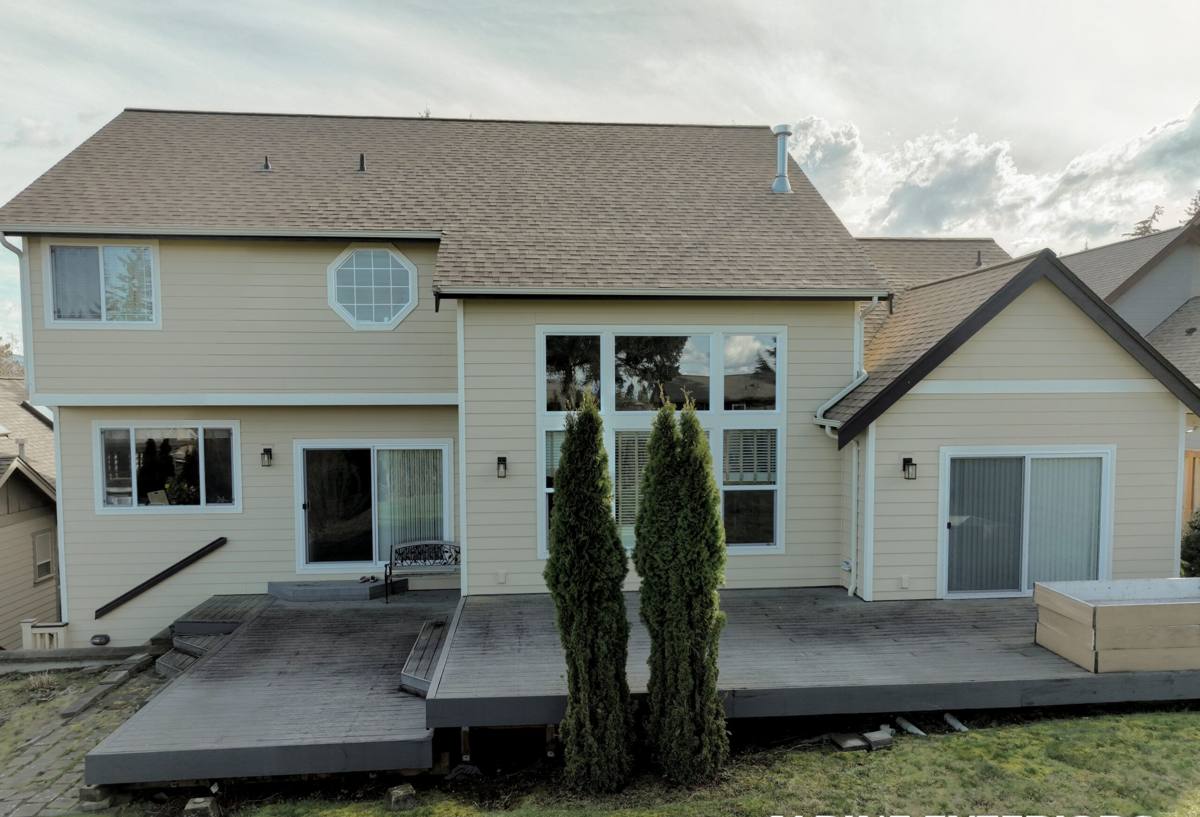
Marietta sits close enough to the water that salt air is a fact of life, not an occasional nuisance. Add Whatcom County's long wet season and the moss and algae that come with months of shade and standing moisture, and you've got a climate that's genuinely harder on outdoor structures than most of the country ever deals with. A deck built to a generic national spec — the kind you'll find in a big-box lumber yard's installation guide — will show its age here in a few years instead of a couple of decades. A deck built for this specific stretch of Whatcom County's coastline holds up far longer.
This page is about one thing: building a custom deck in Marietta that's designed, from the footings up, to handle salt air, driving rain, and moss — not a generic deck dropped into a coastal lot and hoped for the best.
What Salt Air, Driving Rain, and Moss Actually Do to a Deck
Salt Air and Metal Fasteners
Salt-laden air accelerates corrosion on anything metal — screws, joist hangers, structural bolts, railing brackets. On a deck this matters more than people expect, because most of the hardware that holds a deck together is buried inside the structure where you can't see it start to fail. A fastener rated for general outdoor use inland can pit and weaken years faster this close to the water. The fix isn't complicated, but it does mean spending more up front on hardware rated for coastal or marine-grade exposure rather than standard exterior-grade fasteners.
Driving Rain and Water Intrusion
Whatcom County doesn't just get a lot of rain — it gets a lot of wind-driven rain, which behaves differently than a straight-down downpour. It gets pushed under flashing, into ledger board connections, and into any gap where two deck components meet. Most deck failures we see aren't from the decking itself rotting from the top down — they're from water working its way into the ledger-to-house connection or into end grain at joist ends, rotting the structure from the inside where nobody's looking until there's a soft spot underfoot.
Moss, Algae, and Surface Decay
Custer's tree cover and the region's long wet, mild winters create a moss season that runs far longer than most homeowners plan for. Moss and algae hold moisture against decking boards, and on wood decking that moisture cycle — wet, damp, wet again — is what actually breaks wood down over time, more than any single storm. It also makes boards slick, which is a real safety issue on stairs and landings that see morning shade.
Choosing a Decking Material for Marietta's Conditions
There's no single "right" decking material — there's a right material for your budget, your maintenance appetite, and how much sun versus shade your deck actually gets. Here's how the common options stack up specifically against Marietta's salt air, rain, and moss conditions:
| Material | Moisture & Salt Air Behavior | Moss/Algae Resistance | Maintenance | Typical Lifespan Here |
|---|---|---|---|---|
| Pressure-treated wood | Good if properly sealed and detailed; end grain is the weak point | Low — needs regular cleaning | Annual cleaning + resealing every 1-2 years | 15-20 years with upkeep |
| Cedar | Naturally decay-resistant but still needs sealing near salt air | Moderate | Cleaning + oil or stain every 1-2 years | 15-20 years with upkeep |
| Composite decking | Excellent — doesn't absorb water or rot | Moderate to good depending on brand; still needs washing | Periodic washing, no sealing/staining | 25-30+ years |
| PVC decking | Excellent — fully moisture-proof | Good, easiest to keep clean | Occasional washing | 30+ years |
We install all of these, and we're honest about the trade-offs rather than pushing whatever has the best margin. Wood costs less up front and looks the most natural, but it's the material most sensitive to this specific climate — it needs a real maintenance commitment from the homeowner, not just an occasional wipe-down. Composite and PVC cost more initially but largely take moisture and rot out of the equation, which in a climate like this is often worth the premium over the life of the deck. The right call usually comes down to how much upkeep you actually want to do versus how much you want to spend once and mostly forget about it.
What a Correctly Built Deck Involves
Footings and Framing
Footings need to be sized and set below frost depth and on undisturbed or properly compacted soil — cutting corners here doesn't show up for a year or two, but it shows up eventually as a deck that racks, sags, or pulls away from the house. Framing lumber should be rated for ground contact where it's close to grade, and joists need consistent spacing sized to the decking material, since composite and PVC often have tighter span requirements than wood.
Ledger Attachment and Flashing
The connection where the deck attaches to the house is the single most common failure point on any deck, anywhere, and it's made worse by driving rain. Proper flashing — installed so water sheds out and away from the house rather than behind the ledger board — is non-negotiable. We also use structural screws or through-bolts rated for the load and the exposure, not just whatever's fastest to drive.
Fasteners and Hardware
Given the salt air here, we spec joist hangers, screws, and structural connectors rated for coastal or marine exposure rather than standard exterior-grade hardware. It costs a bit more but it's the difference between hardware that's still solid in fifteen years and hardware that's rusting and weakening in five.
Board Spacing and Airflow
Decking boards need consistent gapping for drainage and expansion, and the framing underneath needs enough clearance for air to move. A deck built low to the ground with poor airflow underneath traps moisture, which is exactly what feeds moss and accelerates rot — so ventilation is a design decision, not an afterthought.
Our Deck-Building Process in Marietta
- Site visit and assessment. We look at sun and shade exposure, drainage on the lot, proximity to the water, and the condition of anything we're building off of, like an existing ledger connection or foundation wall.
- Design and material selection. We talk through material options honestly, including what each one will actually require from you in year five and year fifteen, not just what it costs on day one.
- Permitting. Most new decks and many rebuilds in Whatcom County require a permit. We handle that process so you're not the one tracking down requirements or waiting on hold.
- Construction. Footings, framing, flashing, decking, and railing, built in that order with each stage inspected before we move to the next.
- Final walkthrough. We go over the finished deck with you, including what maintenance it actually needs and on what schedule, so there are no surprises.
What It Costs and What Drives the Price
Every deck is priced on its own specifics, but these are the factors that move the number the most:
| Factor | Why It Matters |
|---|---|
| Size and shape | Square footage and the number of angles, levels, or curves directly drive framing and decking material cost |
| Decking material | Wood costs less to install; composite and PVC cost more upfront but less over the deck's life |
| Height off grade | Taller decks need more substantial framing, footings, and often stairs and additional railing |
| Railing style | Cable, glass, and custom rail systems cost more than standard wood or composite balusters |
| Site access | Tight lots or difficult grading near the water can add labor time for material handling and equipment access |
| Permitting requirements | Deck height, proximity to property lines, and structural attachment can all affect what's required |
As a broad range, a simple, code-compliant wood deck is going to land at the lower end of the market, while a larger composite or PVC deck with custom railing and multiple levels moves into the higher end. We'll always give you a real number for your specific project rather than a rough estimate that changes once we're on site.
Keeping Your Deck Ahead of Moss Season
Whatever material you choose, a bit of seasonal attention goes a long way in this climate. Before moss season really sets in each fall, and again once it breaks in spring, it's worth running through this list:
- Sweep debris — needles, leaves, seed pods — off the deck surface regularly so it doesn't hold moisture against the boards
- Wash the deck surface with a deck cleaner or diluted cleaner to remove early moss and algae growth before it takes hold
- Check that gaps between boards are still clear and draining, not clogged with compacted debris
- Inspect railing posts and stair connections for movement, which can signal a loosening fastener
- On wood decking, check the sealer or stain each year and reapply before you see graying or water no longer beading on the surface
- Look at the ledger board area where the deck meets the house for any staining, soft spots, or gaps in flashing
Signs Your Current Deck Needs Attention
If you've got an existing deck in Marietta, a few warning signs are worth acting on before they become bigger problems:
- Soft or spongy spots underfoot, especially near the house connection
- Rust staining around fastener heads or hardware
- Persistent moss or algae that comes back within weeks of cleaning
- Gaps or separation where the deck meets the house
- Railing posts that wiggle or feel less solid than they used to
Why a Crew That Already Works Marietta Matters
Building a deck that holds up here isn't about following a generic manual — it's about knowing how this specific stretch of Whatcom County behaves. That means knowing which fastener grade actually earns its keep this close to salt air, how much airflow a deck needs underneath to fight off a moss season that runs longer than it does inland, and what Whatcom County's permitting office actually expects to see on a plan. A crew that's built decks elsewhere in the country and treats Custer like anywhere else will make decisions that look fine on paper and fail early in practice. We work this area regularly, which means the material choices, hardware specs, and detailing on your deck reflect what actually holds up here, not what holds up somewhere drier.
If you're planning a new deck in Marietta or need an honest look at whether your current one needs repair or replacement, we're happy to come take a look. The estimate is free, there's no pressure, and you'll get a straight answer about what your project actually needs — just fill out the form below to get started.