 Custer
 Why Laurel Homes Wear Out Their Siding Faster
Homes in the Laurel area, just outside Custer in Whatcom County, sit in a climate that is genuinely tougher on exterior building materials than most of the country ever deals with. The combination of salt-laden marine air, long stretches of driving rain, and short, shaded winter days adds up to a specific set of stresses: constant moisture cycling, slow-drying wall assemblies, and near-year-round conditions for moss and algae to take hold. Siding here doesn't fail because homeowners neglect it. It fails because the product wasn't built for this environment in the first place, or because it went up without the details that matter in a wet climate.
Salt air is corrosive to exposed fasteners and metal trim, and it accelerates the breakdown of coatings and caulking faster than inland air does. Driving rain — the sideways, wind-driven kind common to this part of Whatcom County — pushes water into laps, seams, and butt joints that would stay dry in a calmer climate. And moss doesn't need much: shaded north walls, tree cover, and weeks of overcast, damp weather are all it takes for spores to establish on any siding surface that stays even slightly damp.
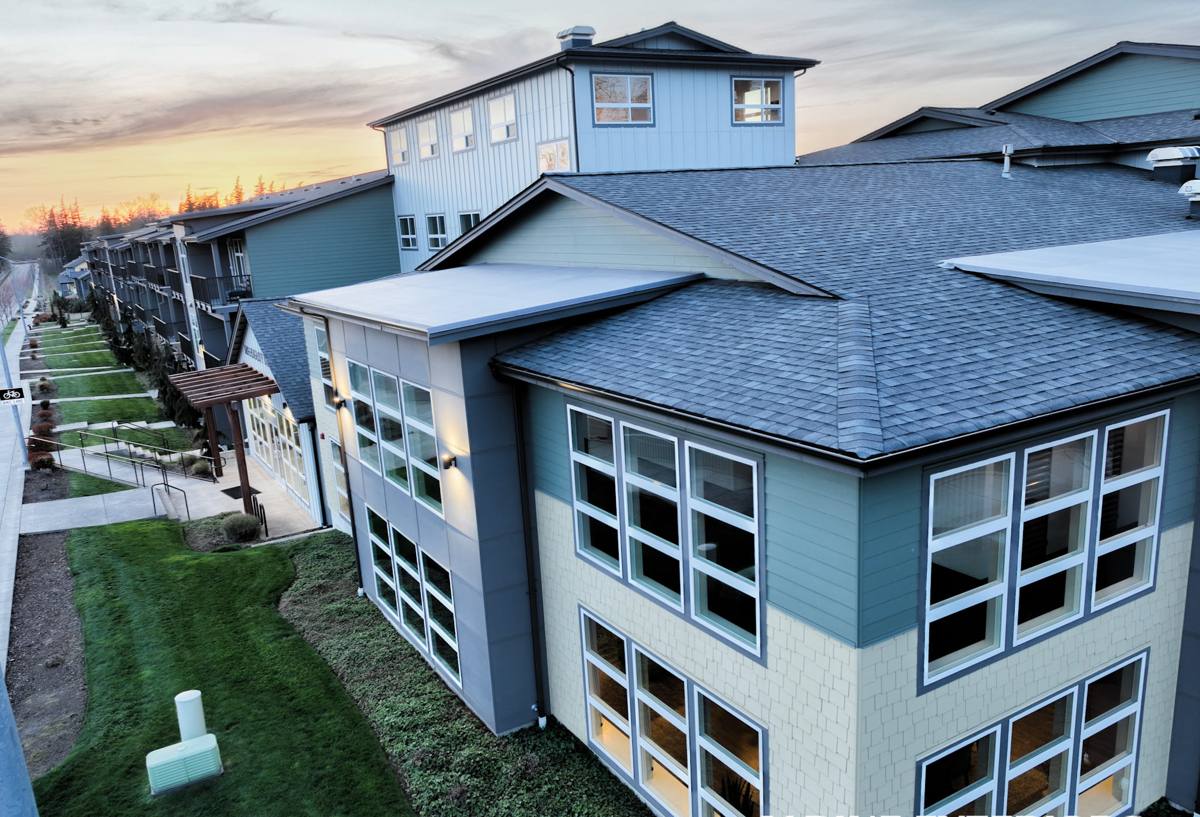
What "Correct" Siding Replacement Actually Means Here
A siding replacement done right in Laurel isn't just swapping old boards for new ones in the same pattern. It's an opportunity to fix whatever let moisture in the first place and to build an assembly that sheds water instead of holding it. That means:
- Full tear-off to inspect sheathing, not siding installed over rot or hidden water damage
- A correctly lapped, taped weather-resistive barrier behind the new siding
- Properly flashed windows, doors, and any horizontal trim or transitions
- Rainscreen or drainage gap where wall assemblies and budget allow, so water that gets behind the siding has somewhere to go
- Factory-finished siding and trim, so field-cut edges are sealed and painted before they're ever exposed to weather
- Stainless or coated fasteners appropriate for a salt-air environment
Skip any one of these and you haven't solved the underlying problem — you've just delayed the next failure by a few years.
Why We Install Only James Hardie Fiber Cement
We made a deliberate decision not to install vinyl siding, LP SmartSide, primed spruce, cedar, or other fiber cement brands like Cemplank or Allura. That's not a marketing position — it's a standard we hold because of what we've seen this specific climate do to those materials over time.
Vinyl expands and contracts significantly with temperature swings, and driven rain can find its way behind loose panels at seams and corners. Engineered wood products like LP SmartSide perform well in many climates, but they rely on an intact factory coating to resist moisture; any breach — a nail pop, a scuff, an unsealed cut edge — gives water a path into wood-based material that swells and deteriorates once it's wet. Cedar and primed spruce are wood, full stop, and wood in a climate with this much sustained moisture and moss pressure demands a maintenance schedule most homeowners don't want to keep up with indefinitely.
James Hardie fiber cement is cement, sand, and cellulose fiber — it doesn't rot, it's non-combustible, and it doesn't feed insects. Hardie's HZ5 product line is specifically engineered for climates with sustained moisture exposure like ours, and every board comes with a factory-applied ColorPlus finish that's baked on and warranted against fading and peeling far beyond what field-applied paint can offer. It's also backed by a strong transferable warranty, which matters to buyers if you ever sell. We don't install it because it's trendy — we install it because it's the product that holds up to what Laurel's climate actually does to a house.
Comparing Siding Materials in a Salt Air, High-Rain Climate
| Material | Moisture behavior | Salt air / coastal durability | Maintenance burden |
|---|---|---|---|
| James Hardie fiber cement | Does not rot or swell; dimensionally stable when wet | Excellent; cement-based, non-corroding substrate | Low — occasional wash, factory finish holds color |
| Vinyl | Sheds surface water but seams/laps can let moisture behind panels | Fair; can become brittle over time in coastal UV/salt exposure | Low, but repairs and color-matching are limited |
| LP SmartSide / engineered wood | Good if coating stays intact; vulnerable once breached | Fair to good, dependent on maintaining the seal | Moderate — cut edges and damage need prompt sealing |
| Cedar / primed spruce | Absorbs moisture; prone to swelling, cupping, rot over time | Poor to fair without diligent upkeep | High — regular refinishing and moss/mildew treatment |
Signs a Laurel Home Needs Siding Replacement Soon
- Soft or spongy spots when you press on the siding, especially near the bottom courses or under windows
- Visible moss or algae that comes back within weeks of cleaning it off
- Paint that's peeling, bubbling, or chalking, particularly on north- or west-facing walls
- Warped, cupped, or delaminating boards
- Staining or discoloration around seams, corners, or fastener heads
- Interior signs like musty smells, peeling interior paint, or damp drywall near exterior walls
- Visible gaps opening up at butt joints or trim after a few seasons of wind and rain
Any one of these on its own might be minor. Several together, especially on an older home, usually means moisture has already found its way past the siding and it's worth having someone look at the wall assembly, not just the surface.
Our Process, Start to Finish
- On-site assessment — we walk the exterior, check problem areas homeowners have flagged, and look at trim, flashing, and drainage as a system, not just the siding itself.
- Written estimate — clear scope, product selection (Hardie plank, shingle, or panel depending on the home's style), and a straightforward price, no pressure to decide on the spot.
- Tear-off and inspection — old siding comes off, sheathing gets inspected, and any rot or damage is addressed before anything new goes up.
- Weather barrier and flashing — the water-management layer goes in correctly, since this is the part that determines whether the house stays dry for the next 30 years, not just how it looks on day one.
- Hardie installation to manufacturer spec — proper fastening, clearances, and caulking sequence, following James Hardie's installation requirements, which is also what keeps the warranty valid.
- Final walkthrough — we go over the finished job with the homeowner before we consider it done.
What Affects the Cost of a Siding Replacement
| Factor | Why it matters |
|---|---|
| Extent of hidden damage | Rotted sheathing or framing found during tear-off adds repair work before new siding can go on |
| Home size and wall complexity | More corners, dormers, and trim details mean more labor and material cuts |
| Siding profile chosen | Lap, shingle, and panel styles differ in material and install time |
| Trim and accessory scope | Full trim replacement adds cost but usually pays off in a cleaner, longer-lasting result |
| Access and site conditions | Steep grades, tight lot lines, or difficult staging affect labor time |
We give real ranges during the estimate once we've seen the specific home — broad guesses without an on-site look aren't useful to anyone.
Why It Matters to Hire a Crew That Already Works This Area
A siding crew that regularly works Custer and the surrounding Whatcom County communities already knows what this climate does to a wall assembly, because they've torn open enough old siding to have seen it firsthand. That experience shows up in small decisions — where to add extra flashing, how much drainage gap to leave, which details to double up on for a west-facing wall that takes the worst of the weather. It also means a crew that isn't guessing at material lead times or scheduling around this region's wetter months, and one that's already built relationships with suppliers who stock the Hardie products and trim this climate calls for.
Local reputation also cuts both ways in a smaller community like Laurel — a crew that plans to keep working here has every reason to do the job right the first time.
Keeping Hardie Siding Looking Right in This Climate
Fiber cement is low-maintenance, not zero-maintenance. A yearly rinse-down knocks back any moss or algae before it gets established, and it's worth checking caulking at trim joints every couple of years since caulk is the one component in the assembly that does wear out on its own schedule. Beyond that, ColorPlus finished siding doesn't need repainting on the timeline that field-painted wood or fiber cement does — that's a large part of why we install it.
If your Laurel-area home is due for new siding, we're happy to come take a look and talk through what the house actually needs. The estimate is free, there's no pressure, and you'll get a straight answer about scope and cost before you decide anything.