 Custer
 Why Laurel Roofs Wear Differently Than Roofs Further Inland
Laurel sits close enough to the water that homes here deal with a different mix of stress than roofs just a few miles inland in Whatcom County. Salt-laden air off the bay corrodes exposed metal faster than it does further from the coast, driving rain off winter storms pushes water sideways into every gap a roof has, and the long, damp moss season here means organic growth has months to take hold on any roof that isn't shedding water and drying out properly. None of these things individually is unusual for Western Washington. Together, on a property like yours in Laurel, they add up to a roof that needs to be installed with those specific stresses in mind, not just built to a generic code minimum.
A roof that would hold up fine in a drier, more sheltered part of the state can fail early here — not because the shingles or panels were bad, but because the fasteners corroded, the flashing wasn't rated for the exposure, or moss was allowed to sit and hold moisture against the roof deck for years. When we install a new roof in this area, we're building for Laurel's actual weather, not the weather on the label.
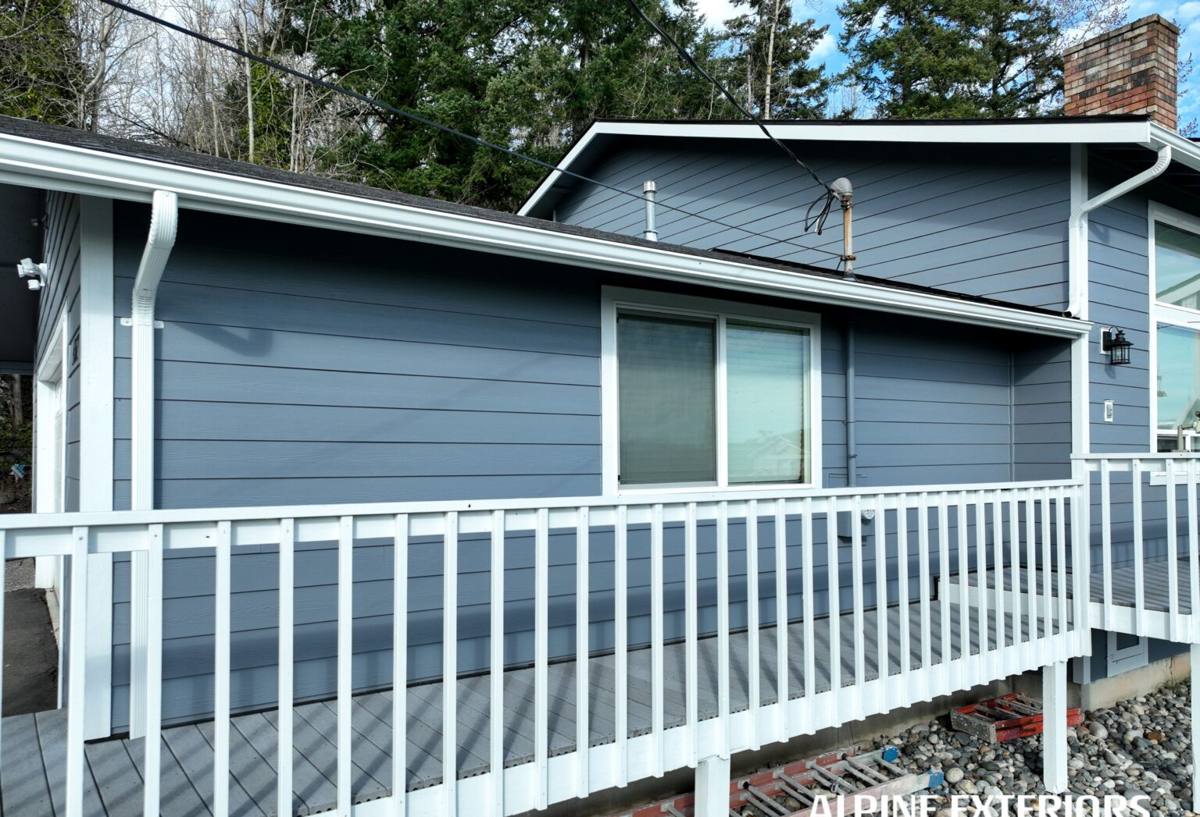
What "Salt Air, Driving Rain, and Moss" Actually Means for a Roof
Salt Air
Airborne salt accelerates corrosion on fasteners, flashing, and any exposed metal trim. Standard galvanized nails and off-the-shelf flashing can start showing rust streaks and weak points years before they would somewhere drier. The fix isn't complicated — it's choosing corrosion-resistant fasteners and flashing material rated for coastal exposure — but it does mean not defaulting to whatever's cheapest at the supply house.
Driving Rain
Wind-driven rain doesn't just fall on a roof, it gets pushed under shingle edges, around vents, and into any flashing detail that isn't sealed and lapped correctly. Roof valleys, chimney flashing, and the transitions where a roof meets a wall are where driving rain finds weak installation work. A roof can look fine from the ground and still be letting water in at these details.
Moss
A long moss season means any roof surface that stays damp and shaded — north-facing slopes, areas under overhanging trees, low-slope sections — gets colonized faster and holds that growth longer each year. Moss isn't just cosmetic. It holds moisture against roofing material, lifts shingle edges as it grows, and can work its way under the roof covering over time.
What a Correct New Roof Installation Involves
A new roof is more than laying down new shingles or panels over what's there. Done right, it's a sequence of steps where each one protects the next:
- Full tear-off of the old roofing so the deck can actually be inspected, not just covered up
- Deck inspection and repair of any soft, rotted, or delaminated sheathing before anything new goes down
- Ice-and-water shield or high-quality synthetic underlayment, with extra attention at eaves, valleys, and any low-slope transitions
- Corrosion-resistant flashing at every roof-to-wall, roof-to-chimney, and valley intersection
- Proper intake and exhaust ventilation so the attic can dry out between rain events instead of staying damp
- Correct fastener type and pattern for the material and local wind exposure
- Final material installation — shingles, metal, or whatever product was chosen — installed to manufacturer spec, not shortcuts
Skipping or rushing any one of these steps is how a roof that looks new on installation day ends up with a leak or premature failure a few years later. In a climate like this one, the underlayment and flashing details matter as much as the visible roofing material — sometimes more.
Choosing a Roofing Material for a Laurel Property
There's no single "best" roofing material for every home — it depends on your roof's exposure, your budget, and how long you want to go before thinking about it again. Here's how the common options stack up against the conditions this area actually throws at a roof:
| Material | Salt Air Resistance | Moss Resistance | Typical Lifespan Here | Notes |
|---|---|---|---|---|
| Architectural asphalt shingle | Good, with corrosion-resistant fasteners and flashing | Moderate — benefits from algae-resistant granules and good ventilation | 25–30 years | Most common choice; wide range of colors; cost-effective |
| Standing seam metal | Very good with a quality coated finish | Very good — smooth surface sheds moisture and discourages growth | 40–50+ years | Higher upfront cost; fewer seams and fasteners mean fewer failure points in wind-driven rain |
| Synthetic shake/slate | Good | Good | 30–50 years, product-dependent | Higher cost; more installation-sensitive — detail work matters |
| Basic 3-tab asphalt | Fair — more prone to early granule and fastener wear near the coast | Lower — flatter profile can hold moisture in low spots | 15–20 years | Lowest upfront cost; shortest service life in this climate |
We'll walk you through these options honestly, including where the extra upfront cost of metal or synthetic materials pays off over time versus where a well-installed architectural shingle roof is the right call for your budget and your home.
Why We Don't Just Recommend the Cheapest Option Blindly
Basic 3-tab shingles and generic, uncoated flashing exist because they're inexpensive, not because they're a good match for salt air and a long wet season. Our standard is to spec materials and fasteners that are rated for coastal, high-moisture exposure, because replacing a roof again in twelve years costs more than doing it right the first time. If a lower-cost option is still the right fit for your situation, we'll tell you that too — the goal is an honest recommendation, not an upsell.
Ventilation and Moisture Control — The Part You Don't See
A roof's ability to shed rain matters, but so does its ability to let the attic below breathe. Balanced intake and exhaust ventilation keeps warm, moist air from condensing on the underside of the roof deck, which matters a lot during Whatcom County's long stretches of wet, cool weather. Poor ventilation shows up later as premature shingle aging from the underside, and it makes the deck itself more prone to the kind of moisture damage that moss and algae exploit on the surface. When we install a new roof, we assess and correct ventilation as part of the job — not as an upsell add-on.
Our Installation Process
- On-site inspection and estimate. We look at your existing roof, deck condition, ventilation, and the specific exposure your home has to wind, rain, and shade — then give you a straightforward written estimate.
- Material selection. We go over the realistic options for your roof and budget, including trade-offs, not just brand names.
- Tear-off and deck inspection. Old roofing comes off, the deck gets inspected, and any needed repairs happen before new material goes down.
- Underlayment, flashing, and ventilation. This is where most of the long-term performance of a roof actually gets decided.
- Installation of the new roofing material, to manufacturer specification.
- Cleanup and walkthrough. Job site cleared of debris and fasteners, and we walk the finished roof with you.
What to Expect During the Job
Roof installation in this part of Whatcom County has to work around actual weather windows, not just a calendar date. We schedule tear-off and dry-in around forecasted rain rather than starting a job and hoping the weather holds — an open roof deck and a driving rain event are not something we let happen. Most residential re-roofs take a few days from tear-off to finished cleanup, depending on roof size, complexity, and material chosen; we'll give you a realistic timeline specific to your home before work starts, not a generic estimate.
Signs Your Laurel Home May Need a New Roof
Some of these are obvious from the ground; others take a closer inspection to catch:
- Granule loss showing up in gutters or downspouts
- Shingles that are curling, cupping, or lifting at the edges
- Moss buildup that keeps coming back within a season or two of cleaning
- Dark streaking or staining on north-facing or shaded roof slopes
- Soft spots, sagging, or visible deflection anywhere on the roof plane
- Daylight visible through the attic roof deck, or damp insulation below it
- Flashing that's rusted, lifted, or separating around chimneys and vents
- A roof that's simply reaching the end of its rated service life
If you're seeing more than one or two of these, it's worth having a roof looked at before a small problem becomes a deck-level repair.
Why It Matters That We Already Work in Laurel
A crew that already works roofs in this part of Custer and the surrounding Whatcom County coastline knows which details actually matter here — where driving rain tends to find weak flashing, which slopes hold moss longest, and how to spec fasteners and underlayment for salt air exposure without over-building or under-building the job. That's different from applying a one-size-fits-all install method to every roof regardless of where it sits. We also know the local permitting process and inspection expectations, so there are no surprises partway through the job.
If you'd like a straightforward look at your roof and an honest, no-pressure estimate for a new roof installation in Laurel, use the form below to get in touch.