 Custer
 Deck Repair Built for Laurel's Coastal Climate
Decks in the Laurel area take a different kind of beating than decks further inland. Sitting close to Whatcom County's coastline, homes here deal with a mix of salt-laden air, long stretches of driving rain, and a moss season that can run from fall through spring. Individually, each of those is manageable. Together, over years, they find every weak point in a deck's structure and finish — the ledger connection, the fastener heads, the end grain, the spots where two boards meet and never quite dry out.
We repair decks in Laurel and the surrounding Custer area regularly enough to know which failures show up first and which ones homeowners tend to miss until they've gotten expensive. This page covers what actually goes wrong, what a correct repair looks like, and how we approach the work.
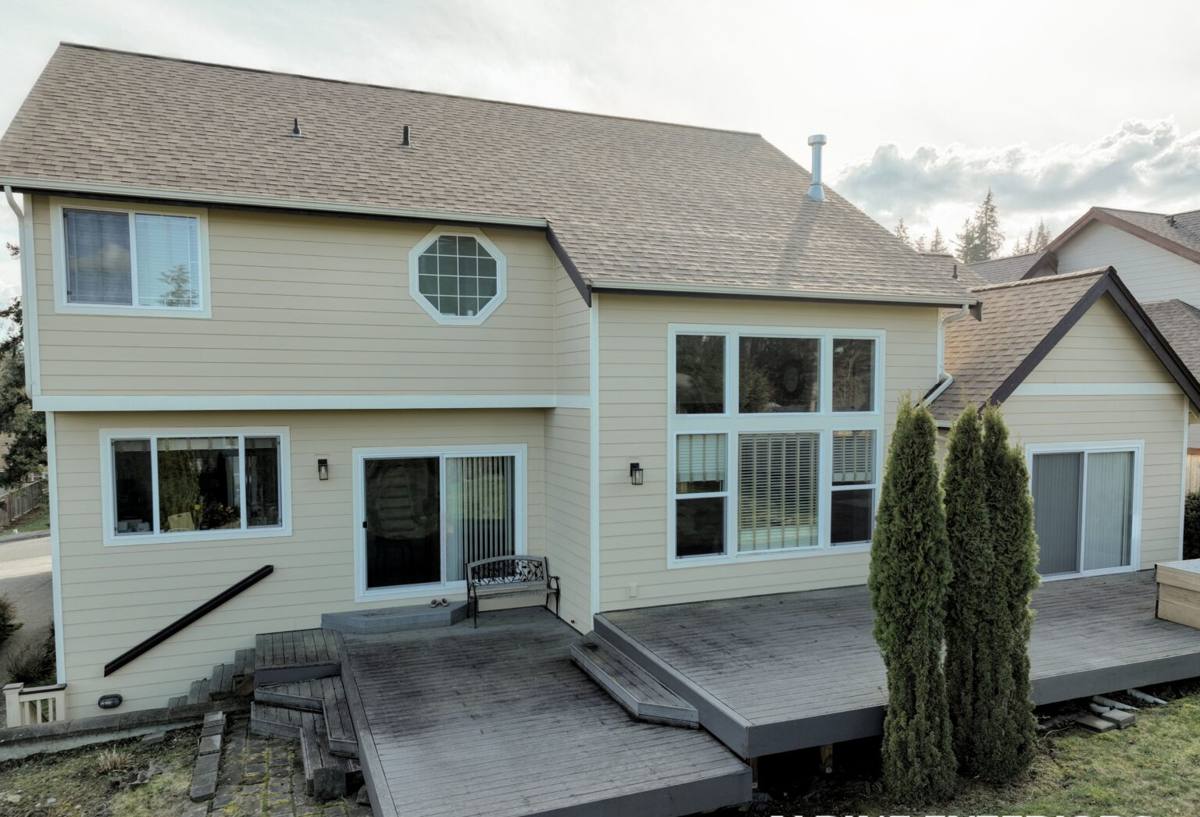
Why Laurel Decks Wear Out the Way They Do
Salt Air and Metal Fatigue
Proximity to the water means airborne salt settles on everything outdoors, including deck hardware. Standard fasteners, joist hangers, and bolts corrode faster here than they would twenty or thirty miles inland. Corrosion doesn't just look bad — it weakens the connection at the exact points holding your deck together. A rusted-through joist hanger or a corroded ledger bolt is a structural problem, not a cosmetic one.
Driving Rain and Trapped Moisture
Whatcom County storms often bring rain sideways, which pushes water into places a vertical rain never would — under railings, behind fascia boards, into the ledger-to-house connection. Decks built or flashed without that in mind end up with water intrusion at the band board, sill, or wall sheathing behind the ledger, which is one of the more serious and expensive problems we find during repair visits.
The Long Moss Season
Shade, humidity, and mild temperatures give moss and algae a long growing window in this area — often most of the year on north-facing or tree-shaded decks. Moss holds moisture against the wood surface, keeps boards from drying out between rains, and makes the decking surface slick and dangerous underfoot. Left alone, it accelerates surface rot even on decking rated for exterior use.
The Deck Problems We See Most Often in Laurel
- Ledger board rot — moisture trapped between the deck and the house at the ledger attachment, often invisible until boards are pulled back
- Corroded fasteners and hangers — rust streaks on decking or visible corrosion on joist hangers, especially on older decks built with standard (non-coated) hardware
- Soft or spongy decking boards — usually near board ends, around posts, or wherever moss and debris collect
- Post base rot — deck posts sitting in or near standing water, or set into concrete without proper standoff hardware
- Loose or wobbly railings — a safety issue as often as a cosmetic one, usually from corroded fasteners or rotted post connections
- Flashing failures — missing or improperly lapped flashing at the ledger, letting water behind the siding and framing
What a Correct Deck Repair Actually Involves
A lot of deck "repairs" are really just surface patches — sistering a board, tightening a rail, calling it done. That can be the right call for minor issues, but it's not a full repair, and on a Laurel deck it often just delays the real problem. A correct repair starts with finding out how far the damage actually goes.
Structural Inspection First
Before we touch a board, we check the load-bearing connections: the ledger attachment to the house, the post bases, the joist hangers, and the beam connections. Surface rot on a deck board is a simple fix. Rot or corrosion at a structural connection changes the whole scope of the job, and we'll tell you plainly if that's what we're looking at.
Fastener and Hardware Condition
Given the salt air here, we pay close attention to hardware condition even on decks that look fine from the surface. Corroded joist hangers, bolts, and screws get replaced with fasteners and connectors rated for coastal exposure — this is one of the most common upgrades we make during a repair, even on decks that are only being partially repaired.
Ledger and Flashing Correction
If we find moisture intrusion at the ledger board, we don't just patch around it. That connection gets opened up, dried out, and rebuilt with proper flashing so water sheds away from the house instead of into it. This is the step that gets skipped most often in a rushed repair, and it's the one that causes the most expensive damage down the line if it's ignored.
Repair or Replace? What Actually Drives That Decision
Homeowners in Laurel often ask us this upfront, and the honest answer depends on where the damage is, not just how much of it there is.
| Factor | Usually Favors Repair | Usually Favors Replacement |
|---|---|---|
| Location of damage | Isolated boards, rail sections, or fasteners | Ledger, multiple joists, or main support posts |
| Deck age | Under 10-15 years, built to a reasonable standard | Older deck nearing the end of its structural life |
| Framing material | Solid pressure-treated framing underneath | Undersized or deteriorated original framing |
| Extent of moisture damage | Surface-level, caught early | Widespread soft spots or hidden rot behind boards |
| Code compliance | Railings, spacing, and connections already meet code | Older railing height, spacing, or attachment doesn't meet current code |
In a lot of cases the right answer is a hybrid: keep sound framing, replace what's failed, and upgrade the hardware and flashing everywhere the deck's exposed to the weather. We'll walk you through what we're seeing and why before any work starts, not after.
Our Deck Repair Process
- On-site inspection — we check decking, framing, ledger connection, posts, railings, and hardware condition, including areas that aren't visible without pulling back a board or two
- Honest scope and estimate — you get a clear picture of what's failing, what's still sound, and what your real options are, in writing
- Demo of failed material — removing only what needs to go, not more than necessary
- Structural correction — sistering or replacing joists, rebuilding post bases, correcting ledger flashing where needed
- Hardware upgrade — corrosion-resistant fasteners and connectors appropriate for this climate
- Decking and railing restoration — matching or replacing boards and rail components to bring the deck back to a safe, solid, even surface
- Final walkthrough — we show you what was done and what to keep an eye on going forward
Materials and Hardware: What We Use and Why
For decking material, both quality pressure-treated wood and composite boards can perform well in this climate if they're installed correctly — the failures we see are almost always about installation and hardware, not the decking material itself. Where we're firm is on hardware and flashing: in a salt-air, high-rainfall area, we don't use standard uncoated fasteners on exposed structural connections, because the maintenance burden and long-term risk aren't worth the small cost difference. That's a standard we hold on our own work, not a claim about any particular product being unsafe.
For ledger connections specifically, we use proper flashing details every time, regardless of what was there originally. It's a small part of the job in terms of labor but it's the single biggest factor in whether a deck stays dry at the house connection for the next ten years.
Keeping a Laurel Deck in Good Shape Between Repairs
A repair only holds up as long as the deck is looked after afterward. A few habits make a real difference here specifically because of the moss and rain:
- Sweep leaves and debris off the deck surface regularly, especially in fall — trapped debris holds moisture against the boards
- Clean moss and algae off the surface at least once a year, before it gets a foothold, rather than scrubbing it off once it's established
- Check railings and stair connections for looseness once or twice a year — a wobble usually means a fastener issue, not a wood issue
- Keep gutters and downspouts near the deck clear so runoff isn't dumping extra water onto or under the deck
- Look underneath the deck occasionally, not just at the surface — early rot and hardware corrosion usually show up there first
- Reseal or refinish wood decking on the manufacturer's recommended schedule; skipping a cycle in this climate shows up faster than it would inland
Why It Matters to Hire a Crew That Already Works in Laurel
Deck repair advice that works for a dry inland climate doesn't always hold up here. A contractor who doesn't regularly work near the coast in Whatcom County may not think twice about standard fasteners, may not flag moss buildup as a moisture problem rather than just an appearance issue, or may not check the ledger connection as closely as it deserves. We work on homes throughout Custer and the surrounding communities, including Laurel, and we've seen firsthand how fast these specific conditions — salt air, driving rain, extended moss season — can turn a small deck issue into a structural one if it's handled with generic assumptions instead of local knowledge.
If your deck has soft spots, rust streaks, a wobbly rail, or you just haven't had it looked at in a while, it's worth getting an honest inspection before it becomes a bigger job. We offer free, no-pressure estimates for deck repair in Laurel and the surrounding Custer area — use the form below to get started.