 Custer
 Semiahmoo's Climate Is Rougher on Siding Than Most of Whatcom County
Semiahmoo sits right on the water, close enough to Semiahmoo Bay and the Strait of Georgia that homes here deal with a combination most inland Whatcom County properties never see: near-constant salt-laden air, wind-driven rain that hits siding sideways instead of straight down, and a wet season that stretches long enough to grow a healthy crop of moss on anything that holds moisture. Add in the marine humidity that barely lets surfaces fully dry between storms, and you have an environment that is genuinely harder on exterior materials than a typical Custer or Ferndale lot a few miles inland.
None of this is unique to one house or one street — it's the nature of building on or near a saltwater spit in the Pacific Northwest. But it means siding decisions that work fine elsewhere in the county can fail faster here, and it means the installation details matter more, not less.
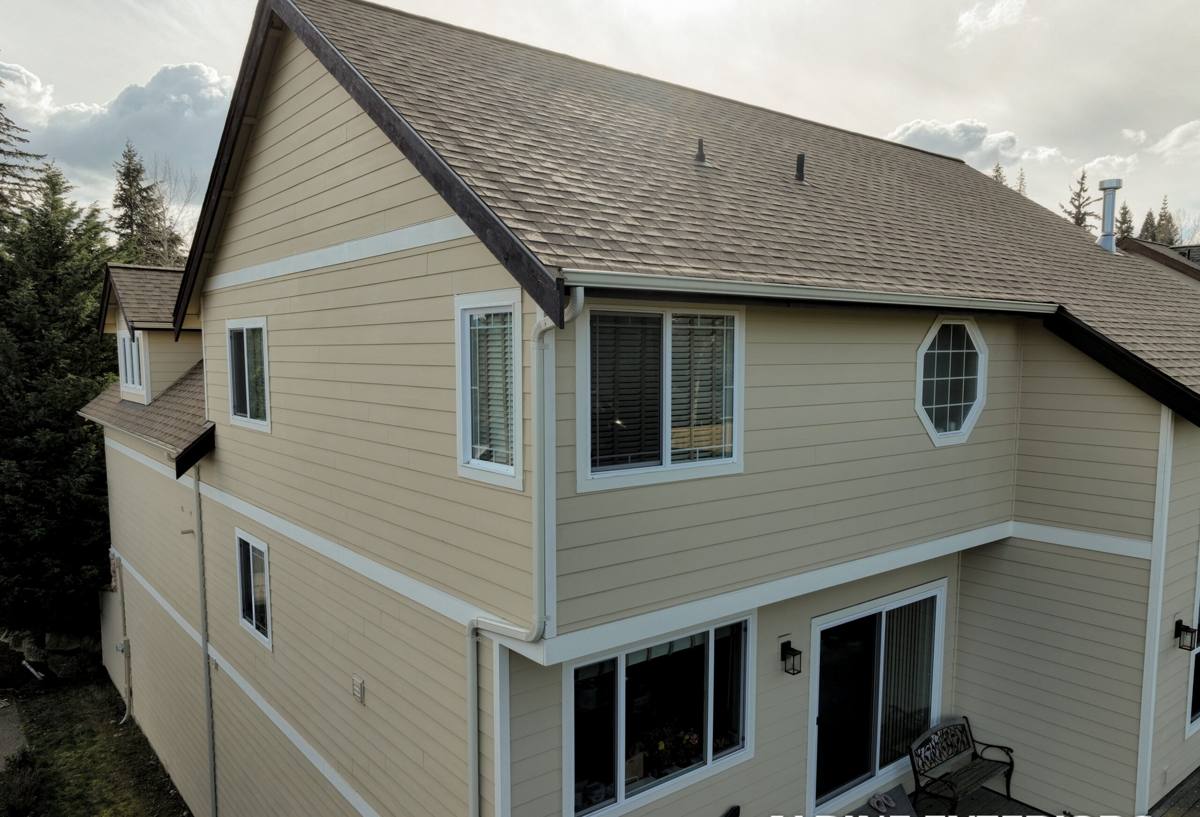
What Salt Air, Driving Rain, and Moss Actually Do to a Wall
Salt air
Airborne salt is corrosive to fasteners, flashing, and trim metal, and it accelerates the breakdown of paints and coatings that aren't formulated to resist it. Over years, a siding product with a weak factory finish will chalk, fade, or start showing surface degradation noticeably faster on a waterfront lot than it would a few miles inland.
Driving rain
Wind off the water pushes rain sideways and up under laps, trim, and penetrations that would stay dry in a calmer setting. This is a water-management problem, not just a material problem — it's why flashing details and drainage planes matter as much as what the siding itself is made of.
Moss and prolonged dampness
Whatcom County's wet season is long anywhere, but a shaded, humid, waterfront lot holds moisture longer than an open, sun-exposed one. Moss and algae need sustained dampness to establish, and siding that can't dry out between rain events becomes a host for it — which then traps even more moisture against the wall.
Why We Install Only James Hardie Fiber Cement Here
We standardized on James Hardie siding for every home we work on, and a marine environment like Semiahmoo is exactly the kind of exposure that shows why. Fiber cement is non-combustible, dimensionally stable in swings between wet and dry, and doesn't feed moss or rot the way wood-based products can. James Hardie's ColorPlus factory finish is baked on and cured under controlled conditions, which gives it better resistance to fading and surface breakdown from UV and salt exposure than field-applied paint typically achieves.
Just as important for this location: James Hardie engineers specific product lines for climate zones, including HZ5 formulations built for freeze-thaw and moisture-heavy regions. That's a meaningfully different approach than a one-size-fits-all product, and it's a big part of why we don't install alternatives like vinyl, LP SmartSide, or cedar on homes in this kind of exposure — the trade-offs in moisture behavior and long-term maintenance aren't worth it this close to the water.
| Siding Material | Behavior in Salt Air / Driving Rain | Moss & Moisture Resistance |
|---|---|---|
| James Hardie fiber cement | Dimensionally stable; ColorPlus finish resists fading/chalking | Doesn't feed organic growth; sheds water when installed to spec |
| Vinyl | Can warp or become brittle with UV and temperature cycling | Traps moisture behind panels if not vented correctly |
| Cedar / wood | Absorbs moisture, salt accelerates weathering of finish | Organic material — moss and rot risk is inherent |
| Vinyl trim/accents on any siding | Fasteners and seams vulnerable to salt corrosion over time | Depends heavily on flashing quality underneath |
What a Correct Installation Actually Involves
The siding material is only part of the equation. On a home exposed to driving rain the way Semiahmoo properties are, the installation details decide whether that material performs for its expected lifespan or fails early around penetrations and trim.
- Proper weather-resistive barrier and a drainage plane behind the siding, not just a flat nail-up
- Correct flashing at every window, door, and penetration — the single most common failure point in wind-driven rain
- Manufacturer-specified nailing patterns and fastener spacing, using corrosion-resistant fasteners appropriate for a marine environment
- Proper starter strip and clearance at the foundation so the bottom course doesn't wick moisture
- Correct gapping and caulking at butt joints and trim, sized for the product's expansion and contraction
- Ventilation behind the cladding where the assembly calls for it, so the wall can actually dry between storms
Skipping or rushing any one of these is how a good product ends up with a bad reputation. James Hardie's warranty coverage assumes installation to their specifications — a shortcut installer can leave a homeowner with a product that looks right for a year or two and then shows problems at exactly the joints and penetrations that matter most.
How Our Process Works on a Semiahmoo Home
1. On-site assessment
We look at the specific exposure of the house — which walls take the worst of the wind and rain off the water, where existing moss or moisture staining shows us where water has been getting in, and the condition of the sheathing underneath the current siding.
2. Product and line selection
We spec the James Hardie product line and profile suited to the home's exposure and style, factoring in the marine environment rather than defaulting to a standard package.
3. Tear-off and substrate check
Removing the old siding lets us actually see the sheathing and framing condition — something that matters more here than in drier parts of the county, since long-term moisture intrusion isn't always visible from outside.
4. Water management first
Housewrap, flashing, and drainage details go in before a single piece of siding is hung. This is the step that determines whether the house handles driving rain correctly for the next several decades.
5. Installation to spec
Fastening, gapping, and finishing follow James Hardie's published installation guidelines exactly, which is also what keeps the manufacturer's warranty intact.
6. Cleanup and walkthrough
We walk the job with the homeowner, cover basic care specific to a waterfront property, and make sure warranty registration paperwork is handled.
Cost Factors on a Waterfront Property
Pricing for any siding job depends on square footage, the condition of what's being removed, and the complexity of the home's trim and penetrations — but a few factors show up more often on Semiahmoo homes specifically.
| Factor | Why It Matters Here |
|---|---|
| Existing moisture damage | Long exposure to a marine environment sometimes means sheathing repair is needed before new siding goes on |
| Wind exposure / elevation | Homes with a direct water-facing wall may need additional flashing detail or fastening attention |
| Access and staging | Waterfront lots can have tighter access or landscaping considerations that affect scaffolding and material staging |
| Trim and architectural detail | More windows, dormers, and penetrations mean more flashing work, which adds labor time |
Living With Hardie Siding in a Marine Environment
One advantage of a correctly installed fiber cement system here is how little ongoing maintenance it asks for compared to wood or poorly detailed alternatives. It won't rot, and it doesn't feed moss the way organic siding can. That said, a few habits go a long way in this specific climate:
- Rinse siding periodically to clear salt residue and organic buildup, especially on shaded walls that stay damp longer
- Keep gutters and downspouts clear so water isn't sheeting down the wall face during driving rain
- Trim back vegetation that shades siding and keeps it from drying out between storms
- Have caulking and trim joints inspected periodically — this is where any installation is most likely to show wear first
Why It Matters That We Already Work in Semiahmoo
A crew that hasn't worked waterfront homes in this part of Whatcom County is guessing at exposure conditions that a local crew already knows firsthand — which walls typically take the worst weather, how long moss actually takes to establish on a shaded elevation near the water, and how to sequence a job around this area's wet stretches. That local experience shows up in the small decisions: where to add extra flashing attention, which product line makes sense for a given exposure, and how to plan a project around the region's weather rather than around a generic install schedule.
Questions worth asking any contractor before hiring for a home in this area
- Are you a James Hardie certified or preferred installer, and can you explain why?
- How do you handle flashing at windows and penetrations on a wind-exposed wall?
- What's your plan if you find moisture damage in the sheathing during tear-off?
- Can you point to the specific James Hardie product line you'd recommend for this exposure, and why?
- How is the manufacturer's warranty affected by your installation method?
If you're weighing a siding project on a Semiahmoo home, we're happy to take a look and walk you through what we'd recommend for your specific exposure. Reach out for a free, no-pressure estimate using the form below.