 Custer
 Windows in Ferndale Take a Different Kind of Beating
Ferndale sits close enough to Bellingham Bay and the Salish Sea that salt-laden air is a fact of life, not an occasional nuisance. Add Whatcom County's driving rain off the water, a moss season that can run eight or nine months out of the year, and the temperature swings between damp winters and dry summer heat, and you've got conditions that push window systems harder than they're pushed almost anywhere else in the state. Vinyl frames chalk and go brittle faster near the coast. Aluminum corrodes at the fasteners. Wood rots at the sill if the finish isn't kept up. None of this means Ferndale homes need exotic solutions — it means the replacement has to be specified and installed correctly for this specific climate, not a generic one.
We work Ferndale and the rest of Whatcom County regularly, which matters more than it sounds like. A crew that mostly installs windows fifty miles inland, in a drier microclimate, doesn't always think about salt exposure on hardware, or how wind-driven rain behaves against a window that faces the water. We do, because we see the failures that come from ignoring it.
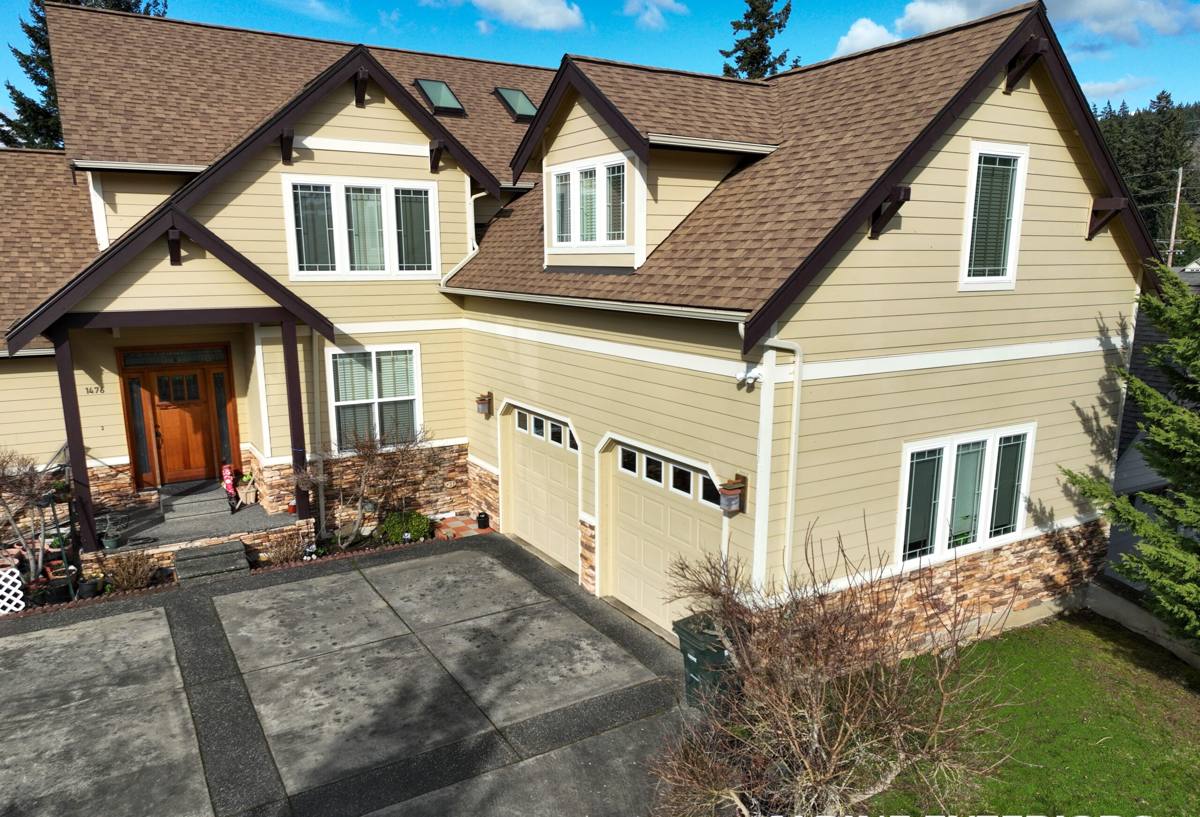
How to Tell a Ferndale Home Actually Needs Replacement
Not every old window needs to come out. Some just need better weatherstripping or a re-glaze. Here's what actually points to full replacement rather than a repair:
- Condensation forming between the panes (a failed seal on a double-pane unit — this cannot be fixed, only replaced)
- Frames that are soft, discolored, or crumbling at the bottom corners, especially on the weather-facing side of the house
- Visible daylight or a draft you can feel with your hand along the frame when it's windy
- Hardware — locks, cranks, balances — that's corroded or seized, common near the water where salt air reaches fasteners over time
- Paint or finish that keeps failing on the interior sill no matter how often it's repainted, which usually means moisture is getting into the wood from outside
- A noticeable jump in heating bills that lines up with when the windows were last replaced or serviced
- Green growth or persistent black mildew staining on the frame or sill, which in this climate shows up faster than most homeowners expect
If you're only seeing one or two of these, it's worth a look before assuming the whole window needs to go. That's part of what an honest estimate is for.
What a Correct Window Replacement Job Actually Involves
The window unit itself is maybe half the job. The other half — the part that determines whether it lasts fifteen years or thirty — is how it's flashed, sealed, and tied into the wall assembly. In a climate with this much wind-driven rain, that installation detail is where most premature failures actually start.
Removal and inspection
We pull the old unit carefully and inspect the rough opening before anything new goes in. This is the point where hidden water damage, soft sheathing, or a missing/failed flashing detail from the original build shows up. It gets addressed before the new window goes in, not covered over.
Flashing and drainage
Every window needs a path for incidental water to drain back out, not into the wall cavity. That means proper sill pan flashing, correctly lapped house wrap or building paper, and head flashing that sheds water past the window rather than behind it. This is the single most important step for coastal Whatcom County homes, and it's also the step that's easiest to rush.
Air sealing and insulation
The gap between the window frame and the rough opening gets sealed and insulated correctly — not just packed with fiberglass, which does little against air movement, and not oversprayed with expanding foam, which can bow a frame out of square. Low-expansion foam or backer rod and sealant, applied properly, keeps the unit airtight without distorting it.
Exterior trim and sealant
Exterior caulking and trim get finished so water sheds away from every joint. In a moss-prone climate, we also think about how trim details hold or shed moisture over the following seasons, since trapped moisture is what feeds moss and mildew growth on and around window openings.
Choosing the Right Frame Material for This Climate
There's no single "best" window material — there's the right one for a given house, budget, and exposure. Here's how the common options actually perform for a Ferndale-area home:
| Frame Material | Salt Air / Coastal Performance | Maintenance | Typical Lifespan |
|---|---|---|---|
| Vinyl (quality, welded-corner) | Good — won't rust or corrode, but lower-grade vinyl can chalk and go brittle with UV and salt exposure over many years | Low | 20-30 years |
| Fiberglass | Very good — dimensionally stable, resists the expansion/contraction cycling that coastal temperature swings cause | Low | 30-40 years |
| Aluminum | Weaker choice near the water — prone to corrosion at fasteners and hardware unless marine-grade and well-finished | Moderate | 15-25 years |
| Wood (clad exterior) | Good if the exterior cladding and seals are intact; unclad wood struggles badly in this much rain and humidity | High if unclad; moderate if clad | 20-40 years, install-dependent |
For most Ferndale homes we recommend quality vinyl or fiberglass for the balance of upfront cost, low maintenance, and how well they hold up to salt air and rain over decades. We don't push aluminum-frame replacements in this area as a rule — not because aluminum is a bad product everywhere, but because the corrosion risk on hardware and fasteners this close to the water is a real maintenance burden we'd rather steer a homeowner away from up front than have them discover in year eight.
Glass and gas fill
Double-pane, low-E glass with an argon fill is the standard we install for this climate — it manages both the heat loss from cool, wet winters and the solar gain from summer sun without over-specifying for a climate that isn't dealing with extreme heat or cold. Triple-pane can make sense on a north- or west-facing wall that catches the worst of the wind and rain, but it's not a blanket upgrade every window needs.
Our Process, Start to Finish
- Walk-through and measure. We look at every window being considered, not just the ones you called about — sometimes a neighboring window has the same hidden issue and it's worth doing together.
- Honest estimate. You get a written quote that spells out frame material, glass package, and what's included in the install — flashing, sealing, trim, haul-away.
- Scheduling around the weather. We plan install windows with Whatcom County's rain patterns in mind so openings aren't sitting exposed longer than necessary.
- Installation. Old units out, opening inspected, new units flashed, sealed, and trimmed per the details above.
- Walkthrough and cleanup. We check operation on every window, clean up the site, and haul away the old units.
What Affects Cost
Every home is different, so we don't quote sight-unseen, but these are the factors that actually move the price:
| Factor | Why It Matters |
|---|---|
| Frame material | Vinyl is the most budget-friendly; fiberglass costs more upfront but needs less attention over time |
| Window size and style | Large picture windows, bays, and custom shapes cost more than standard single- or double-hung sizes |
| Number of windows | Doing a full-house replacement in one pass is almost always more cost-effective per window than one-off jobs over several years |
| Condition of the opening | Hidden rot or damaged sheathing found during removal adds repair cost, but skipping that repair is how failures happen later |
| Access and site conditions | Second-story windows, tight side yards, or limited access add labor time |
Broadly, homeowners in this area should expect a wide range depending on how many windows and what material is chosen — a detailed, written estimate after seeing the actual openings is the only honest way to give you a real number.
Why It Matters That We Already Work in Ferndale
A crew based nearby and working this area regularly brings a few practical advantages over a contractor who has to drive in from somewhere they don't normally work:
- We already know how coastal exposure in this part of Whatcom County affects different materials and finishes, so we're not guessing at specs
- We can respond faster if something needs a follow-up look after install
- We're familiar with the local building department's permitting expectations, which keeps the project on schedule
- Our reputation in this community depends on the job holding up for years, not just looking good at handoff
Living With Ferndale's Long Moss Season
Moss doesn't just grow on roofs here — it takes hold anywhere moisture sits, including window sills, trim, and the corners of frames that don't shed water cleanly. A correctly installed window with proper flashing and sloped sill details sheds water fast enough that moss has a much harder time getting a foothold. That's one more reason the installation details matter as much as the window unit itself: a great window installed with poor drainage will still grow moss and hold moisture at the frame, while a solid mid-range window installed correctly will shed water and stay cleaner for years.
Simple upkeep that helps
- Rinse pollen, salt residue, and grime off frames and glass a couple of times a year
- Keep weep holes on vinyl and fiberglass frames clear of debris so water can drain out
- Check exterior caulking annually, especially on windows facing prevailing wind and rain
- Trim back vegetation that keeps window trim shaded and damp, which speeds up moss growth
Ready When You Are
If you're weighing whether your windows need replacing or just some attention, we're happy to take a look and give you a straight answer — including telling you if replacement isn't actually necessary yet. Reach out for a free, no-pressure estimate using the form below.