 Custer
 Roof Replacement Built for Everson's Weather, Not Just Any Roof
Everson sits inland from the coast but still catches the same weather pattern that defines Whatcom County: long stretches of steady rain, damp air moving in off the water, and short, low-angle winter sun that never quite dries things out. A roof here doesn't fail because of one big storm. It fails slowly, from moisture that never fully leaves the assembly, moss that takes hold in shaded valleys and north-facing slopes, and flashing details that were never quite right to begin with. Replacing a roof in this area means designing for that slow, steady exposure, not just swapping old shingles for new ones.
We work on homes throughout Whatcom County, including Custer, out of our base in the area, and we see the same failure patterns repeat on Everson roofs: granule loss on the shaded slopes, soft decking around old skylights and chimneys, and gutters that back up every fall when the first big rains hit. A correct replacement addresses all of that at once, not just the shingles on top.
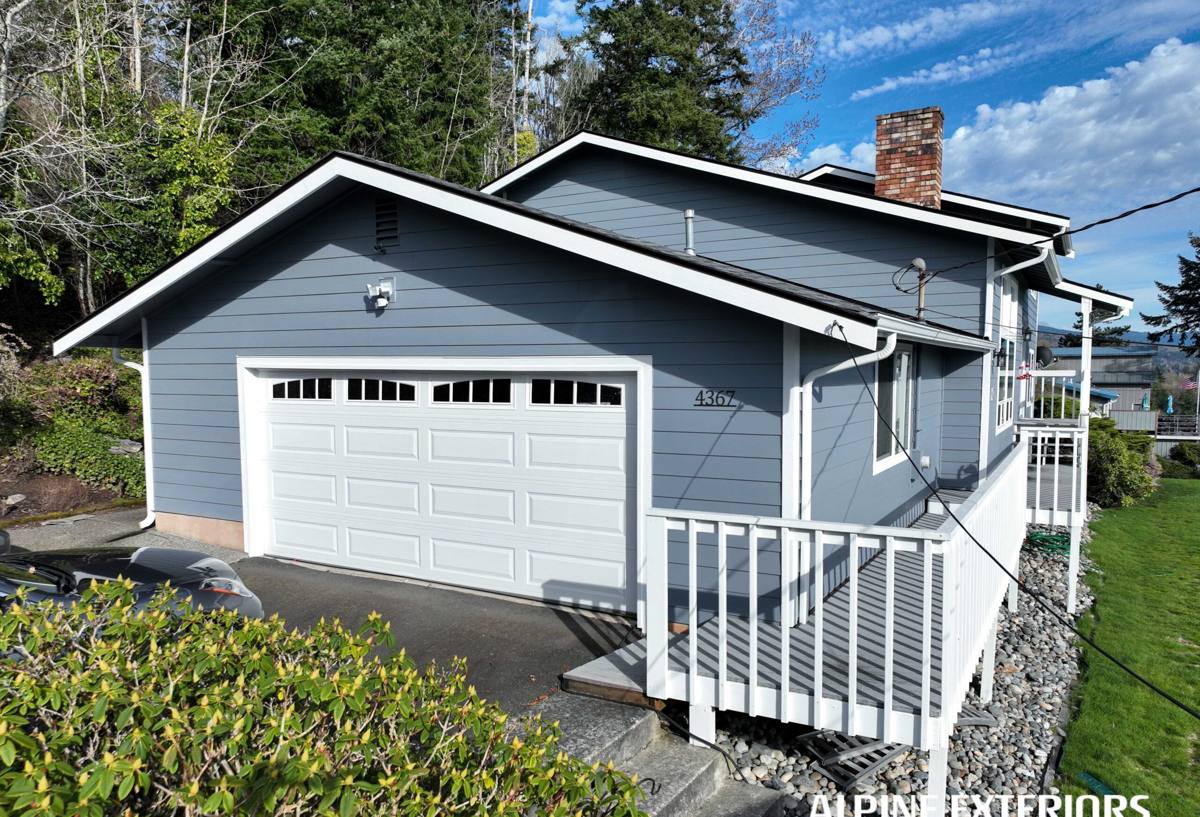
What Whatcom County Climate Does to a Roof Over Time
Moss and Organic Growth
Everson gets enough shade from tree cover and enough sustained dampness that moss and moss season are a real design factor, not an afterthought. Moss holds moisture against the roof surface long after a rain has passed, and once it establishes itself under shingle tabs, it lifts them and lets water track sideways instead of shedding down and off. A roof that's been neglected for a few moss seasons often has more damage under the moss than the surface suggests.
Driving Rain and Wind-Driven Water
Storms here don't always come straight down. Wind pushes rain sideways into valleys, around chimneys, and up under poorly lapped flashing. Standard shingle installation assumes mostly vertical water flow; driving rain punishes any shortcut in flashing, underlayment lap direction, or fastener placement.
Salt Air and Metal Fatigue
Whatcom County's proximity to Puget Sound means salt-laden air reaches inland further than people expect, especially on breezy days. Exposed metal flashing, nail heads, vent stacks, and gutter hardware corrode faster here than in a dry inland climate. Uncoated or poor-grade fasteners and flashing are one of the most common hidden causes of leaks we find on older Everson roofs.
Temperature Swings and Material Movement
The Pacific Northwest's mild but variable temperatures cause slow expansion and contraction in roofing materials and sheathing. Over many years, this movement works fasteners loose and opens small gaps at flashing laps that eventually let water in.
Signs an Everson Home Needs a Roof Replacement, Not Just a Repair
- Granules collecting in gutters or at downspout outlets, especially after wind or heavy rain
- Moss or dark streaking covering more than a small patch, particularly on north-facing or shaded slopes
- Shingles that are cupping, curling at the edges, or missing tabs
- Soft or spongy decking felt when walking the roof, often around chimneys, skylights, or old vent penetrations
- Daylight visible through the attic roof deck, or water stains on attic sheathing or insulation
- A roof that's 20+ years old with the original flashing still in place
- Repeated interior ceiling stains that reappear after every repair attempt
Any one of these can sometimes be handled with a targeted repair. Several at once, especially on a roof already past 20 years, usually means the underlying materials are worn out everywhere, not just where the leak happened to show up.
What a Correct Roof Replacement Includes
A roof replacement done right in this climate is really several systems working together, not just one layer of shingles. Skipping any of these is where most premature failures come from.
Tear-Off and Deck Inspection
We remove the old roofing down to the deck so we can actually see the sheathing condition, not guess at it. Soft or delaminated plywood gets replaced before anything new goes down — installing new shingles over compromised decking just hides the problem for a few more years.
Underlayment Selected for Moisture, Not Just Code Minimum
Given how much of the year Whatcom County spends damp, we use underlayment and ice-and-water protection at vulnerable areas — valleys, eaves, around penetrations — that's suited to sustained moisture exposure, not just the minimum required to pass inspection.
Flashing Done Properly the First Time
Chimneys, skylights, sidewalls, and valleys are where the vast majority of leaks originate, and they're also where corner-cutting is easiest to hide. Correct step flashing, counterflashing, and valley metal — properly lapped and sealed for wind-driven rain — matter more to a roof's long-term performance than the shingle brand printed on the wrapper.
Ventilation That Matches the Attic
Proper intake and exhaust ventilation keeps the underside of the deck dry and helps prevent the kind of trapped moisture that leads to rot and mold in a climate that's damp for much of the year. A roof replacement is the right time to correct ventilation that was never sized properly to begin with.
Fasteners and Metal Rated for the Coastal Air
Given the corrosion risk from salt-laden air, we use fasteners and flashing metal chosen to hold up over time rather than the cheapest option available, and we set nails at the correct depth and pattern — overdriven or underdriven nails are a common, avoidable cause of early shingle failure.
Choosing Materials for Everson's Conditions
There's no single "best" roofing material for every home — the right choice depends on the roof's slope, sun and shade exposure, budget, and how the homeowner weighs upfront cost against long-term maintenance. Here's how the common options compare for a moss-prone, damp climate like Whatcom County's:
| Material | Moss/Moisture Behavior | Typical Lifespan | Maintenance Burden |
|---|---|---|---|
| Architectural asphalt shingle | Good with proper ventilation and periodic cleaning; algae-resistant granule options help on shaded slopes | 25–30 years | Low to moderate |
| Standard 3-tab shingle | More prone to early granule loss and moss lift on shaded areas | 15–20 years | Moderate |
| Metal roofing | Sheds water and resists moss well on steeper slopes; needs corrosion-rated fasteners near salt air | 40–50+ years | Low |
| Wood shake | Highly moisture-sensitive; needs regular treatment and cleaning in a damp climate | 20–25 years with upkeep | High |
We don't install wood shake as a standard recommendation on homes with significant shade or north-facing slopes in this area — it's not that the material is bad everywhere, but the maintenance it demands to stay ahead of moisture in a climate like ours is more than most homeowners want to sign up for. We're happy to talk through the honest trade-offs for your specific roof.
Our Process for an Everson Roof Replacement
- On-site assessment: We walk the roof and attic, check slope, shade patterns, ventilation, and flashing condition, and identify any deck damage.
- Written estimate: A clear scope covering materials, tear-off, deck repair allowances, flashing work, and ventilation changes — no vague line items.
- Material selection: We walk through options suited to your roof's exposure and your budget, including moss-resistant shingle options where relevant.
- Tear-off and deck repair: Full removal of old roofing, deck inspected and any soft sheathing replaced before underlayment goes down.
- Underlayment, flashing, and ventilation installed correctly: Attention paid specifically to valleys, penetrations, and intake/exhaust balance.
- New roofing installed to spec: Correct nailing pattern and depth, proper exposure, and manufacturer installation requirements followed so warranty coverage stays intact.
- Final walk-through and cleanup: Site cleared of debris, magnetic sweep for stray fasteners, and a walk-through so you know what was done and why.
Why Hire a Crew That Already Works in Whatcom County
A roof replacement is only as good as the details a crew gets right without being told — how they lap underlayment against driving rain, how they flash a valley for wind-driven water, which fastener grade they default to near the coast. Crews that mostly work in drier climates don't always carry those habits automatically. We work on homes throughout the Custer and greater Whatcom County area, so decisions like underlayment coverage at eaves, moss-resistant shingle options, and corrosion-rated flashing aren't upsells we have to explain — they're just how we build a roof here.
We're also familiar with what tends to go wrong on older Everson-area homes specifically: the shaded slopes that hold moss longest, the flashing styles common on homes built a few decades back, and the attic ventilation shortcuts that were common in past construction. That local pattern recognition saves time during the estimate and prevents surprises once tear-off starts.
What Roof Replacement Typically Costs
Roofing costs vary by roof size, slope complexity, decking condition, and material choice, so a real number only comes from seeing the roof. In general terms, straightforward architectural shingle replacements on moderately sized homes tend to fall in a broad mid-range, while steep or complex rooflines, extensive deck repair, or metal roofing push costs higher. We provide a detailed written estimate before any work starts so there are no surprises.
Ready for a Straight Answer About Your Roof?
If your Everson-area roof is showing moss, granule loss, or age, we're happy to take a look and give you an honest assessment — replacement, repair, or just something to keep an eye on. Fill out the form below for a free, no-pressure estimate.