 Custer
 Deck Repair for Everson-Area Homes
Everson sits in the flat, low-lying stretch of Whatcom County between Custer and the Nooksack River, and decks out here take a beating that decks in drier parts of the state simply don't. Between the marine air moving in off the Strait, long stretches of steady rain, and a moss season that can run from October through April, a deck that isn't built or maintained with this climate in mind starts failing structurally years before it looks bad on the surface. We repair decks in and around Everson regularly, and the patterns are consistent enough that we can usually tell what we're going to find before we pull the first board.
This page is about deck repair specifically — not new deck builds, and not a general overview of every siding or exterior service we offer. If your deck has soft spots, a wobbly railing, staining, or you just haven't had it looked at in a few years, this is what you need to know before you call anyone.
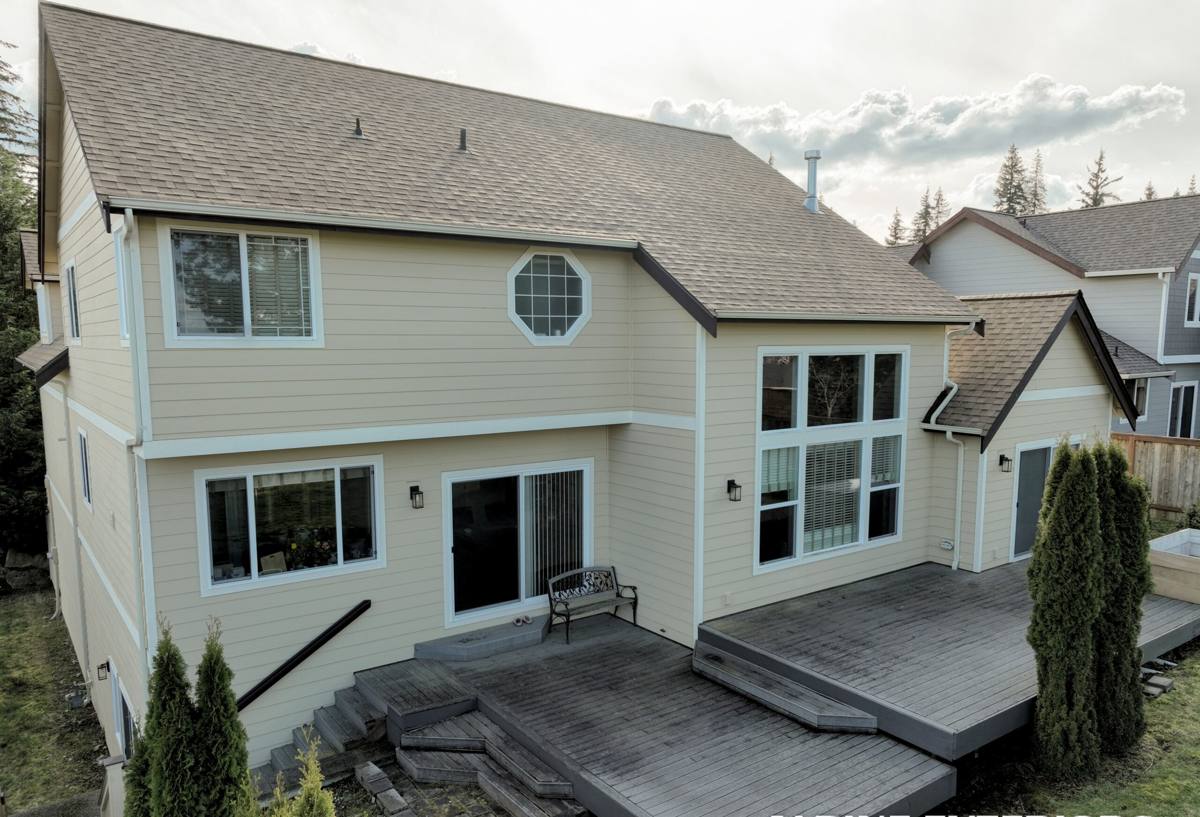
Why Everson Decks Wear the Way They Do
Three things drive most of the repair calls we get in this part of the county.
Salt Air and Metal Fatigue
Everson isn't right on the water, but Whatcom County's marine air still carries enough salt to accelerate corrosion on fasteners, joist hangers, and railing hardware over time. Once a nail or screw starts to corrode, it loses grip strength long before the wood around it shows any visible damage. That's why a lot of the "mystery wobble" we're called out for turns out to be hardware failure, not wood failure.
Driving Rain and Water Intrusion
Sustained, wind-driven rain doesn't just wet the deck surface — it drives water sideways into ledger connections, under flashing, and into any gap where two boards meet at an angle. Decks attached to the house are especially vulnerable at the ledger board, which is the single most common point of structural failure we find in this area.
The Long Moss Season
Moss and algae hold moisture against wood and composite surfaces for months at a time instead of letting them dry between rain events. On horizontal deck boards, that constant dampness is what turns ordinary weathering into actual rot, especially in shaded corners, under furniture that never gets moved, and near the house where sun doesn't reach.
Common Deck Problems We Find in Everson
Ledger Board and Rim Joist Rot
This is the connection between the deck and the house, and it's load-bearing for the entire structure. Flashing that was installed poorly — or not at all — lets water track behind the siding and into the ledger board year after year. By the time it's visible from underneath, the wood is often already compromised.
Post Base and Footing Deterioration
Posts that sit directly on or too close to grade wick moisture up from the soil, especially in Everson's flatter, poorly-draining lots. We regularly find posts that are solid at eye level but soft or hollow at the base.
Surface Rot vs. Structural Rot
Not every soft spot is a safety issue, and not every safety issue is obvious. Surface graying and minor cupping on deck boards is cosmetic. Soft, spongy, or dark wood that gives under a screwdriver is a different problem, and it needs to be traced back to its source, not just patched over.
Railing and Guard Post Failure
Loose railings are one of the most common repair calls we get, and they're also one of the more serious ones from a liability standpoint — a railing that moves under load is a fall risk, not just a cosmetic annoyance.
Fastener and Hardware Corrosion
Old nails, non-coated screws, and undersized joist hangers are frequently the actual cause of a deck that "feels off" even when the wood itself is in decent shape.
Repair vs. Replace: How We Decide
Homeowners often assume that any structural issue means the whole deck needs to come out. That's rarely true. Most decks we look at can be repaired section by section, as long as the framing underneath is sound. Here's the general framework we use to evaluate a deck:
| Factor | Leans Toward Repair | Leans Toward Replacement |
|---|---|---|
| Ledger board condition | Solid, well-flashed, isolated rot | Widespread rot, no flashing, water damage to house rim joist |
| Framing (joists, beams) | Sound with a few isolated soft spots | Multiple joists compromised or undersized for current code |
| Post/footing condition | Footings intact, posts solid above grade rot line | Footings undersized, cracked, or heaving |
| Decking surface | Weathered but structurally sound boards | Widespread soft or delaminating boards |
| Age and design | Under 15-20 years, reasonable original construction | Older deck with outdated railing/attachment methods that won't pass current code |
The honest answer is that it depends on what's underneath the surface, which is why a real inspection — not a walk-around — matters more than a quick estimate off photos.
What a Correct Repair Actually Involves
Inspection Before Anything Else
We check the ledger connection and flashing, probe joists and posts for soft spots, test railings under load, and look at drainage around the footings. This is what determines whether we're looking at a repair or something bigger.
Fixing the Cause, Not Just the Symptom
Replacing a rotted board without correcting the flashing or drainage issue that caused the rot just buys a few years before the same spot fails again. A correct repair addresses why the damage happened, not just where it's visible.
Code-Correct Structural Work
Joist hangers, ledger fasteners, and railing attachment all have to meet current structural requirements, even on repair work — not just new builds. This matters most on older Everson-area decks that were built before current guard and attachment standards.
Finish Work That Matches
Whether it's matching decking material, staining a repaired section to blend with the rest of the deck, or making sure new hardware doesn't stand out, the finish work is what separates a patch job from a repair that actually looks intentional.
Our Repair Process
- On-site inspection. We walk the full deck, check underneath where possible, and identify every problem area — not just the one you called about.
- Written scope and honest recommendation. You get a clear explanation of what's structural, what's cosmetic, and what your real options are, in plain language.
- Repair. We remove and replace only what needs it, correct the underlying moisture or attachment issue, and bring connections up to current structural standards.
- Finish and walkthrough. We match materials and finish as closely as possible and walk you through what was done and what to watch going forward.
Materials We Use and Why
For structural repairs — framing, ledgers, posts — we use pressure-treated lumber rated for ground contact where appropriate, with stainless steel or heavy hot-dip galvanized fasteners and hardware. In this climate, cutting corners on fastener quality is one of the fastest ways to end up back at the same repair in five years. For visible decking replacement, we'll work with either wood or composite depending on what's already on the deck and what the homeowner wants going forward — each has real trade-offs in maintenance, moisture behavior, and upfront cost, and we'll walk through those honestly rather than push one option.
Deck Maintenance Checklist for Everson Homeowners
Between professional inspections, a few habits go a long way toward keeping a deck out of the repair pile:
- Sweep leaves, needles, and debris off the deck surface regularly, especially in fall
- Keep moss and algae from building up — a stiff brush and deck-safe cleaner handle most of it
- Check under railings and around post bases once a year for soft or discolored wood
- Make sure gutters and downspouts aren't dumping water directly onto or near the deck
- Move planters and furniture occasionally so moisture doesn't sit trapped in one spot
- Look at the ledger board area where the deck meets the house for staining or gaps in flashing
- Reseal or restain wood decking on the schedule the product calls for, not "when it looks bad"
Why a Crew That Already Works Everson Matters
Deck repair done by someone unfamiliar with Whatcom County's conditions tends to treat every deck the same way, regardless of climate. We already know where water tends to collect on decks in this area, how fast moss builds up on north-facing sections, and which older construction details around Everson and Custer don't hold up to the driving rain we get most winters. That local pattern recognition is what keeps repairs from becoming repeat visits.
If you've got a soft spot, a loose railing, or you just haven't had your deck looked at in a while, we're happy to come take a look. Fill out the form below for a free, no-pressure estimate — we'll tell you honestly what we find, whether that's a small repair or something more.