 Custer
 Why Decks Wear Out Faster in Marietta
Marietta sits close enough to salt water that homes here deal with a different kind of weathering than decks built further inland. Salt-laden air corrodes fasteners and hardware years before they'd fail in a dry climate. Combine that with Whatcom County's long stretch of driving rain each fall and winter, plus a moss season that can run from October into May, and you get a deck environment that punishes shortcuts. A deck that was built to a generic spec — instead of one built for this specific corner of the county — tends to show rot, soft spots, and failing connections well before its time.
We're not describing a worst-case scenario. This is just what happens to an unprotected deck near Custer and Marietta over ten or fifteen years: moisture gets trapped under boards that never fully dry out between rain events, moss holds water against the wood surface, and metal fasteners that aren't rated for coastal exposure start to rust and weaken. Replacement, done correctly, addresses all three of those problems at once instead of just swapping out boards and hoping for the best.
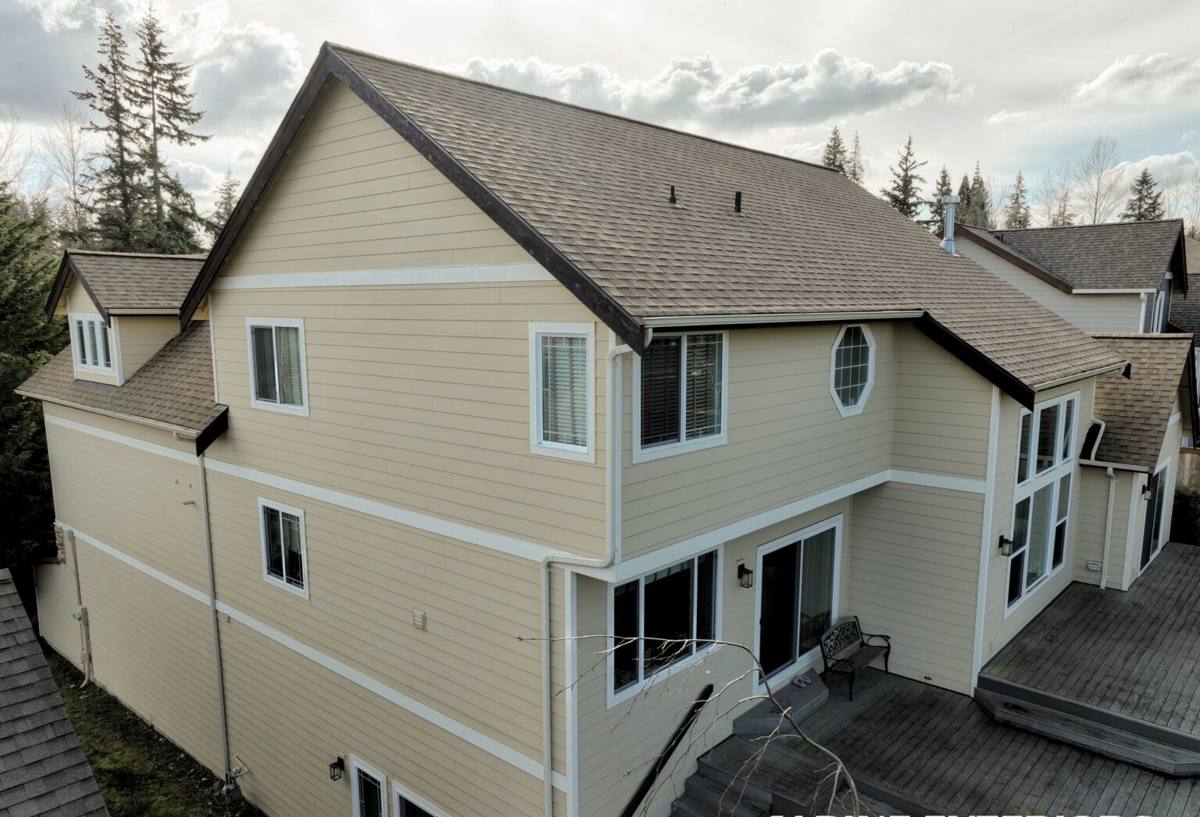
Signs a Deck Needs Replacement, Not Another Repair
Not every tired-looking deck needs to be torn out. But there's a point where patching boards or re-staining stops being a real fix and starts being a way to delay the inevitable. Here's how we tell the difference on a typical visit:
- Soft, spongy decking or joists you can push a screwdriver into with light pressure
- Rust streaks running down from fasteners or ledger board connections
- Gaps or movement where the ledger board meets the house — a common failure point in wet climates
- Persistent moss or algae growth that comes back within weeks of cleaning
- Railings or posts that flex or wobble under normal weight
- Structural framing more than 15-20 years old, especially if it was never properly flashed
- Multiple past repairs in different sections, suggesting the whole structure is aging out together
If you're only seeing one or two of these and the framing underneath is sound, a repair or partial resurface can make sense. Once the substructure itself is compromised, replacement is the honest recommendation — patching boards on top of failing joists just moves the problem, it doesn't solve it.
Choosing Decking Material for a Salt-Air, High-Moisture Climate
What Actually Matters Here
Every decking material has trade-offs, and none of them are maintenance-free near salt water. The right choice depends on how much upkeep you're willing to do, your budget, and how long you want to go between major work.
| Material | Moisture & Salt Behavior | Maintenance | Typical Lifespan |
|---|---|---|---|
| Pressure-treated wood | Resists rot when properly sealed; needs re-sealing regularly in this climate | Annual cleaning and re-staining/sealing | 10-15 years |
| Cedar | Naturally moisture-resistant but softer; benefits from breathable finish, not paint | Cleaning and refinishing every 1-2 years | 15-20 years |
| Composite decking | Doesn't rot or splinter; some early-generation products held moisture at the core — modern capped composites handle this much better | Occasional washing; no staining or sealing | 25+ years |
| Fasteners & hardware | Standard galvanized hardware corrodes faster in salt air | N/A — this is a one-time spec decision | Should match the decking's expected life |
We generally steer homeowners in this area toward capped composite decking or well-sealed cedar over bare pressure-treated boards left unfinished, simply because the maintenance burden of raw wood is higher here than it is 30 miles inland. That's a judgment call about upkeep, not a claim that wood decking is a bad product — plenty of homeowners are happy to stay on top of annual sealing, and we'll build a wood deck correctly if that's your preference.
Hardware Matters as Much as the Decking
We use stainless steel or coated fasteners rated for coastal and marine-adjacent exposure on every replacement we do in this area, not standard galvanized hardware. It costs a little more upfront. It's also the single biggest factor in whether a deck's connections are still tight in year twelve or already rusting through in year six.
What a Correct Deck Replacement Actually Involves
Substructure and Footings
The part nobody sees is the part that matters most. Footings need to sit below frost depth and bear on solid, undisturbed soil — not on fill that was never compacted. Posts and beams get sized to the actual load and span, not just whatever lumber was on hand. This is where a lot of older decks in the area were built light to begin with, which is part of why replacement — not just a resurface — is often the right call.
Ledger Board and Flashing
The ledger board — where the deck attaches to the house — is the single most common failure point we see on decks near Custer and Marietta. Water gets behind it, the rim joist rots, and eventually the whole deck loses its structural connection to the house. A correct install uses proper flashing that sheds water away from the house framing, not caulk as a substitute for flashing.
Decking, Gaps, and Airflow
Board spacing needs to allow water to drain and air to move underneath. Decks laid too tight, or built without adequate ventilation below, hold moisture longer after every rain — which is exactly what feeds moss and accelerates rot in this climate.
Railings and Code
Railing height, baluster spacing, and guard requirements are set by code for a reason. On a full replacement we bring everything up to current code, even if the original deck predates it.
Our Deck Replacement Process
1. On-Site Assessment
We look at the existing structure from the ground up — footings, framing, ledger connection, and decking condition — and tell you honestly whether you need a full replacement or something less. We measure for the new deck and talk through material options based on how you actually use the space.
2. Design and Permitting
Deck replacements of significant size typically require a permit through Whatcom County. We handle that process and design the deck to meet current setback, footing, and railing code requirements.
3. Demo and Rebuild
We remove the old deck down to the posts (or further, if the substructure needs replacing too), then rebuild from the footings up: framing, ledger flashing, decking, and railings in that order. We don't build decking on top of a substructure we haven't verified ourselves.
4. Final Walkthrough
Before we consider the job done, we walk the deck with you — checking for level, fastener finish, railing stability, and drainage — so you know exactly what you're getting and how to maintain it.
Cost Factors for Deck Replacement
Every deck is different, but the same handful of factors drive most of the cost difference between projects in this area:
| Factor | Why It Affects Cost |
|---|---|
| Size and footprint | More square footage means more material, footings, and labor hours |
| Decking material | Composite costs more upfront than pressure-treated wood, less over the deck's lifetime |
| Substructure condition | If footings and framing need full replacement, not just the decking, cost rises accordingly |
| Height and access | Elevated decks or decks with limited access for equipment take longer to build |
| Railing style | Cable, glass, or custom railing systems cost more than standard wood or metal baluster railing |
| Permitting requirements | Larger or elevated decks may require engineering review, adding time and fees |
We'll give you a real number after we've actually looked at your deck — not a phone estimate based on square footage alone, since the condition of what's underneath the old decking often changes the scope.
Living With Moss Season After Replacement
A correctly built deck won't stop moss from landing on it — nothing does in a Whatcom County winter — but it will stop moss from causing damage. Proper board spacing and airflow mean the deck surface dries out between rain events instead of staying damp for weeks. That single difference is what separates a deck that just needs an occasional wash from one that's rotting from the top down by its fifth winter.
A few habits go a long way once your new deck is in:
- Sweep debris off the deck surface before it accumulates and holds moisture
- Rinse or lightly scrub visible moss growth before it spreads, rather than letting it sit all winter
- Keep gutters and downspouts near the deck clear so runoff isn't landing directly on the decking
- Check railing connections and fastener heads once a year for early rust or looseness
- Re-seal wood decking on the schedule the manufacturer recommends — don't wait until it's visibly gray
Why It Matters That We Already Work in Marietta
A deck built for a dry-climate spec sheet doesn't hold up the same way here. Crews that don't regularly work this close to the water can underestimate how much salt air and moisture matter to material and hardware choices, and they're less familiar with Whatcom County's permitting requirements for waterfront and near-waterfront properties. We work Custer, Marietta, and the surrounding area regularly, which means we're not guessing at how a deck will hold up two winters from now — we're building to what we've already seen happen to decks in this exact climate.
If your deck is showing its age, we're happy to take a look and give you a straightforward, no-pressure estimate — no obligation, just an honest read on whether you need a full replacement or something less. The form below gets you on our schedule.