 Custer
 Why Decks in California Creek Wear Out Faster Than the Manual Says
If you own a home in the California Creek area near Custer, you already know your deck doesn't age the way a deck in a dry inland climate does. The combination of salt-laden air off the Strait of Georgia and Puget Sound, near-constant driving rain through fall and winter, and a moss season that can run six months or longer puts a different kind of stress on outdoor structures than most decking manufacturers design around. A deck that might last 20 years in a dry climate can start showing serious problems in half that time here if it wasn't built and finished correctly for this environment.
Salt air accelerates corrosion on any exposed metal — fasteners, joist hangers, railing brackets, and structural screws. Driving rain doesn't just wet the surface of a deck; wind-driven moisture gets pushed sideways into seams, ledger connections, and end grain that a vertical-only rain would never reach. And moss, once established on a shaded or north-facing deck surface, holds moisture against the wood or composite far longer than the surrounding air would on its own, which is exactly the condition that rot, mildew staining, and slick, unsafe footing thrive in.
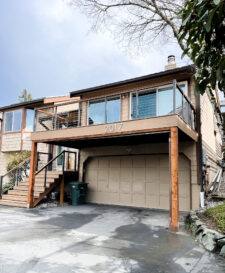
Signs a California Creek Deck Needs Replacement, Not Just Repair
Homeowners often call us thinking they need a few boards swapped out, and sometimes that's true. But in Whatcom County's coastal microclimate, surface problems are frequently a sign that the structure underneath has been compromised for a while. Here's what tells us a deck is past the point where patching makes sense:
- Soft or spongy spots in the decking boards, especially near the house or in shaded corners
- Rot or discoloration at the ledger board where the deck attaches to the house
- Rusted, stained, or failing fasteners and joist hangers
- Railing posts that flex or feel loose when pushed
- Persistent moss or algae that returns within weeks of cleaning
- Gaps opening up between boards, or boards cupping and splitting
- A deck more than 15-20 years old that has never had the substructure inspected
Any one of these on its own might be repairable. Two or three together, particularly if the ledger or framing is involved, usually means the safest and most cost-effective move is a full replacement rather than chasing problems one board at a time.
What a Correct Deck Replacement Actually Involves
The Ledger and Flashing
The single most common point of failure we find on old decks in this area is the ledger connection — where the deck framing bolts to the house. If that connection wasn't flashed correctly the first time, wind-driven rain gets behind the ledger board and rots both the deck framing and the house's rim joist behind it, sometimes long before it's visible from outside. A correct replacement means removing the old ledger entirely, inspecting and repairing the house framing behind it if needed, and installing proper flashing that sheds water away from the structure rather than trapping it.
Framing and Fasteners
Given the salt air here, we don't treat fastener choice as an afterthought. Structural screws, joist hangers, and hardware need to be rated for coastal or ACQ-treated lumber contact so they don't corrode from the inside out. Framing lumber gets pressure-treated for ground contact where it's within a few inches of grade, and joist spacing gets set to match whatever decking material is going on top, since composite and PVC products often call for tighter spacing than traditional wood.
Drainage Underneath
A deck that sits low to the ground or has limited airflow underneath is a moss and rot magnet in this climate. Where possible, we build in proper ventilation and grade the ground below to shed water away from posts and footings instead of letting it pool.
Decking Material Options for a Salt-Air, High-Rain Climate
There's no single "best" decking material for every homeowner — it depends on budget, how much upkeep you want to do, and how close you are to the water. Here's an honest comparison of the main options we install:
| Material | Upfront Cost | Maintenance | How It Handles This Climate |
|---|---|---|---|
| Pressure-treated wood | Lowest | Annual cleaning and re-sealing recommended | Good if maintained; end grain and fastener holes need vigilant sealing against driving rain |
| Cedar | Moderate | Regular staining/sealing to hold color and resist moisture | Naturally rot-resistant but still needs upkeep in constant moisture; can gray and get slick with moss if neglected |
| Composite decking | Higher | Occasional washing, no staining or sealing | Strong moisture resistance; needs correct board spacing and hidden fastener systems to avoid trapping water |
| PVC/capped polymer | Highest | Minimal — washing only | Best moisture and mildew resistance of the group; most forgiving in shaded, damp yard conditions |
We're honest with clients that composite and PVC cost more up front but tend to save money over a 10-15 year window here, simply because they don't demand the annual sealing that wood does in a climate where the rainy season doesn't leave much of a dry window to do that work properly. If a homeowner wants real wood for the look and feel, we'll build it — but we make sure they understand the maintenance schedule that comes with it before we start.
Our Deck Replacement Process
We keep the process straightforward and communicate clearly at every stage, since a deck touches both your home's structure and your daily outdoor living space:
- On-site assessment. We inspect the existing deck, ledger connection, posts, and footings, and check for any hidden moisture damage to the house itself.
- Written estimate. You get a clear scope of work and pricing before anything is torn out, including material options and what each one means for long-term maintenance.
- Tear-off and disposal. The old deck comes down and is hauled away, and we inspect the house framing behind the ledger once it's exposed.
- Framing and flashing. New posts, footings (or footing repairs), joists, and ledger flashing go in to current structural standards.
- Decking and railing installation. Boards, fasteners, and railing systems go in per the manufacturer's spacing and fastening requirements for our climate.
- Final walkthrough. We check every rail, board, and connection with you before calling the job done.
Permits and Local Considerations Near Custer
Deck replacements in Whatcom County typically require a permit once you're rebuilding structural elements like framing, footings, or railings — not always required for a simple like-for-like board swap on an existing sound structure, but a full replacement usually crosses that line. We handle the permit process as part of the job so you're not left guessing what's required for your property. If your lot is near a shoreline, wetland, or drainage area — which is common around California Creek — there can be additional setback or environmental review requirements, and we'll flag that during the initial assessment rather than after work has started.
What Drives the Cost of a Deck Replacement
Every deck is different, but the price generally comes down to a handful of factors. We won't quote a number without seeing the site, but here's what tends to move the estimate:
| Factor | Why It Matters |
|---|---|
| Deck size and shape | More square footage and complex angles or multiple levels increase material and labor |
| Decking material chosen | Wood is cheaper upfront; composite and PVC cost more but reduce long-term maintenance |
| Condition of the substructure | Rotted framing, ledger, or footings found during tear-off add repair work beyond the decking itself |
| Railing style | Cable, glass, or composite railing systems cost more than standard wood or metal baluster rail |
| Height and access | Elevated decks or difficult site access add labor time for footings and safe material staging |
| Permit and inspection requirements | Structural rebuilds near shoreline or wetland areas may need additional review |
Why Hire a Crew That Already Works California Creek
A deck built to a generic national spec sheet doesn't always hold up to what this specific stretch of Whatcom County throws at it. Working regularly in and around Custer and the California Creek area means we already know which details matter most here: flashing details that actually stop wind-driven rain, fastener choices that won't rust out in a few seasons of salt air, and board spacing that lets a deck dry out between storms instead of holding water and growing moss. We're not learning the local climate on your project — we've already seen how decks fail here and we build to avoid those specific failure points from day one.
We also know the practical side of working in this area: typical soil conditions for footings, how shoreline proximity can affect permitting, and how to schedule tear-off and framing work around the wetter months so your project isn't sitting exposed during the worst of the rain.
Keeping Your New Deck in Good Shape Through the Wet Season
A correctly built deck still needs some seasonal attention in this climate. A light cleaning before moss season sets in, keeping gutters and downspouts clear so runoff isn't dumping directly onto the deck surface, and an annual check of railing connections go a long way toward protecting the investment. If you chose wood decking, plan on resealing on the schedule your material calls for — skipping a season in a climate this wet is usually when problems start. Composite and PVC owners have it easier, but even those materials benefit from keeping debris out of the gaps between boards so moisture and organic matter don't build up underneath.
If your deck in the California Creek area is showing its age, or you just want an honest opinion on whether it needs repair or full replacement, we're glad to take a look. Reach out for a free, no-pressure estimate using the form below.