 Custer
 Semiahmoo Decks Take a Different Kind of Beating
A deck built five miles inland in Whatcom County ages differently than one sitting near Semiahmoo Bay. Out here, the air itself is part of the problem. Salt-laden marine air rides in off the water and settles on every exposed fastener, hinge, and metal bracket, working corrosion into places a homeowner never thinks to check. Add driving rain that comes in sideways during winter storms, and a long moss season that can stretch from late fall well into spring, and you've got three separate forces attacking the same structure at once.
Most deck problems we find in Semiahmoo aren't cosmetic. They start underneath — in the ledger connection, the joist hangers, the post bases — where moisture and salt air do their damage quietly for years before a board finally goes soft or a railing starts to wobble. Repairing a deck properly out here means understanding that the surface boards are often the least of the problem.
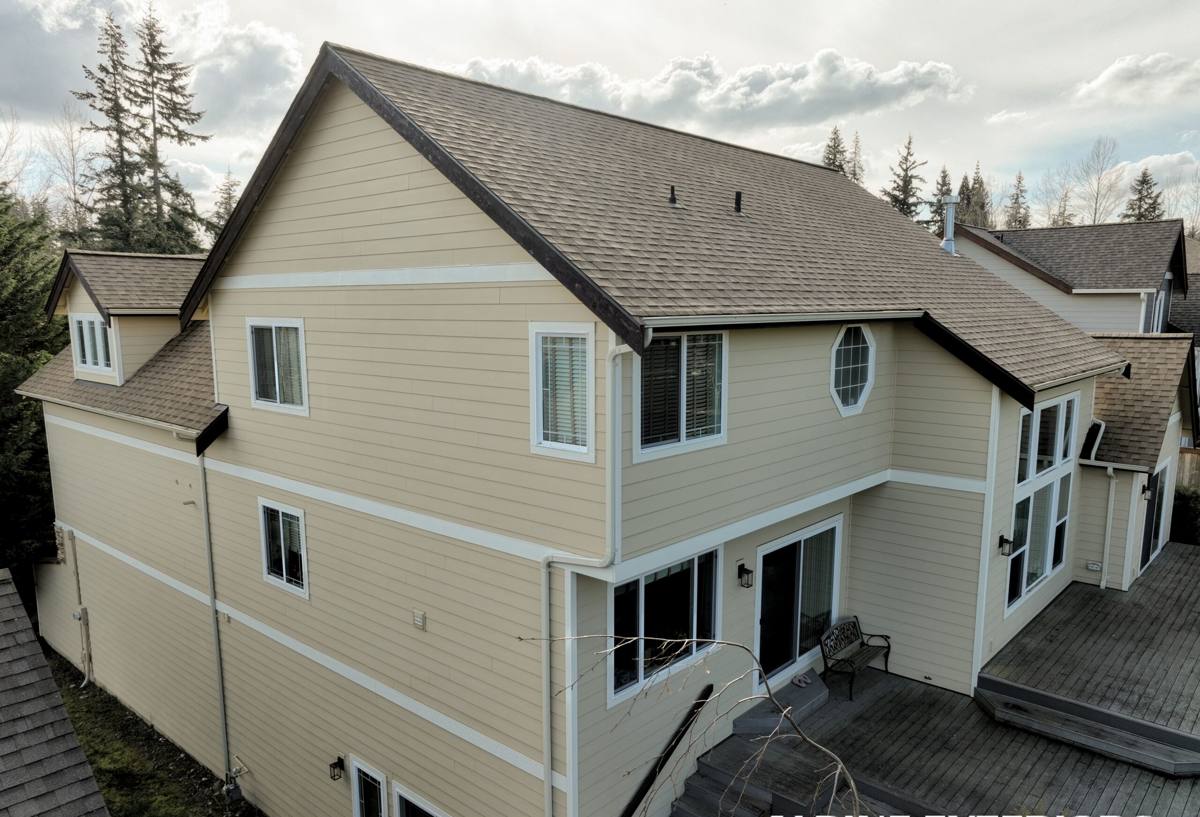
Signs a Semiahmoo Deck Needs Attention
Some warning signs are obvious. Others take a trained eye, especially when the damage is happening from the underside where salt air and trapped moisture do their worst work.
- Soft or spongy spots when you walk across the deck, especially near the house or at board ends
- Rust streaks bleeding down from screw heads, joist hangers, or railing brackets
- A railing or post that flexes or wobbles more than it used to
- Gaps opening up where the deck ledger meets the house siding or band board
- Persistent green or black growth on boards, especially on the north side or under overhangs, that comes back within weeks of cleaning
- Fasteners that back out on their own or snap off when you try to remove them
Any one of these on its own might just need a targeted fix. Several together, especially near the ledger board, usually mean it's time for a full structural inspection before we talk about what boards to replace.
What a Correct Repair Actually Involves
A repair that only replaces the boards you can see is a repair that fails again in a year or two. Doing it right on a Semiahmoo deck means working from the structure outward.
Structure First
We check the ledger board attachment — the single most common failure point on coastal decks — along with joist hangers, beam connections, and post bases. Salt air corrodes fasteners from the outside in, so a bracket can look fine on the surface while the screws holding it are already compromised. We test connections, not just look at them.
Moisture Path Second
Rot rarely happens because water touched wood once. It happens because water had nowhere to go. Flashing at the ledger, proper gaps between boards, and drainage under the deck all matter more here than in a drier inland yard, because Whatcom County's rain volume and duration give water far more time to find a way in.
Surface Last
Board replacement, refastening, and finish work come after the structure is confirmed sound. Replacing decking on top of a compromised frame just hides the problem for another season.
Fasteners and Hardware: The Detail Salt Air Punishes Most
This is the single biggest difference between a coastal repair and an inland one. Standard exterior-rated screws and brackets that hold up fine twenty minutes from the water can corrode noticeably faster in a spot like Semiahmoo, where salt-laden air is a near-constant presence.
| Hardware Type | Typical Performance | Best Use Near the Water |
|---|---|---|
| Standard coated deck screws | Fine short-term, prone to surface corrosion in salt air over time | Not recommended for exposed coastal decks |
| Hot-dip galvanized | Solid general-purpose protection | Acceptable for framing not directly exposed to salt spray |
| Stainless steel (305/316 grade) | Best resistance to salt-air corrosion | Recommended for ledger connections, railing hardware, and any exposed fastener |
| Mixed-metal connections | Can accelerate corrosion through galvanic reaction | Avoid — match hardware grade to fastener grade |
We don't upsell stainless hardware as a scare tactic — it's simply what holds up in this specific environment. Cutting corners on fasteners is the fastest way to end up back on the same repair in a few years.
Moss, Algae, and the Long Wet Season
Custer's moss season isn't a minor nuisance — it's a structural concern if it's left unmanaged. Moss and algae hold moisture against the wood surface long after the rain has stopped, and on a deck that means slower drying, softer boards, and a slicker, more dangerous walking surface.
Board spacing, airflow underneath the deck, and sun exposure all affect how fast growth comes back after a cleaning. A repair that doesn't address drainage and airflow is a repair that will need moss treatment again within a season. Where boards are consistently shaded or tucked against the house, we sometimes recommend wider gapping or a different board orientation as part of the repair, not just a power wash and a new coat of sealant.
Repair vs. Replace: What Actually Drives the Decision
| Factor | Leans Toward Repair | Leans Toward Replacement |
|---|---|---|
| Ledger/structural connection | Sound, tests solid | Soft, corroded, or previously patched |
| Extent of rot | Isolated boards or joists | Rot spread across multiple framing members |
| Deck age | Under 10-12 years, built to a decent standard | Older deck nearing the end of its practical life |
| Fastener condition | Localized corrosion | Widespread rust, snapping screws throughout |
| Homeowner goals | Extend current deck's life affordably | Reconfigure size, layout, or material |
We'd rather tell you honestly that a repair will hold for years than sell you a full rebuild you don't need — and we'll tell you just as plainly when patching a compromised structure isn't worth doing.
Our Process for a Semiahmoo Deck Repair
We keep the process straightforward and don't start swinging a hammer until we know exactly what we're dealing with.
- Inspection — We check the ledger, framing, posts, and fasteners from underneath the deck, not just a walk across the surface.
- Written scope — You get a clear list of what needs repair, what's optional, and what we'd flag for later if budget is a factor.
- Permit check — Structural repairs that touch framing or the ledger connection can require sign-off from Whatcom County's building department; we handle that conversation so you don't have to.
- Repair work — Structure and moisture path first, hardware upgraded to coastal-grade where it matters, then surface boards and finish.
- Walkthrough — We go over what was done and what to expect from the deck going forward, including any maintenance that will help it last.
Why a Crew That Already Works Semiahmoo Matters
A contractor who mostly works twenty miles inland will size up a Semiahmoo deck the same way they'd size up any other deck in Whatcom County — and that's exactly how repairs end up redone in three years instead of ten. We already know which fastener grades hold up against this specific salt-air exposure, how far moss can spread before it's a structural issue rather than a cosmetic one, and how driving rain off the bay finds its way into a ledger connection that looks fine from the yard.
That familiarity shows up in small decisions — which side of the deck needs extra flashing attention, whether a board layout needs adjusting for drainage, which hardware is worth the upgrade and which isn't. It's the difference between a repair that's built for this specific stretch of coastline and one that's built for decks in general.
Keeping a Repaired Deck Sound Between Now and the Next Inspection
- Clean moss and algae buildup before it has a chance to hold moisture against boards for weeks at a time
- Keep gutters and downspouts clear so runoff isn't draining directly onto or under the deck
- Check railing posts and stair connections for movement once or twice a year, not just when something feels off
- Look underneath the deck occasionally, not just at the walking surface — that's where salt air and moisture do their earliest damage
- Address soft spots or rust streaks as soon as you notice them rather than waiting for the next dry season
If your Semiahmoo deck has a soft board, a wobbly rail, or you just want an honest read on how much life it has left, we're happy to come take a look. The estimate is free, there's no pressure, and you'll get a straight answer either way — you can request one using the form below.