 Custer
 Why Cherry Point Siding Has to Work Harder
Homes in the Cherry Point area sit closer to open water and prevailing weather than most of inland Whatcom County, and the siding on those homes takes a different kind of beating than siding a few miles east. Salt-laden air corrodes fasteners and trim faster, wind-driven rain gets pushed sideways into laps and seams that would stay dry in a calmer spot, and the long, damp shoulder seasons here give moss and algae months at a time to get established on north-facing walls and anything shaded by trees. None of this is unusual for Whatcom County's coastline, but it does mean a siding job that would hold up fine in a drier part of the state can fail early out here if it isn't planned for this specific exposure.
That's the starting point for every Cherry Point job we bid: not "what siding looks good" but "what siding, installed which way, actually holds up against salt air, driving rain, and moss for the next 30-plus years."
Why We Install James Hardie Here — and Nothing Else
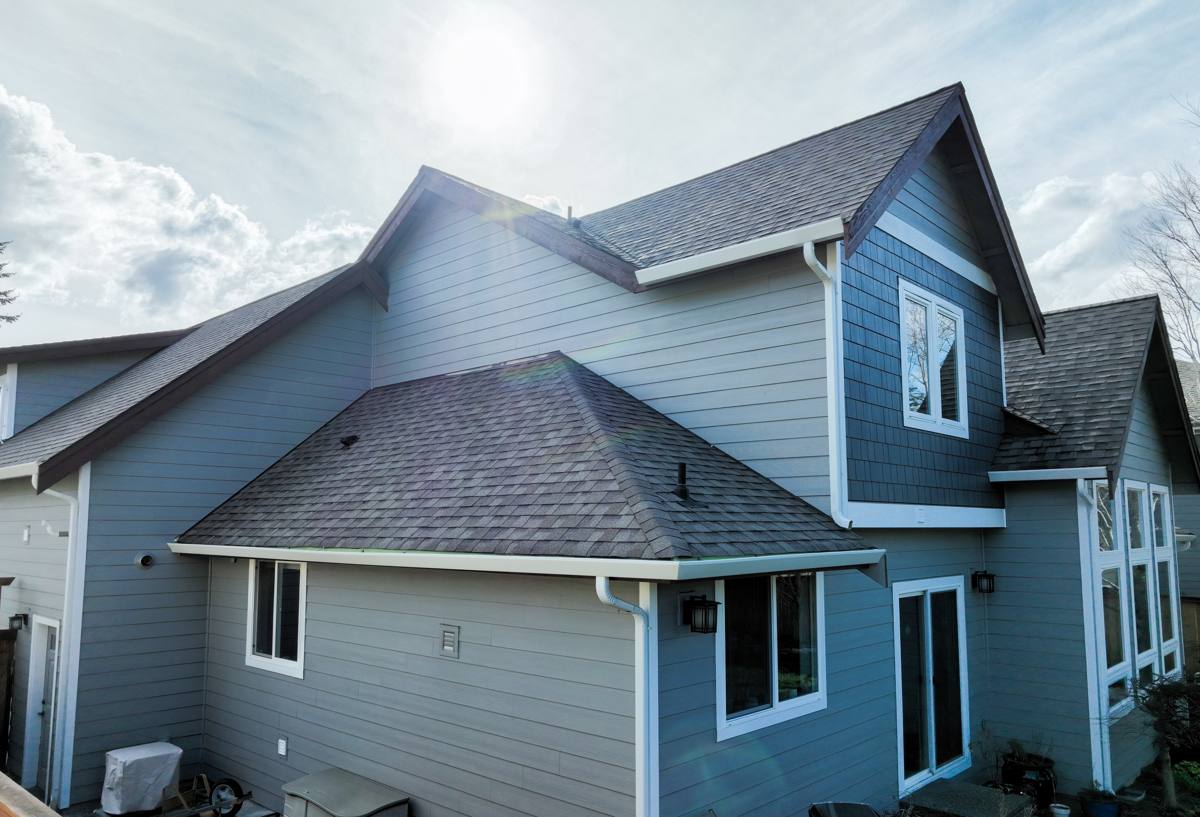
We are a James Hardie-only siding contractor. We don't install vinyl, LP SmartSide, Cemplank, Allura, or bare cedar and spruce siding, and that's a deliberate call, not a marketing line. Fiber cement is non-combustible, dimensionally stable in wet-dry cycling, and — critically for a site like Cherry Point — it doesn't feed the organic growth that vinyl and wood products are prone to hosting in a damp marine climate. Hardie's ColorPlus factory finish also removes a major weak point: field-painted siding depends on paint adhesion holding up against salt spray and driving rain, while ColorPlus is baked on at the factory with a finish engineered specifically to resist that kind of exposure.
The HZ5 Product Line
James Hardie makes different formulations of the same siding for different climate zones, and Western Washington — including Custer and Cherry Point — falls into their HZ5 zone, engineered for moisture and freeze-thaw exposure typical of the Pacific Northwest coast. Using the HZ5 formulation instead of a generic or warm-climate version isn't an upsell; it's the version of the product actually designed for the moisture load this area sees. Using anything else here is a shortcut that shows up as problems ten or fifteen years down the road.
ColorPlus vs. Field-Applied Paint
ColorPlus finishes carry their own extended finish warranty separate from the substrate warranty, and the finish is applied and cured under factory conditions rather than on a ladder in variable weather. In a salt-air environment, a factory finish's UV and moisture resistance matters more than it would somewhere drier — it's one less variable exposed to conditions it wasn't built for.
What Correct Installation Actually Involves Out Here
Hardie siding performs the way it's rated to perform only when it's installed to spec, and in a wind-and-rain-exposed area like Cherry Point, a few details matter more than they would on a sheltered inland lot.
Drainage Plane and Rainscreen Gap
A proper water-resistive barrier behind the siding, with a drainage gap that lets any moisture that does get past the cladding drain and dry out, is not optional in this climate. Driving rain will find gaps in a wall system; the question is whether the wall is built to shed that moisture or trap it against the sheathing.
Fastening and Flashing
Corrosion-resistant fasteners matter more near open water, where standard fasteners can start showing rust streaks and losing holding power well before their inland equivalents. Flashing at windows, doors, and every horizontal trim transition needs to be lapped correctly so wind-driven rain can't work its way behind the plane — this is the single most common failure point we find on re-sides in wetter, windier parts of the county.
Joints, Caulking, and Trim Choices
Every butt joint and trim intersection is a potential entry point for wind-driven moisture. We treat those joints as the first line of defense rather than an afterthought, and we use trim details and sealants chosen for movement and moisture exposure, not just appearance.
What We See Go Wrong on Older Cherry Point Homes
When we're called out to bid a re-side in this area, a handful of problems show up over and over:
- Moss and algae staining concentrated on north- and west-facing walls, especially near tree cover or shaded eaves
- Rusted or backed-out fasteners on older wood or hardboard siding exposed to salt air
- Soft or delaminating trim and sheathing near window and door flashing that wasn't lapped correctly
- Paint failure on field-painted siding years ahead of the manufacturer's expected repaint cycle
- Caulked joints that have cracked and opened, letting moisture behind the cladding
These aren't defects unique to any one product — they're what happens when a wall system isn't detailed for this specific combination of salt exposure, driving rain, and prolonged damp seasons.
Our Process for a Cherry Point Job
1. On-Site Assessment
We look at wall exposure — which sides take the worst of the wind and rain, where moss has already taken hold, and where the existing siding or sheathing shows signs of moisture damage that needs addressing before new siding goes on.
2. Tear-Off and Substrate Check
Old siding comes off and we inspect the sheathing underneath. Any soft or water-damaged sheathing gets replaced before a new water-resistive barrier goes up — covering damaged sheathing with new siding just hides a problem that will come back.
3. Weather Barrier and Rainscreen Install
We install the drainage plane and rainscreen gap appropriate to the wall assembly, tailored to how exposed that particular elevation is.
4. Hardie Panel or Lap Installation
Panels or lap siding go on with corrosion-resistant fasteners at the correct spacing and depth, following Hardie's fastening schedule for the HZ5 product.
5. Trim, Flashing, and Final Detailing
Flashing, trim, and caulked joints get finished last, with particular attention to any wall facing the prevailing wind and rain.
6. Walkthrough and Cleanup
We walk the finished job with the homeowner and cover basic maintenance expectations specific to this site's exposure.
Cost Factors on a Cherry Point Re-Side
Every job is different, but these are the factors that most often move a Cherry Point estimate up or down:
| Factor | Why It Matters Here |
|---|---|
| Existing siding removal | Wood or hardboard siding with moisture damage often means more sheathing repair than a straightforward tear-off |
| Wall exposure | Elevations facing prevailing wind and rain may need more rigorous flashing and rainscreen detailing |
| Trim complexity | Homes with more window/door openings and trim transitions have more joints that need correct flashing |
| Panel vs. lap siding | Different Hardie profiles have different material and labor costs |
| Sheathing repair | Any soft or rotted sheathing found during tear-off adds material and labor before new siding can go on |
We give a written, itemized estimate before any work starts, so homeowners know exactly what's driving the number.
Living With Hardie Siding in a Salt Air, Moss-Prone Spot
Hardie siding installed correctly needs relatively little upkeep, but "little" isn't "none," especially this close to open water. A short annual routine keeps it looking right and catches small issues before they become expensive ones:
- Rinse salt residue and grime off the siding once or twice a year, especially on walls facing open water
- Keep gutters clear so overflow doesn't run down the siding face and feed moss growth
- Trim back vegetation and tree cover that keeps north- or west-facing walls damp and shaded
- Inspect caulked joints and trim intersections yearly for cracking or gaps
- Address any moss or algae staining promptly with a gentle wash rather than pressure-washing, which can damage the finish
Why Local Experience Matters for This Address
A crew that only occasionally works this close to the water tends to detail every job the same way regardless of exposure. A crew that regularly works Cherry Point and the surrounding Custer waterfront knows which walls need the extra attention on flashing and drainage, which product line is engineered for this exposure, and what maintenance realistically looks like once the job is done. That familiarity shows up in fewer callbacks and siding that's still doing its job well past the point where a generic install would be showing problems.
If you're weighing a re-side or new siding for a Cherry Point home, we're happy to walk the property, look at your specific exposure, and put together a straightforward, no-pressure estimate — use the form below to get started.