 Custer
 Why California Creek Homes Face a Different Kind of Weather
California Creek sits in the part of Whatcom County where the marine layer never really leaves. Homes here catch salt-laden air drifting in off the water, months of driving rain that comes in sideways more often than straight down, and a moss season that can run from October well into spring. None of that is unusual for this corner of the Pacific Northwest, but it does mean the siding on a California Creek home is doing more work than siding on a house forty miles inland. It's not just holding paint and looking presentable — it's the actual barrier between a wet, salty, moss-friendly climate and the wood framing underneath.
When siding is installed correctly for this environment, it holds up for decades with minimal attention. When it's installed to a generic spec that ignores local conditions, problems tend to show up in the same places: seams, fastener heads, and anywhere moisture can sit against the wall longer than it should. This page is about what siding installation actually needs to account for in this specific area, and why the details matter more here than they do in a drier climate.
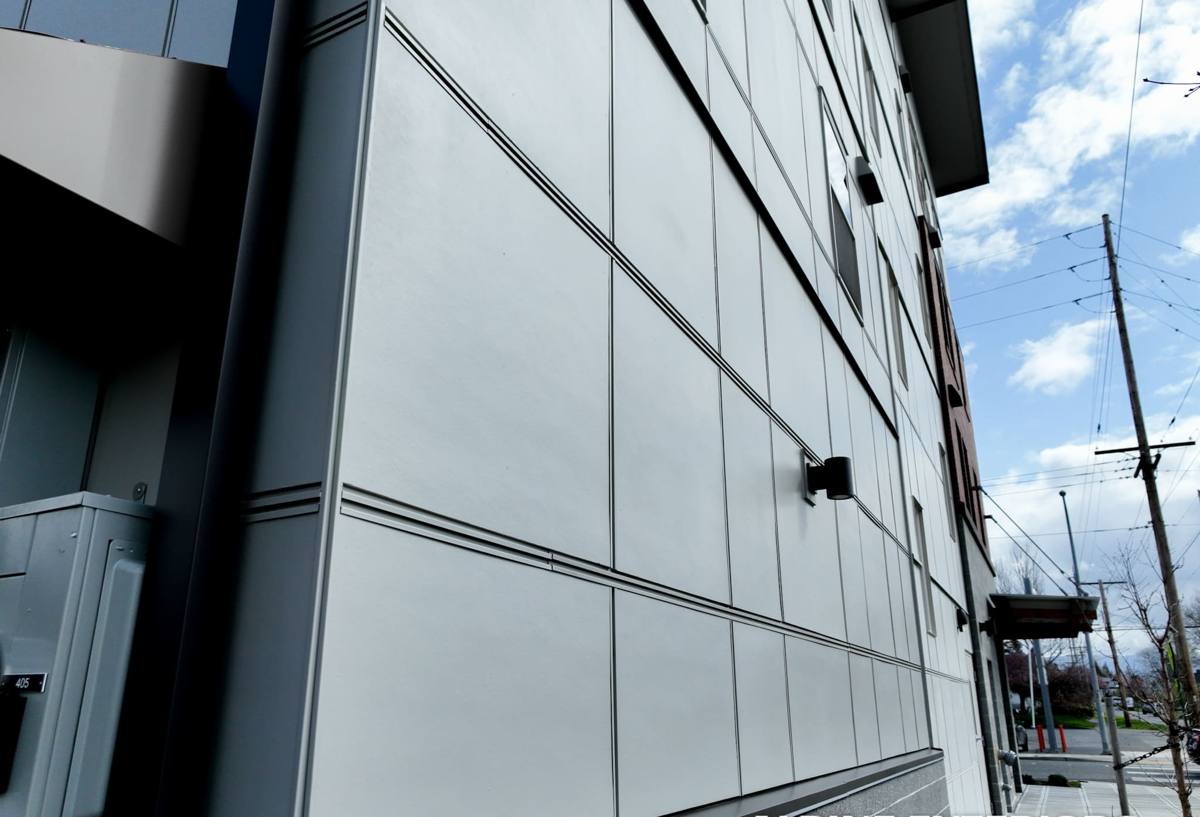
What Salt Air, Rain, and Moss Actually Do to Siding
Salt and Fasteners
Airborne salt accelerates corrosion on anything metal — nail heads, flashing, trim fasteners. Once a fastener starts to corrode, it can bleed rust through paint or, worse, lose its grip on the substrate. Materials and fasteners rated for coastal exposure aren't optional upgrades in this area; they're the baseline.
Wind-Driven Rain and Seams
Rain that comes in at an angle finds every gap a straight-down rain would never reach. That means horizontal seams, butt joints, and anywhere two pieces of siding meet need to be detailed as if wind-driven rain is guaranteed — because in California Creek, it is.
Moss and Trapped Moisture
Moss doesn't just grow on roofs. On the north and shaded sides of a house, algae and moss can colonize siding surfaces and hold moisture against the material far longer than an open, sunny wall would ever experience. Over time, that constant damp exposure is what breaks down materials that aren't built to shrug it off — and it's what causes paint to fail and wood-based products to swell, split, or rot from the inside out.
Why We Install Only James Hardie Fiber Cement in This Area
We install James Hardie fiber cement siding exclusively — not vinyl, not LP SmartSide, not cedar or primed spruce. That's not a marketing preference; it's a decision based on what actually holds up against salt air, sustained rain, and a long moss season without turning into a maintenance project for the homeowner.
Fiber cement is non-combustible and dimensionally stable, meaning it doesn't expand and contract with moisture the way wood-based products do. Hardie's engineered climate lines (built for regions like ours, with high moisture exposure) are formulated specifically to resist moisture damage in wet coastal conditions. The factory-applied ColorPlus finish is baked on under controlled conditions, which gives it better adhesion and UV resistance than field-applied paint — something that matters when a house is getting salt air and long gray winters instead of dry, moderate weather.
Wood-based engineered siding and cedar can perform well in the right conditions, but they're more sensitive to sustained moisture exposure and generally need more attention over their life — recaulking, repainting, and closer monitoring for swelling at cut edges and seams. Vinyl is low-maintenance but can become brittle and prone to cracking in cold snaps, and it doesn't offer the same fire-resistance profile. In a climate like California Creek's, where the moisture exposure is relentless and consistent rather than occasional, we've standardized on the product that's engineered to handle it with the least long-term risk to the homeowner.
What a Correct Siding Installation Involves
The material is only half the equation. A correct installation is what actually keeps water out — and it's where the difference between a durable job and a callback-prone one shows up.
Water-Resistive Barrier and Flashing
Every wall gets a continuous water-resistive barrier installed and lapped correctly, with flashing integrated at every window, door, and horizontal transition. In a driving-rain climate, flashing details around penetrations are what determine whether water gets diverted or gets behind the siding.
Fastening and Clearances
Hardie siding has specific fastening patterns, nail penetration depth, and clearance requirements (from grade, roof lines, and decks) that are spelled out in the manufacturer's installation manual. Skipping these — nailing too high, too tight, or too close to panel edges — voids warranty coverage and creates the exact stress points where cracking and water intrusion start.
Caulking and Joints
Not every joint should be caulked, and the ones that should need the right sealant applied correctly. Over-caulking traps moisture; under-caulking lets it in. Getting this right depends on understanding how the wall assembly is supposed to shed water in the first place.
| Detail | Done to Spec | Common Shortcut |
|---|---|---|
| Fasteners | Corrosion-resistant, correct length and spacing | Standard fasteners, inconsistent spacing |
| Water-resistive barrier | Continuous, properly lapped and taped | Gaps or reliance on siding alone as the barrier |
| Flashing at openings | Integrated with the barrier at every window and door | Caulk used in place of proper flashing |
| Clearance from grade/roof | Per manufacturer minimums | Siding run tight to grade or roofline |
| Joint treatment | Sealant only where specified, correct product | Caulk everywhere, or none where it's needed |
Our Process for California Creek Homes
Every job starts the same way, regardless of how straightforward it looks from the curb.
- Assessment — we walk the exterior and check for existing moisture damage, soft sheathing, failed flashing, and problem areas typical of this climate, especially on shaded and north-facing walls.
- Tear-off — old siding comes off cleanly so we can inspect the sheathing underneath, not just the surface.
- Sheathing repair — any wood that's already taken on rot or moisture damage gets replaced before anything new goes up. Covering a compromised wall with new siding just hides the problem.
- Water-resistive barrier and flashing — installed and integrated at every penetration, lapped to shed water downward at every transition.
- Hardie installation — fastened, spaced, and cleared to manufacturer spec, with attention to the joints and transitions that take the most weather exposure.
- Finish details — trim, caulking where appropriate, and a final check of every seam and corner.
- Walkthrough — we go over the finished work and what maintenance, if any, to expect going forward.
Moss, Algae, and Long-Term Maintenance in This Microclimate
Even the right siding benefits from a few habits that matter more here than elsewhere in the state. Keeping gutters and downspouts clear prevents water from sheeting down the wall face during heavy rain. Trimming back vegetation and tree cover near shaded walls reduces the damp, low-light conditions moss needs to take hold. A periodic gentle wash (never pressure-washing at close range, which can force water behind joints) keeps salt residue and organic growth from building up on the surface.
ColorPlus-finished Hardie siding resists staining and algae growth better than field-painted alternatives, but no exterior material in this climate is entirely maintenance-free. The difference is that a correctly installed fiber cement system needs occasional cleaning, not structural repair, to stay ahead of the weather.
What Siding Installation Costs in California Creek
Every house is different, but the same handful of factors drive cost on jobs in this area more than anywhere else in the region.
| Cost Factor | Why It Matters Here |
|---|---|
| Sheathing condition | Homes near water with a history of moisture exposure often need sheathing repair before new siding goes on |
| Home size and complexity | Dormers, multiple stories, and cut-up wall lines add labor and flashing detail |
| Siding profile and trim | Lap width, trim style, and accent details affect material and labor |
| Access and site conditions | Tree cover, slope, and setback affect scaffolding and staging |
| Tear-off scope | Full removal of old siding versus a simpler re-side over sound sheathing |
We give a firm, itemized number after the on-site assessment — not a phone estimate — because the sheathing condition alone can change the scope significantly on a coastal-exposure home.
Signs Your Current Siding Is Losing the Battle
Homeowners in California Creek should watch for a few specific warning signs, especially heading into the wetter months:
- Soft or spongy spots when you press on the siding, especially near the bottom courses
- Persistent moss or dark staining that returns quickly after cleaning
- Paint that's peeling or bubbling rather than just fading
- Visible gaps, warping, or separation at seams and corners
- Rust streaks running down from fastener heads or flashing
- A musty smell or interior wall staining on the same side as visible exterior damage
Any one of these on its own might be minor. Two or more together, especially on the same wall, usually means water has been getting behind the siding for a while.
Why Hiring a Crew That Already Works This Area Matters
A contractor who works across dry, inland climates and one who works Whatcom County's coastal edge aren't solving the same problem, even if they're installing the same product. Knowing which walls in California Creek take the worst of the wind-driven rain, how much clearance to leave given the salt exposure, and where moss tends to establish itself first isn't something you get from a manual — it comes from having done the work here, repeatedly, and having seen what holds up and what doesn't over time.
That local experience shows up in the small decisions during a job: where to add extra flashing attention even when the spec is technically met, which fasteners to use without being asked, and how to sequence a tear-off around a wet forecast instead of just working through it. Those aren't things a homeowner can easily verify by watching, which is why it's worth asking directly about a contractor's experience with coastal Whatcom County installations before signing anything.
If your California Creek home needs new siding, or you're not sure whether what's on there now is doing its job, we're happy to take a look. We'll walk the exterior, tell you honestly what we find, and put together a straightforward, no-pressure estimate — fill out the form below to get started.