 Custer
 Building Decks for California Creek's Climate
A deck in the California Creek area near Custer lives a different life than one built inland. The salt air off the water, the long stretches of driving rain, and a moss season that can run eight or nine months out of the year all work on wood, fasteners, and finishes in ways that a generic deck spec sheet doesn't account for. We've built and repaired decks in this part of Whatcom County long enough to know which shortcuts show up as callbacks two winters later, and which details are worth the extra hour of labor up front.
This page is specifically about custom decks for the California Creek area — not a general overview of deck building everywhere. If you're comparing bids or just trying to understand what you're paying for, the details below are the ones that actually matter for a deck that has to survive here.
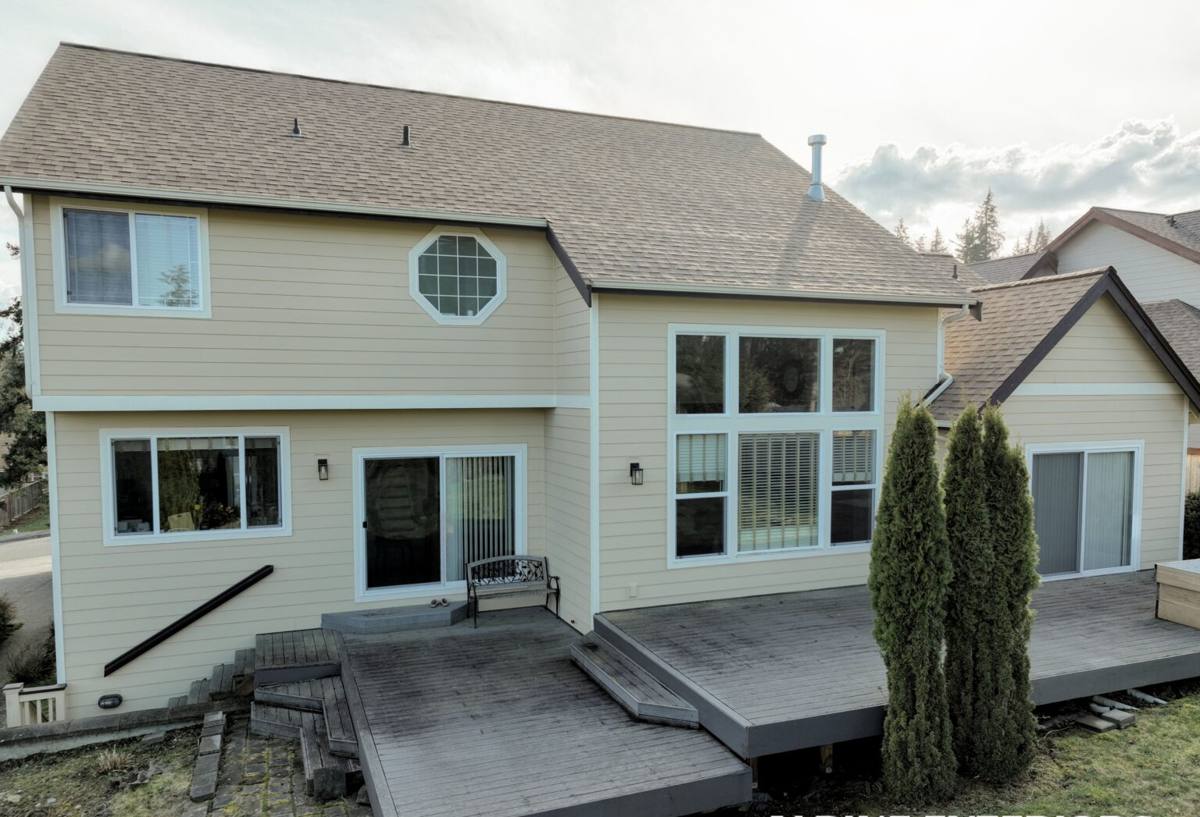
What This Local Climate Does to a Deck
Salt Air
Airborne salt accelerates corrosion on any exposed metal — nails, screws, joist hangers, post bases, and railing hardware. Standard galvanized fasteners can start showing rust streaks and pitting well before a deck's structural components would otherwise need replacing. Once a fastener starts corroding, it loses holding strength quietly, long before the failure is visible from the surface.
Driving Rain
Wind-driven rain doesn't just fall straight down — it gets pushed sideways into ledger connections, under poorly flashed rim joists, and into end grain that isn't sealed. Water that gets trapped between a ledger board and a house wall, or pools on a joist top instead of shedding off, is the single most common cause of hidden rot we find when we tear into an older deck.
Moss and Algae
A long, damp shoulder season means moss and algae get a real head start on any deck surface that stays shaded or doesn't drain well. Beyond looking bad, moss holds moisture against decking boards and turns a normally dry surface into a slip hazard for months at a time. Board spacing, surface texture, and how much sun a deck gets all affect how much of a problem this becomes.
Design Considerations for California Creek Homes
Most of the homes we work on in this area are on lots with mature trees, some slope, and a mix of soil conditions — which changes how a deck should be framed and footed compared to a flat, open, inland lot. Before we design anything, we look at:
- Sun and shade exposure across the deck footprint — shaded corners need different board spacing and drainage than sun-exposed sections
- Prevailing wind and rain direction relative to the house, which drives ledger flashing and railing placement decisions
- Existing drainage patterns on the lot, so the deck doesn't create a low spot that holds water against the foundation
- Soil type and depth to stable bearing soil, which determines footing size and depth
- Tree root proximity, since digging footings near mature trees sometimes calls for helical piers instead of poured concrete
None of this is exotic engineering — it's just paying attention to the specific lot instead of framing every deck the same way regardless of where it sits.
Choosing the Right Decking Material
There's no single "best" decking material — there's a best material for a given budget, maintenance appetite, and how close the home sits to the water. Here's how the common options actually compare in this climate:
| Material | Upfront Cost | Salt/Moisture Behavior | Maintenance | Typical Lifespan |
|---|---|---|---|---|
| Pressure-treated wood | Lowest | Prone to graying, splintering, and fastener corrosion if hardware isn't matched | Annual cleaning, periodic re-sealing | 10–15 years before major boards need replacing |
| Cedar | Moderate | Naturally rot-resistant but still needs sealing against salt spray and moss | Regular cleaning and re-oiling to hold color and resist moss | 15–20 years with upkeep |
| Composite decking | Higher | Doesn't rot or splinter; some early-generation composites held moisture and grew mold faster than expected | Occasional washing; no sealing or staining | 25+ years, varies by product warranty |
| PVC/capped polymer | Highest | Best moisture and salt resistance of the group; fully sealed surface resists moss growth | Lowest — occasional rinse | 25–30+ years, strong warranties |
We don't push composite or PVC on every job — a well-built cedar or treated-wood deck with the right fasteners and finish schedule is a legitimate, honest choice for a lot of budgets. What we won't do is install a premium decking surface on top of undersized or poorly flashed framing, because the decking is never the part that fails first.
Why Fastener Choice Matters as Much as Board Choice
In a salt-air environment, we standardize on stainless steel or heavy-coated fasteners rated for coastal or treated-lumber contact, and hot-dip galvanized or stainless structural hardware for joist hangers, post bases, and hold-downs. This adds a modest amount to material cost but avoids the slow, invisible corrosion that undermines an otherwise well-built deck from the inside.
What a Correct Deck Build Actually Involves
Footings and Framing
Footings need to reach stable bearing soil and be sized for the actual load the deck will carry, not just a minimum guess. Ledger attachment to the house has to be properly flashed and through-bolted — this is the connection point that takes the most water abuse and the one that causes the most serious failures when done wrong. Joists get sized for span and spacing based on the decking material chosen, since composite and PVC products often have tighter span requirements than solid wood.
Flashing and Drainage
Every ledger board gets flashed to shed water away from the house wall rather than behind it. Joist tops on framing that will be covered by decking benefit from a protective tape or coating to keep standing water from sitting directly on end grain and fastener holes. Board gaps are set to let water drain through rather than pool on the surface — too tight and water sits, too wide and the deck feels unfinished and collects debris.
Railings, Stairs, and Structural Connections
Guardrails, stair stringers, and post connections all carry code-mandated load requirements — these aren't optional upgrades, they're the parts of a deck most likely to cause an injury if built light. Post-to-beam and beam-to-footing connections use rated hardware, not toe-nailing, especially on any deck more than a couple feet off the ground.
Deck Build Checklist
- Footings sized and set to proper bearing depth for the local soil
- Ledger board through-bolted and properly flashed against the house
- Joist spacing matched to the decking product's span rating
- Stainless or coated hardware used throughout, not mixed metal types
- Joist tops protected from standing water where covered by decking
- Guardrails and stair stringers built to current code load requirements
- Board gaps set for proper drainage without excessive debris collection
- Final grading checked so water sheds away from the house and footings
Permits and Whatcom County Requirements
Most decks attached to a house, and any deck above a certain height off grade, require a building permit in Whatcom County. Permit review typically checks footing depth and sizing, ledger attachment method, guardrail height and baluster spacing, and stair geometry. Skipping the permit on a deck that requires one can create real problems later — at resale, with insurance claims, or if the work needs to be inspected for an unrelated reason. We pull permits as a standard part of the job rather than treating it as an optional add-on, and we build to pass inspection the first time.
Our Process From Estimate to Finished Deck
1. On-Site Consultation
We walk the lot with you, look at sun exposure, drainage, tree placement, and how the deck will connect to the house, and talk through material options honestly — including what each one costs to maintain over time, not just to install.
2. Design and Proposal
You get a clear scope: footing plan, framing approach, decking and railing materials, and a written price. No vague allowances that turn into change orders once work starts.
3. Permitting
We handle the permit submission and any plan revisions Whatcom County requests, so you're not the one going back and forth with the building department.
4. Construction
Footings and framing go in first and get inspected before decking closes anything up. We don't cover framing connections until they've either passed inspection or we're confident they'd pass, because those are the parts you can't easily check once the deck is finished.
5. Final Walkthrough
We go over the finished deck with you, including a basic maintenance schedule specific to the material you chose, before we consider the job done.
Maintaining a Deck Through a Long Moss Season
Even a well-built deck needs some seasonal attention in this climate. What that attention looks like depends heavily on the material:
| Task | Wood Decks | Composite/PVC Decks |
|---|---|---|
| Moss and algae removal | Scrub and treat annually, more often in shaded areas | Rinse or light wash as needed |
| Sealing/staining | Every 1–3 years depending on exposure | Not required |
| Fastener inspection | Check annually for corrosion or loosening | Check annually regardless of decking type |
| Drainage check | Clear debris from board gaps each fall | Clear debris from board gaps each fall |
Skipping these small tasks is how a 15-year deck becomes a 9-year deck. None of it is complicated, but it does need to actually happen on a schedule rather than "whenever it looks bad."
Why a Crew That Already Works California Creek Matters
A deck built by a crew unfamiliar with this specific stretch of Whatcom County can still look fine on installation day. The problems show up in year two or three — corroding hardware that wasn't rated for salt exposure, a ledger connection that wasn't flashed for the wind-driven rain pattern this area actually gets, or decking spaced for a drier climate that turns into a moss trap by the second winter. Working California Creek regularly means we've already seen how these decisions play out over time on homes nearby, and we build accordingly from the first footing rather than learning the hard way on your deck.
It also means straightforward logistics — we're not driving a long distance for a warranty check or a quick adjustment, and we're already familiar with Whatcom County's permitting process for this area rather than treating it as a one-off.
Get a Straight Answer on Your Project
If you're planning a new deck or replacing one that's past its prime, we're happy to come take a look, walk the lot with you, and give you an honest read on what it'll take — no pressure, no inflated scope. Use the form below to request a free estimate.