 Custer
 Board & Batten in a Place Like Point Roberts
Board and batten is one of the most requested looks we install — wide vertical panels with narrow battens covering the seams, giving a home a clean, linear, farmhouse-or-craftsman profile that lap siding doesn't quite deliver. It works well on gables, dormers, accent walls, and full elevations alike. But Point Roberts is not an easy place to put siding of any kind, and board and batten has a few characteristics that make the material choice and the installation details matter more here than they would somewhere drier and more sheltered.
Point Roberts sits on its own peninsula, exposed on multiple sides to open water, which means homes there take a steadier dose of salt-laden air and wind-driven rain than most of inland Whatcom County. Add a long, damp shoulder season most years and you get conditions that will find every weak point in a siding job — usually within a few years, not a few decades.
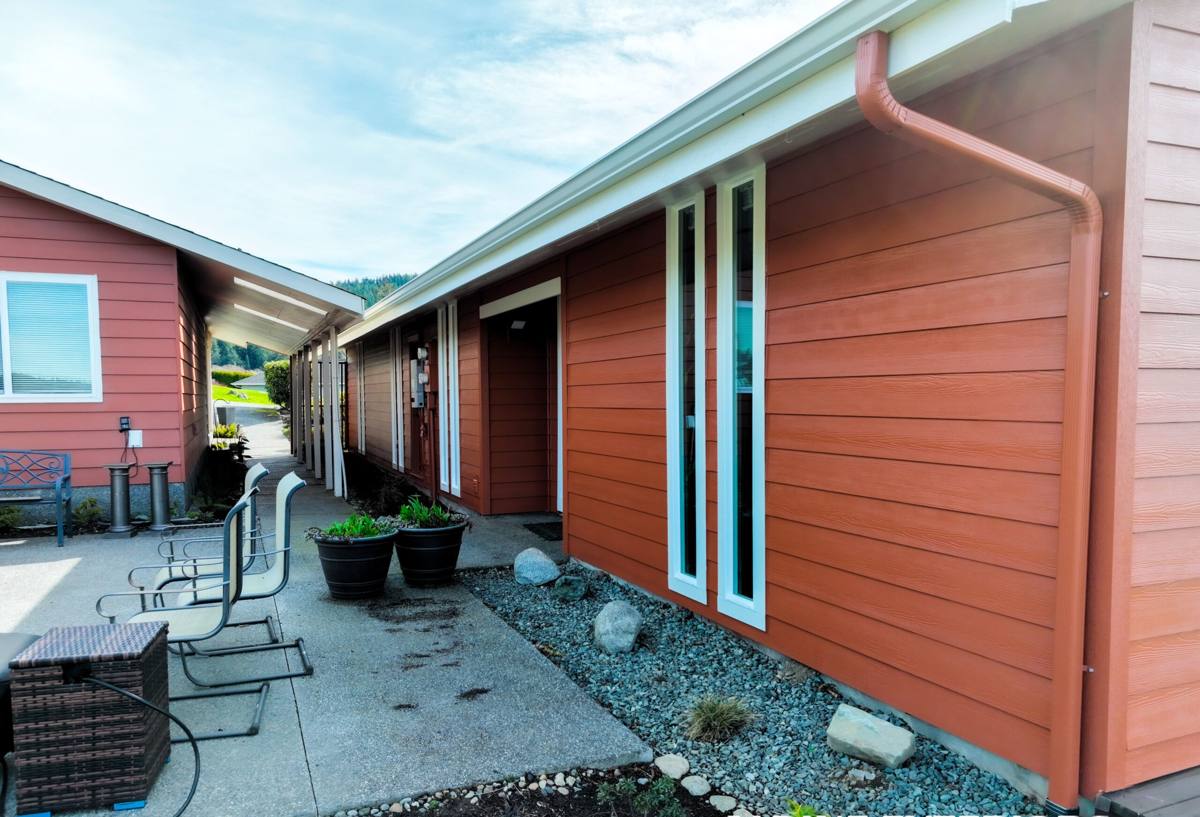
What the Local Climate Actually Does to Vertical Siding
Salt Air
Airborne salt doesn't just sit on the surface — it works into fasteners, flashing, and any exposed metal, accelerating corrosion. On board and batten specifically, the battens create dozens of extra fastener lines compared to standard lap siding, and every one of those fasteners is a potential rust point if the wrong hardware gets used.
Driving Rain
Wind-driven rain doesn't fall straight down — it gets pushed sideways into vertical seams and batten joints. Board and batten has more vertical seam length per square foot than horizontal lap siding, so if the drainage detailing behind the panels isn't right, water has more opportunities to find a way in.
Moss Season
Shaded, north-facing, and tree-sheltered walls in this part of Whatcom County stay damp for long stretches of the year. Moss and algae take hold wherever siding can't dry out between rain events, and once established they hold moisture against the surface and finish, which shortens the useful life of paint, caulk, and — on the wrong substrate — the siding material itself.
What a Correct Board & Batten Installation Involves
The visual result of board and batten is simple. What's behind it is where the job is won or lost. Three things matter more in a coastal, high-rain area than almost anywhere else:
Drainage Plane and Rain Screen Gap
Behind every board and batten wall should be a weather-resistant barrier and, ideally, a drainage gap (furring strips or a manufactured rain screen product) that lets any water that does get past the siding drain out and lets the wall assembly dry. Face-nailing panels directly to a wall with no gap traps moisture against the back of the siding — exactly the setup that leads to premature failure in a wet, salty environment.
Flashing at Every Penetration
Windows, doors, hose bibs, light fixtures, and the transitions where board and batten meets trim, roof lines, or a different siding profile all need proper flashing and sealant details — not caulk alone. Caulk is a maintenance item; flashing is the actual water management system. This is where rushed installs cut corners, and it's where leaks show up first.
Fasteners and Hardware
In a salt-air environment, fastener choice isn't a minor spec — it's the difference between hardware that lasts the life of the siding and streaking rust stains within a few seasons. Stainless steel or high-grade hot-dip galvanized fasteners, correctly set (not overdriven, not underdriven), are non-negotiable on this coastline.
Why We Install James Hardie Board & Batten — Not Vinyl, Not Wood
We only install James Hardie fiber cement, and board and batten is one of the clearer cases for why. Vinyl board and batten is lightweight and low-cost, but it's a plastic product that expands and contracts with temperature swings, and in high-wind, high-moisture coastal exposure the panel joints and battens are more prone to working loose or warping over time. Real wood board and batten (cedar or primed spruce) gives the most traditional look, but it's the most maintenance-intensive option in exactly the conditions Point Roberts has — repainting cycles, caulk failure, and rot risk at the batten seams where moisture collects.
| Material | How it handles salt air & driving rain | Moss/algae resistance | Long-term maintenance |
|---|---|---|---|
| James Hardie fiber cement | Non-combustible, dimensionally stable, factory-engineered for coastal/wet climates (HZ5 formulation) | Factory ColorPlus finish resists moisture absorption better than bare wood | Periodic gentle washing; no repainting cycle with ColorPlus |
| Cedar / primed wood | Absorbs moisture at end grain and batten seams; can cup or split | More prone to holding moisture, feeding moss/algae growth | Repainting/staining every few years; caulk maintenance |
| Vinyl | Can warp or loosen at seams under wind and temperature cycling | Grows moss on shaded panels like any other surface | Low, but limited repair options once damaged or faded |
James Hardie's HZ5 climate-engineered formulation is built specifically for the Pacific Northwest's wet, moderate-temperature conditions, and the factory-applied ColorPlus finish is baked on and warrantied against fading and peeling — which matters when you're not eager to be repainting a house exposed to salt spray every few years. That combination of material stability and finish durability is why board and batten in fiber cement holds its line and color out here better than the alternatives.
Our Process on a Point Roberts Job
- On-site assessment: we look at wall orientation, shade patterns, existing moss or moisture staining, and current siding condition before recommending anything.
- Sheathing and moisture check: once old siding is off, we inspect the sheathing for hidden rot or moisture damage — common on walls that have been trapping water for years — and address it before anything new goes up.
- Drainage and weather barrier: weather-resistant barrier plus a drainage gap where the wall assembly calls for it, sized correctly for board and batten's seam pattern.
- Panel and batten installation: Hardie panels installed to manufacturer spec with correct fastener spacing, then battens set to cover seams and hide fasteners cleanly.
- Flashing and sealant details: every window, door, and penetration flashed properly, with sealant used as a secondary defense, not the primary one.
- Final inspection: we walk the job checking reveal lines, fastener pattern, and finish before calling it done.
Maintaining Board & Batten Siding Through Moss Season
Even the right material needs some upkeep in this climate. A short annual routine keeps board and batten looking sharp and keeps small problems from becoming siding replacements:
- Rinse shaded and north-facing walls with a garden hose or soft wash setup — never a high-pressure washer, which can force water behind panels or damage the finish
- Trim back vegetation and tree limbs that keep walls shaded and slow to dry after rain
- Check caulking at windows, doors, and trim transitions once a year and touch up before gaps widen
- Look at fastener heads and flashing edges for early rust streaking, especially on ocean-facing elevations
- Clear gutters and downspouts so roof runoff isn't dumping extra water onto siding below
Why It Matters That We Already Work in Point Roberts
Point Roberts is geographically part of Whatcom County, but it's an exclave — the only road access is through Canada. That's not a small detail for a siding project. Material deliveries, crew scheduling, and border logistics all take planning that a contractor who's never worked out there won't have dialed in. It affects both the cost of getting a crew and materials on-site and how smoothly the project actually runs day to day.
Because we already do this work in the area, we know what a Point Roberts job requires before the first panel goes up — from logistics to the kind of moisture and salt exposure specific walls on that peninsula are going to see. That's the difference between a contractor learning the local conditions on your house and one who already knows them.
What Board & Batten Costs to Consider Before You Commit
Every board and batten project is priced around a handful of real factors, not a flat rate per square foot:
- Tear-off and sheathing condition: hidden rot from long-term moisture problems adds repair work before new siding goes on
- Wall complexity: gables, dormers, and multiple elevations take more cutting, flashing, and batten layout time than a simple rectangular wall
- Drainage and rain screen detailing: proper wet-climate assembly costs more upfront than a bare face-nail install, and it's the part that determines whether the job lasts
- Color and finish: factory ColorPlus finishes are priced differently than field-applied paint, but they remove the recurring repaint cost
- Access and logistics: site access on the peninsula, staging area, and delivery timing all factor into scheduling and cost
If you're weighing board and batten for a home in Point Roberts, we're glad to come take a look and walk through what your specific walls need — no pressure, no obligation. A free estimate is the easiest way to get real numbers instead of guesses.