 Custer
 Blaine's Climate Puts Real Stress on Siding
Blaine sits right on the water, and that proximity to Semiahmoo Bay and Drayton Harbor means homes here deal with a combination most inland Whatcom County properties don't: salt-laden air moving off the water, wind-driven rain that hits siding at an angle instead of straight down, and a wet season that stretches long enough to grow moss on almost any north- or west-facing wall that doesn't get much sun. None of these factors are dramatic on their own, but together they wear down siding faster than homeowners expect, especially products that weren't engineered with coastal exposure in mind.
Salt air is corrosive to exposed metal fasteners and trim, and it accelerates the breakdown of paint films and caulk joints. Driving rain finds every gap in flashing, trim, and lap joints, pushing moisture behind the siding where it can sit against sheathing. And moss doesn't just look bad — a mat of moss holds water against a wall surface for days after a storm has passed, which is exactly the kind of sustained dampness that rots wood-based products and stains anything with a weak factory finish. A siding system for a Blaine home has to be chosen and installed with all three of these conditions in mind, not just the mildest one.
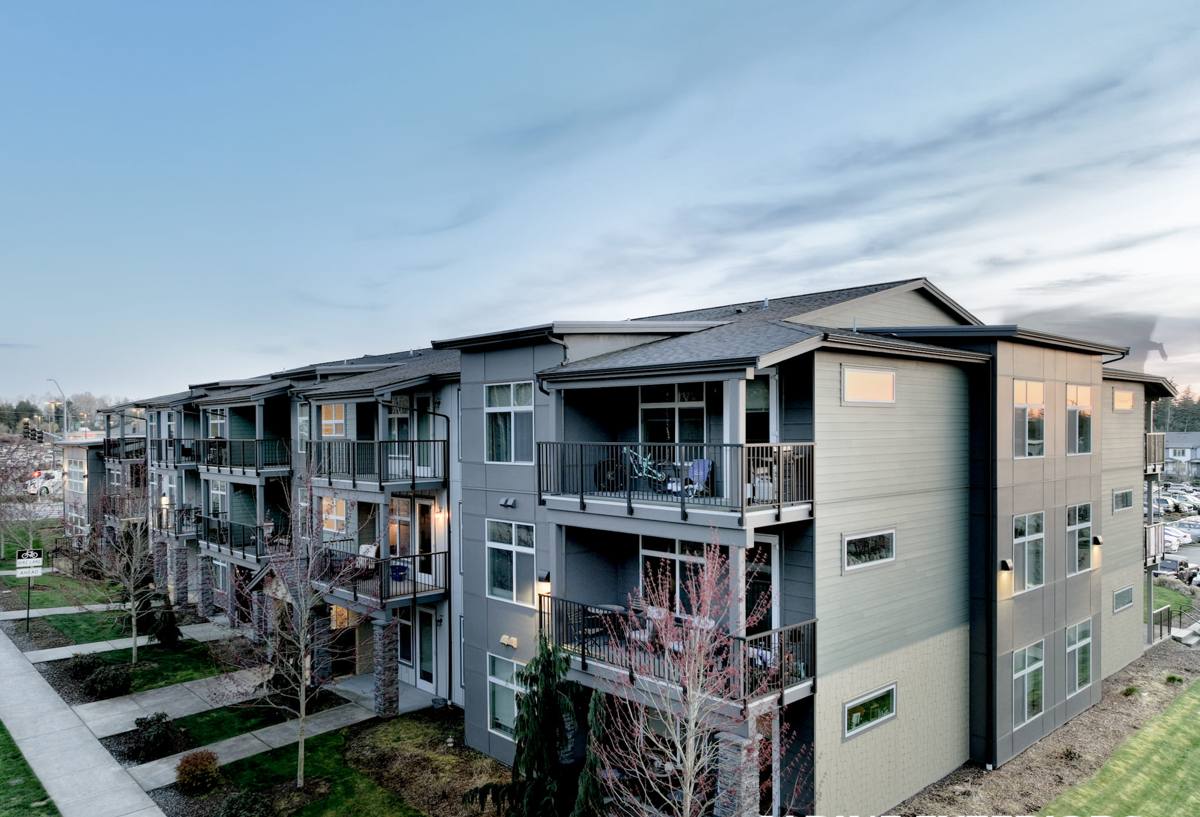
Why We Install James Hardie Fiber Cement — and Nothing Else
We are a Hardie-only siding contractor. We don't install vinyl, LP SmartSide, Cemplank, Allura, or wood siding, and that's a deliberate standard, not a sales preference. Fiber cement from James Hardie is non-combustible, dimensionally stable in wet-dry cycling, and finished at the factory with ColorPlus technology — a baked-on finish that resists fading and holds up to salt air and UV exposure far better than field-applied paint. Hardie's HZ5 product formulation is specifically engineered for climates with prolonged moisture exposure and freeze-thaw cycling, which describes Whatcom County's coastal zone well.
We've made the call not to install the alternatives because, in a climate like Blaine's, their trade-offs show up faster than they do elsewhere. Vinyl can warp and its seams open up under sustained wind-driven rain. Wood-based products like LP SmartSide and untreated cedar depend heavily on unbroken paint and caulk to keep moisture out — in a place where moss holds water against walls for days at a time, any gap in that protective layer becomes a slow leak into the substrate. Fiber cement doesn't rot, and it doesn't feed moss the way wood fiber does.
What "HZ5" Actually Means for This Job
James Hardie manufactures its siding in different formulations calibrated to regional climate zones. HZ5 products are built for areas with more freeze-thaw activity and moisture cycling than the mildest coastal zones see. For a Blaine home exposed to salt air and consistent winter rain, specifying the correct zone product isn't a minor detail — it affects how the board handles moisture absorption and expansion over the life of the siding.
What a Correct Hardie Installation Involves Near the Water
Fiber cement siding is only as good as the installation behind it. A large share of the siding failures we get called out to inspect in coastal Whatcom County aren't product failures at all — they're installation shortcuts that let water in behind a perfectly good board.
Moisture Management Comes First
Before a single piece of Hardie goes up, the wall needs a correctly lapped weather-resistive barrier and properly integrated flashing at every window, door, and horizontal transition. Rainscreen furring — a small air gap between the back of the siding and the water-resistive barrier — matters more in a driving-rain, salt-air environment like Blaine's than it does in drier parts of the state, because it lets any moisture that does get past the siding drain and dry out instead of sitting against the sheathing.
Fastening and Clearances
Hardie specifies exact nailing patterns, fastener types, and minimum clearances from grade, roofing, and decks. In a salt air environment, fastener material matters — corrosion-resistant fasteners are non-negotiable, since a rusting nail head will bleed through the finish and eventually lose its grip. We also hold to Hardie's minimum ground clearance and keep siding from making direct contact with roof surfaces, both common places we find gaps in other contractors' work.
Joints, Caulking, and Trim
Butt joints, corners, and trim transitions are where a lot of coastal homes actually fail first. Every seam either needs to be properly flashed or correctly caulked with a product rated for the exposure — and in a climate with this much sustained moisture, we don't rely on caulk alone where flashing is the better long-term answer.
Comparing Siding Options for a Coastal Whatcom County Home
| Factor | James Hardie Fiber Cement | Vinyl | Wood / LP SmartSide |
|---|---|---|---|
| Salt air resistance | Strong — factory finish holds up well | Moderate — can chalk and become brittle over time | Weak — finish breakdown exposes wood fiber |
| Driving rain / wind-driven moisture | Strong when installed with proper flashing and rainscreen | Moderate — seams can open under sustained wind | Depends heavily on caulk and paint integrity |
| Moss and sustained dampness | Does not feed moss growth; won't rot from contact | Doesn't rot, but moss holds moisture against seams | Vulnerable — moisture trapped by moss can rot wood fiber |
| Fire resistance | Non-combustible | Combustible | Combustible |
| Finish longevity | Factory-baked ColorPlus finish, long repaint interval | Color molded in, but can fade and chalk | Field-applied paint, shorter repaint interval |
Our Process for Blaine Projects
We keep the process straightforward and transparent from the first walkthrough to the final inspection.
- On-site assessment — we look at wall exposure, existing moisture damage, and which sides of the house take the worst of the wind and rain off the water.
- Product and line selection — we recommend the Hardie plank profile, panel style, and HZ5 formulation that fits the home and its exposure.
- Tear-off and substrate check — we remove the old siding and inspect sheathing for rot or damage before anything new goes up, since covering a problem never fixes it.
- Weather barrier and rainscreen installation — this is the layer that actually keeps water out long-term, and we don't skip it to save time.
- Hardie installation to spec — correct fastening, clearances, flashing, and joint treatment throughout.
- Final walkthrough — we go over the finished work with the homeowner and confirm every detail before calling the job done.
Living With Hardie Siding in a Salt Air, Moss-Prone Climate
Correctly installed Hardie siding is low-maintenance, but "low-maintenance" doesn't mean "no maintenance" — especially this close to the water. A little seasonal attention keeps the siding performing the way it's supposed to for decades.
- Rinse salt residue and grime off the siding once or twice a year with a garden hose and soft brush — avoid high-pressure washing directly at seams and joints.
- Trim back shrubs and trees that keep walls shaded and damp, since that's exactly where moss gets a foothold.
- Check caulking at trim and joints annually and have any cracked or missing caulk redone before winter rains set in.
- Look at ground-contact areas after landscaping work to make sure soil, mulch, or paving hasn't crept up and reduced the siding's clearance from grade.
- Address any moss or algae growth early with a gentle wash rather than letting it establish and hold moisture against the wall.
Why It Matters That We Already Work in Blaine
A siding crew that regularly works this stretch of Whatcom County already knows which walls on a typical Blaine lot take the worst weather, how far to carry rainscreen and flashing details for this exposure, and what moss and salt residue actually look like on a wall that's been neglected for a few years. That local pattern recognition shows up in small decisions — where to add extra flashing, which corners need more attention — that a crew unfamiliar with coastal Whatcom County conditions might not think to make.
It also means we're not guessing at product specification. We know which Hardie lines and HZ formulation fit this climate, and we install every job to the same standard because it's the only product line we work with.
Get a Free, No-Pressure Estimate
If your Blaine home's siding is showing its age — fading, moss buildup, or soft spots near trim and corners — we're happy to take a look and walk you through what correct James Hardie installation would involve for your specific property. Fill out the form below for a free estimate, no pressure and no obligation.