 Custer
 Building a Deck That Actually Holds Up in Everson
Everson sits in a part of Whatcom County where the weather doesn't do a homeowner any favors. You get long stretches of driving rain from fall through spring, a marine air layer that carries salt and moisture off the Salish Sea inland on the wrong wind, and a moss season that seems to start earlier and last longer every year. A deck out here isn't just a place to put a grill and a couple of chairs — it's an exterior structure that has to survive standing water, shaded damp corners, and freeze-thaw swings without rotting, cupping, or growing a green film across every board. Composite decking, installed correctly, is one of the more honest answers to that problem. This page walks through what that actually means for a home in the Everson area, not a generic decking pitch.
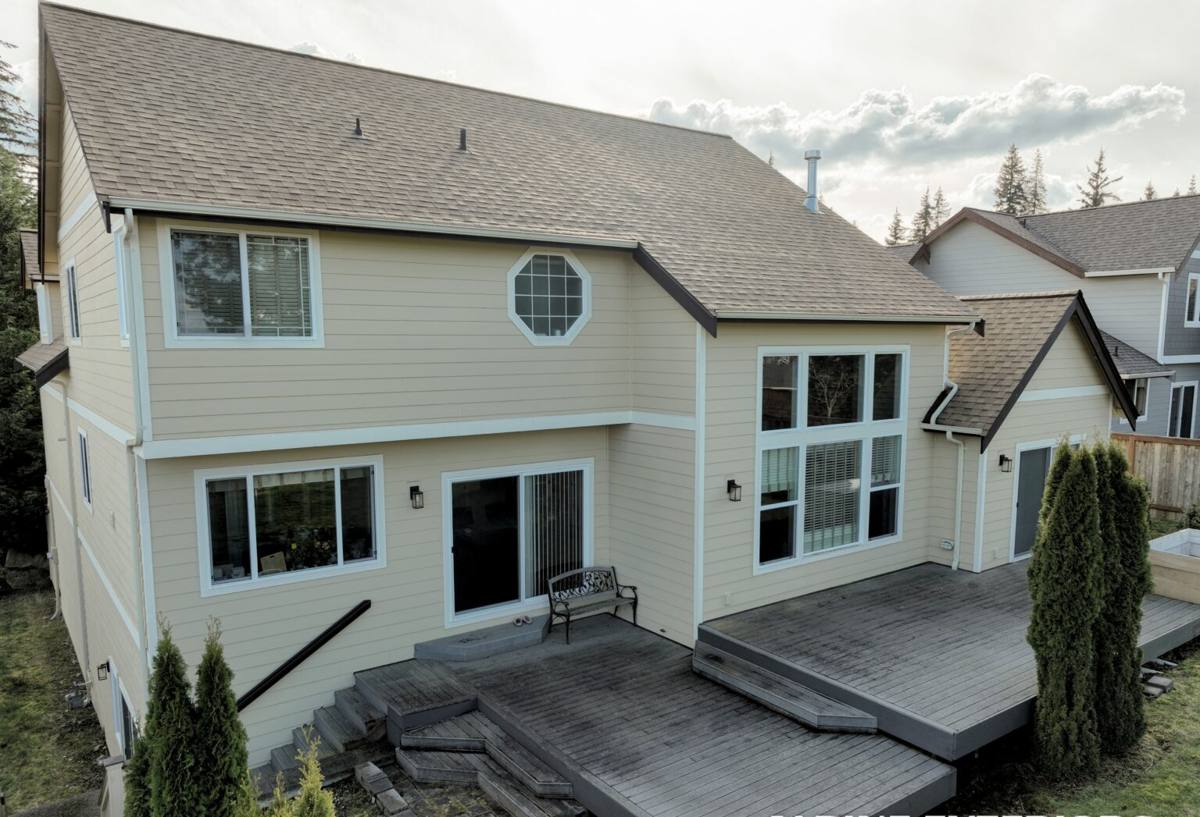
What Rain, Salt Air, and Moss Actually Do to a Deck
Most deck failures around here aren't dramatic. They're slow. Water sits in a board's end grain or in a fastener hole, doesn't fully dry between rain events because the sun angle is low for half the year, and the wood starts to break down from the inside. Salt-laden air adds a second problem: it accelerates corrosion on any exposed metal — screw heads, joist hangers, railing brackets — long before the wood itself gives out. And moss doesn't just look bad. Once it establishes on a deck surface, it holds moisture against the board around the clock, which speeds up rot underneath it and makes the surface genuinely slick and dangerous in wet weather.
None of this is unique to any one property in Everson — it's a function of the regional climate, and it's why we treat every composite deck build here as a moisture-management project first and a finish-carpentry project second.
The Three Failure Points We See Most
- Framing that never dries — joists and beams tucked under a low deck with poor airflow stay damp for weeks at a time.
- Unprotected fasteners — standard exterior screws corrode faster than people expect once salt air gets into the mix.
- No drainage plan — decking installed flat with no slope or gap strategy just holds water instead of shedding it.
Composite vs. Wood vs. PVC for This Climate
Every decking material has real trade-offs. We'd rather lay them out honestly than oversell one option.
| Material | How it handles Everson's moisture and moss | Ongoing maintenance |
|---|---|---|
| Pressure-treated wood | Absorbs water at cut ends and fastener holes; needs consistent sealing to slow rot and moss growth | Annual cleaning, periodic staining/sealing, board replacement over time |
| Capped composite | Cap layer resists moisture absorption and gives moss less to grab onto than raw wood grain | Occasional wash-down; no staining or sealing |
| Cellular PVC | Fully synthetic, very low moisture absorption, but can feel and flex differently underfoot and shows scratches more readily | Low, but repairs and color-matching can be less forgiving |
For most Everson homes, capped composite hits the balance between upfront cost, low upkeep, and how it actually performs in wet, shaded, moss-prone conditions. It's not maintenance-free — nothing outdoors here is — but it removes the sealing and staining cycle that wood demands, and its cap layer sheds surface moisture better than open wood grain does.
What a Correct Composite Deck Installation Involves
The composite boards get the attention because they're what you see, but the framing underneath is what determines whether the deck lasts. We build to a standard that assumes this climate, not a dry-region default.
Framing and Substructure
Joists and beams get joist tape or a comparable flashing membrane on top before boards go down — this keeps rainwater that gets past the decking off the exposed wood grain and away from fastener holes, which is where rot typically starts. Framing lumber itself should be rated for ground contact or exterior exposure, and we check that hardware — hangers, hurricane ties, post bases — is corrosion-resistant given the salt-air exposure this area gets.
Ventilation and Drainage
Low decks with poor airflow underneath are a recurring problem on older homes in this area. Where deck height allows, we build in ventilation gaps and grade the ground below to drain rather than pool. Board spacing and any picture-frame or fascia detail is set to let water actually get off the deck instead of channeling it against the house.
Fasteners and Fixings
We use hidden fastener systems designed for composite boards, paired with corrosion-resistant screws throughout — stainless or coated hardware rated for coastal/marine exposure, not a generic exterior-grade screw. This matters more here than in a drier inland climate, because salt air will find and degrade the weak link in a fastening system faster than most people expect.
Flashing Where the Deck Meets the House
Ledger board attachment is one of the most common failure points on any deck, and it's also one of the most dangerous to get wrong. Proper ledger flashing keeps water from tracking behind the siding and into the house framing — a detail that's easy to skip and expensive to fix later.
Choosing the Right Composite Board
Not every composite product is built the same, and the differences matter more in a wet, moss-prone climate than they would somewhere dry.
- Capped vs. uncapped composite — a full polymer cap on all sides resists moisture absorption and staining far better than boards capped only on the top surface.
- Board profile — grooved-edge boards paired with hidden fastener clips give a cleaner surface with fewer places for standing water and debris to collect than face-screwed boards.
- Color and heat — darker composite colors run hotter in direct sun and can also show mineral deposits and pollen film more readily; lighter and mid-tone colors tend to hide the kind of surface residue that builds up under tree cover, which is common on wooded Everson lots.
- Warranty structure — read what's actually covered. Fade and stain warranties are often separate from structural warranties, and terms vary meaningfully between manufacturers.
Our Process
We keep the process straightforward because a deck build shouldn't feel like a mystery to the homeowner.
- Site visit and assessment — we look at existing framing (if any), drainage, sun/shade exposure, and how the deck ties into the house.
- Plan and material selection — we walk through board options, layout, and railing choices, with honest input on what holds up best given the site's exposure.
- Framing and flashing — the structural work and moisture protection go in first, before a single composite board is placed.
- Decking installation — boards, hidden fasteners, and fascia go in with attention to consistent spacing and drainage.
- Final walkthrough — we go over care and cleaning expectations so there are no surprises once the deck is in daily use.
Cost Factors to Expect
Composite decking costs more upfront than pressure-treated wood and less than most premium PVC systems, but the real cost driver on most Everson projects is the site conditions, not just the board choice.
| Factor | Why it affects cost |
|---|---|
| Deck height and access | Low or hard-to-access decks require more work to build in proper drainage and ventilation |
| Existing framing condition | Rotted or undersized joists/beams from a prior wood deck often need replacing before decking goes on |
| Board and railing selection | Composite lines and railing systems vary widely in price per linear foot |
| Ledger and flashing work | Proper attachment to the house takes more time than a shortcut installation, but it's not optional |
| Square footage and layout complexity | Multi-level decks, angles, and stairs add labor beyond a simple rectangle |
Maintenance: What Composite Actually Still Needs
Composite decking is low-maintenance, not no-maintenance, especially in a climate that grows moss on nearly everything left damp and shaded.
- Sweep or rinse off debris regularly, especially under trees where organic buildup accelerates moss and mildew growth.
- Wash the surface a couple of times a year with a soft-bristle brush and a cleaner made for composite — pressure washing can damage the cap layer if used incorrectly.
- Keep gutters and downspouts near the deck clear so runoff isn't dumping extra water onto or under it.
- Check railing posts and stair connections annually for looseness, which can signal a fastener or framing issue worth catching early.
- Clear standing water or debris from between boards after storms rather than letting it sit.
Why a Crew That Already Works Everson Matters
A lot of deck problems we get called to look at weren't caused by bad composite board — they were caused by an installation that didn't account for this region's moisture load. Framing without flashing, standard hardware in a salt-air zone, decks built with no real drainage plan. A crew that works this specific climate regularly knows to build in those protections as standard practice, not as an upsell. That's the difference between a deck that needs attention in five years and one that's still solid in twenty.
If you're planning a new composite deck or replacing an aging wood one in the Everson area, we're happy to take a look and give you a straightforward, no-pressure estimate — just fill out the form below.