 Custer
 Why Birch Bay's Coastal Climate Is Hard on Siding
Birch Bay sits right on the water, and that changes what siding has to deal with compared to homes even a few miles inland in Whatcom County. Onshore air off the Salish Sea carries salt, which settles on exterior surfaces and accelerates corrosion of fasteners, trim, and any siding material that isn't built to resist it. Add in wind-driven rain that hits walls at an angle instead of just falling straight down, and water gets pushed into laps, seams, and fastener points that a calmer climate would never stress-test.
Then there's moss. Between the tree cover common in this area and the long stretches of damp, mild weather, north-facing and shaded walls stay wet longer than they dry out. That moisture holds against the siding surface for weeks at a time during the fall and winter, which is exactly the environment moss and mildew need to take hold. Siding that can't shed water quickly or that absorbs moisture into its core is going to show it first in Birch Bay.
None of this means siding fails fast here — it means the margin for error is smaller. A product or installation detail that would hold up fine in a drier part of the county can fall short a lot sooner this close to the water.
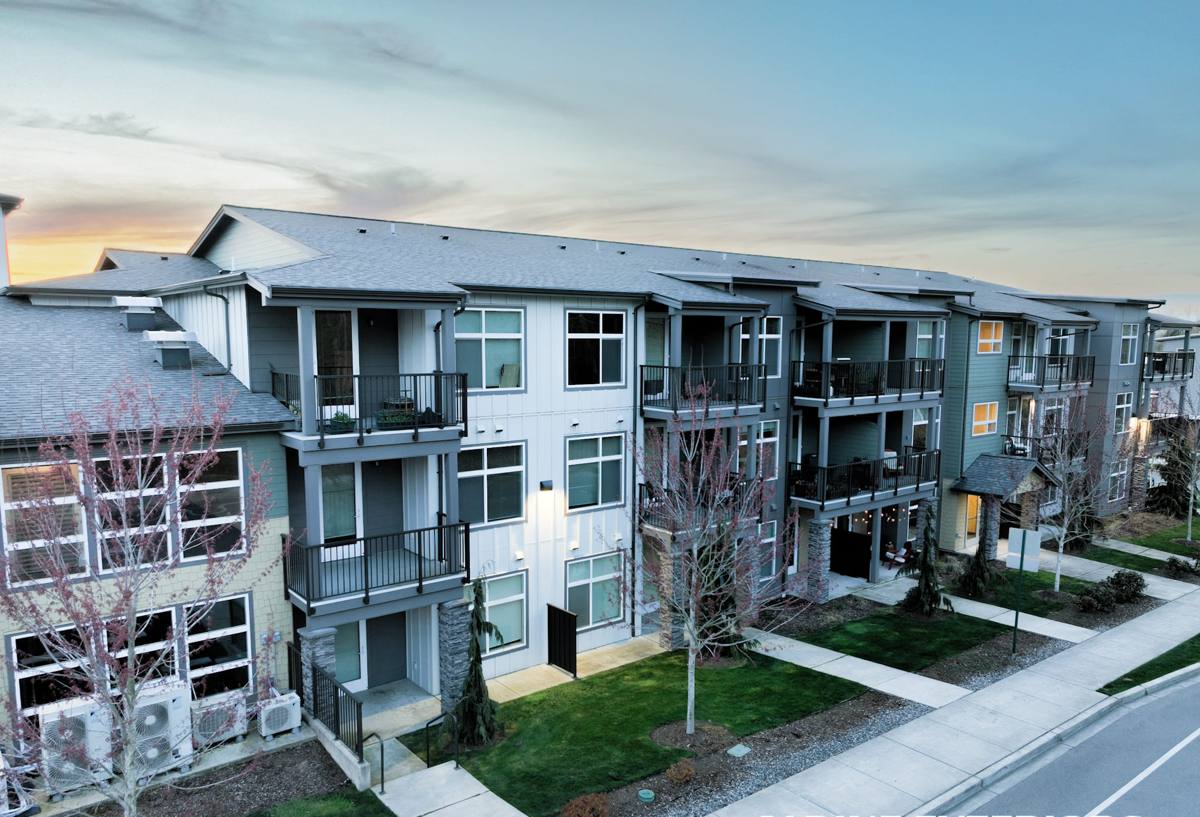
Signs a Birch Bay Home Needs Siding Replacement, Not Just Repair
Coastal wear shows up in patterns you can learn to spot before it becomes a bigger problem:
- Soft or spongy spots when you press on the siding, especially near the bottom courses and around window and door trim
- Paint that's peeling, bubbling, or chalking faster than the rest of the house — often a sign moisture is getting behind the material
- Persistent moss or dark streaking on shaded or north-facing walls that comes back within a season of cleaning
- Visible cupping, warping, or delamination, common on older wood-based or engineered wood products exposed to repeated wet-dry cycles
- Rust staining running from fastener heads or corner trim, a sign the hardware is corroding from salt exposure
- Gaps opening up at seams, corners, or butt joints where caulking has failed and water has a clear path inward
One or two of these on an otherwise sound wall might mean a targeted repair. Several of them together, or any sign of rot in the sheathing behind the siding, usually means it's time to talk about full replacement rather than chasing problems one board at a time.
What a Correct Siding Replacement Actually Involves
Siding replacement isn't just pulling off old boards and nailing up new ones. In a location like Birch Bay, the details underneath the visible surface matter as much as the siding itself:
Water Management Starts Behind the Siding
A weather-resistive barrier (house wrap) goes on first, and it has to be lapped correctly — upper courses over lower ones — so any water that gets past the siding runs down and out instead of pooling. Every window, door, and penetration needs proper flashing integrated with that barrier, not just caulked over. This is where most premature siding failures actually start, and it's invisible once the job is finished, which is exactly why it has to be done right the first time.
Fastening and Clearances
Corrosion-resistant fasteners matter everywhere, but especially this close to salt air. Siding also needs proper clearance from grade, roof lines, decks, and other horizontal surfaces so water and debris don't sit against the bottom edge. Butt joints and corners need to be treated as water-shedding details, not just visual seams.
Product Selection for the Site
Not every wall on a coastal property faces the same exposure. A wall that takes direct wind-driven rain off the water needs the same attention to product and installation as a shaded wall that stays damp longer — they fail for different reasons, and both need to be accounted for in how the job is planned.
Why We Install Only James Hardie Fiber Cement
We don't install vinyl, LP SmartSide, primed wood, cedar, or other fiber cement brands. That's a deliberate standard, not a lack of options. In a place like Birch Bay, the products we've chosen not to install tend to share the same weak points: wood-based products absorb moisture and are vulnerable to the wet-dry cycling this climate produces, vinyl can warp or become brittle over time and doesn't hold paint if a homeowner ever wants a color change, and not every fiber cement product on the market is engineered the same way for coastal exposure.
James Hardie fiber cement is non-combustible, resists moisture intrusion far better than wood-based sidings, and holds its factory-applied ColorPlus finish without the repainting cycle wood siding demands. Hardie also makes climate-engineered HZ product lines specifically formulated for different moisture and temperature conditions — relevant in a region where a shaded, damp wall and a sun-exposed, wind-battered wall on the same house can face very different stresses. Backed by a strong transferable warranty and a long track record when installed to spec, it's the product we're willing to stand behind on homes exposed to salt air and driving rain.
Our Siding Replacement Process
- On-site assessment — we walk the exterior, check for hidden moisture and sheathing damage, and note the specific exposure conditions on each side of the house
- Removal — old siding comes off carefully so we can inspect what's underneath before anything new goes up
- Sheathing repair — any rot or water damage found during removal gets addressed before the new siding system goes on; this step gets skipped by crews trying to move fast, and it's the one that causes callbacks later
- Weather barrier and flashing — house wrap and flashing installed and properly lapped around every window, door, and penetration
- Hardie installation — siding installed to manufacturer spec, with correct fastening, clearances, and joint treatment for the exposure on that wall
- Trim and detail work — corners, trim, and caulking finished to shed water rather than just look clean
- Final walkthrough — we go over the finished work with the homeowner before calling the job done
Cost Factors for Siding Replacement in Birch Bay
Every home is different, but these are the main variables that move the price of a siding replacement project up or down:
| Factor | Why It Matters |
|---|---|
| Extent of sheathing damage found | Coastal homes with a history of moisture intrusion sometimes need repair work behind the siding before new material goes on |
| House size and wall complexity | More corners, gables, and trim detail mean more labor and material cuts |
| Number of exposures facing wind-driven rain | Walls that take direct exposure off the water may need extra attention to flashing and sealing |
| Siding profile and color selection | Different Hardie product lines and ColorPlus finishes carry different material costs |
| Access and site conditions | Landscaping, slope, decks, or tight lot lines can affect how efficiently a crew can work |
| Removal and disposal of old siding | Certain older materials require more careful handling and disposal than others |
A firm number only comes from an on-site look at the house — anything else is a guess.
Why It Matters to Hire a Crew That Already Works Birch Bay
A siding crew that mostly works drier, inland parts of Whatcom County can still do fine work — but they're not necessarily thinking about wind-driven rain angles, salt exposure on fasteners, or which walls on a coastal lot stay damp longest. A crew that already works this specific stretch of coastline has seen how these homes actually age, which details cause problems five years down the road, and which ones don't matter as much. That's the difference between siding that's installed to code and siding that's installed for the conditions it actually has to survive.
It also means fewer surprises during the project itself — knowing what to expect from local permitting, typical lot conditions, and the kind of moisture issues that turn up once old siding comes off.
Protecting Your Investment After Installation
New siding lasts longest when it gets a small amount of attention over the years. A simple annual checklist helps:
- Rinse off salt residue and grime with a garden hose, especially on walls facing the water
- Check shaded and north-facing walls for early moss growth and remove it before it spreads
- Inspect caulking at trim, corners, and penetrations for cracking or gaps
- Keep gutters clear so overflow doesn't run down the siding face
- Trim back vegetation that keeps a wall shaded and damp
- Look at fastener heads and trim edges periodically for early rust staining
None of this is heavy maintenance — it's the kind of upkeep that keeps a properly installed Hardie system performing the way it's designed to for the long haul.
Get a Straight Answer About Your Siding
If your Birch Bay home is showing wear from salt air, driving rain, or moss, it's worth having someone take a real look before deciding whether you're looking at repair or replacement. We'll walk the exterior, tell you honestly what we see, and lay out what a correct job would involve — no pressure, no guesswork pricing. Reach out below for a free estimate.