 Custer
 Birch Bay's Marine Climate and What It Means for Your Roof
Birch Bay sits right on the water, and that location cuts both ways. The views are part of why people live there, but the same exposure that gives you a waterfront outlook also puts your roof through more than a typical Whatcom County home a few miles inland ever sees. Salt-laden air drifts in off the water and settles on every exposed surface, including your shingles, flashing, and fasteners. Add in wind-driven rain that doesn't just fall straight down but gets pushed sideways and up under roof edges, plus a long, damp shoulder season that's practically custom-built for moss growth, and you've got a roof environment that punishes shortcuts.
None of this means a Birch Bay roof needs to be exotic or overbuilt. It means the details that get skipped on an easier job — fastener material, underlayment coverage, flashing laps, ventilation balance — actually matter here, and they show up as problems years earlier if they're done wrong.
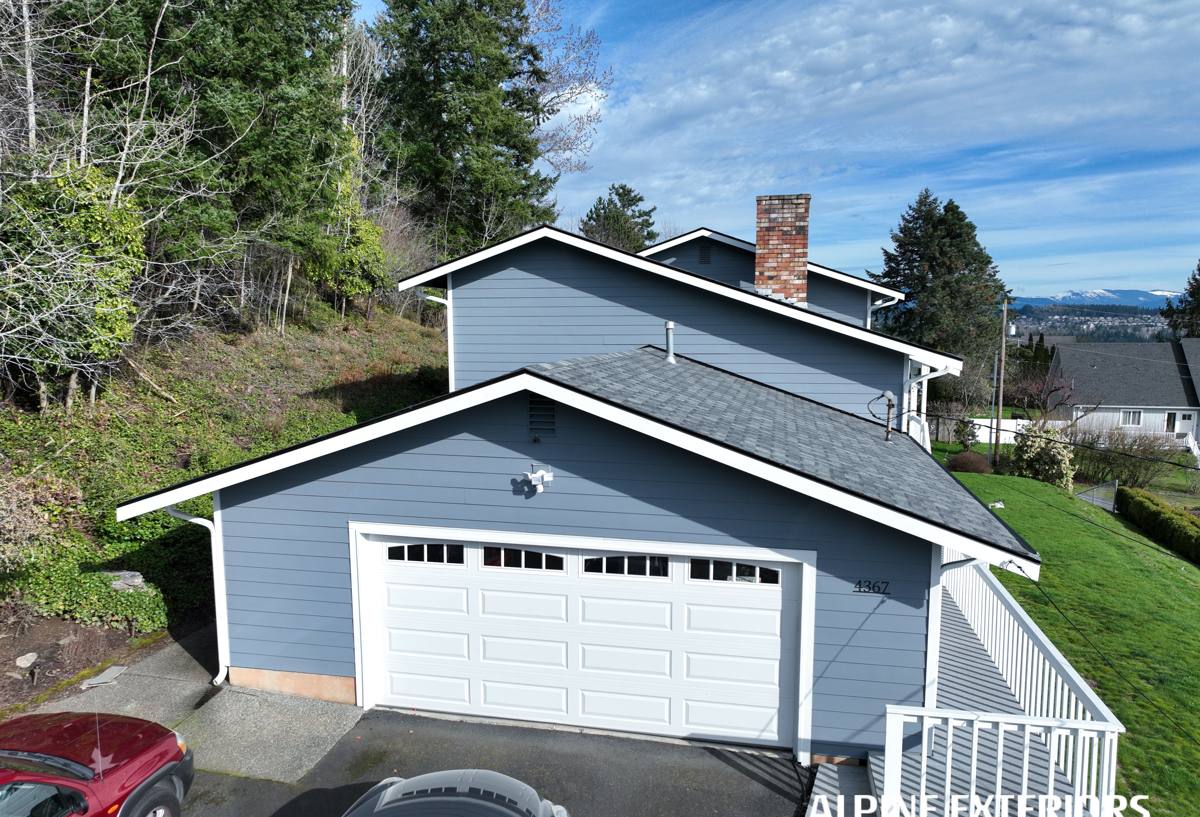
What a Proper New Roof Installation Actually Includes
"New roof" sounds simple, but it's really a stack of individual decisions, each of which affects how the roof holds up to salt, rain, and moss over the next 20-30 years. A correct installation isn't just laying new shingles over what's there — it starts underneath.
Deck Inspection and Repair
Once the old roofing is off, the plywood or OSB deck underneath gets inspected board by board. Coastal moisture has a way of finding soft spots around old nail penetrations, valleys, and anywhere moss has been holding water against the roof for years. Any rotten or delaminated sheathing gets replaced before anything new goes down — covering up a bad deck with new shingles just hides the problem for the next owner to find.
Underlayment and Wind-Driven Rain Protection
This is one of the biggest differences between a roof built for Birch Bay and a roof built for a sheltered inland lot. Wind-driven rain can push water uphill under shingle tabs and through nail holes that would never leak in calmer conditions. A synthetic underlayment with fully lapped, properly fastened seams — and self-adhered membrane at eaves, valleys, and any low-slope transitions — gives the roof a real second line of defense instead of a thin paper barrier that was only ever designed for straight-down rain.
Flashing and Fasteners That Resist Salt Corrosion
Salt air accelerates corrosion on anything less than fully corrosion-resistant metal. Standard electro-galvanized nails and thin aluminum flashing can start showing rust streaks and pinholing well before the shingles themselves are due for replacement. We spec stainless steel or hot-dip galvanized fasteners and heavier-gauge, properly coated flashing for roofs in this exposure, because replacing rusted-out flashing on an otherwise good roof is a needless repeat visit.
Ventilation to Fight Moss and Trapped Moisture
A roof deck that can't breathe stays damp longer after every rain, and damp shingles are exactly what moss spores need to take hold. Balanced intake (soffit vents) and exhaust (ridge or box vents) keep air moving under the roof deck, which shortens how long the roof surface stays wet and measurably slows moss colonization compared to a poorly vented attic.
Choosing the Right Roofing Material for a Coastal Whatcom County Home
There's no single "best" material for every Birch Bay roof — it depends on your home's style, your budget, and how much long-term maintenance you want to take on. Here's how the common options actually perform in this specific climate:
| Material | Salt Air Behavior | Moss Resistance | Typical Lifespan Here |
|---|---|---|---|
| Architectural asphalt shingle | Good with proper fasteners/flashing; the shingle mat itself doesn't corrode | Moderate — benefits from zinc/copper strips and good airflow | 20-30 years |
| Standing seam metal | Excellent when specified in a marine-grade finish (e.g., Kynar-coated steel or aluminum) | High — moss struggles to grip smooth metal panels | 40-50+ years |
| Composite/synthetic shingle | Very good; won't rust, but check fastener spec | Good to moderate depending on surface texture | 30-50 years |
| 3-tab asphalt shingle | Fair; thinner mat, more exposed fastener heads | Lower — flatter profile holds moisture longer | 15-20 years |
For most Birch Bay homeowners, the real decision comes down to architectural asphalt versus metal. Asphalt is the more budget-friendly, proven choice and performs well as long as the installation details above are followed. Metal costs more upfront but shrugs off both salt corrosion and moss almost entirely, which some waterfront owners decide is worth it over a 40+ year horizon. We'll walk you through both honestly based on your roof and budget — we don't push one product line as a one-size-fits-all answer.
Moss: A Year-Round Concern in Birch Bay
Inland Whatcom County homes deal with seasonal moss. On shaded, water-adjacent lots in Birch Bay, moss pressure can be closer to year-round, especially on north-facing slopes and anywhere tree canopy keeps a roof section from ever fully drying out. Left alone, moss lifts shingle edges, holds water against the roof surface, and shortens the life of even a well-installed roof.
A new roof installation is the right time to build moss resistance in rather than fight it after the fact:
- Zinc or copper control strips near the ridge, which release trace metal ions that inhibit moss growth on every rain
- Ventilation sized correctly for the roof's square footage, not just whatever vents happened to be there before
- Attention to valleys and low-slope sections where debris and moisture naturally collect
- A realistic gutter and downspout layout so water actually leaves the roof instead of backing up at the eaves
None of this makes a roof moss-proof forever — periodic cleaning is still part of ownership here — but it stretches out the interval between problems considerably.
Our New Roof Installation Process, Start to Finish
- On-site inspection and estimate. We look at your existing roof, attic ventilation, and any problem areas (valleys, chimneys, skylights) before quoting anything, so the estimate reflects your actual roof rather than a generic square-footage guess.
- Material selection. We go over the options above in plain terms — cost, lifespan, maintenance — so you're picking based on what matters to you, not a sales script.
- Tear-off and disposal. Old roofing comes off down to the deck. We don't install new roofing over old layers — you can't properly inspect or repair a deck you can't see.
- Deck repair. Any soft, rotten, or delaminated sheathing is replaced and documented before covering it.
- Underlayment and flashing installation. Synthetic underlayment, ice-and-water membrane at vulnerable areas, and corrosion-resistant flashing go down per the manufacturer's specs — not shortcuts.
- Roofing material installation. Shingles, panels, or composite roofing installed with the correct nailing pattern and exposure for wind and moisture conditions on your specific lot.
- Ventilation check and adjustment. Intake and exhaust vents are confirmed balanced for the finished roof.
- Cleanup and walkthrough. Job site cleared, magnetic sweep for stray fasteners, and a walkthrough so you know exactly what was done and what maintenance (if any) to expect.
What a Quality Installation Looks Like — A Homeowner's Checklist
Whether you hire us or someone else, these are the things worth confirming before and after any new roof installation in a coastal exposure like Birch Bay:
- Full tear-off to the deck, not an overlay on existing roofing
- Written scope specifying fastener material (stainless or hot-dip galvanized, not standard electro-galvanized)
- Underlayment type and coverage specified, including self-adhered membrane at eaves and valleys
- Flashing replaced, not reused, at chimneys, skylights, and wall intersections
- Attic/roof ventilation addressed as part of the job, not treated as a separate afterthought
- Manufacturer warranty terms explained in writing, including what voids them
- Local references or completed work you can actually go look at
- Current Washington contractor license, liability insurance, and bonding
Cost Factors for a New Roof in Birch Bay
Every roof is different, so we won't quote a number without seeing yours, but these are the main things that move the price up or down:
| Factor | Why It Matters |
|---|---|
| Roof size and pitch | More surface area and steeper slopes mean more material and labor time |
| Number of tear-off layers | Removing multiple old layers costs more than a single-layer tear-off |
| Material choice | Asphalt, composite, and metal span a wide cost range, as shown above |
| Deck condition | Rotten sheathing found during tear-off adds repair cost not visible from the ground |
| Roof complexity | Valleys, dormers, skylights, and chimneys all add flashing and labor time |
| Access | Waterfront lots with limited driveway or staging space can add setup time |
As a rough guide, a straightforward asphalt shingle replacement typically runs in the mid four figures to low five figures depending on size, while metal roofing runs higher upfront in exchange for a much longer service life. We'll give you exact numbers once we've actually seen your roof.
Why Hire a Crew That Already Works in Birch Bay
A roofing crew that mostly works inland can install a technically fine roof and still get the coastal-specific details wrong — the wrong fastener grade, underlayment that's adequate for calm rain but not wind-driven rain, or ventilation sized for a drier climate zone. Those mistakes don't show up on day one. They show up three or four years later as premature rust streaks, lifted shingle tabs at the eaves, or moss coming back faster than it should.
We work siding and roofing jobs throughout Custer and the surrounding Whatcom County coastline, including Birch Bay, regularly enough that the marine-exposure details aren't an afterthought — they're just how we spec the job from the start. That means fewer callbacks, a roof that actually matches the conditions it has to survive, and a crew that's still local and reachable years down the road if you ever have a question about your roof.
If you're weighing a new roof for your Birch Bay home, we're happy to take a look and walk you through what your specific roof needs — no pressure, no obligation. Use the form below to request a free estimate.