 Custer
 Bellingham Roofs Deal With a Different Kind of Weather
A roof in Bellingham doesn't fail the way a roof does in a drier climate. It's rarely one dramatic event that does the damage — it's the accumulation. Salt-laden air moving in off the water corrodes fasteners and flashing faster than inland homes ever see. Driving rain, pushed sideways by wind off the Strait, finds gaps that would never leak in a straight-down rainstorm. And then there's moss season, which in Whatcom County isn't really a season so much as most of the year — cool, damp, shaded roof slopes give moss everything it needs to take hold and start working its way under shingle edges.
When a storm hits a roof that's already dealing with that background wear, the damage tends to be worse than it looks from the ground. A few missing shingles after a windstorm might be hiding a section of underlayment that's been slowly failing for a year. That's the mindset we bring to every storm repair call in this area: look past the obvious damage to what the climate has already been doing underneath it.
Salt Air and Fasteners
Homes closer to the water see faster corrosion on exposed nails, screws, and metal flashing than homes a few miles inland in Custer or further out. Galvanized fasteners that hold up fine elsewhere can start rusting and losing grip years earlier here. When we're repairing storm damage, we're checking fastener condition across the whole repair area, not just replacing what the storm obviously loosened.
Moss, Moisture, and Decking
Moss doesn't just look bad — it holds water against the roof surface and lifts shingle edges, which gives wind a place to grab during the next storm. A lot of the "storm damage" we get called out for started as moss damage that a storm simply finished off. Any real repair has to deal with the moss and the moisture it trapped, not just the torn shingle on top of it.
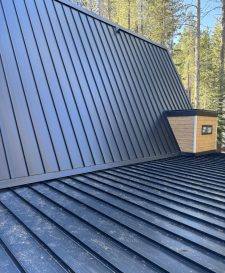
What Actually Counts as Storm Damage
Storm damage covers more than the dramatic stuff. Around Bellingham and the rest of Whatcom County, the storms that do the most roof damage are usually wind events — sometimes paired with heavy rain — plus the occasional ice or snow load in a hard winter. Here's the range of what we're typically asked to look at:
- Wind-lifted, torn, or missing shingles, especially along ridges, edges, and valleys where wind uplift is strongest
- Fallen branches or debris that puncture, crack, or dent roofing material
- Flashing pulled loose around chimneys, vents, and skylights after high wind
- Water intrusion from wind-driven rain finding a gap that never leaked before
- Granule loss on asphalt shingles from wind abrasion or impact
- Gutter and downspout damage that redirects water onto the roof edge or fascia
Obvious Damage vs. Hidden Damage
The damage you can see from your yard — a tarp-worthy hole, shingles in the gutter, a bent vent cap — is only part of the picture. Wind uplift often loosens shingles without fully detaching them, which means they'll leak the next time it rains hard but won't look wrong from the ground. That's why a proper storm inspection means getting on the roof, not just looking at it with binoculars.
What a Correct Storm Repair Actually Involves
A repair that only replaces what's visibly missing is a repair that's likely to fail again in the next storm. Doing it correctly means treating the damaged area as a system, not a patch job.
Assessment Before Any Tarp or Patch
Before any material goes down, we walk the roof and document the full extent of the damage — not just the spot that prompted the call. That includes checking adjacent shingles for lifted edges, checking decking underneath for soft spots or water staining, and checking whether moss or prior wear contributed to the failure.
Matching Materials and Fastening
Storm repairs should use materials that match the existing roof in type, weight, and where possible, color and profile — a mismatched patch is both a cosmetic problem and, on some warranties, a coverage problem. Fastening pattern matters just as much: nails placed in the manufacturer's specified nailing zone and pattern hold up to wind far better than a quick, undersized patch.
Underlayment and Flashing — the Parts You Don't See
Most roof leaks after a storm trace back to underlayment or flashing, not the shingles themselves. Any section we open up gets new underlayment underneath it and flashing that's checked (and replaced if needed) around any penetration in the repair area — chimneys, vents, skylights. Skipping this step is the single most common shortcut in storm repairs, and it's the one most likely to cause a repeat leak.
Our Process for Storm Repairs in the Bellingham Area
Because we already work in and around Custer and Bellingham, we're not learning the local weather patterns or driving in from out of the area when a storm rolls through. Our process generally runs like this:
- Immediate stabilization. If there's active leaking or an open hole, our first priority is a proper tarp-down or temporary seal to stop water from getting further into the structure — this comes before any long-term repair planning.
- Full roof assessment. We inspect the damaged area and the roof as a whole, since storm damage often shows up in more than one spot.
- Written scope and estimate. You get a clear explanation of what's damaged, what needs to be repaired, and what it will cost — before any work starts.
- Documentation. We photograph the damage in detail, which is useful whether or not you end up filing an insurance claim.
- Repair. Matching materials, proper underlayment and flashing work, and fastening done to the manufacturer's spec.
- Follow-up check. We stand behind the repair and want to know if anything looks off after the next hard rain, not months later.
Repair, Section Replacement, or Full Replacement?
Not every storm-damaged roof needs a full replacement, and not every damaged roof can be fixed with a small patch. The right call depends on the extent of the damage, the roof's age, and how much of the underlying decking and underlayment is affected. Here's a general breakdown of how we think through that decision:
| Situation | Typical approach | Cost factor |
|---|---|---|
| Isolated wind or debris damage on a roof under 10-12 years old | Spot repair matching existing materials | Lowest — limited to material and labor for the affected area |
| Damage concentrated in one slope or section, roof otherwise sound | Section replacement (tear-off and re-roof that slope) | Moderate — depends on slope size and roof access |
| Widespread damage, roof near or past expected lifespan, or moss/moisture damage found under the storm damage | Full roof replacement | Highest — but often more cost-effective long-term than repeated repairs on an aging roof |
| Storm damage plus existing insurance-covered event | Depends on adjuster scope and roof condition | Varies — we provide documentation to support your claim either way |
We'll always tell you honestly which category your roof falls into rather than defaulting to the most expensive option. If a patch will genuinely hold, we'll say so.
Working With Insurance on a Storm Claim
We're not insurance adjusters, and we don't promise a specific claim outcome — that's between you and your insurer. What we can do is give you the documentation that makes a claim easier to support: dated photos of the damage, a written description of what happened and what it takes to fix it, and a clear estimate broken down by scope of work. If your insurer sends their own adjuster out, we're glad to walk the roof with them and point out damage that isn't obvious from the ground.
Why It Matters to Hire a Crew That Already Works Bellingham
Storm damage repair isn't the place to hire the first ad you see after a bad windstorm. A crew that already works this part of Whatcom County knows what the local weather does to roofs over time, has a working relationship with local material suppliers so repairs don't stall waiting on a shipment, and understands what permits or inspections apply to a given repair versus a full replacement. Response time matters too — a tarp that goes up same-day is worth a lot more than a perfect repair scheduled two weeks out, especially with more rain likely on the way.
Reducing the Damage From the Next Storm
Storm damage repair fixes what already happened. A few maintenance habits make the next storm less likely to cause the same kind of damage, especially given how much moss and moisture pressure Bellingham-area roofs deal with year-round:
- Keep gutters and downspouts clear so wind-driven rain has somewhere to go instead of backing up under the roof edge
- Treat and remove moss on a regular schedule rather than waiting until it's visibly thick
- Trim back tree limbs that hang over or near the roofline before they become storm debris
- Have loose or lifted shingles resecured as soon as they're noticed, not after the next windstorm finds them
- Get flashing around chimneys, vents, and skylights checked periodically — these are the first places wind and rain exploit
- Schedule a roof inspection after any major windstorm, even if nothing looks wrong from the ground
If a recent storm has left your roof with missing shingles, a leak, or damage you're not sure how to assess, we're glad to take a look. Estimates are free, there's no pressure to move forward, and you'll get a straight answer about what actually needs to happen next.