 Custer
 Why Bellingham Roofs Wear Out Differently
A roof in Bellingham doesn't fail the same way a roof does in a dry inland climate. Between Bellingham Bay's salt-laden air, the driving rain that comes in sideways off the water during winter storms, and a moss season that can run eight months or longer under the region's tree cover, this is one of the tougher climates in the country to keep a roof watertight. A new roof installation here has to be built for that reality from the first course of shingles, not patched together and hoped for.
We're based in Custer, just up the road, and Bellingham is one of the communities we work in regularly. That matters because the right roofing approach for Bellingham isn't identical to what works two hours east in drier country. Fastener choice, underlayment, ventilation, and moss strategy all get adjusted for what this specific stretch of Whatcom County throws at a roof year after year.
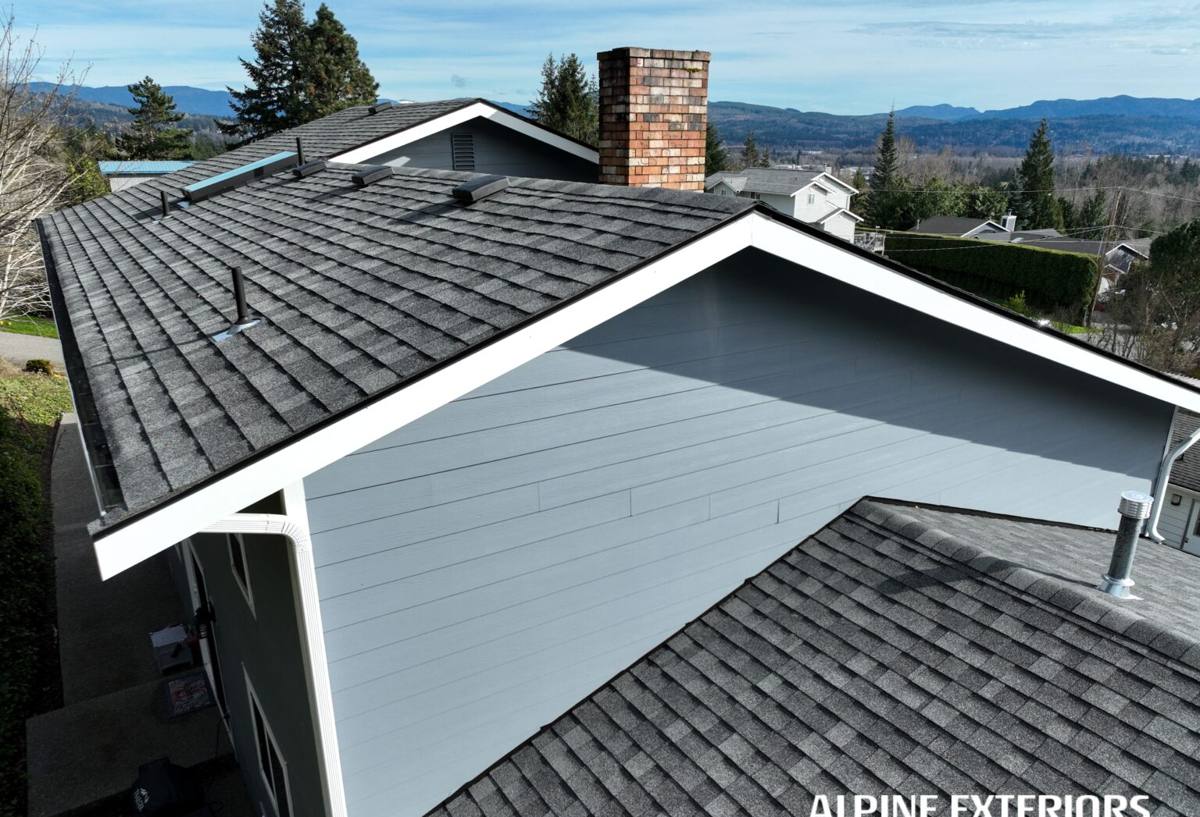
What a Correct New Roof Installation Includes
"New roof" should mean more than new shingles over the old problems. A correct installation addresses the whole system — deck, barrier layers, ventilation, and flashing — because any one weak link will eventually leak, regardless of how good the shingles on top look.
Tear-Off and Deck Inspection
We remove the old roofing down to the deck rather than layering over it. That's the only way to actually see what's underneath: soft spots, delaminated plywood, or old leaks that were never addressed. Any damaged decking gets replaced before anything new goes down. Installing over a compromised deck just hides the problem for a few more years.
Ice-and-Water Barrier and Underlayment
Eaves, valleys, and roof penetrations get a self-adhering waterproof membrane underneath the main underlayment. In a climate with sustained, wind-driven rain, water can be pushed uphill under shingles at these vulnerable points — a synthetic underlayment alone won't stop that. This is one of the details that separates a roof that holds up through a real Pacific storm from one that starts leaking at the first valley or chimney flashing.
Ventilation Isn't Optional
A roof deck that can't breathe traps moisture, and trapped moisture rots wood and shortens shingle life from underneath — you won't see it until it's a real problem. We check intake (usually soffit vents) and exhaust (ridge or box vents) together, because one without the other doesn't move air. Good ventilation also keeps attic humidity down, which matters in a marine climate where the air outside is already damp for much of the year.
Flashing Details That Get Skipped
Chimneys, skylights, sidewalls, and roof-to-wall transitions are where most leaks actually start — not the open field of shingles. New step flashing, counterflashing, and properly lapped valley metal cost more labor than reusing what's there, but reused flashing is one of the most common causes of a "new roof" that still leaks within a year or two.
Choosing a Roofing Material for This Climate
There's no single "best" roofing material — there's a best material for your budget, your roof's exposure, and how much long-term maintenance you're willing to do. Here's how the common options hold up under Bellingham's salt air, rain, and moss pressure:
| Material | Typical Lifespan Here | Moss/Algae Resistance | Relative Upfront Cost |
|---|---|---|---|
| Standard 3-tab asphalt | 15–20 years | Low — needs active upkeep | Lowest |
| Architectural (laminate) asphalt | 20–30 years | Moderate; better with algae-resistant granules | Moderate |
| Metal (standing seam or panel) | 40–50+ years | High — sheds moss and debris well | Highest |
| Cedar shake | 20–30 years with upkeep | Low — absorbs moisture, needs regular treatment | High |
Most Bellingham homeowners land on architectural asphalt shingle for the balance of cost and durability, with algae-resistant granules worth the small upgrade given how much shade and moisture this area gets. Metal makes sense on steep, hard-to-access roofs or for homeowners planning to stay long enough to value the lower lifetime maintenance. We don't install cedar shake as a standard offering — it can look great, but it demands ongoing treatment against moisture and moss in a climate this wet, and we'd rather steer clients toward something that holds up with less upkeep than sell a product we know will be high-maintenance here.
Fighting Moss and Algae Before They Start
Moss doesn't just sit on top of a roof — its root structure lifts shingle edges and holds moisture against the surface, which accelerates granule loss and eventually leads to leaks. In shaded Whatcom County yards with mature evergreen cover, moss pressure is constant, not seasonal in any real sense.
On a new installation, we build in moss resistance rather than treating it as an afterthought:
- Zinc or copper strips installed near the ridge, so rain carries trace metal ions down the roof and inhibits moss and algae growth
- Algae-resistant shingle granules where the budget allows, especially on north-facing slopes that stay damp longest
- Attention to overhanging branches and debris paths during the estimate, since trapped organic material is what gives moss a foothold in the first place
- Proper ventilation, which keeps the deck and shingle underside drier and less hospitable to growth
None of this makes a roof moss-proof forever — nothing does in this climate — but it substantially slows the buildup and stretches the years between cleanings.
Signs Your Roof Needs Replacement, Not Another Repair
Repairs make sense for isolated damage on a roof that's otherwise sound. Replacement makes sense once the roof as a system is failing. Some signs point clearly toward the latter:
- Shingles curling, cupping, or losing granules across large areas rather than one isolated spot
- Heavy moss coverage that comes back within months of cleaning, even after treatment
- Soft or spongy spots underfoot when walking the roof, indicating deck rot
- Daylight visible through the roof deck from inside the attic
- Multiple active leaks, or a leak that keeps recurring in a different spot after repair
- A roof approaching or past 20–25 years old, even without visible symptoms
If you're only seeing one or two of these and the roof is otherwise young, a repair is probably the honest answer — we'll tell you that during the estimate rather than push a full replacement you don't need.
How Our Installation Process Works
We keep the process straightforward, because a new roof is a big enough expense without added confusion about what's happening and when.
- On-site inspection — we walk the roof and attic, check the deck, ventilation, and flashing condition, and take measurements.
- Written estimate — material options, scope of work, and cost laid out clearly, with the reasoning behind our recommendation.
- Scheduling around weather — we plan installs for stretches of dry weather where possible, given how much rain this area sees.
- Tear-off and deck repair — old roofing removed, deck inspected and repaired as needed before anything new goes down.
- Installation — ice-and-water barrier, underlayment, new flashing, ventilation components, and the chosen roofing material, installed to manufacturer specification.
- Cleanup and walkthrough — site cleaned including magnetic sweep for nails, and we walk the finished roof and attic with you.
Permits and Local Code Considerations
Roof replacement in Whatcom County typically requires a permit, and the specifics depend on your jurisdiction and the scope of work. Local code also sets requirements around underlayment, ventilation ratios, and fastening patterns that account for regional wind and rain exposure. We handle the permit process as part of the job rather than leaving it for the homeowner to sort out, and we build to code as a floor, not a ceiling — meeting the minimum isn't the same as building a roof that actually holds up to a Bellingham winter.
Why a Crew That Already Works Bellingham Makes a Difference
Roofing crews that mainly work drier, inland climates sometimes bring habits that don't hold up here — skipping ice-and-water barrier because "it doesn't usually matter," underestimating ventilation needs, or not accounting for how fast moss returns under heavy tree cover. Working Whatcom County roofs regularly means we've seen how these choices play out over years, not just at the final walkthrough.
Being based in Custer also means we're a short drive away if a warranty question or storm-related concern comes up after the job is done — not a crew that installed once and moved on to the next region.
Caring for Your New Roof After We Leave
A well-installed roof still needs basic upkeep to hit its full lifespan in this climate. Keep gutters clear so water isn't backing up under the eave line, especially during heavy fall storms. Trim back branches that overhang the roof to cut down on trapped moisture and moss seeding. Have the roof looked at after any major windstorm, and plan on a moss check every year or two even with resistant materials installed — catching it early is a lot cheaper than letting it establish.
If you're weighing a new roof for your Bellingham home, we're happy to take a look and give you an honest read on what your roof actually needs — no pressure, no inflated scope. Fill out the form below and we'll get a free estimate scheduled.