 Custer
 Roofing in Sumas Faces a Different Kind of Wear
Sumas sits in a part of Whatcom County where the weather doesn't do a roof any favors. The marine air that moves in off the Salish Sea carries salt and moisture well inland, and by the time it reaches Sumas it's mixed with the driving, sideways rain that this corner of the state is known for. Add in the deep shade from mature trees on a lot of rural and semi-rural properties out here, and you get a long moss season that can run most of the year in the shadier spots. None of this is unusual for Whatcom County — it's just the reality of roofing this far north and this close to the coast.
The problem is that most roofing materials and installation details are designed with a national average climate in mind, not this one. A roof that would last two decades in a dry inland climate can start showing real problems in half that time here if it wasn't built with local conditions in mind. That's the gap a roof replacement in Sumas needs to close — not just putting on new shingles, but building a roof system that's actually suited to what it's going to face every winter.
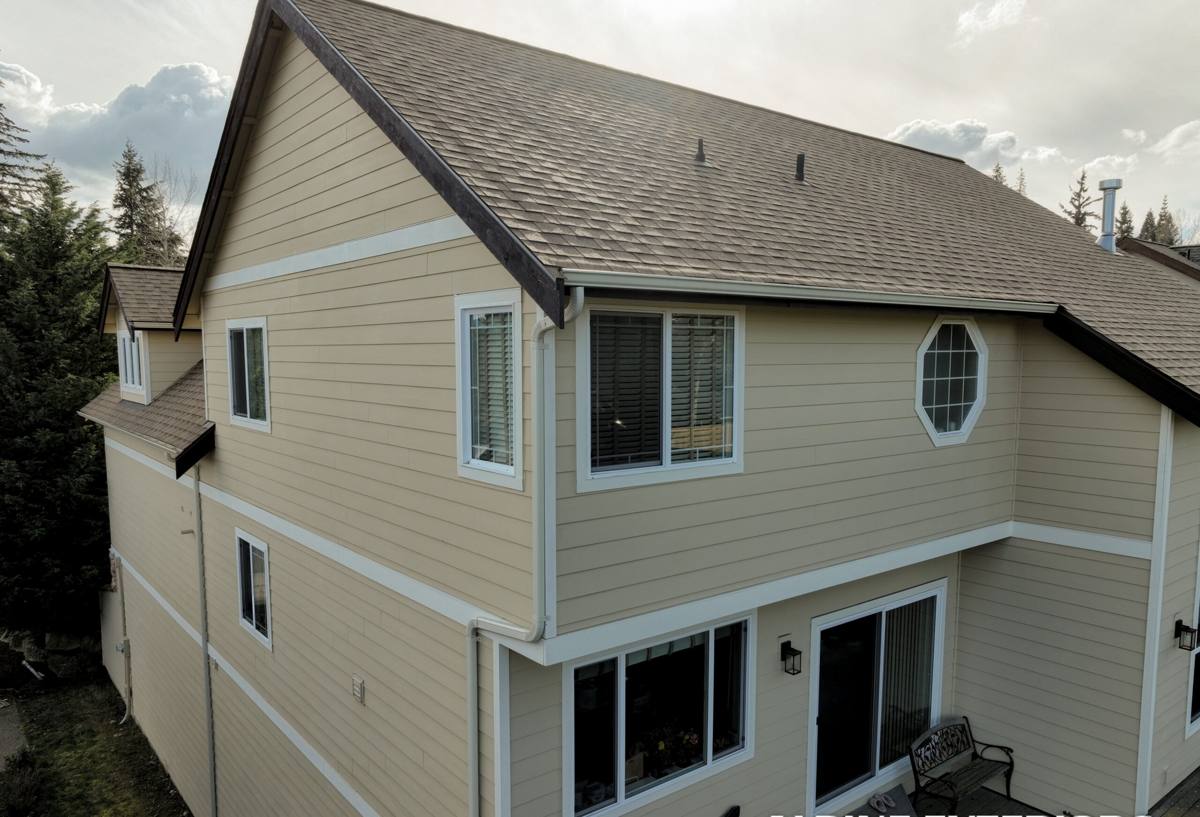
What Driving Rain and Moss Actually Do to a Roof
Wind-driven rain
Rain that falls straight down mostly runs off. Rain that comes in sideways during a windstorm gets pushed up under shingle tabs, along ridge lines, and into any flashing detail that isn't sealed correctly. Over years, this is what causes hidden leaks around chimneys, skylights, and roof-to-wall transitions long before the shingles themselves look worn out.
Moss and organic growth
Moss doesn't just sit on top of a roof looking bad. Its root structure holds moisture against the shingle surface, and as it spreads it lifts shingle edges and granules, which shortens the life of the roofing material underneath it. On shaded slopes — north-facing roofs, or roofs under tree cover — moss can establish itself within a few years of a new roof going on if the roof wasn't set up to shed water and dry out quickly.
Constant humidity
Even on days without active rain, the air here stays damp for long stretches. That moisture works its way into attic spaces without good ventilation, which leads to sheathing rot from the underside — a failure mode that has nothing to do with the shingles at all and everything to do with how the roof system was built.
Signs a Sumas Home Needs Replacement, Not Another Repair
Homeowners often ask us to patch a leak, and sometimes that's the right call. But there's a point where repeated repairs are just delaying a bigger bill. Some patterns we look for:
- Granules collecting in gutters and downspouts in noticeable amounts, not just a light dusting
- Shingles that are curling, cupping, or cracking across multiple areas of the roof, not one isolated spot
- Moss or algae staining that keeps coming back within a season or two of cleaning
- Soft spots or sagging when walked on, which usually points to sheathing damage underneath
- Daylight visible through the roof deck from inside the attic
- A roof that's past 20–25 years old (for asphalt composition) regardless of how it looks from the ground
- Multiple past repairs in different locations rather than one recurring issue
If a roof is only showing one or two of these, targeted repair can still make sense. When several show up together, that's usually the roof telling you it's at the end of its useful life for this climate.
What a Correct Roof Replacement Involves Here
A roof replacement is more than stripping old shingles and nailing down new ones. In a climate like Whatcom County's, the details underneath the visible surface matter as much as the shingle brand on top.
Tear-off and deck inspection
We remove the old roofing down to the deck so we can actually see what's there. Years of trapped moisture can cause soft or rotted sheathing that isn't visible from a repair-level inspection — that gets replaced before anything new goes down.
Underlayment
Given how much wind-driven rain this area sees, we treat underlayment as a real line of defense, not a formality. Ice-and-water shield style membrane at eaves, valleys, and roof penetrations gives a sealed backup layer where wind-driven water is most likely to find a way in.
Flashing
Chimneys, skylights, vent pipes, and wall intersections are where the vast majority of roof leaks actually start. Correct flashing — properly lapped, sealed, and tied into the underlayment — is what keeps water out at these transition points over the long run.
Ventilation
Balanced intake and exhaust ventilation keeps the attic space dry and closer to outdoor temperature, which reduces the moisture buildup that leads to rot and helps the shingles themselves last longer. This is one of the most overlooked parts of a roof replacement and one of the most important in a humid climate.
Moss-conscious detailing
On shaded or north-facing slopes, we talk through options like zinc or copper strips near the ridge, which release trace amounts of metal ions that discourage moss regrowth as rain washes over them. It's not a permanent fix on its own, but it buys meaningful time between cleanings on the roofs that need it most.
Choosing a Roofing Material for This Climate
There's no single "best" roofing material for every home — it depends on the roof's exposure, the home's structure, and the budget. Here's how the common options actually compare for a property in the Sumas and Custer area:
| Material | Typical Lifespan Here | Moss/Moisture Behavior | Relative Cost | Best Fit |
|---|---|---|---|---|
| Standard 3-tab asphalt | 15–20 years | More prone to moss on shaded slopes; lowest wind resistance | $ | Budget-focused replacements, low-slope exposure |
| Architectural (laminate) asphalt | 20–30 years | Better shedding profile; still benefits from moss deterrents on shade | $$ | Most homes in this area — the common middle ground |
| Metal (standing seam or panel) | 40–50+ years | Sheds water and moss buildup very well; minimal organic growth | $$$ | Homes prioritizing longevity over upfront cost |
| Cedar shake | 20–30 years with upkeep | High maintenance burden in constant moisture; needs regular treatment | $$$ | Homeowners committed to the maintenance schedule it requires |
We'll walk through these trade-offs honestly for your specific roof rather than pushing one product. For a lot of Sumas homes, a quality architectural shingle with proper underlayment and ventilation is the practical choice — metal earns its higher cost on roofs with heavy shade, steep pitches, or where the homeowner wants to stop thinking about the roof for decades.
How Our Roof Replacement Process Works
- On-site inspection. We look at the current roof, the attic, and the specific exposure of your property — sun, shade, wind direction, tree cover — before recommending anything.
- Written estimate. A clear breakdown of material options, labor, and any deck repair contingencies, so there are no surprises once tear-off starts.
- Scheduling around the weather. We plan installation windows with Whatcom County's rain patterns in mind and keep the roof dried in at every stage of a multi-day job.
- Tear-off and deck repair. Old material comes off, the deck gets inspected, and any damaged sheathing is replaced before underlayment goes down.
- Installation. Underlayment, flashing, ventilation components, and the finish roofing material are installed to manufacturer specification and local best practice for this climate.
- Final walkthrough. We inspect the completed roof with you, cover any warranty documentation, and answer questions before we consider the job done.
Why It Matters to Hire a Crew That Already Works in Sumas
A roofing crew that mostly works dry, low-moss climates will build a technically fine roof — for a different climate. The details that matter here — how much ice-and-water membrane to use, where moss deterrent strips actually pay off, how to detail ventilation for a wet, shaded lot — come from having done this work repeatedly in Whatcom County conditions, not from a generic install checklist.
There's also a practical side to being local. A crew based near Custer can respond quickly if a problem shows up after a storm, knows which suppliers stock the materials that hold up here, and isn't guessing at how a given roof pitch and orientation will behave through a Pacific Northwest winter. That local track record is worth asking about directly when you're comparing contractors.
What to Expect for Timeline and Disruption
Most residential roof replacements in this area take one to three days of active work, depending on roof size, pitch, and how much deck repair is needed once tear-off starts. Weather is the biggest variable — we won't start a tear-off with rain in the forecast that could leave a roof exposed, so scheduling has some built-in flexibility around it. Expect some noise and vibration inside the home during tear-off and nailing, and a thorough magnetic sweep of the yard afterward to catch stray nails.
Maintaining a New Roof in This Climate
A correctly installed roof still needs some basic upkeep to hit its full lifespan out here. A simple annual routine goes a long way:
- Clear gutters and downspouts each fall before the heavy rains set in
- Have shaded or north-facing slopes checked for early moss regrowth every year or two
- Trim back overhanging branches that keep sections of the roof damp and shaded
- Check attic ventilation isn't blocked by insulation or debris
- Address any small flashing or sealant issues right away, before a small leak becomes a deck repair
If you're weighing a roof replacement for a home in Sumas or the surrounding Custer area, we're glad to take a look and give you a straightforward assessment — no pressure, no inflated urgency, just an honest read on where your roof actually stands. Use the form below to request a free estimate.