 Custer
 Composite Decking in Sumas: Built for a Damp, Moss-Prone Stretch of Whatcom County
Sumas sits at the far northern edge of Whatcom County, tucked against the Canadian border with the Nooksack floodplain and low farmland spreading out around it. It's a wetter, quieter corner of the county than the coastal towns, but the exposure a deck faces here is just as demanding: long stretches of driving rain, damp air moving in off the Salish Sea and up the valley, and a moss and mildew season that can run nearly year-round on shaded or north-facing surfaces. A deck built here has to shed water fast, dry out between storms, and resist the slow buildup of organic growth that eventually finds every low spot and shaded corner.
We install composite decking for homeowners throughout Custer, Sumas, and the surrounding stretch of Whatcom County, and the decks that hold up best out here aren't the ones with the fanciest board — they're the ones where the substructure, drainage, and fastening were done right the first time. Composite board is only as good as what's underneath it.
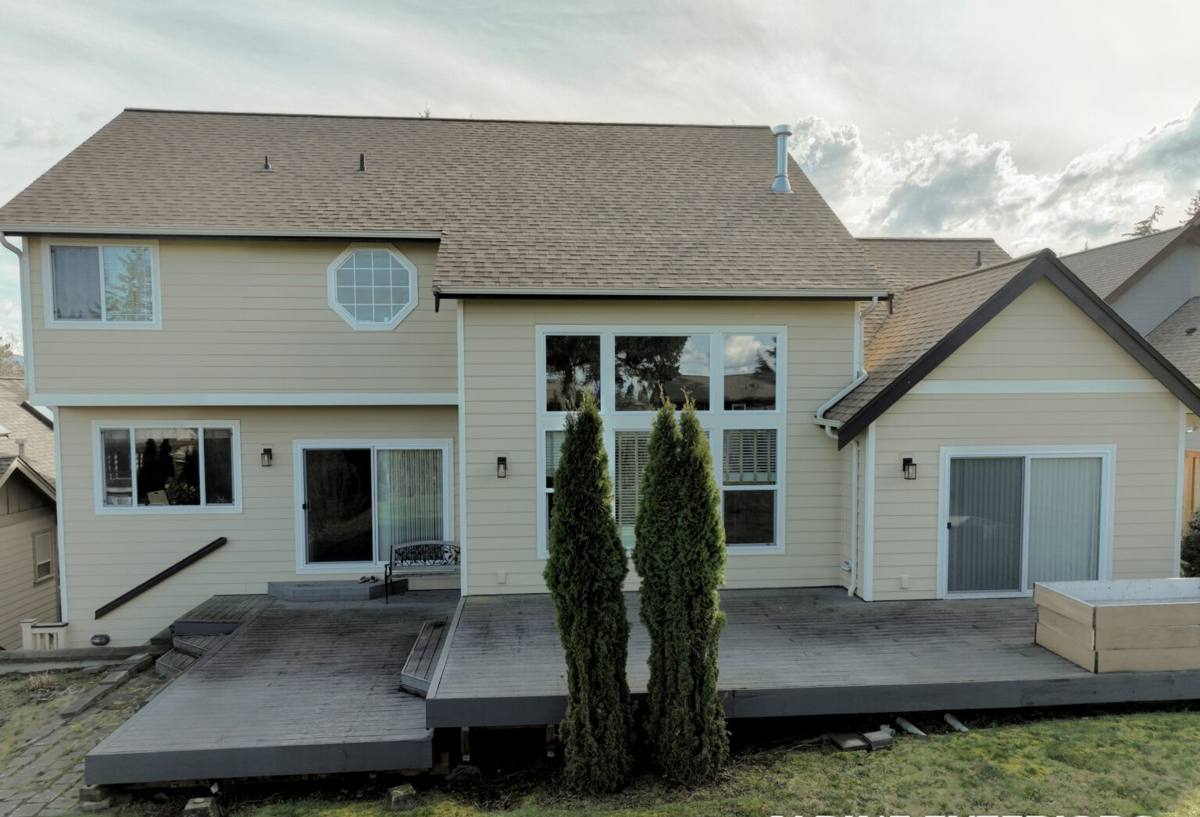
What Sumas's Climate Demands From a Deck
Driving Rain and Standing Water
Salt-laden marine air and driving rain move inland across Whatcom County for much of the year, and Sumas gets its share of both, on top of a valley setting where moisture tends to linger longer before it evaporates off. A deck surface that doesn't shed water quickly, or a substructure without a real drainage path underneath it, stays wet longer after every storm. That prolonged dampness is what breaks down fasteners, framing, and the boards themselves over time — not any single rain event.
Moss and Algae on Shaded Boards
Composite decking resists rot, but it isn't immune to surface growth. Moss, algae, and mildew will take hold on any composite board that stays damp and shaded, particularly on the north side of a house or under a covered porch roof where sun never reaches the surface. Board texture and color matter here — some capped composite products shed moss and clean up easier than others, and grain-heavy, deeply embossed boards can hold more organic buildup in the low spots of the texture.
Salt Air and Fastener Corrosion
Even well inland from Birch Bay and Drayton Harbor, Sumas gets enough salt-carrying air moving through the county to accelerate corrosion on lower-grade hardware over the life of a deck. Composite board itself doesn't corrode, but the hidden fasteners, joist hangers, and structural screws holding the whole system together will, if they're not rated for the exposure. A deck is only as durable as its weakest fastener.
Freeze-Thaw and Ground Movement
Whatcom County sees enough cold snaps most winters to put real freeze-thaw stress on footings and ground-contact posts, especially in the flatter, wetter ground around Sumas and the Nooksack floodplain. Footings that aren't set below frost depth, or posts that sit in ground that holds water, can shift slightly over a few seasons — enough to throw a deck out of level or open gaps at stair stringers and ledger connections.
What a Correct Composite Deck Build Involves
Composite decking is a forgiving, low-maintenance surface material, but it doesn't fix a poorly built frame — it just sits on top of whatever is underneath it, good or bad. A correct install in this climate covers several things most homeowners never see once the boards go down:
- Pressure-treated or naturally rot-resistant framing, sized and spaced to the board manufacturer's span rating — not stretched to save material
- Joist tape or a flashing membrane on top of every joist, so water sheds off the frame instead of soaking into cut ends and fastener holes
- A ledger board properly flashed and bolted to the house structure, with real drainage space behind it — ledger rot is one of the most common deck failures we find on older homes
- Stainless or coated, corrosion-rated fasteners and hidden fastening hardware suited to marine-influenced air, not generic hardware store screws
- Footings set to local frost depth with proper drainage around them, so ground movement doesn't telegraph up into the deck surface
- Board gapping set correctly for composite's expansion and contraction, so decking doesn't buckle in summer heat or gap excessively in winter
- Airflow underneath the deck — proper joist spacing and skirting that still allows ventilation, so the underside can dry out between rains
Choosing a Composite Board for This Climate
Not every composite product performs the same way in a wet, moss-prone environment, and the differences matter more here than they would in a dry climate. We walk homeowners through the real trade-offs rather than pushing whatever has the best margin:
| Factor | What to Look For in Whatcom County | Why It Matters Here |
|---|---|---|
| Capping | Fully capped (all four sides) composite | Uncapped or partially capped boards absorb more moisture at cut ends and edges, which shows up as swelling or discoloration faster in a wet climate |
| Surface texture | Moderate grain, not deep embossing | Deep textures trap moss spores and organic debris in shaded, damp spots; flatter textures clean off easier with routine washing |
| Color | Mid-tone over very dark or very light | Very dark boards show mineral streaking and heat differently; very light boards show mildew staining more visibly |
| Warranty structure | Read the fine print on staining, mold, and fade coverage separately from structural warranty | Most composite warranties split these out, and mold/mildew coverage in a marine climate is often more limited than the headline warranty number suggests |
| Hidden fastener compatibility | Board profile matched to a corrosion-rated hidden fastening system | Mismatched or generic fastening hardware is a common point of early failure in salt-influenced air |
Composite vs. Wood: An Honest Comparison for Sumas
Wood decking still has a place, and we install it when a homeowner wants that look or budget. But given Sumas's rain totals and moss season, composite generally makes more sense for anyone who doesn't want annual maintenance on the deck surface. The honest trade-offs:
- Wood costs less upfront, but needs annual cleaning, sealing, or staining to keep moisture out — skip a year or two in this climate and moss, graying, and soft spots show up fast.
- Composite costs more upfront but doesn't need sealing or staining, resists rot at the board level, and only needs periodic washing to stay clean — a real advantage when moss season runs most of the year.
- Composite still needs a correctly built frame underneath it. The material doesn't reduce the importance of flashing, drainage, and fastener quality — it just removes maintenance on the visible surface.
- Neither material fixes a bad substructure. A composite deck on a poorly flashed frame will still develop hidden rot in the framing, even if the boards on top look fine.
Signs an Existing Sumas Deck Needs Attention
- Boards that feel spongy, bounce, or flex more than they used to when walked on
- Persistent moss or algae growth that returns within weeks of cleaning, especially on shaded sections
- Visible gaps, movement, or staining at the ledger board where the deck meets the house
- Rust streaking at fastener locations or visibly corroded hardware at stair connections
- A deck surface that stays visibly wet or damp long after the rest of the yard has dried out
- Railings or stair stringers that feel loose or have shifted slightly from level
Repair, Resurface, or Full Rebuild?
We inspect the framing before recommending anything. If the substructure is sound and the issue is limited to aging or damaged boards, resurfacing with new composite decking over the existing frame can make sense. If we find ledger rot, undersized framing, or footings that have shifted, patching the surface without addressing the structure underneath just delays a bigger repair. We tell homeowners which situation they're actually in before quoting either option.
How We Handle a Sumas Composite Decking Project
- On-site assessment. We look at the existing structure (if there is one), house connection points, drainage patterns, sun and shade exposure, and how the space will actually be used before recommending a board or layout.
- Board and layout selection. We walk through composite options suited to this climate — capping, color, and texture — along with a straightforward cost breakdown, no pressure toward a particular brand.
- Framing and flashing built to hold up here. Pressure-treated framing, joist tape, and a properly flashed ledger connection, sized to span ratings rather than cut short to save material.
- Corrosion-rated fastening throughout. Hidden fastener systems and structural hardware matched to marine-influenced air, not generic hardware.
- Final walkthrough. We go over board care, cleaning recommendations for moss and mildew season, and what to watch for as the deck settles in through its first wet season.
Why a Crew That Already Works Sumas Matters
A deck built to a generic spec sheet, without accounting for this specific stretch of Whatcom County, tends to show its weak points within a few wet seasons — usually at the ledger connection, the fasteners, or the drainage underneath the boards. We already work on homes throughout Custer and Sumas, so we're not guessing at how much rain this area sees, how long moss season really runs, or how far salt-carrying air travels inland from the coast. That local experience shows up in the details that matter most once the boards are down and the framing is out of sight — the flashing, the fastener grade, and the drainage path, not just the visible surface.
If you're planning a new composite deck or need an honest look at one that's showing its age, we're happy to come take a look. There's no pressure and no obligation — just a straightforward assessment and a free estimate using the form below.