 Custer
 Storm Damage Roof Repair in Meridian, Custer
Meridian sits in the part of Whatcom County that gets the full range of what Pacific storms can throw at a roof — wind off the water, long stretches of driving rain, and winters mild enough that moss never really stops growing. When a roof takes a hit out here, it's rarely one dramatic event. More often it's a windstorm that lifts a few shingles, followed by weeks of rain finding that opening before anyone notices a stain on the ceiling. Repairing storm damage correctly means understanding that sequence, not just patching the visible spot.
This page covers what storm damage roof repair actually involves for homes in and around Meridian — what to look for, what a proper repair includes, and how we approach the job when a Meridian homeowner calls us out.
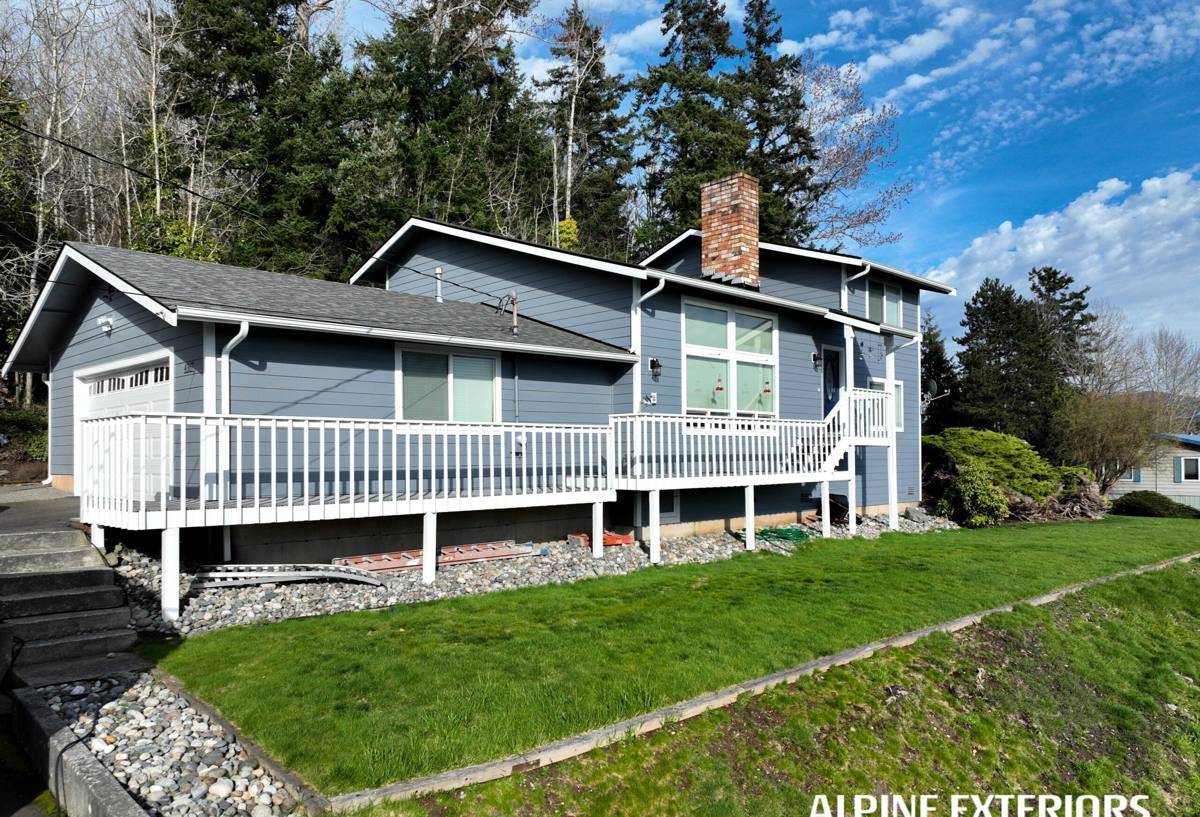
Why Meridian Roofs Take a Different Kind of Beating
Every roofing material has a service life on paper. Out here, the real-world factors that shorten that life are pretty consistent from one property to the next.
Salt Air and Metal Fatigue
Whatcom County's proximity to Puget Sound and the Strait of Georgia means salt-laden air travels further inland than a lot of homeowners expect. It doesn't rust a roof overnight, but it accelerates corrosion on flashing, fasteners, and any exposed metal edge over years. A flashing detail that would last two decades in a dry inland climate can start showing pinholes or lifted seams noticeably sooner here. Storm repair work is a natural point to check those details, since wind and rain damage often shows up first exactly where corrosion has already weakened a seam.
Driving Rain and Wind-Driven Water
A lot of storm damage in this area isn't from hail or falling limbs — it's from rain that hits a roof sideways during a windstorm. Wind-driven rain gets pushed up and under shingle edges, into nail pops, and through any gap in flashing that would never leak in a straight-down rain. That's why a roof can look fine from the ground after a storm and still be actively leaking into the attic.
A Long Moss Season
Mild, wet winters mean moss and moisture-holding debris build up on north-facing slopes and shaded valleys almost year-round. Moss doesn't cause storm damage directly, but it holds water against the roof surface and works into shingle tabs and seams, so a roof with heavy moss growth is more vulnerable when a storm hits — the material is already softened and less able to shed wind-driven water.
What Actually Counts as Storm Damage
Homeowners often assume storm damage means missing shingles or a hole you can see from the yard. In practice, most of the repair calls we get involve less obvious problems:
- Shingles lifted or creased by wind, but not fully torn off — these often reseal poorly and keep leaking intermittently
- Flashing pulled loose around chimneys, vents, or where a roof plane meets a wall
- Fasteners backed out just enough to let water track down the shaft
- Gutter and downspout damage that redirects water back under the roof edge or against fascia
- Impact damage from falling branches or debris, ranging from bruised shingles to punctured decking
- Granule loss on asphalt shingles from wind abrasion, which shortens remaining life even without a visible leak
The tricky part is that several of these can exist on the same roof after one storm event, and only one of them might be causing the leak someone actually notices inside the house.
What a Correct Repair Involves
A patch job stops the drip. A correct repair addresses why the drip started and whether the surrounding material is still sound enough to hold. That distinction matters most on older roofs, where the storm damage is often the first visible sign of underlying wear that's been building for years.
A proper storm damage repair includes:
- Identifying the actual entry point, not just the interior stain — water travels along rafters and sheathing before it shows up on a ceiling, so the visible spot and the real leak location are often several feet apart
- Checking decking condition once shingles are pulled back, since wet plywood or sheathing loses structural integrity and needs replacement, not just a shingle patch over the top
- Matching or reasonably blending replacement shingles so the repair doesn't create an obvious patchwork panel, where color and granule wear allow
- Re-securing or replacing flashing rather than just caulking over a gap — caulk is a short-term fix, not a flashing repair
- Confirming surrounding fasteners and seams are still holding before closing the repair back up
How Our Process Works
- Inspection first. We look at the whole roof, not just the reported problem area, since one storm event can create damage in more than one place.
- Honest scope. We tell you plainly whether this is a targeted repair or whether the damage points to a bigger issue worth addressing now rather than twice.
- Written estimate. You get a clear description of the work and materials before anything is scheduled — no verbal-only quotes.
- The repair itself. Decking checked, flashing corrected, shingles matched and properly fastened, and the work area cleaned up when done.
- Follow-up. We tell you what to watch for afterward, especially if the repair was done ahead of another storm system moving through.
Repair vs. Full Replacement: What Actually Decides It
Not every storm-damaged roof needs a full replacement, but not every one should be patched indefinitely either. These are the factors that actually drive that decision:
| Factor | Favors Repair | Favors Replacement |
|---|---|---|
| Extent of damage | Isolated to one section or slope | Spread across multiple areas or slopes |
| Roof age | Well within expected service life | Already near or past typical lifespan |
| Decking condition | Dry, sound sheathing underneath | Soft, delaminated, or repeatedly wet decking |
| Shingle match | Similar shingles still available or blend acceptably | Discontinued style or heavy color/granule mismatch |
| Typical cost range | Often a few hundred to roughly $1,500 for a targeted repair | Often several thousand and up, depending on size and material |
Those cost figures are broad and vary a lot with roof size, pitch, material, and access — we won't put a real number on it until we've actually looked at your roof.
Insurance and Storm Damage Claims
Many storm-related roof repairs in this area do get filed as insurance claims, particularly after a named windstorm event. A few things worth knowing going in:
- Document the damage with photos as soon as it's safe to do so, before any temporary tarping or cleanup changes the scene
- An adjuster's inspection and a contractor's inspection serve different purposes — we can provide a written scope of the roofing work needed, but we don't represent your insurer or negotiate the claim for you
- Wear-and-tear damage (like a roof that was already near the end of its life) is usually treated differently than sudden storm damage, so an honest assessment of both matters for how the claim gets handled
What to Do in the First 24-48 Hours After a Storm
What a homeowner does right after a storm affects how well the eventual repair goes. This is the practical checklist we give Meridian customers:
- Check the attic or upper closets for fresh water stains, damp insulation, or a musty smell, not just the ceiling below
- Look at the roofline from the ground for obviously lifted, missing, or torn shingles — don't get on the roof yourself, especially on wet or steep sections
- Check gutters and downspouts for debris blockages that could be backing water up under the roof edge
- Photograph anything visible from the ground or from inside before you touch or clean anything
- Get a tarp over an active leak only if it's safely accessible, or call for temporary protection rather than climbing up in wet, windy conditions
- Call for an inspection promptly — a small storm repair left open to weather for weeks tends to turn into a bigger repair
Why a Crew That Already Works Meridian Matters Here
Storm damage repair isn't a generic skill applied the same way everywhere. A crew that regularly works roofs in Meridian and around Custer already has a feel for which details tend to fail first in this specific mix of salt air, wind-driven rain, and moss buildup — and that shapes what we check first, not just what we fix last. It also means we're not learning the regional climate on your roof. We know what a wind-lifted shingle looks like three weeks into a wet spell versus three days after the storm, and that difference changes what the repair needs to include.
Local also means accountability. We're not driving in from out of the area for a one-time job — we're doing work on roofs in a community we're going to keep serving, which is exactly the incentive you want in a contractor doing storm repair.
Get a Straight Answer on Your Roof
If a recent storm left you with a stain on the ceiling, a shingle in the yard, or just a nagging feeling you should have someone look before the next system rolls through, we're happy to take a look. The estimate is free, there's no pressure to sign anything on the spot, and you'll get a plain-English explanation of what we find and what it would take to fix it. Use the form below to get started.