 Custer
 Why Siding Replacement Looks Different in Everson
Everson sits in the Nooksack River valley, close enough to the water and to the marine air moving in off Bellingham Bay that homes here take a specific kind of beating. It's not one dramatic storm that wears out siding in Whatcom County — it's the accumulation. Salt-tinged air off the Strait works into seams and fastener heads. Driving rain, pushed sideways by wind off the valley, finds every gap in a housewrap or flashing detail that wasn't done right the first time. And because this part of Washington stays cool and damp for most of the year, moss and algae get a long runway to establish themselves on anything with texture or shade.
None of that means Everson homes need something exotic. It means the replacement has to be done with those specific stresses in mind — the right material, the right water management behind it, and installation details that don't leave shortcuts for moisture to exploit.
What Old Siding in This Area Usually Tells Us
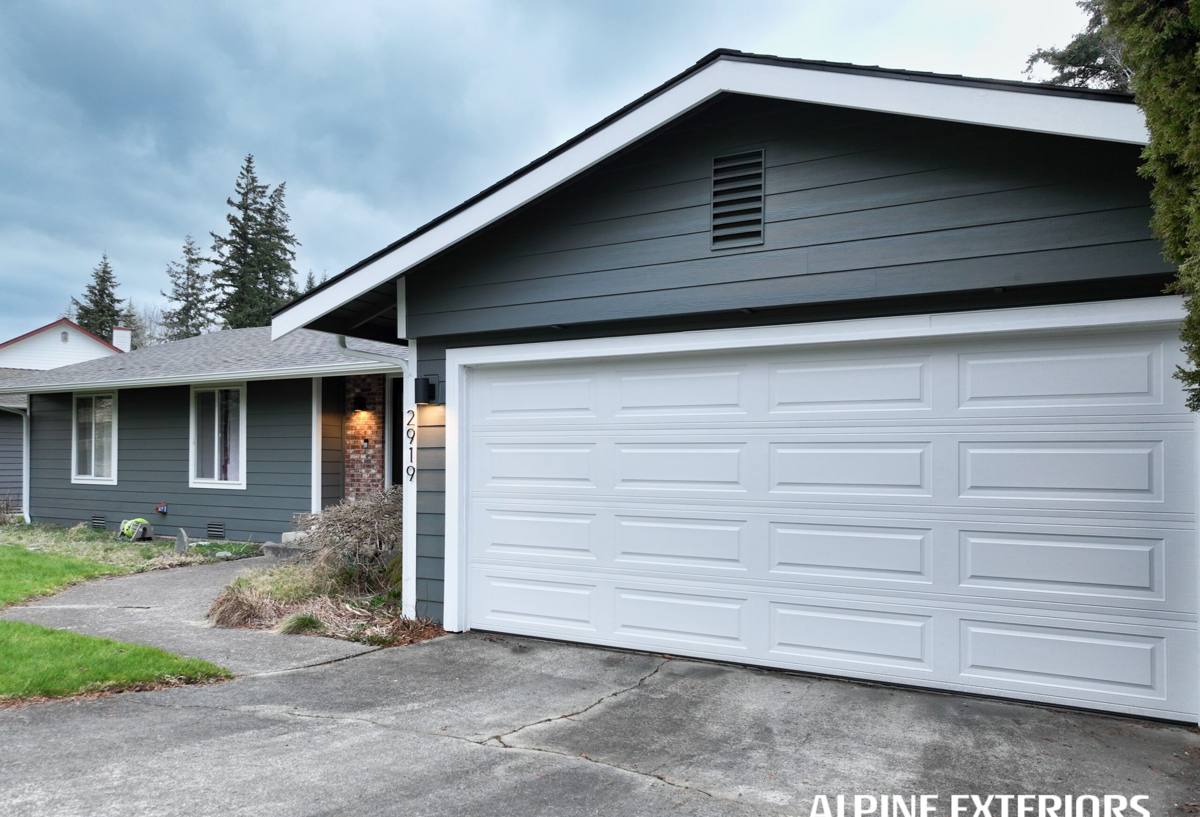
When we pull siding off a home in or around Everson, a few patterns show up often enough that we plan for them before we start:
- Soft or delaminating wood siding — cedar and old primed wood products that have taken on moisture for years, especially on north- and west-facing walls that see the least sun and the most weather.
- Failed or missing housewrap — older homes, and some newer ones done in a hurry, with water-resistive barriers that were taped poorly or torn during past work.
- Moss and algae staining in lap joints and under trim — cosmetic at first, but a sign that water and organic growth have had time to sit against the wall.
- Rot at the bottom courses and around window sills — the lowest few feet of siding takes the most splash-back and standing moisture, and it's usually the first place to go.
- Rusted or popped fasteners — a giveaway that the wrong fastener type or spacing was used for the original product, or that the siding has been moving with moisture cycles for years.
Seeing these patterns before we quote a job matters. It tells us whether we're replacing siding on sound sheathing or whether there's substrate repair to plan for first — and it's the reason we always recommend an in-person look rather than a phone estimate for a full replacement.
What Correct Water Management Involves
Siding is the visible layer, but the work that actually keeps a house dry happens underneath it. A correct replacement in this climate includes:
- A continuous, properly lapped water-resistive barrier — installed shingle-style so every seam sheds water downward, not into the wall.
- Flashing at every horizontal transition: window and door heads, trim boards, deck ledgers, and roof-to-wall intersections.
- Proper drainage gap or rainscreen detailing where the wall assembly calls for it, so bulk water and incidental moisture have somewhere to go instead of sitting against the back of the siding.
- Correctly sealed and back-primed cut ends, especially at inside and outside corners where end grain is most exposed.
Skip any one of these and the new siding can look great for a season or two while the same moisture problems rebuild behind it.
Why We Install James Hardie Fiber Cement — and Nothing Else
Custer Siding installs James Hardie fiber cement exclusively. We don't offer vinyl, LP SmartSide, Cemplank, Allura, primed spruce, or cedar as alternatives, and that's a deliberate standard, not a lack of options.
Vinyl is inexpensive and low-maintenance in mild climates, but it expands and contracts significantly with temperature swings, and in wind-driven rain it relies almost entirely on the water barrier behind it — the panels themselves aren't designed to be a primary water seal. Wood-based engineered siding like LP SmartSide performs well when it stays dry, but any product with a wood-strand core is more sensitive to sustained moisture exposure than fiber cement, which matters in a valley that stays damp for much of the year. Cedar and primed spruce are traditional and attractive, but they need ongoing refinishing to hold up, and in a climate this wet that maintenance schedule gets demanding fast.
James Hardie fiber cement is non-combustible, dimensionally stable across temperature and humidity swings, and comes with a factory-applied ColorPlus finish that's baked on rather than field-painted — which means better fade and moisture resistance at the finish layer itself, one of the first things to fail on repainted wood or vinyl. Hardie's HZ5 product line is engineered specifically for climates with freeze-thaw cycles and sustained moisture, which describes Whatcom County well. It also carries a strong transferable warranty, which matters if you sell the home down the road.
We're not saying every other product is unusable everywhere — we're saying that for the moisture load Everson homes see, fiber cement is the material we're willing to put our name behind.
Comparing Common Siding Materials for This Climate
| Material | Moisture Tolerance | Maintenance | Finish Durability |
|---|---|---|---|
| James Hardie Fiber Cement | High — non-combustible, dimensionally stable | Low — occasional wash | Factory ColorPlus finish, long fade resistance |
| Vinyl | Moderate — relies on barrier behind it | Low, but can warp/crack in temperature extremes | Color molded in, but can chalk and fade over years |
| Wood-Strand (LP SmartSide) | Moderate — vulnerable if moisture is sustained | Moderate — field-applied finish needs upkeep | Depends on paint/coating maintenance |
| Cedar / Primed Spruce | Lower without diligent upkeep | High — regular refinishing needed | Weathers and needs repainting/staining |
How We Approach a Siding Replacement in Everson
1. On-Site Assessment
We walk the exterior, check for soft spots, look at the condition of trim, windows, and flashing, and identify anything the wind and rain patterns on your particular lot may have caused. Homes closer to open fields or with less tree cover tend to take more direct wind-driven rain than sheltered lots, and that affects how we plan flashing and panel layout.
2. Tear-Off and Sheathing Check
Old siding comes off and we inspect the sheathing underneath. Any soft, rotted, or delaminated sheathing gets flagged and repaired before anything new goes up — installing new siding over compromised sheathing just hides a problem instead of solving it.
3. Water-Resistive Barrier and Flashing
We install a continuous water-resistive barrier and flash every penetration and transition point according to manufacturer specifications, not shortcuts. This is the step that determines how the house performs in year eight, not just year one.
4. Hardie Installation to Manufacturer Spec
Panels and lap siding are installed with correct fastener type, spacing, and clearance from grade and other hard surfaces — a common mistake we see on older installs is siding run too close to the ground or a deck surface, which invites moisture wicking.
5. Final Walkthrough
We review the finished job with you, check caulking and trim details, and make sure everything meets both our standard and yours before we call it done.
What to Ask Before Hiring Anyone for This Kind of Work
Siding replacement is one of those projects where the visible result can look fine for a while even if the work underneath was done poorly. A few questions are worth asking any contractor bidding the job:
- Will you inspect and repair sheathing if it's found to be damaged, or is that a separate change order surprise?
- What water-resistive barrier and flashing details do you use, specifically — not just "we use house wrap"?
- Are your installers factory-trained or certified on the specific product you're installing?
- What does your warranty cover, and is it transferable if the home sells?
- Can you show examples of similar work completed in this area, in this climate?
Why Local Experience in Everson Specifically Matters
A crew that's worked in and around Everson and greater Whatcom County already knows the wind exposure patterns, the moss growth timeline, and the kind of moisture problems that show up in this valley versus a drier inland area. That's not a marketing point — it changes real decisions on a job, like where extra flashing attention is warranted, how much drainage gap to build in, and which corners of a home tend to need the most protection from driving rain. A contractor unfamiliar with the region is starting from scratch on judgment calls that local experience already answers.
Getting Started
If your siding is showing moss staining that keeps coming back, soft spots near the bottom courses, or just age and wear that make you want it handled before it becomes a bigger repair, we're happy to take a look. We'll walk the exterior with you, tell you honestly what we find, and put together a straightforward estimate — no pressure, no obligation. The form below is the easiest way to get that started.