 Custer
 Bellingham's Climate Doesn't Forgive Shortcuts
Bellingham sits close enough to the water that homes here deal with a different kind of weather load than siding contractors in drier parts of the state ever have to think about. Salt-tinged air off Bellingham Bay, wind-driven rain that comes in sideways off the Strait of Georgia, and a moss and algae season that can run nine or ten months out of the year all work on exterior siding at the same time, year after year. A siding job that looks fine on day one but wasn't detailed correctly for this exposure will show it within a few winters — soft trim, streaking, bubbled paint, or worse, moisture sitting behind the cladding where nobody can see it.
That's the whole reason a "siding installation" page for Bellingham needs to be different from a generic one. The product matters, but so does how it's flashed, how it drains, how it's fastened, and whether the crew doing the work has actually installed siding in this specific stretch of Whatcom County before.
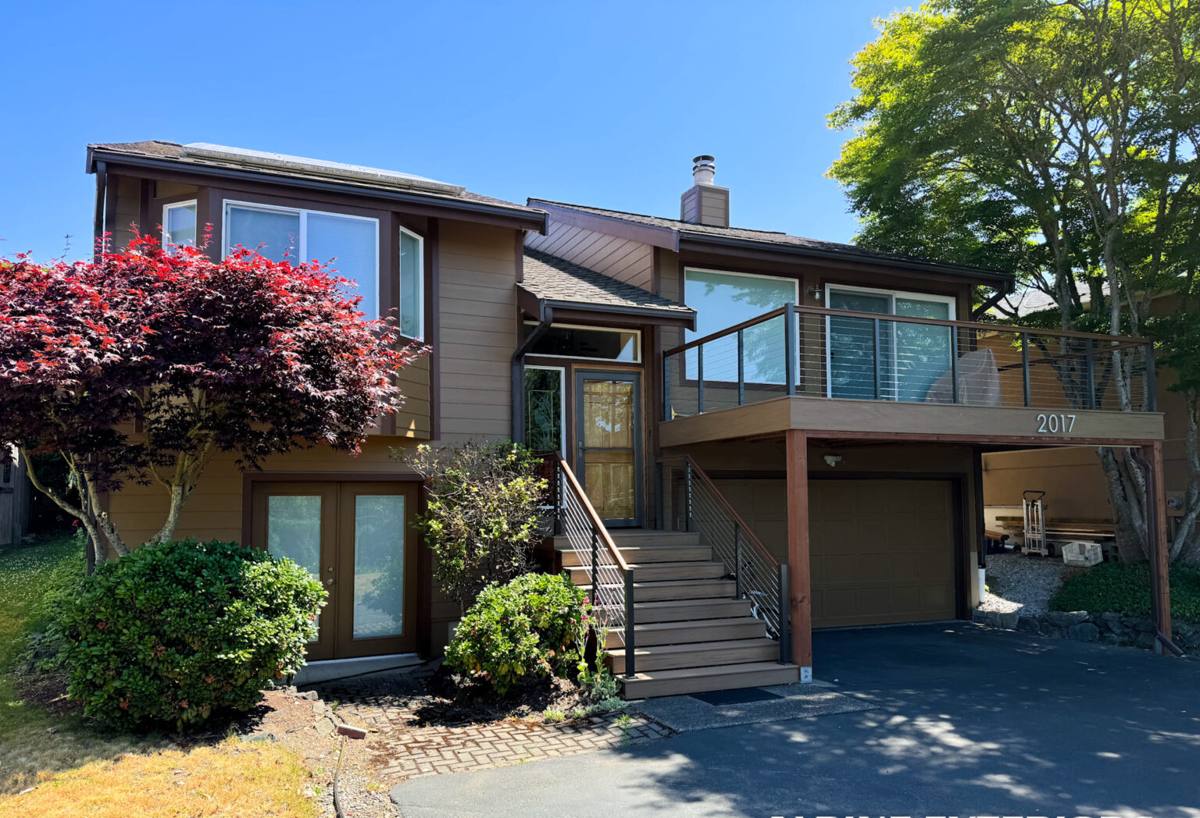
What Correct Installation Actually Means Here
Siding installation isn't just nailing panels to the wall. In a marine climate like Bellingham's, the details that don't show up in a walk-around inspection are the ones that determine whether the siding lasts 10 years or 40. A correct installation addresses:
- Weather-resistive barrier (WRB): a continuous, properly lapped water barrier behind the siding, sealed at every penetration.
- Drainage plane / rainscreen gap: a small air gap behind the siding so any water that gets past the cladding can drain and dry instead of sitting against the sheathing.
- Flashing at every transition: windows, doors, decks, roof-to-wall intersections, and especially kickout flashing where a roofline meets a sidewall — one of the most common sources of hidden rot in this region.
- Fastener schedule matched to exposure: homes closer to the bay or in more exposed, windy locations need tighter fastener spacing and correct nail placement to hold up under sustained wind-driven rain.
- Joint and seam treatment: factory-finished panel joints sealed and caulked per manufacturer spec, not just butted together.
Skip any one of these and the siding might still look good from the curb. What you can't see is moisture finding a path behind the cladding, which in a climate that stays damp this much of the year, doesn't dry out — it just sits.
Why We Install Only James Hardie Fiber Cement
We made a decision years ago to install one siding system, on every job: James Hardie fiber cement. We don't install vinyl, LP SmartSide, Cemplank, Allura, primed spruce, or cedar, and we're upfront with homeowners about why.
Vinyl is affordable and low-maintenance, but it's a petroleum-based product that expands and contracts with temperature swings, can crack in impacts, and its color is baked into thin material that fades over time — none of which pairs well with decades of damp, salt-laden air. Wood products like cedar and primed spruce look great new, but they need real upkeep — repainting, caulking, moisture monitoring — to survive Bellingham's rain season, and most homeowners don't want that maintenance schedule forever. Engineered wood products like LP SmartSide perform reasonably in drier climates but are more sensitive to sustained moisture exposure than fiber cement, which matters a great deal this close to the water.
James Hardie fiber cement is non-combustible, dimensionally stable, and doesn't absorb and swell with moisture the way wood-based products can. Its ColorPlus factory finish is baked on under controlled conditions rather than field-painted, which means better fade resistance and a finish that's far less likely to peel than site-applied paint. Hardie also builds region-specific product formulations — including an HZ5 line engineered for climates like ours — and backs the material with a strong, transferable warranty. When it's installed to spec, it's simply the product we trust to hold up on this coastline.
Our Installation Process, Step by Step
Every Bellingham job follows the same disciplined sequence, whether it's a full re-side or a partial replacement after storm or moisture damage:
- On-site assessment: we walk the whole exterior, check for soft sheathing, existing moisture damage, and identify the wall's exposure to prevailing wind and rain.
- Tear-off and inspection: old siding comes off and the sheathing underneath gets inspected. Any rot or damaged sheathing is repaired before anything new goes up — covering a problem never fixes it.
- Weather-resistive barrier installation: a continuous WRB is applied and lapped correctly, shingle-style, so water is always directed outward and down.
- Drainage gap / furring: a rainscreen gap is built in so the wall assembly can drain and breathe, rather than trapping moisture directly against the sheathing.
- Flashing details: windows, doors, decks, and every roof-to-wall intersection get properly integrated flashing, including kickout flashing where it's needed — this single detail prevents a large share of the hidden water damage we see on older homes.
- Hardie panel or plank installation: installed per manufacturer fastening spec, with correct nail type, spacing, and clearance from grade and roof lines.
- Joint sealing and trim: seams, corners, and trim are sealed with compatible sealants so the whole assembly works as one weatherproof system.
- Final walkthrough: we go over the finished job with the homeowner, point out what was done at key details, and answer questions before we call it complete.
Cost Factors for Siding Installation in Bellingham
Every home is different, so we don't quote sight-unseen — but these are the factors that most often move a project's scope and price:
| Factor | Why It Matters |
|---|---|
| Home size and wall complexity | More square footage, dormers, and cut-ins mean more material and labor time. |
| Existing sheathing condition | Rot or moisture damage found during tear-off needs repair before new siding goes on. |
| Full re-side vs. partial replacement | Partial work needs careful tie-in to existing siding and flashing to avoid weak points. |
| Siding profile and texture chosen | Lap, shingle, and panel styles differ in material and install time. |
| Exposure level of the home | Homes with more direct wind/rain exposure near the bay may need tighter fastening and additional flashing detail. |
| Trim, fascia, and soffit scope | Replacing trim alongside siding gives a cleaner, more weathertight result than working around old trim. |
Signs Your Bellingham Home Needs New Siding
Because moisture damage in this climate often starts behind the siding, by the time it's visible from the outside it's usually been building for a while. Watch for:
- Persistent moss, algae, or dark streaking that returns quickly after cleaning
- Soft or spongy spots when you press on the siding, especially near the bottom edge or around windows
- Peeling, bubbling, or chalky paint on wood or engineered wood siding
- Visible gaps, warping, or cupping in siding boards
- Rising heating bills with no other clear cause, which can point to a compromised weather barrier
- Interior signs like musty smells, staining, or bubbled drywall on exterior walls
Any one of these on its own isn't necessarily an emergency, but a home showing several of them is a good candidate for a closer look before small problems become structural ones.
Choosing the Right Hardie Line and Finish for This Climate
James Hardie builds its products in climate-specific formulations, and homes in Whatcom County fall into the HZ5 zone, engineered for regions with more freeze-thaw cycling and sustained moisture exposure than the HZ10 product used in milder, drier climates. We spec HZ5 on every Bellingham job for that reason. Beyond the base product line, homeowners choose between lap siding, shingle-style panels, and vertical or board-and-batten looks, all available in a range of factory ColorPlus finishes that come pre-baked with a 15-year finish warranty on the coating itself, separate from the substrate warranty. Because the color is factory-applied, there's no field-painting seam to fail later, which matters in a climate where site-applied paint takes a beating.
Why Local Experience in Bellingham Matters
A crew that mostly works drier inland areas can install siding correctly on paper and still miss the details that matter most here — how much wind-driven rain a bay-facing wall actually takes, which roof-to-wall intersections in this area are chronic kickout-flashing failure points, or how aggressively moss and algae establish themselves on north-facing walls under tree cover. None of that is exotic knowledge, but it's the kind of thing you only really internalize by doing the work in this specific climate, on this specific coastline, repeatedly. That's the difference between a technically compliant install and one that's actually built for Bellingham.
After Installation: What Upkeep Actually Looks Like
One of the advantages of fiber cement over wood-based sidings is how little ongoing maintenance it needs — but "low-maintenance" isn't "no-maintenance." A periodic rinse to keep moss and organic growth from taking hold, an annual look at caulking around windows and trim, and prompt attention to any impact damage will keep a correctly installed Hardie system performing for decades. We're happy to walk homeowners through a simple seasonal checklist at the end of the job.
If you're weighing whether your Bellingham home needs new siding, or just want a straight answer on what a correct installation should include, we're glad to take a look. Reach out for a free, no-pressure estimate — the form below gets you started.