 Custer
 Windows Built for a Salt Air Coastline
Semiahmoo sits right up against Drayton Harbor and the Strait of Georgia, which means homes here take on a different kind of weather than houses even a few miles inland around Custer. Salt-laden air, near-constant wind off the water, and driving rain that comes in sideways during winter storms all put extra stress on window frames, seals, and flashing. A window that performs fine in a sheltered inland lot can fail early on a home with unobstructed exposure to the water.
We install windows on homes throughout the Semiahmoo area regularly, and we size the job to what this specific stretch of coastline demands — not a generic install plan pulled from a catalog. That means paying close attention to material choice, flashing detail, and sealant selection so the window holds up to salt corrosion and wind-driven moisture, not just rain falling straight down.
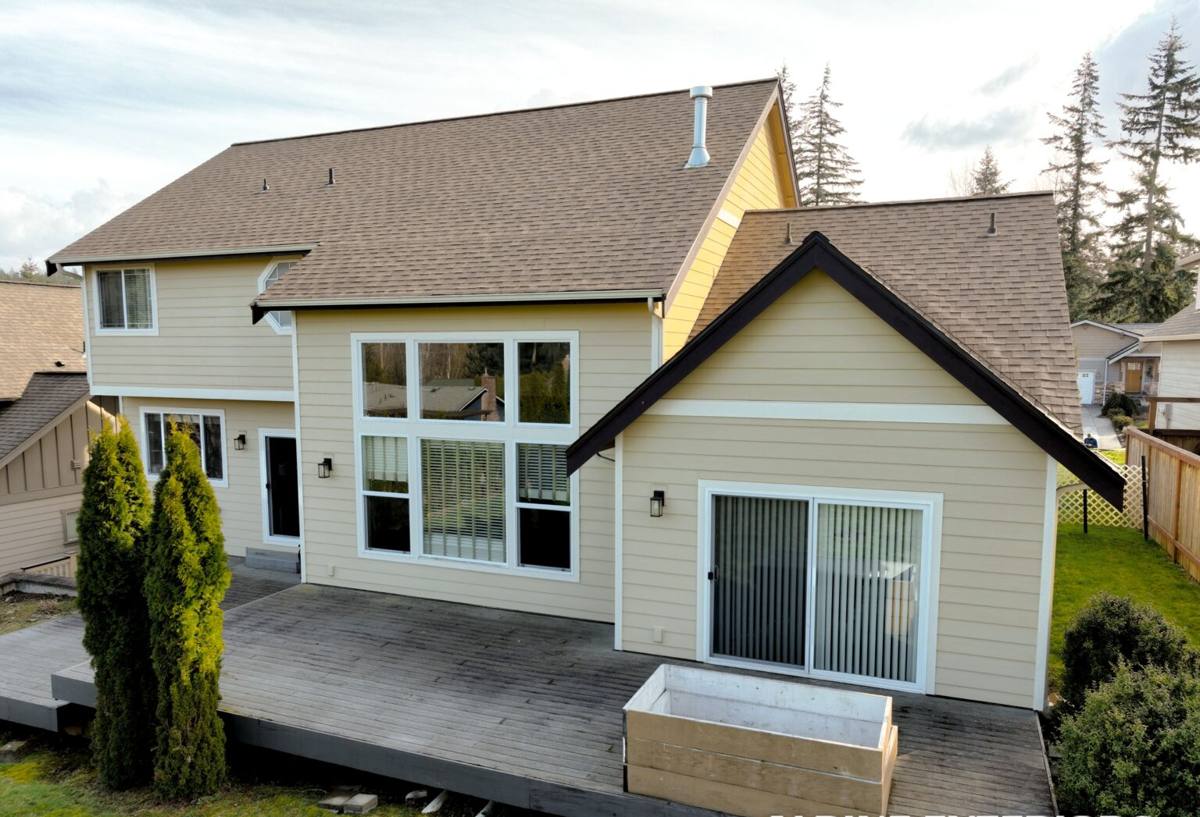
What Salt Air and Coastal Wind Actually Do to a Window
It helps to understand the specific failure modes we're guarding against, because they're different from what causes window problems in a typical inland home.
- Corrosion of hardware and fasteners: Salt in the air accelerates corrosion on exposed screws, hinges, and lower-quality cladding over time, especially on the side of a home facing the water.
- Wind-driven rain intrusion: Steady onshore wind pushes rain into gaps that would stay dry on a calmer inland lot, so flashing and sealant details matter more here than almost anywhere else in the county.
- Moss and organic growth around frames: Whatcom County's long wet season lets moss and algae take hold on north-facing trim and sills, holding moisture against the window frame for months at a stretch.
- UV and salt combined fading: Vinyl and painted wood trim near the water can fade or chalk faster than the same materials would inland.
None of these issues show up on day one. They show up two, five, or ten years in, as soft trim, stained drywall below a sill, or a window that suddenly won't latch tight. Getting the install right the first time is what prevents that timeline.
Material and Frame Choices That Hold Up Here
We don't push one brand or material as the answer for every home — the right choice depends on the home's exposure, existing siding, and budget. What we do insist on is being honest about how each option behaves in a salt-air, high-moisture environment.
| Frame Material | How It Handles Semiahmoo Conditions | Maintenance Reality |
|---|---|---|
| Vinyl | Good moisture and corrosion resistance; performs consistently near the water | Low — occasional rinse to clear salt film |
| Fiberglass | Very stable in temperature swings and wind, holds paint well | Low to moderate — repaint cycle longer than wood |
| Aluminum-clad wood | Attractive, but cladding seams need careful sealing near salt air to prevent hidden moisture behind the metal | Moderate — watch seams and touch-up as needed |
| Bare wood | Highest maintenance burden this close to the water; moss and moisture exposure shorten the repaint interval | High — we're upfront that this isn't our first recommendation for direct water-facing exposure |
Whatever material a homeowner chooses, we match the hardware finish and fasteners to resist salt corrosion, and we're clear about the maintenance schedule that choice comes with. A wood-frame window can still be the right call for the look of a home — we just want the owner to know what upkeep it needs living this close to the harbor.
Glass Packages Worth Discussing
Beyond the frame, the glass package matters for comfort and condensation control. Double-pane, argon-filled units with a low-E coating are the standard baseline we recommend for this climate — they cut down on the heat loss that a drafty older window lets through during Whatcom County's cold, wet winters, and they help resist condensation buildup on the interior glass during humid stretches. For homes with more direct wind exposure, we'll also talk through impact-resistant or heavier-gauge glass options, since sustained coastal wind puts more flex on a large pane than it would on a sheltered inland wall.
What a Correct Installation Actually Involves
The window unit itself is only part of the job. Most window failures we get called out to repair trace back to installation shortcuts, not a bad product. On a Semiahmoo-area home, we treat these steps as non-negotiable:
- Remove and inspect the opening. We pull the old window fully out rather than installing over it, so we can check the framing, sheathing, and sill for hidden rot or moisture damage before anything new goes in.
- Repair any compromised framing. If we find soft wood or water staining, we address it before the new window goes in — sealing a window into a damaged opening just hides the problem for a few more years.
- Install proper flashing, in the right order. Sill pan flashing, side flashing, and head flashing each go on in a specific sequence so water sheds outward and never gets trapped behind the window. This is the single most important step for wind-driven rain resistance.
- Use exterior-grade, salt-resistant sealant. Not all caulks and sealants are rated for sustained salt air and UV exposure — we use products chosen for this environment, not whatever's cheapest at the hardware store.
- Set and shim for a true, square fit. A window that's slightly out of square will bind, leak, or lose weatherproofing performance early, even if every other step was done right.
- Insulate the gap correctly. Low-expansion foam or backer rod and sealant around the perimeter, sized to the actual gap — overfilled foam can bow the frame and cause the window to operate poorly.
- Finish and seal the interior and exterior trim. The trim isn't just cosmetic — it's part of the weather barrier, and a gap here is a common entry point for both moisture and moss.
Signs a Semiahmoo-Area Home Needs New Windows Soon
Homeowners often wait until a window fails outright, but there are earlier warning signs worth acting on, especially in this climate:
- Visible fogging or moisture between panes — the seal has failed and the insulating gas has escaped
- Drafts you can feel with a hand near the frame on a windy day
- Soft or discolored trim or sill, often a sign moisture has been getting behind the frame for a while
- Moss or dark staining building up on the sill or lower frame that keeps returning after cleaning
- Difficulty opening, closing, or latching — frames can warp slightly from repeated wet-dry cycles
- Rising heating bills that aren't explained by anything else in the home
Any one of these is worth a look before it turns into interior damage. Given the humidity and rain volume in this part of Whatcom County, moisture problems tend to escalate faster than homeowners expect.
Why Hiring a Crew That Already Works This Area Matters
A window installer who mostly works drier, more sheltered inland jobs isn't necessarily thinking about salt-resistant hardware, sill pan flashing sequencing for wind-driven rain, or how fast moss builds up on a north-facing frame near the water. Those aren't exotic considerations — they're just the normal working conditions for anyone who installs windows in the Semiahmoo area regularly.
We're a Custer-based crew that works this stretch of Whatcom County, from Custer out toward the water and the Semiahmoo area, so the flashing detail, sealant choice, and frame material conversation isn't guesswork for us — it's the same conversation we have on most jobs out here. That familiarity shows up in fewer callbacks and windows that actually perform the way they're supposed to for the length of their warranty and beyond.
Our Process, Start to Finish
| Step | What Happens |
|---|---|
| 1. On-site assessment | We look at existing windows, framing condition, and the home's specific exposure to wind and water |
| 2. Honest recommendation | We walk through frame material, glass package, and cost trade-offs based on that home's actual conditions — not a one-size answer |
| 3. Written estimate | Clear scope and pricing before any work begins, no surprise add-ons mid-project |
| 4. Removal and prep | Old windows removed, opening inspected, any framing issues addressed |
| 5. Installation | Flashing, sealant, shimming, and insulation done to the standard this climate requires |
| 6. Trim and finish | Interior and exterior trim completed and sealed |
| 7. Final walkthrough | We check operation, seal, and finish with the homeowner before calling the job done |
What This Kind of Project Typically Costs
Window installation pricing depends on the number of openings, frame material, glass package, and how much (if any) framing repair is needed once the old window comes out — that last factor is impossible to price accurately without seeing the opening. As a broad range, expect single-window replacement on a straightforward opening to run from the low thousands per window, with material upgrades, larger openings, or structural repair pushing the cost higher. We don't quote firm numbers without an on-site look, because guessing on framing condition sight-unseen isn't fair to the homeowner.
If you're weighing a window replacement or new install on a Semiahmoo-area home, we're glad to come take a look and give you a straight, no-pressure estimate — just fill out the form below to get started.