 Custer
 Semiahmoo Sits in a Tougher Climate Than It Looks
Semiahmoo's location near the water is part of what makes it a desirable place to live, but that same exposure is hard on a house. Homes here take on a steady diet of salt-laden air, wind-driven rain that hits siding sideways instead of straight down, and a moss season that can stretch for most of the year in the shaded, damp corners of a lot. None of that is unique to any one street or neighborhood — it's the reality of building anywhere along this stretch of Whatcom County's coastline. What it means practically is that siding installed here needs to be treated as a system, not just a set of boards nailed to the wall. Get the details wrong and problems show up faster than they would on a house twenty miles inland.
This page is about one thing: what a correct siding installation involves for a Semiahmoo home, given what this climate actually does to a building over time, and how we approach that work.
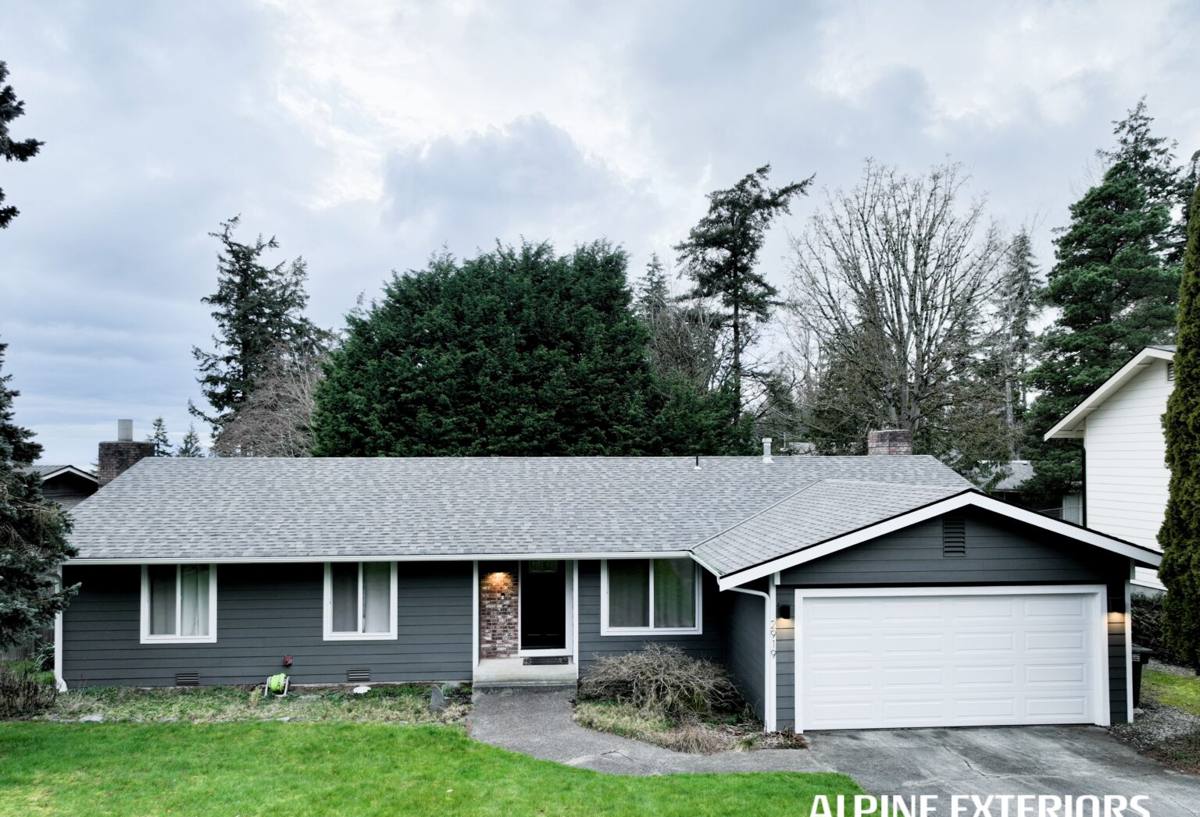
What Salt Air, Rain, and Moss Actually Do to Siding
Salt Air
Airborne salt accelerates corrosion on anything metal — fasteners, flashing, trim connectors — and it degrades some paint and coating systems faster than a standard inland exposure would. Siding that isn't rated or finished for this kind of exposure can chalk, fade, or start showing surface breakdown well ahead of schedule.
Driving Rain
Wind off the water doesn't let rain run straight down a wall — it pushes it sideways and up under laps, trim, and penetrations. A siding system with weak flap-back at the laps, undersized overlaps, or missing flashing at windows and transitions will eventually let water behind the cladding, even if the face of the siding looks fine.
Moss and Sustained Moisture
North-facing walls, areas under tree cover, and anywhere airflow is blocked stay damp longer here than they would in a drier climate. That moisture supports moss and algae growth on the siding surface and, more importantly, keeps the wall assembly wetter for longer stretches. Materials that absorb water or swell when saturated pay a real price for that extra dwell time.
Individually, none of these three things is dramatic. Together, over years, they're exactly the combination that separates a siding job that lasts three decades from one that needs attention in eight or ten years.
What a Correct Installation Involves in This Climate
A siding job is only as good as what's underneath it and around it. In a marine-exposure area like Semiahmoo, a handful of details matter more than they would somewhere drier and more sheltered:
- Weather-resistant barrier, done right: A continuous, properly lapped house wrap or building paper behind the siding, with all penetrations sealed, is the wall's real first line of defense — not the siding itself.
- Flashing at every transition: Windows, doors, decks, roof-to-wall intersections, and any place two materials meet need flashing installed to shed water outward, not siding caulked over gaps and hoped to hold.
- Correct clearances: Siding needs a gap above roof lines, decks, patios, and grade — typically an inch or more depending on the surface — so water and debris don't wick moisture into the bottom edge of the material.
- Starter strip and lap spacing to spec: Manufacturer-specified overlap and fastener placement keep wind-driven rain from finding its way behind a course of siding.
- Fastener choice: In a salt-air environment, corrosion-resistant fasteners rated for the specific cladding and exposure aren't optional — cutting corners here shows up as rust streaks and loosened boards within a few years.
- Caulking as a backup, not a fix: Sealant has a service life and should be used to supplement good flashing and lap details, not substitute for them.
Any siding product can be installed sloppily, and any siding product can hold up well if these fundamentals are respected. But some materials give you far less margin for error — and far less resistance to salt, moisture, and moss — than others.
Why Product Choice Matters More Here Than Inland
We install James Hardie fiber cement siding exclusively, and a coastal-exposure job like a Semiahmoo home is a good example of why. Fiber cement is non-combustible, dimensionally stable, and doesn't absorb and swell with moisture the way wood-based or wood-composite products can. Hardie's ColorPlus factory finish is baked on and engineered to hold up to UV and weather exposure better than field-applied paint, which matters when a house is also fighting salt air and near-constant seasonal dampness. Hardie also makes climate-specific HZ product lines, so the siding going on the wall is engineered for the moisture and temperature conditions of the Pacific Northwest specifically, not a generic national spec.
That's also why we don't install vinyl, LP SmartSide, or other engineered wood products, even though each has legitimate strengths in the right application. Vinyl can warp or become brittle with temperature swings and UV exposure over time, and its seams and expansion joints give wind-driven rain more opportunities to work behind the material. Wood-based composite sidings perform well when kept dry and well-maintained, but they're more sensitive to sustained moisture exposure than fiber cement — and sustained moisture is exactly what a shaded, damp Semiahmoo wall delivers for a good part of the year. None of that makes those products bad; it means we made a standard for our own work, and fiber cement is what we're willing to put our name behind in this climate.
A Straightforward Comparison
| Factor | James Hardie Fiber Cement | Vinyl Siding | Wood/Engineered Wood |
|---|---|---|---|
| Moisture absorption | Very low | Non-absorbent, but seams allow water intrusion | Moderate to high; sensitive to sustained wetness |
| Salt air / coastal durability | Engineered for it (HZ lines) | Can degrade/discolor faster in UV and salt exposure | Coatings and edges vulnerable to salt exposure |
| Fire resistance | Non-combustible | Combustible, can melt/deform | Combustible |
| Finish longevity | Factory-baked ColorPlus finish | Color molded in, can fade/chalk | Field-applied paint/stain, needs recoating |
| Typical maintenance | Occasional wash, repaint decades out | Occasional wash, panel replacement if cracked | Regular repainting/resealing to prevent moisture damage |
Our Installation Process
The steps don't change dramatically from house to house, but the attention paid to certain details does, based on a home's exposure. For a Semiahmoo project, our process generally looks like this:
- On-site assessment: We look at wall exposure, existing moisture damage, roofline and deck transitions, and shaded or moss-prone areas before we talk product or price.
- Tear-off and substrate check: Old siding comes off and we inspect the sheathing underneath for rot, soft spots, or existing water intrusion — this is where hidden problems get caught before they're covered up again.
- Weather barrier installation: A continuous, correctly lapped house wrap goes on with all seams and penetrations sealed.
- Flashing details: Windows, doors, and all transitions get flashed before a single piece of siding goes up.
- Hardie installation to manufacturer spec: Correct starter strip, lap spacing, fastener type and placement, and clearances at grade, roof, and deck lines.
- Trim and caulking: Sealant is used as a backup layer at the details that need it, not as a substitute for flashing.
- Final walkthrough: We go over the finished work with the homeowner and point out anything they should know for long-term care.
Cost Factors on a Semiahmoo Project
Every home is different, but the same handful of factors drive most of the price variation we see on coastal Whatcom County jobs:
| Factor | Why It Matters |
|---|---|
| Existing substrate condition | Rot or water damage found at tear-off requires repair before new siding goes on |
| Wall complexity | Dormers, multiple gables, and cut-ins take more labor and material than flat elevations |
| Trim and detail level | Corner boards, window casing, and accent details add labor time |
| Siding profile and color | Lap width, texture, and factory-finish color selection affect material cost |
| Access and site conditions | Slopes, tight lot lines, and staging space affect labor efficiency |
What Maintenance Looks Like Afterward
One of the practical benefits of a correctly installed Hardie system in this climate is how little upkeep it demands compared to other claddings. Homeowners should still expect to:
- Rinse siding periodically to knock off salt residue and organic growth, especially on shaded or north-facing walls
- Keep gutters and downspouts clear so water isn't dumping onto or behind siding at roof-to-wall transitions
- Trim back vegetation and tree cover that keeps a wall section damp and shaded longer than necessary
- Have caulking and sealant joints checked every few years, since sealant has a shorter service life than the siding itself
- Address any impact damage or loose boards promptly rather than letting a small opening become a water entry point
None of this is heavy maintenance — it's the kind of routine care any exterior benefits from — but skipping it in a salt-air, high-rainfall environment shortens the timeline before problems show up.
Why It Matters That We Already Work This Area
A siding crew that mostly works drier, more sheltered parts of the region can still do competent work, but they're solving for a different set of conditions by default. Working Semiahmoo and the surrounding Custer and Whatcom County coastline regularly means we're not guessing at flashing details for wind-driven rain, we're not surprised by moss buildup in shaded wall sections, and we're not specifying fasteners that look fine on paper but corrode faster than expected in salt air. Those are the kinds of things you only really internalize by doing the work here repeatedly, not by reading a manufacturer spec sheet once.
Signs Your Current Siding May Already Be Struggling
- Persistent moss or algae staining that returns quickly after cleaning
- Soft spots, bubbling, or visible warping, especially near the bottom courses or trim
- Rust streaking around fasteners or metal trim pieces
- Paint or finish that's chalking, peeling, or fading unevenly
- Gaps opening up at seams, corners, or window trim
- Musty smells or visible interior staining near exterior walls
If any of that sounds familiar, it's worth having someone take a real look before it turns into a sheathing repair on top of a siding replacement.
If you're weighing a siding project on a Semiahmoo home, we're happy to come take a look, walk the exterior with you, and put together a straightforward, no-pressure estimate — no obligation, just an honest read on where things stand.