 Custer
 Why Semiahmoo Decks Wear Out Faster Than You'd Expect
If you own a home near Semiahmoo, you already know your deck doesn't age like a deck fifteen miles inland. The combination of salt-laden air off the bay, near-constant fall and winter rain, and long stretches of shade and moss growth puts a specific kind of stress on wood and fasteners that most manufacturers never tested for. We've replaced enough decks in this corner of Whatcom County to know the failure patterns by sight before we even pull a board.
Salt air accelerates corrosion on anything metal — nails, screws, joist hangers, post bases. Once those fasteners start rusting, they lose grip strength long before the wood around them looks bad, which is why a deck can feel "soft" or bouncy while the surface boards still look fine. Add in driving rain that comes sideways off the water during winter storms, and water gets driven into joints and end grain that a calmer climate would never test. Then there's moss — Semiahmoo's tree cover and marine humidity keep decking damp for days after a storm, and moss holds that moisture right against the wood surface, which is exactly what accelerates rot.
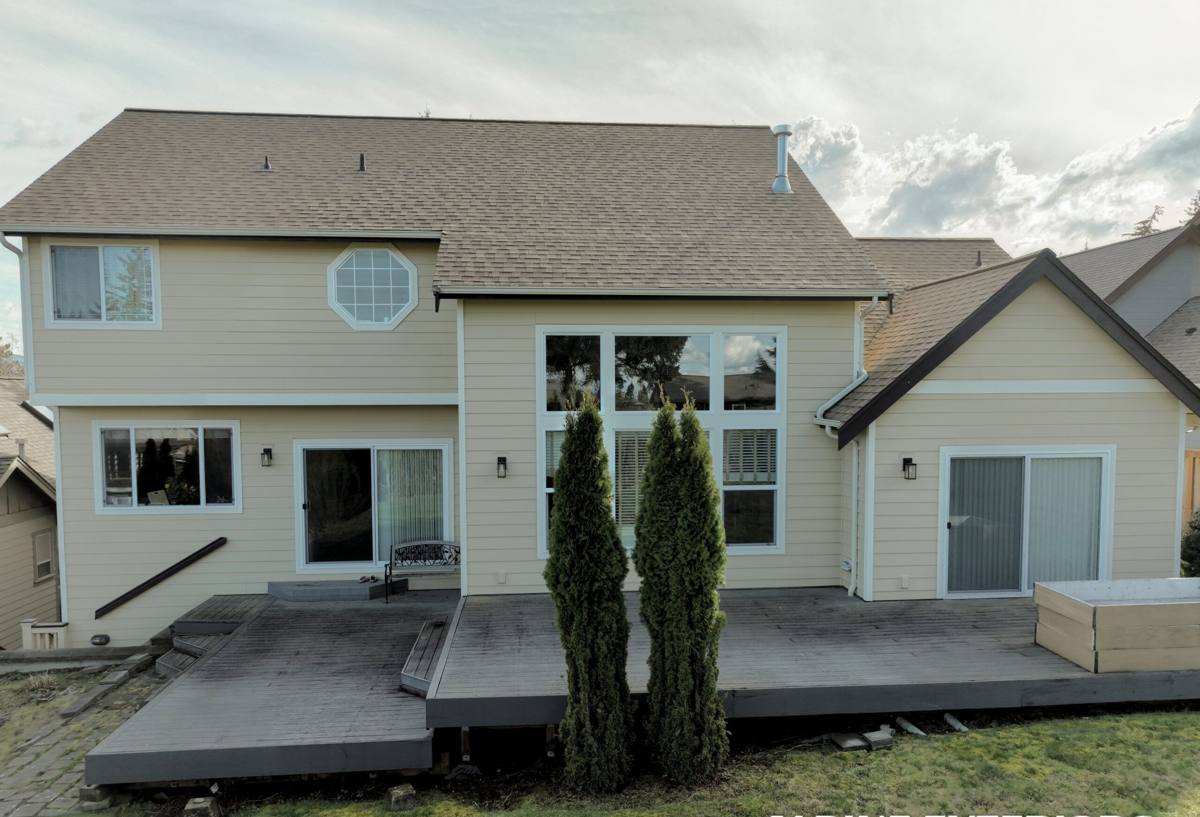
What "Correct" Looks Like in This Climate
A deck replacement done right for a Semiahmoo property isn't just about swapping old boards for new ones. It's about changing the details that let the old deck fail in the first place. That means:
- Stainless or heavily coated hardware rated for coastal/marine exposure, not standard exterior-grade fasteners
- Proper flashing and ledger board waterproofing where the deck meets the house, so driven rain can't work its way behind the band board
- Gapping and spacing between boards sized for real drainage, not just appearance, so water and debris don't pool
- Joist tape or a moisture barrier over framing members to slow the rot cycle at the number-one failure point on older decks
- Airflow underneath the deck — skirting and grading that don't trap ground moisture against the framing
Skip any one of these and you've built a deck that looks good for a season or two and then starts showing the same problems the old one had — just on a schedule that's now hidden from view until it's expensive.
The Ledger Connection Is Where Most Failures Start
On older Semiahmoo-area decks we've opened up, the ledger board — the piece that attaches the deck framing to the house — is almost always the worst of it. Builders decades ago didn't flash it the way current code requires, and driving rain off the bay finds that gap every winter. By the time it shows as a soft spot on the deck surface or staining on the siding below, the rim joist and sill plate behind it may already be compromised. Replacing the deck is the right time to fix this properly, because it's the one part of the job you genuinely cannot do right without tearing the old deck off first.
Decking Material: What Actually Holds Up Here
We get asked a lot whether composite, PVC, or real wood is "better." The honest answer depends on what you're willing to maintain and what you're trying to avoid.
| Material | How it handles salt air & rain | Moss/mildew behavior | Maintenance |
|---|---|---|---|
| Pressure-treated wood | Good if fasteners and flashing are marine-grade; wood itself is durable but end grain needs sealing | Needs regular cleaning or moss takes hold in shaded areas | Refinish/seal every 1-3 years |
| Cedar | Naturally rot-resistant, ages well in coastal air, but softer surface | Still needs periodic cleaning to prevent moss and graying | Stain/seal every 2-3 years for color; can be left to weather gray with less upkeep |
| Composite | Excellent — doesn't absorb moisture into the board itself, no end-grain rot risk | Surface can still grow mildew/moss film if shaded; needs washing | Occasional washing, no staining or sealing |
| PVC/capped polymer | Best moisture resistance of the group; unaffected by salt exposure | Least prone to moss because it holds almost no surface moisture long-term | Lowest maintenance; periodic rinse |
None of these materials fail on their own in a coastal climate — what fails is the framing, fasteners, and flashing underneath them. We'll walk you through the real trade-offs for your specific deck (sun exposure, tree cover, how much upkeep you actually want to do) rather than push one product as the answer for every home.
Signs Your Deck Is Due for Replacement, Not Just Repair
Not every deck problem means a full tear-off. But in this climate, certain signs mean repair is just delaying a bigger cost:
- Soft or spongy spots anywhere on the deck surface, especially near the house
- Visible rust streaking from screws or joist hangers
- Gaps or separation at the ledger board where it meets the siding
- Persistent moss or dark staining that comes back within weeks of cleaning
- Railing posts that wiggle at the base — often a sign the framing they're anchored to has softened
- A deck older than 15-20 years that's never had fasteners or flashing upgraded
If you're only seeing one or two of these and the framing underneath tests solid, a targeted repair can make sense. Once you're seeing several, or the framing itself is soft, replacement is almost always the more cost-effective path — repairs on failing framing tend to become a repeat expense.
Our Deck Replacement Process
1. On-Site Assessment
We start by getting under the deck, not just walking on top of it. That means checking joists, the ledger connection, post footings, and fastener condition. This is where we find out whether we're dealing with a surface problem or a structural one, and it drives an honest recommendation instead of a guess.
2. Scope and Material Discussion
We'll go over decking material options against your budget, sun/shade exposure, and how much maintenance you want going forward — including realistic cost differences, not just upfront price.
3. Tear-Off and Structural Correction
Old decking, and any framing that doesn't check out, comes off. This is the stage where ledger flashing gets corrected, footings get evaluated, and any rot gets cut back to solid wood rather than covered over.
4. Rebuild With Coastal-Grade Details
New framing (or reinforced existing framing where it's sound), correct flashing, marine-rated fasteners, and the decking material you chose — installed with the drainage and airflow details that matter for this climate.
5. Final Walkthrough
We walk the finished deck with you, point out any maintenance specifics for the material you chose, and make sure railings, stairs, and fasteners are solid before we call it done.
Cost Factors for a Semiahmoo Deck Replacement
Every deck is different, but the variables that actually move the price are consistent:
| Factor | Why it matters |
|---|---|
| Deck size and shape | More square footage and complex angles mean more material and labor |
| Framing condition | Rotted joists, posts, or footings add rebuild cost beyond the surface decking |
| Decking material | Pressure-treated is the lowest upfront cost; PVC/composite cost more but need less upkeep over time |
| Height and railing requirements | Taller decks and code-required railings add labor and material |
| Ledger and flashing work | Correcting old, unflashed ledger connections is essential here and adds time but prevents repeat failure |
| Access | Tight side yards or waterfront lots can slow tear-off and material staging |
We give straightforward, itemized estimates so you can see where the money is going — including what's driven by the coastal conditions specifically versus what any deck replacement would cost anywhere in Whatcom County.
Why a Crew That Already Works This Coastline Matters
A deck built to a generic spec sheet can still fail early here. What holds up on a dry inland lot doesn't automatically hold up a mile from Semiahmoo Bay. We work this stretch of Whatcom County regularly, so we're not guessing at how much salt exposure a fastener will see, how fast moss builds up under tree cover near the water, or how hard driving rain hits an exposed ledger board in a January storm. Those details get built into the deck from the start instead of discovered as a callback two years later.
We also know that Custer and the surrounding Semiahmoo-area homes range from older cabins with decks that were never built to current flashing standards, to newer builds where the deck was an afterthought during construction. Either way, we assess what's actually there rather than applying a one-size answer.
Maintenance That Actually Extends the Life of a New Deck
Whatever material you choose, a few habits make a real difference in this climate:
- Sweep debris and standing leaves off the deck regularly, especially in shaded areas prone to moss
- Rinse or wash the surface a couple times a year to keep moss and mildew from taking hold
- Check railing posts and stair connections annually for looseness
- Keep gutters and downspouts near the deck clear so runoff isn't dumping extra water onto or under it
- If you chose wood, stay on top of the resealing schedule rather than waiting until it visibly grays or cracks
None of this is complicated, but skipping it is how a well-built deck starts developing the same problems as the one you just replaced.
Get a Straightforward Estimate
If your deck is showing soft spots, rust streaks, or moss that won't quit, or if it's simply old enough that you're wondering whether repair still makes sense, we're happy to take a look. We'll give you an honest read on the framing, walk through material options that fit your budget and how the deck sits relative to the weather, and put together a clear estimate — no pressure, no upsell. Use the form below to request your free estimate.