 Custer
 Siding Built for What Sandy Point Actually Deals With
Sandy Point sits close enough to the water that "siding" isn't a cosmetic decision — it's the first line of defense against conditions most inland Whatcom County homes never see. Salt-laden air moves off the water and settles on everything, wind-driven rain finds its way into laps and seams that would stay dry a few miles inland, and the shaded, damp stretches of the year turn into a long moss season that can take hold on north faces and under eaves before anyone notices. A siding job done to a generic standard doesn't hold up here the way it would in a drier, more sheltered part of the county.
This page is specifically about installing new siding on a home in Sandy Point — what the material needs to survive, what a correct installation looks like in this environment, and how we approach the work differently than we would on a job set back from the water.
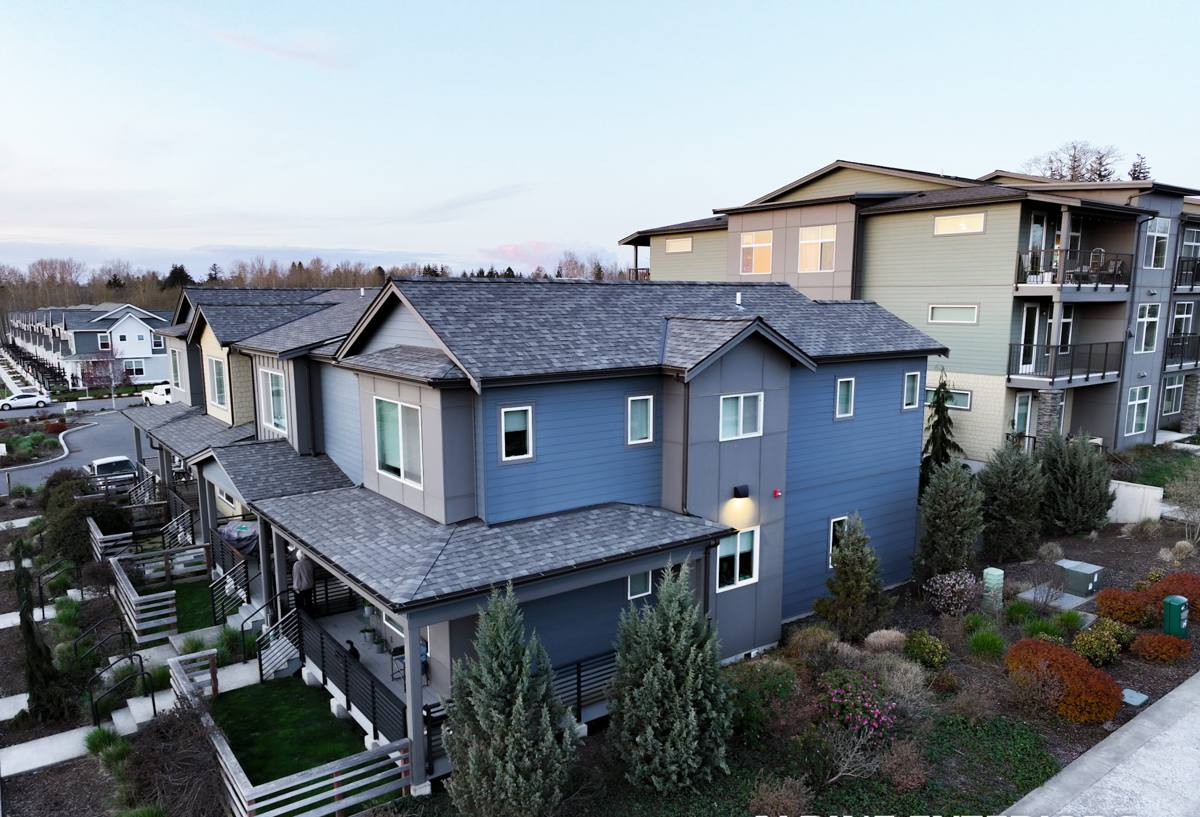
What Salt Air, Rain, and Moss Do to Siding Over Time
Three things drive almost every siding failure we see near the water in this part of Whatcom County:
Salt Air and Airborne Moisture
Salt spray carried on the wind settles into any exposed seam, fastener, or crack in the surface finish. On materials that aren't dimensionally stable or that rely on a field-applied paint film, that salt residue accelerates finish breakdown, chalking, and corrosion of exposed metal fasteners and flashing. It doesn't take a direct ocean-front lot for this to matter — Sandy Point's proximity to open water means the whole community deals with some level of salt exposure.
Driving, Wind-Pushed Rain
Rain that falls straight down is easy to shed. Rain that's being pushed sideways by wind off the water is a different problem — it gets forced up under laps, into butt joints, and around window and door trim that would stay dry in calmer conditions. Any weakness in the drainage plane behind the siding, or any gap in flashing, becomes a moisture entry point over time.
A Long Moss and Algae Season
Between the marine humidity and the number of shaded, tree-lined lots in and around Sandy Point, moss and algae growth start earlier in the fall and hang on later into spring than they would in a drier microclimate. Moss holds moisture against the siding surface for extended periods, which is exactly the condition that causes problems on materials that aren't built to handle sustained dampness.
What a Correct Installation Involves in This Environment
The siding material matters, but so does everything installed underneath and around it. A job that looks right from the curb can still fail early if these details are skipped.
Drainage Plane and Weather-Resistive Barrier
Every installation starts with a continuous weather-resistive barrier over the sheathing, lapped correctly from the bottom up so water is always shed downward and outward. In a wind-driven rain environment like Sandy Point, we pay particular attention to how that barrier integrates with window and door openings, since those are the most common points where water gets forced in during a storm.
Flashing at Every Transition
Roof-to-wall intersections, window and door heads, deck ledgers, and any place two different materials meet all need proper flashing — not just caulk. Caulk fails; flashing sheds water by design and keeps working long after a bead of sealant has cracked or pulled away.
Fastening and Cut-Edge Treatment
Fiber cement siding has to be fastened at the correct spacing and depth to perform as engineered, and every field-cut edge needs to be sealed or primed before installation. An unsealed cut edge is a weak point where moisture can wick into the board over time — a detail that matters more here than in a drier climate, and one that's easy for a crew unfamiliar with coastal installs to skip.
Fastener and Trim Material Selection
In a salt-air environment, corrosion-resistant fasteners and trim components aren't optional upgrades — they're the difference between hardware that lasts the life of the siding and hardware that starts staining or failing within a few years.
Why We Install Only James Hardie Fiber Cement
We don't install vinyl, LP SmartSide, or other fiber cement brands. On a project this close to the water, the case for James Hardie is straightforward:
- Non-combustible material — fiber cement doesn't feed a fire the way wood-based or vinyl products can, which matters for insurance and long-term peace of mind regardless of location.
- Climate-engineered product lines — Hardie's HZ5 formulation is engineered for the freeze-thaw and moisture cycling common to the Pacific Northwest, which lines up with what a coastal Whatcom County home actually experiences through the year.
- Factory-applied ColorPlus finish — the finish is baked on at the factory under controlled conditions, rather than sprayed or brushed on site. That gives it far better resistance to fading, chalking, and salt-related finish breakdown than a field-applied paint job, and it comes with its own finish warranty.
- Dimensional stability — fiber cement doesn't swell, warp, or rot the way wood-based siding can when it stays damp for extended stretches, which is exactly what happens during a long moss season.
- A strong, transferable warranty — backed by a large manufacturer with decades of installed product in wet coastal climates, not a smaller company with a shorter track record.
We're not against every other product on principle — vinyl and engineered wood sidings have their place. We simply won't put our name on an installation using a product we don't think holds up to Sandy Point's combination of salt air, driving rain, and moss for the long haul.
Our Process, Start to Finish
- On-site assessment. We look at your home's exposure — how close to the water, how much shade, which walls take the worst of the wind-driven rain — before we talk product or price.
- Tear-off and sheathing inspection. Old siding comes off and we inspect the sheathing underneath for rot or moisture damage. Any compromised sheathing gets repaired or replaced before anything new goes up — covering a bad substrate with new siding just hides the problem.
- Weather-resistive barrier and flashing. A continuous barrier goes on first, with flashing installed at every window, door, and transition point.
- Siding installation. HZ5 James Hardie boards or panels are installed to manufacturer spec — correct fastener spacing, correct clearances at grade and roof lines, and sealed cut edges throughout.
- Trim and detail work. Corner boards, window and door trim, and any transitions are finished out to shed water correctly, not just look finished.
- Final walkthrough and cleanup. We walk the finished job with you, and the site is cleaned of debris and old material before we consider it done.
Cost Factors on a Sandy Point Siding Project
Every home is different, and we won't quote a number without seeing the house, but these are the main factors that move the price up or down on a job in this area:
| Factor | Why It Matters Here |
|---|---|
| Home size and wall complexity | More corners, gables, and dormers mean more cutting, flashing, and trim work |
| Condition of existing sheathing | Rot or moisture damage found during tear-off adds repair work before new siding can go on |
| Full tear-off vs. new construction | Removing and disposing of old siding adds labor that new-build siding doesn't require |
| Product line (HZ5 vs. HZ10) | The right formulation depends on your home's specific exposure and elevation |
| Trim and accent complexity | Board-and-batten accents, shake-style panels, or custom trim details add labor time |
| Color selection | Factory ColorPlus finishes vary by line and color depth; some premium colors cost more than standard tones |
| Site access | Tight lots, limited staging area, or difficult equipment access can add time to the job |
Keeping Salt Residue and Moss From Taking Over Between Now and Then
Even the right siding, installed correctly, benefits from a little homeowner attention in this climate. A few habits go a long way:
- Rinse down siding facing the water a couple of times a year to clear salt residue before it builds up.
- Keep gutters and downspouts clear so water isn't overflowing and running down the siding face.
- Trim back trees and shrubs that keep a wall shaded and damp — airflow is the simplest defense against moss.
- Check caulking at trim and penetrations once a year and have any cracked or missing sections redone.
- Watch north-facing and heavily shaded walls first — that's almost always where moss shows up earliest.
- Don't pressure-wash siding at close range or high pressure; it can force water behind laps and trim.
Why It Matters to Hire a Crew That Already Works Sandy Point
A contractor who mostly works inland jobs isn't necessarily going to get the flashing details, fastener choices, or drainage plane wrong on purpose — but they may not know to prioritize them the way a crew that regularly works near the water does. Wind-driven rain, salt exposure, and a longer moss season aren't things every siding crew in Whatcom County thinks about daily, because not every job they do requires it.
Working in and around Sandy Point regularly means we're not guessing at how a particular wall orientation handles a winter storm, or which details tend to get missed on jobs closer to the water. That familiarity shows up in the small decisions made on-site during installation — the ones that determine whether the siding is still performing well in fifteen years or starting to show problems in five.
Get a Free Estimate
If you're planning a siding project for a home in Sandy Point, we're happy to come take a look, walk you through what your home's specific exposure calls for, and put together a straightforward, no-pressure estimate. There's no obligation — just an honest look at what your home needs.