 Custer
 Why Sandy Point Asks More of a Siding Job Than Most of Whatcom County
Sandy Point sits close enough to the water that homes there deal with a different combination of stresses than a house a few miles inland in Custer proper. Salt-laden air moves off the water and settles on every exterior surface, wind-driven rain gets pushed sideways into wall assemblies during winter storms, and the shaded, damp stretches of the neighborhood stay wet long enough each year to grow a serious moss season. None of these things alone is unusual for Whatcom County. Together, on a waterfront lot, they add up faster than most siding products are built to handle.
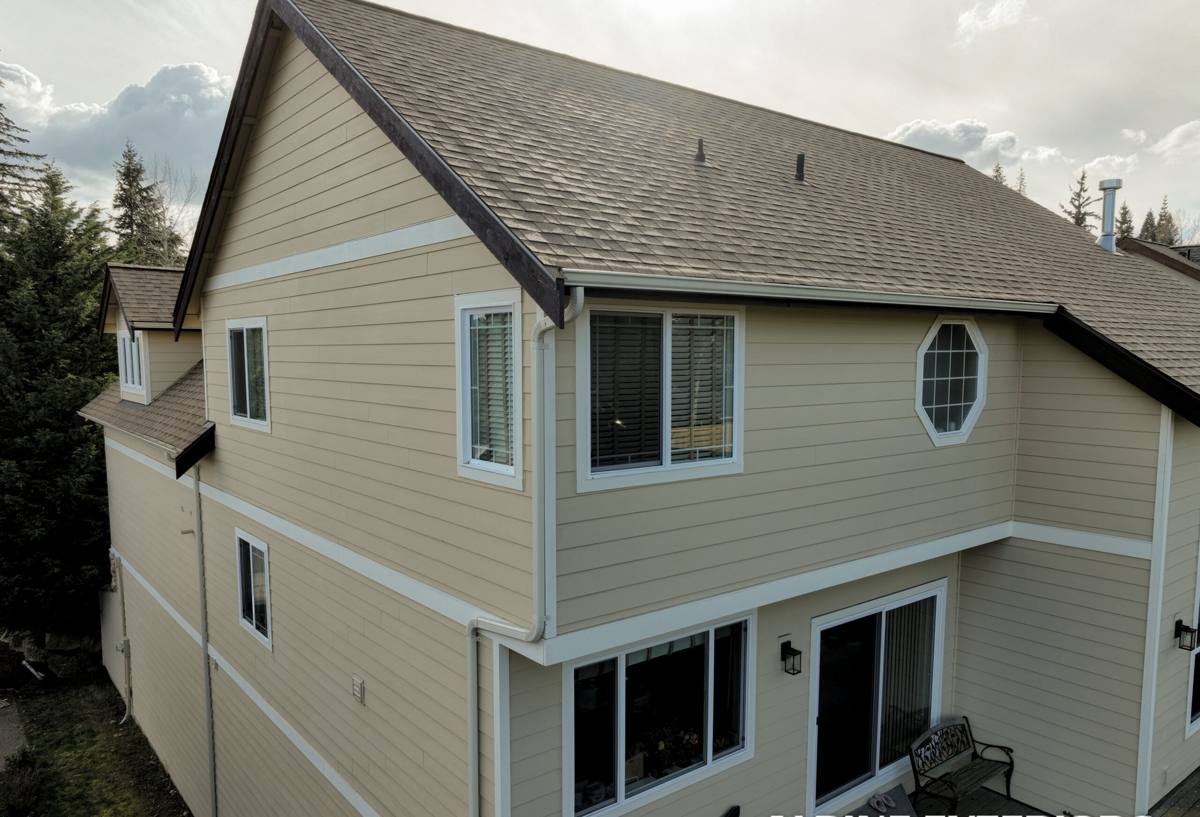
We install James Hardie fiber cement siding exclusively, and Sandy Point is one of the areas where that decision matters most. A siding material that's marginal in a typical inland yard becomes a real liability a few blocks from the water. This page is about what that means specifically for a Hardie job on a Sandy Point home — not siding in general.
What Salt Air, Driving Rain, and Moss Actually Do to Siding
Salt Air
Airborne salt is corrosive to metal fasteners, flashing, and trim hardware, and it accelerates the breakdown of coatings that aren't formulated to resist it. On many siding products, salt exposure shows up first as chalking, fading, or a chalky white residue that won't wash off. Over years, it can also work into seams and joints faster than in a non-coastal setting.
Driving Rain
Wind off the water doesn't just wet the siding surface — it pushes water horizontally and even upward at inside corners, window returns, and butt joints. Any siding system with weak seams, poor flashing detail, or gaps at penetrations will let water behind the cladding in these conditions, and once it's behind the siding, it dries slowly.
Moss and Sustained Moisture
Shaded north and west-facing walls near mature trees or dense landscaping stay damp for much of the fall, winter, and spring. That's the moss window. Moss and algae growth on siding isn't just cosmetic — sustained surface moisture is what allows less moisture-resistant substrates to soften, swell, or eventually fail at the edges.
Why James Hardie Is the Right Material Here
James Hardie fiber cement is cement, sand, and cellulose fiber — it doesn't have an organic wood component that can absorb water and swell the way wood-based sidings can. That matters directly in a moss-season environment where a wall can stay damp for weeks at a stretch. It's also non-combustible, which isn't a Sandy Point-specific climate issue but is a standing part of why we standardized on the product.
Hardie's HZ5 formulation is engineered for regions with more freeze-thaw cycling and moisture exposure, and it's the version we spec for Whatcom County jobs, Sandy Point included. The ColorPlus factory finish is baked on in a controlled environment and holds color and resists fading better than field-applied paint — a real advantage on a coastal wall that takes more UV and salt exposure than an inland one.
None of that means Hardie siding is maintenance-free on a waterfront lot. It means the material itself isn't the weak point — the installation detail is what determines how it performs over 20-plus years in this specific setting.
Comparing How Common Siding Materials Hold Up in a Sandy Point Setting
| Material | Behavior in salt air | Behavior under driving rain | Behavior in sustained moss/moisture |
|---|---|---|---|
| James Hardie fiber cement (HZ5, ColorPlus) | Non-organic substrate; factory finish resists fading/chalking | Engineered lap and joint details shed water when installed to spec | Doesn't swell or rot; surface can still host moss, needs periodic cleaning |
| Vinyl siding | Can fade, warp, or become brittle faster near salt exposure | Prone to water intrusion at seams if not lapped correctly | Won't rot, but panels can trap moisture behind them |
| Untreated or primed wood/spruce | Coatings break down faster; more frequent repainting | Absorbs water at end grain and joints | Highest risk of rot and swelling in sustained damp conditions |
| LP SmartSide (engineered wood) | Factory treatment helps, but it's still a wood-based substrate | Edge sealing is critical; cut edges are vulnerable | More susceptible to swelling at exposed or damaged edges than fiber cement |
This is why we don't install the alternatives on the right side of that table. It's not that they're unusable everywhere — it's that a site like Sandy Point exposes their weak points faster than most homeowners expect, and we'd rather stand behind one product we install correctly every time.
What a Correct Hardie Installation Involves in This Setting
The material choice is only half the equation. A Hardie installation that's rushed or done to a generic spec will still leak, stain, or fail early in a driving-rain, salt-air environment. On Sandy Point jobs, we pay particular attention to:
- Weather-resistive barrier and flashing installed and lapped correctly at every window, door, and penetration before siding goes up
- Rain-screen or proper drainage gap behind the siding so any moisture that does get behind the cladding can drain and dry
- Correct fastener type and spacing — stainless or coated fasteners rated for coastal exposure, driven per Hardie's specifications, not just "close enough"
- Proper clearance at grade, decks, and roof lines so siding isn't sitting in standing water or constant splash-back
- Caulked and sealed joints at inside corners and butt joints, using sealants rated for the movement and exposure this location sees
- Factory-cut ColorPlus edges touched up correctly where field cuts expose raw material, so the cut edge doesn't become the first failure point
Every one of these is a standard part of installing Hardie to manufacturer spec. The difference in a place like Sandy Point is that skipping any one of them shows up sooner — sometimes within a season or two — instead of years down the line.
Our Process for a Sandy Point Job
1. Site Walk and Moisture Check
We look at sun and wind exposure on each elevation, existing moss or algae staining, and any signs of past water intrusion around windows, trim, or the foundation line before we spec the job.
2. Product and Line Selection
We spec HZ5 Hardie products and the ColorPlus finish appropriate to the home's exposure, and walk through lap siding, panel, or shingle profile options based on the home's style and the elevations that take the most weather.
3. Tear-Off and Substrate Check
We remove the existing siding and inspect the sheathing underneath for any moisture damage before closing the wall back up — this is often the first real look anyone's had at that wall assembly in years.
4. Weather Barrier, Flashing, and Drainage Detail
This is the step that determines long-term performance more than any other, and it's done before a single piece of visible siding goes on.
5. Installation to Manufacturer Spec
Fastening, spacing, joint treatment, and finish work are done to James Hardie's published installation requirements, which is also what keeps the manufacturer's warranty intact.
6. Final Walkthrough
We walk the finished job with the homeowner, elevation by elevation, before calling it done.
Living With Hardie Siding in a Moss and Salt-Air Environment
Even correctly installed, siding this close to the water benefits from a little routine attention. None of this is heavy maintenance — it's mostly about not letting moss, salt film, or debris sit against the siding for months at a time.
- Rinse salt film and general grime off the siding once or twice a year with a garden hose or low-pressure wash
- Keep gutters clear so overflow isn't running down the wall and feeding moss growth
- Trim back landscaping and tree cover on shaded elevations to cut down how long those walls stay wet
- Address any moss buildup with a soft wash rather than high-pressure equipment, which can damage the factory finish
- Have caulking at joints and trim inspected every few years, since sealant is the one component that wears faster than the siding itself
Why It Matters That We Already Work in Sandy Point
A crew that mostly installs siding in drier, more sheltered parts of Whatcom County can still install Hardie correctly on paper and still get the flashing and drainage detail wrong for a waterfront lot, because they're not used to designing for that level of exposure. Working in Sandy Point regularly means we already know which elevations on a typical home here take the worst of the wind-driven rain, where moss tends to establish first, and how much drainage detail is actually needed versus what's overkill.
That local pattern recognition doesn't replace following Hardie's installation spec — it's what makes sure the spec gets applied where it actually matters on this specific site, not just where a generic checklist says it should.
Get a Straight Answer on Your Sandy Point Siding Job
If you're dealing with moss staining, wind-driven leaks, or siding that's showing its age faster than it should this close to the water, we're happy to take a look and give you a straightforward read on what's going on and what it would take to fix it right. Reach out for a free, no-pressure estimate using the form below.