 Custer
 Building Decks for Sandy Point's Waterfront Climate
Sandy Point sits close enough to the water that every deck built here has to answer to conditions most inland Whatcom County homes never deal with. Salt-laden air moves in off the water and settles on everything, driving rain comes in sideways more often than straight down, and the long gray stretch from fall through spring keeps wood and composite surfaces damp for weeks at a time. A deck that would hold up fine in a drier part of the county can start showing problems here in just a few seasons if it wasn't built with this specific environment in mind.
We've worked on homes throughout this area long enough to know which fastener finishes actually hold up, which board gaps let a deck dry out between storms, and which framing details keep water from sitting where it shouldn't. This page focuses specifically on custom deck work for Sandy Point properties — not a generic rundown of deck options, but what we've learned building decks that have to survive right where you live.
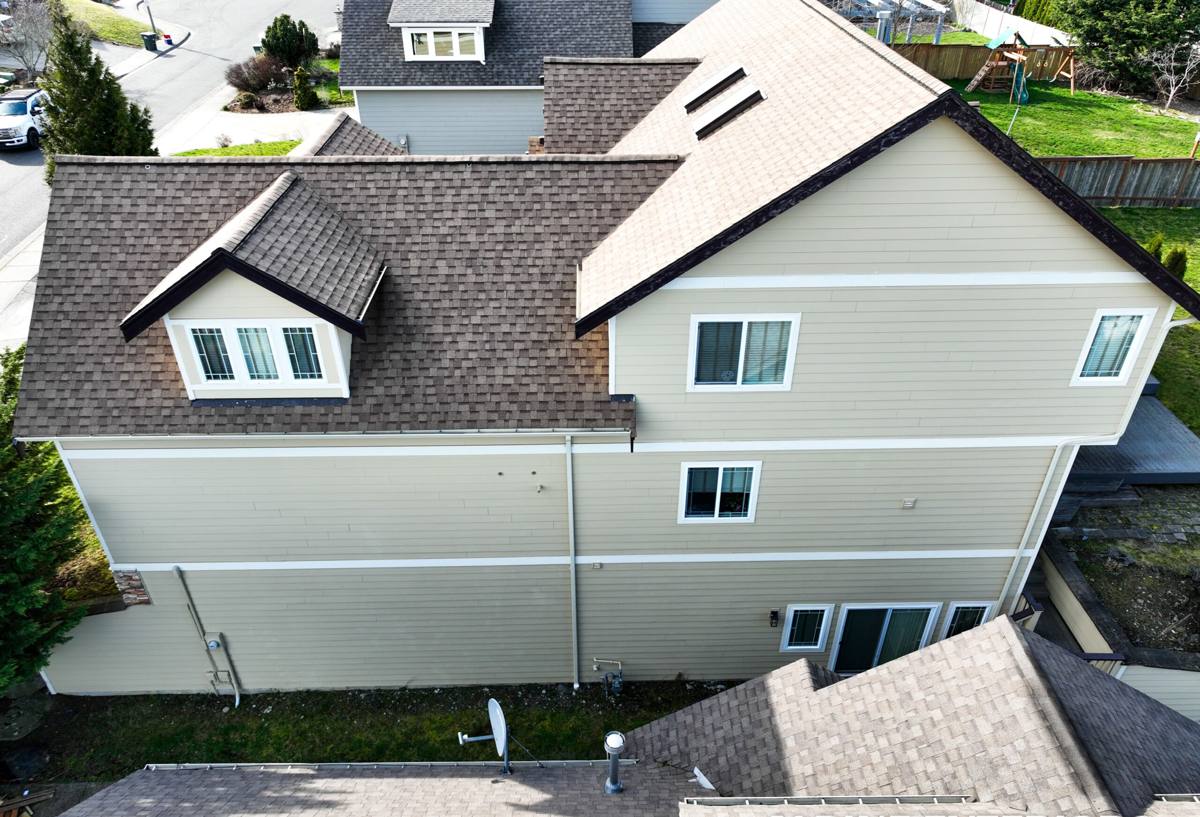
What Sandy Point's Climate Does to a Deck
Salt Air and Metal Hardware
Salt air accelerates corrosion on anything metal — screws, joist hangers, post bases, railing brackets. Standard galvanized fasteners that are perfectly adequate a few miles inland can start rusting and staining decking boards within a couple years this close to the water. Stainless steel or heavy-duty coated hardware rated for coastal exposure costs more up front, but it's the difference between hardware that lasts the life of the deck and hardware you're replacing — or worse, discovering has failed — a decade in.
Driving Rain and Water Intrusion
When rain comes in at an angle instead of straight down, it gets up under railings, into ledger board connections, and behind fascia in ways vertical rain doesn't. The ledger board — where the deck attaches to the house — is the single most common failure point we see on older decks in wind-driven rain areas, because flashing details that work for calm rain don't always block water pushed sideways by a storm coming off the water.
Moss, Algae, and Extended Dampness
Whatcom County's moss season runs long, and a shaded or low-airflow deck near Sandy Point can stay damp for much of the fall and winter. Moss and algae aren't just a slip hazard — they hold moisture against the decking surface, which accelerates rot in wood and can dull or stain composite materials if it's not addressed. Deck orientation, gap spacing, and under-deck airflow all affect how fast moss takes hold and how hard it is to keep off.
What a Correctly Built Deck Looks Like Here
A deck built for Sandy Point's conditions isn't a different structure than a deck built anywhere else — it's the same structure with the vulnerable points handled correctly for this environment. That comes down to a handful of details:
- Ledger board flashing that sheds water away from the house even when rain is hitting it sideways
- Corrosion-resistant fasteners and structural hardware throughout, not just at visible connections
- Board spacing and orientation that lets water and debris pass through and air circulate underneath
- Post bases set to keep wood-to-concrete contact points from holding standing water
- Railing hardware and connections sealed against wind-driven moisture, not just vertical rain
- A decking material choice that matches how much upkeep the homeowner actually wants to do
Skip any one of these and the deck will still look fine on installation day. The problems show up two, five, or ten years later — which is exactly why it matters who builds it and how, not just what it looks like when it's finished.
Decking Material Choices for a Coastal-Adjacent Property
Pressure-Treated Wood
Pressure-treated lumber is the most affordable option and performs fine when it's maintained — stained or sealed on a regular schedule and kept clear of standing moisture and moss buildup. In a salt-air environment, that maintenance schedule tends to be tighter than what's needed a few miles inland, since salt and moisture together break down wood surface protection faster.
Cedar
Cedar has natural rot and insect resistance and holds up well to Pacific Northwest weather, and a lot of homeowners like the look. It still needs periodic sealing to maintain that resistance and its color, and it's a softer wood, so it's more prone to surface wear near the water than composite.
Composite Decking
Composite boards don't rot, don't need staining, and resist moss staining better than wood because they don't absorb moisture the same way. The trade-off is a higher material cost and the fact that installation has to be done correctly the first time — composite doesn't forgive sloppy spacing or fastening the way wood sometimes does, and a poorly installed composite deck can trap moisture underneath just as easily as wood can.
| Material | Upfront Cost | Maintenance | Coastal Durability |
|---|---|---|---|
| Pressure-Treated Wood | Lowest | Stain/seal every 1-2 years | Good with regular upkeep |
| Cedar | Moderate | Seal every 2-3 years | Good, softer surface |
| Composite | Highest | Occasional cleaning | Excellent if installed correctly |
Framing and Structural Details We Don't Skip
The parts of a deck nobody sees are the parts that determine how long it lasts. For Sandy Point properties specifically, we pay close attention to:
Ledger Attachment and Flashing
This connection carries a huge share of the deck's structural load and is the most exposed point to wind-driven rain intrusion into the house framing. Correct flashing here isn't optional — it's the single detail most likely to cause expensive hidden damage if it's done wrong.
Joist Hangers and Fastener Selection
We use hardware rated for the exposure this deck will actually see, not just what meets minimum code in a drier climate zone. That's a small cost difference at installation and a large difference in how the structure holds up after a decade of salt air.
Post Footings
Footings set below frost depth and detailed to shed water away from the post base keep the most vulnerable structural point — where wood meets ground or concrete — from becoming a rot pocket.
Our Process for a Sandy Point Deck Project
- On-site assessment — we look at sun exposure, prevailing wind and rain direction, drainage, and how close the site is to salt spray to inform material and hardware recommendations.
- Design and material selection — we walk through wood versus composite trade-offs based on your maintenance preferences and budget, not a one-size answer.
- Permitting — we handle the permit process with Whatcom County where required for the project's size and structure.
- Construction — framing, flashing, and fastening done to the standard this environment requires, with inspection points built into our own process along the way.
- Final walkthrough — we go over the finished deck with you, including what maintenance it will need and on what schedule.
Why Hiring a Crew That Already Works This Area Matters
A contractor who mostly builds decks inland doesn't necessarily think about salt-air hardware corrosion or wind-driven rain flashing as a default — because most of the decks they build don't need it. That's not a knock on their work generally; it's just a different set of conditions. A crew that regularly works Sandy Point and the surrounding Custer area already has the hardware specs, flashing details, and material trade-offs for this exact environment worked into how we build, not treated as an upgrade or an afterthought.
We're also familiar with the practical side of building here — typical site access, drainage patterns common to the area, and what Whatcom County's permitting process requires for deck projects of different sizes.
Maintaining a Deck Built for This Environment
Even a correctly built deck needs some ongoing attention in this climate. A simple seasonal checklist:
- Clear moss and debris from board gaps before it holds moisture through the winter
- Check railing and stair hardware annually for corrosion, especially near the water side of the property
- Reseal or restain wood decking on the schedule appropriate to the material
- Confirm ledger flashing and any caulked joints are still sealed after major storms
- Keep gutters and downspouts near the deck clear so runoff isn't draining directly onto or under it
If it's been a while since your deck had a real look, or you're planning a new one and want it built for what Sandy Point actually throws at it, we're happy to come take a look. Request a free, no-pressure estimate using the form below.