 Custer
 Siding Installation on a Peninsula That Doesn't Forgive Shortcuts
Point Roberts sits on its own peninsula at the end of Whatcom County, surrounded on three sides by water and reachable by land only through Canada. That geography isn't just a curiosity — it shapes how siding behaves on homes here. Wind off the Strait of Georgia carries salt spray onto exterior walls, driving rain hits with more force and from more directions than it does further inland, and the tree cover and marine humidity that make the peninsula beautiful also make it one of the mossiest environments in the county. A siding job that would hold up fine in a drier, more sheltered part of Whatcom County can fail early out here if it isn't installed with these conditions specifically in mind.
This page is about one thing: what it actually takes to install siding correctly on a Point Roberts home, and why that installation needs to account for salt air, driving rain, and a long moss season rather than following a generic playbook.
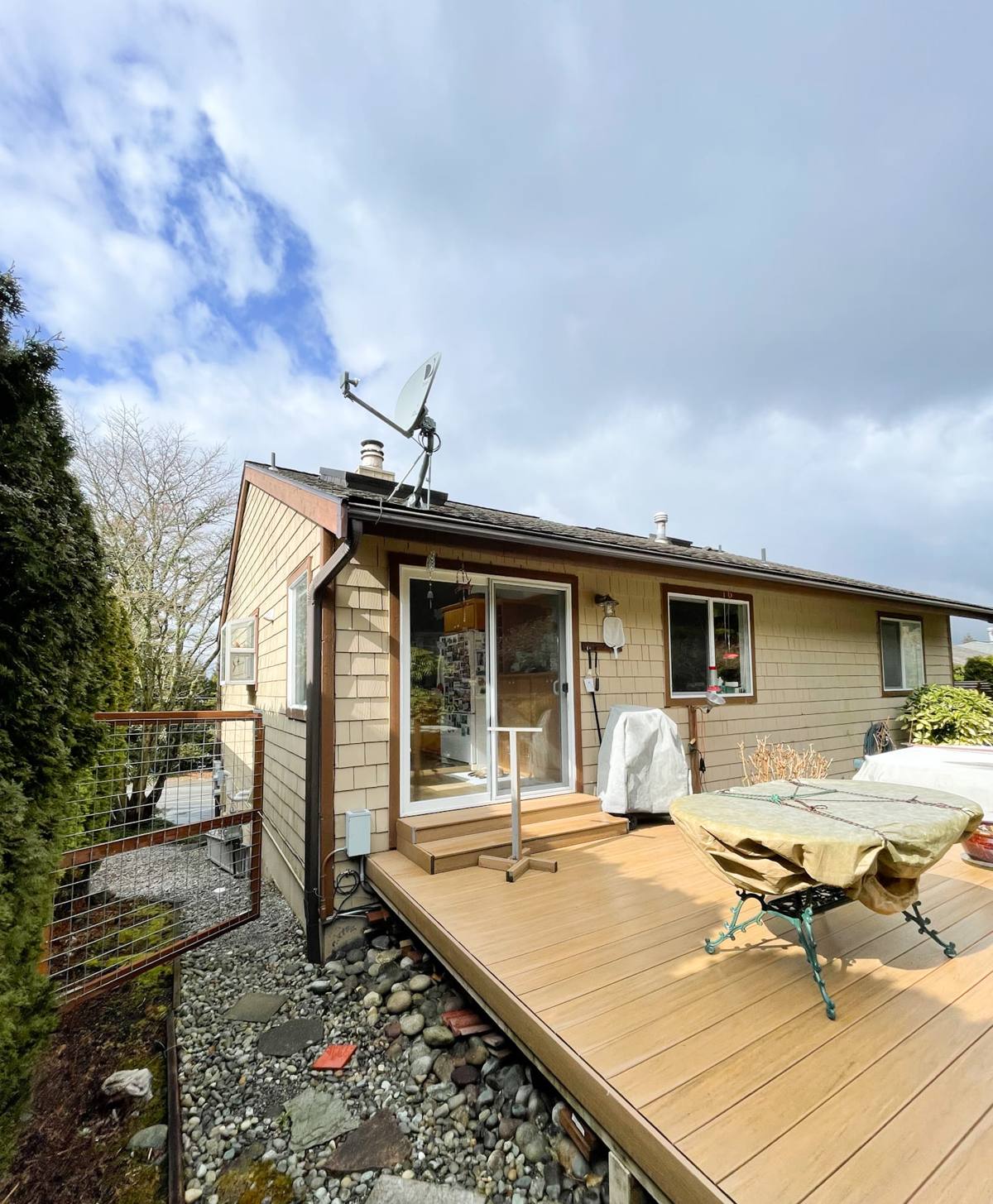
What Salt Air, Driving Rain, and Moss Season Actually Do to Siding
Each of these three conditions attacks siding in a different way, and a home on the peninsula usually deals with all three at once.
Salt Air
Airborne salt is corrosive to metal fasteners, flashing, and trim, and it accelerates the breakdown of paint and coatings that aren't built to resist it. Over years, salt exposure can chalk or fade a weak factory finish faster than UV alone would, and it can corrode exposed fastener heads or trim screws if the wrong hardware was used in the first place.
Driving Rain
Wind-driven rain doesn't just wet the surface of a wall — it pushes water sideways and upward, testing every seam, joint, and penetration in the siding system. Homes on the peninsula's exposed sides take this directly. If laps, joints, and flashing details aren't done to spec, wind-driven rain will find the gap that a straight-down rain never would.
Moss Season
Shaded, humid conditions on the peninsula keep surfaces damp for long stretches of the year, which is exactly what moss and algae need to establish. Moss holds moisture against a wall far longer than bare siding would, and on the wrong material that trapped moisture leads to swelling, rot, or coating failure. On a properly finished material, moss stays a surface issue instead of a structural one.
None of these three problems is exotic — they're just persistent, and they compound each other. A siding system for Point Roberts has to hold up to all three at the same time, year after year.
Why We Install James Hardie Fiber Cement Here — and Nothing Else
We install James Hardie fiber cement siding exclusively. That's a deliberate standard, not a limited product lineup we're stuck with, and on a peninsula like this the reasoning is straightforward:
- Fiber cement doesn't rot. Its core is cement, sand, and cellulose fiber — it can get wet without the moisture damage that plagues wood-based or engineered wood siding in a marine climate.
- ColorPlus factory finish is baked on, not sprayed on site. It resists fading and chalking from UV and salt exposure far longer than field-applied paint, which matters when salt air is working on the finish year-round.
- It's non-combustible. Not a driving factor for water and moss, but a meaningful safety upgrade for homeowners comparing materials.
- Hardie's HZ5 product line is engineered for exactly this exposure — freeze-thaw cycling, moisture, and climate variability — which is a closer match to peninsula conditions than a general-purpose siding product.
- It carries a strong, transferable manufacturer warranty backed by a large, established manufacturer, not a smaller regional brand.
We don't install vinyl, LP SmartSide, primed wood, or cedar. Each of those products has legitimate uses somewhere, but none of them holds up as well as fiber cement against the specific combination of salt exposure, wind-driven rain, and sustained moss-friendly humidity that Point Roberts homes deal with continuously. We'd rather install one product correctly, every time, than offer several and let a homeowner unknowingly pick the one that's a poor fit for this exposure.
What a Correct Installation Actually Involves
Fiber cement siding is only as good as the installation behind it. The material resists moisture on its own, but the assembly around it — flashing, water-resistive barrier, fastening, and joint treatment — is what actually keeps water out of the wall long-term. On a home taking direct wind-driven rain and salt spray, these details matter more, not less.
| Detail | Why It Matters Here |
|---|---|
| Weather-resistive barrier behind the siding | Gives the wall a second line of defense if wind-driven rain gets past the siding's outer surface |
| Proper flashing at windows, doors, and penetrations | These are the points where driving rain most commonly finds a way in |
| Correct fastener type and placement | Salt-air corrosion resistant fasteners, set per Hardie's specifications, avoid premature failure at attachment points |
| Proper clearance from grade, roofing, and decks | Keeps the bottom edge of the siding from sitting in standing moisture, a common moss and rot starting point |
| Correctly caulked and sealed joints | Uncaulked or poorly caulked seams are the most common failure point we see in wind-driven rain climates |
Every one of these is a manufacturer-specified detail, not an optional upgrade. Skipping any of them can void the product warranty and, more importantly, lets exactly the conditions Point Roberts is known for get behind the siding.
How We Approach a Point Roberts Project
Working on the peninsula comes with logistics that don't apply to a job a few miles inland, and we plan for them rather than treating them as surprises mid-project.
Access and Scheduling
Reaching Point Roberts by land means crossing into and back out of Canada, which affects how we schedule crews, sequence deliveries, and plan material staging. We build that into the project timeline up front so it doesn't turn into delays once work has started.
Material Planning
Because supply runs to the peninsula take more coordination than a same-day inland delivery, we order and stage materials — siding, trim, flashing, fasteners — before the crew starts, rather than relying on the ability to run out for anything mid-job.
Site Assessment First
Before we quote a Point Roberts job, we look at the home's specific exposure: which walls take direct wind and salt spray off the water, which sides stay shaded and damp longest, and where existing moss or moisture damage is already showing. That assessment shapes the flashing and detailing plan for that specific house, not a generic template.
What Siding Installation Costs Depend On
Every Point Roberts home is different, so we won't quote a number without seeing the house, but the same factors drive cost on every project:
| Factor | How It Affects the Project |
|---|---|
| Home size and wall complexity | More corners, gables, and trim detail mean more labor and material |
| Current siding removal | Tear-off and disposal of old siding adds time versus a bare-wall install |
| Extent of moisture or rot damage found | Hidden sheathing or framing damage, common under old siding here, must be repaired before new siding goes on |
| Trim and profile selection | Hardie offers multiple plank widths, panel styles, and trim options at different price points |
| Site access and staging | Peninsula logistics factor into scheduling and material delivery planning |
We'd rather walk a homeowner through these factors honestly during an estimate than throw out a broad number that doesn't hold up once we're actually on the wall.
Why It Matters That Your Contractor Already Works Point Roberts
A crew that's never worked on the peninsula is learning its logistics and its exposure conditions on your job. A crew that already works Point Roberts regularly has already solved the scheduling and material questions, and already knows which walls on a given lot type take the worst of the weather. Before hiring anyone for siding work here, it's worth asking:
- Have you completed siding projects on Point Roberts before, and can you speak to the access and scheduling involved?
- What water-resistive barrier and flashing details do you use, and are they per the manufacturer's written installation instructions?
- Is your crew factory-trained or certified on the specific siding product being installed?
- How do you handle material staging and delivery for a peninsula job?
- What does the manufacturer's warranty cover, and does improper installation void it?
- Will you assess and address any existing rot or moisture damage before new siding goes on, or just cover it?
Living With Hardie Siding on the Peninsula
Correctly installed fiber cement siding is low-maintenance, but "low-maintenance" doesn't mean zero attention, especially in a moss-prone marine climate. A periodic rinse to keep moss and algae from establishing, keeping gutters and downspouts clear so water isn't sheeting down the wall, and trimming back vegetation that keeps a wall shaded and damp all go a long way toward keeping siding looking and performing the way it did on day one. Because the ColorPlus finish is factory-applied and baked on, it doesn't need repainting on the schedule that field-painted wood or fiber cement would, which matters on a peninsula where getting a painting crew back out isn't a quick errand.
Get an Estimate for Your Point Roberts Home
If your siding is showing moss, staining, cupping, or failed caulk lines, or if you're planning ahead for a home you own on the peninsula, we're glad to take a look and talk through what correct installation would involve for your specific walls and exposure. Use the form below to request a free, no-pressure estimate.