 Custer
 Building New in Point Roberts Means Building for a Harder Climate Than Most of Whatcom County
Point Roberts sits on its own little peninsula, surrounded on three sides by saltwater and cut off from the rest of Washington by land. That geography is part of what makes it a special place to live, but it's also why new-construction windows here need to be selected and installed differently than a comparable build in Bellingham or Ferndale. Salt-laden air off the water, wind-driven rain coming straight off the Strait of Georgia and Boundary Bay, and a long, damp moss season all put extra stress on window assemblies from the day they're installed.
When you're building new, you only get one real shot at doing the window openings right. Once siding, trim, and interior finishes go on, correcting a bad flashing detail or an undersized window means tearing back into finished work. This page walks through what actually matters for new-construction windows in Point Roberts specifically, not just window installation in general.
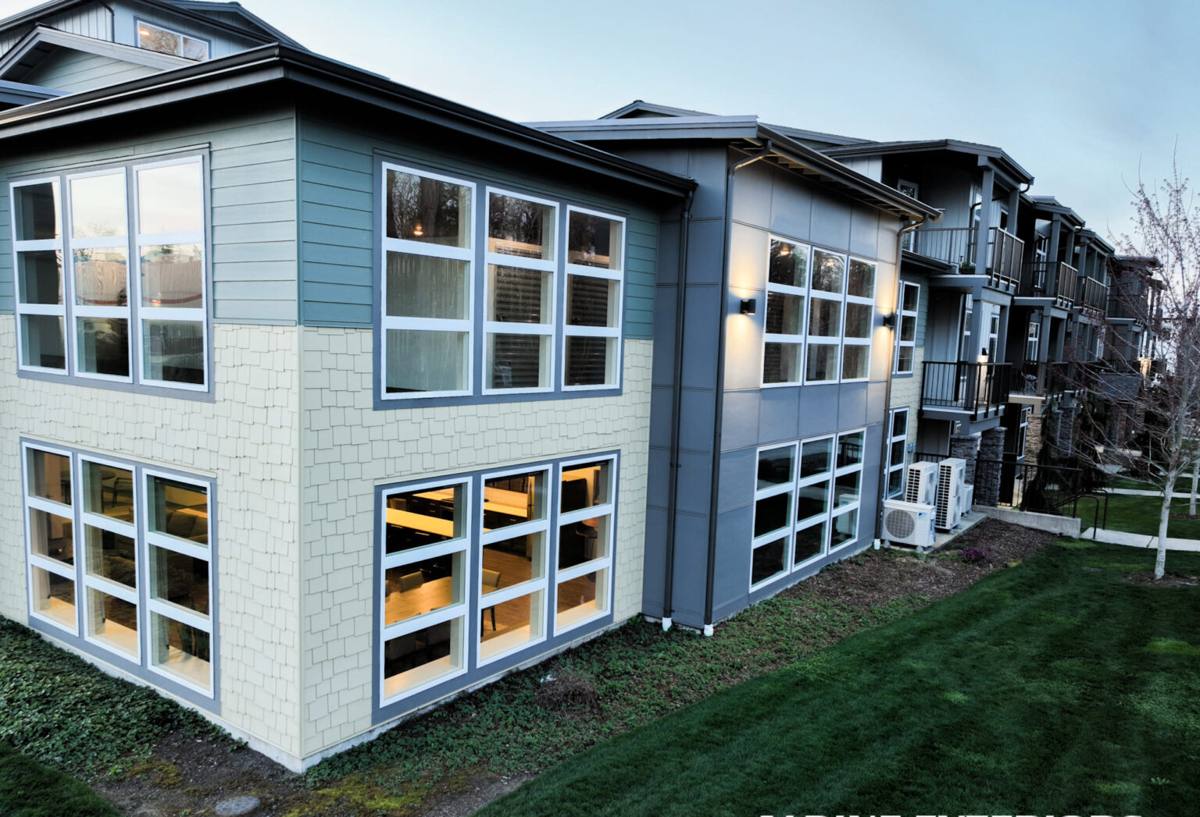
What Salt Air, Driving Rain, and Moss Season Actually Do to a Window Assembly
Salt Air
Airborne salt is corrosive to exposed metal — screws, hinges, cranks on casement windows, and lower-grade cladding finishes all degrade faster in a marine exposure like Point Roberts than they would even a few miles inland. It doesn't ruin a window overnight, but over years it can pit hardware, dull finishes, and accelerate corrosion at fasteners that weren't rated for coastal exposure.
Driving Rain
Point Roberts gets hit by wind-driven rain that comes in sideways rather than falling straight down. A window that would stay dry in a calmer inland setting can take on water at the sill or around the perimeter if the flashing and sealant details aren't built to handle rain pushed horizontally by wind. This is the single biggest factor we plan around on new builds out here.
Long Moss Season
The combination of moisture, shade, and mild temperatures in Whatcom County creates long stretches where moss and algae can establish themselves on any surface that stays damp — including window sills, trim, and the siding immediately around openings. Moss holds moisture against building materials far longer than bare wood or vinyl would dry on its own, which is one more reason the drainage path around a new window needs to be built correctly the first time.
Choosing the Right Window for a Point Roberts New Build
There's no single "best" window brand or material for every project — the right choice depends on your budget, your home's design, and how much long-term maintenance you're willing to take on. What we focus on with clients is matching the frame material, glazing package, and hardware finish to the exposure the window will actually face.
| Frame Material | Salt Air / Moisture Behavior | Maintenance | Typical Fit |
|---|---|---|---|
| Vinyl | Won't corrode or rot; performs well in coastal air | Low — occasional cleaning | Budget-conscious builds, rentals, most elevations |
| Fiberglass | Very stable in moisture and temperature swings; holds paint well | Low to moderate | Water-facing elevations, higher-end builds |
| Wood-clad (exterior clad, interior wood) | Good if cladding and flashing details are correct; interior wood needs protection from any leak | Moderate | Homes wanting a wood interior look with exterior durability |
| Aluminum | Prone to corrosion in salt air unless marine-rated and well finished | Higher in this climate | Limited use; we're selective about where we recommend it here |
We're generally cautious about standard aluminum-frame windows on direct water-facing elevations in Point Roberts — not because aluminum is a bad material everywhere, but because uncoated or lower-grade aluminum corrodes faster in sustained salt exposure, and that's a maintenance burden we'd rather steer a homeowner away from up front than have them discover in five years.
Glazing and Hardware Considerations
- Dual or triple-pane glazing with a warm-edge spacer holds up better against the condensation swings common in a marine, moisture-heavy climate.
- Look for hardware — hinges, cranks, locks — rated for coastal or marine use, especially on any elevation facing the water directly.
- Low-E coatings help with energy performance year-round, which matters given how much of the year Whatcom County stays overcast and cool.
- Darker exterior finishes can show water spotting and mineral deposits from driving rain faster than lighter finishes; it's a cosmetic tradeoff worth discussing before you commit to a color.
Where New-Construction Window Installations Actually Go Wrong
Most window failures we see in coastal Whatcom County homes aren't due to a bad window — they're due to a flashing or drainage detail that was rushed or skipped during the original install. On new construction, this is entirely preventable because the wall assembly is open and accessible before siding goes on.
The Details That Matter Most
- Sill pan flashing under every rough opening, sloped to shed any water that gets past the window back to the exterior — not into the wall cavity.
- Proper shingle-lap sequencing of weather-resistive barrier, flashing tape, and window flanges so water is always directed outward and downward, never trapped behind a layer.
- Head flashing that extends beyond the window's rough opening width and integrates correctly with the drainage plane above.
- Correct fastener selection — corrosion-resistant screws and nails appropriate for a coastal environment, not standard interior-grade hardware.
- Sealed but not trapped — sealant at the right joints, with weep paths left open so any incidental moisture can still drain and dry out.
Skip any one of these steps and you may not see a problem for a year or two. By the time staining, soft trim, or interior drywall damage shows up, the fix usually involves opening the wall back up — a much bigger job than getting it right during framing.
Our New-Construction Window Process
- Plan review and product selection. We look at your elevations, exposure, and budget, and walk through frame material, glazing, and hardware options suited to a Point Roberts site specifically.
- Rough opening verification. Before any window goes in, we confirm openings are square, plumb, and sized correctly — catching framing issues now is far cheaper than after the fact.
- Sill pan and flashing install. Every opening gets a sloped sill pan and a full flashing sequence integrated with your home's weather-resistive barrier.
- Window set and shim. Units are set plumb, level, and square, with shimming at the manufacturer's specified points to avoid frame distortion that can cause operational problems later.
- Fastening and sealing. Corrosion-resistant fasteners, correct nailing fin or clip attachment, and sealant applied at the right joints — leaving weep paths open.
- Final inspection and documentation. We check operation, weatherseal, and flashing continuity before siding or trim closes the opening up.
Why a Crew That Already Works in Point Roberts Matters
Point Roberts is a U.S. exclave — the only way in or out by road is through Canada. That single fact changes how a construction project needs to be run. Material deliveries, crew scheduling, and any mid-project supply runs all take longer and need more advance planning than they would for a job a few miles down the road in Custer or Ferndale. A crew that hasn't worked out here before can lose real time (and money) relearning that logistics reality on your project.
We also know what the exposure actually looks like on the ground in Point Roberts — which elevations take the worst of the wind-driven rain, how fast moss and staining establish themselves on north- and west-facing surfaces, and what level of hardware and sealant spec actually holds up here versus what's adequate a few miles inland. That's not something you can fully substitute with a generic install checklist; it comes from having done the work in this specific microclimate.
Cost Factors to Plan For
New-construction window costs vary widely based on the number and size of openings, frame material, glazing package, and access on site. We won't quote a number without seeing your plans, but the factors below are the ones that move the price most:
| Factor | Why It Affects Cost |
|---|---|
| Frame material (vinyl vs. fiberglass vs. wood-clad) | Material and hardware costs vary significantly by product line |
| Number and size of openings | More and larger windows mean more material, flashing, and labor |
| Glazing package | Triple-pane and specialty Low-E coatings cost more than standard dual-pane |
| Elevation exposure | Water-facing walls may warrant upgraded flashing details or hardware |
| Site access and staging | Point Roberts logistics can add scheduling time versus a mainland job |
What to Confirm Before Work Starts
- Frame material and glazing package are specified in writing, not left as a placeholder allowance.
- Sill pan flashing and full flashing sequence are included in the scope — not treated as an upsell.
- Fastener and hardware specs are appropriate for coastal exposure.
- Rough opening sizes have been field-verified against actual window order dimensions.
- You have a clear plan for who handles trim, caulking, and paint or stain after the windows are set.
If you're planning a new build in Point Roberts and want windows specified and installed to actually hold up against the salt air, driving rain, and moss this stretch of Whatcom County sees every year, we're glad to walk your plans and give you a straightforward, no-pressure estimate — just fill out the form below.