 Custer
 Why Point Roberts Is Harder on a Roof Than Most Whatcom County Towns
Point Roberts sits on a small peninsula with water on three sides, which means every roof out there deals with a heavier dose of what already makes Whatcom County roofing tough: salt-laden air, wind that comes off open water instead of breaking on hills first, and a rain pattern that doesn't just fall straight down — it drives sideways into anything with a gap. Add in the tree cover and shaded lots common to the area, and you get a moss and algae season that runs most of the year instead of a few wet months.
None of that means asphalt shingles are the wrong choice for a Point Roberts home — they're still the most practical, cost-effective roofing material for the vast majority of houses out there. It means the installation details that get skipped on an easier job can't get skipped here, and the shingle itself needs to be matched to what the climate is actually going to throw at it.
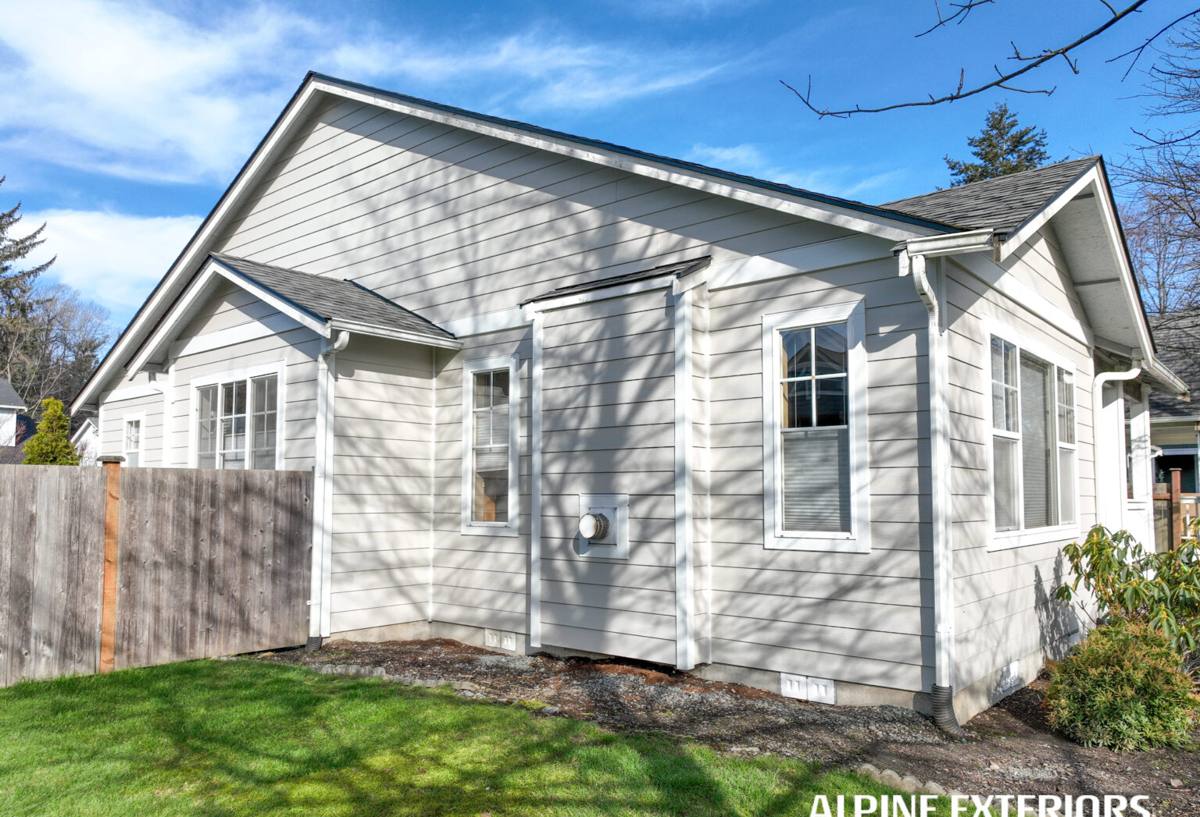
What Salt Air and Driving Rain Do to a Shingle Roof
Corrosion at Fasteners and Flashing
Most roof failures near open water don't start with the shingles — they start with the metal. Standard nails, drip edge, and flashing that would hold up fine twenty miles inland can start corroding years early when they're exposed to salt air day after day. Once a fastener rusts and loses its grip, or a flashing seam corrodes and opens a hairline gap, water gets underneath the shingle field even though the shingles themselves still look fine from the ground. We spec corrosion-resistant fasteners and flashing on Point Roberts jobs as a standard, not an upgrade.
Wind-Driven Rain and Underlayment
Rain that's being pushed sideways by wind off the water behaves differently than rain falling straight down — it can work its way under shingle edges, around vent boots, and into valleys that would shed a normal rainstorm without issue. That's why underlayment choice and placement matters more here: ice-and-water shield at eaves, valleys, and every roof penetration, plus a synthetic underlayment across the field, gives the roof a real second layer of defense instead of relying on the shingles alone to keep the house dry.
Moss and Algae: Managing a Long Growing Season
Shaded, moisture-holding roofs in this part of Washington support moss and algae growth for most of the year, and once moss establishes itself under shingle edges it lifts them, holds water against the deck, and shortens the life of an otherwise sound roof. This is one of the most common reasons we get called out to a roof that's only ten or twelve years old but already leaking.
Algae-Resistant Shingles
Many shingle lines now offer algae-resistant granules, typically infused with copper or zinc, that discourage the black streaking and green growth common on shaded, north-facing, or heavily treed roofs. It's not a permanent guarantee against moss, but on a Point Roberts roof it meaningfully slows growth and keeps the roof looking and performing better for longer, which is why we bring it up as a standard conversation on every quote here rather than an upsell.
Maintenance Habits That Help
Keeping overhanging branches trimmed back so the roof gets more sun and airflow, clearing gutters and valleys of needles and debris a couple times a year, and dealing with moss early with the right treatment (not a pressure washer, which strips protective granules) all extend a roof's real service life. If moss has already lifted shingle edges or you're seeing soft, spongy spots, that's usually a sign the issue has moved past surface maintenance and into the deck underneath.
Choosing the Right Shingle for This Climate
Not every asphalt shingle is built for the same conditions, and on a property exposed to salt air and open-water wind, the tier of shingle you choose has a real effect on how many times you'll be back on the roof over the next twenty years.
| Shingle Type | Typical Lifespan | Wind Rating | Algae Resistance | Best Fit |
|---|---|---|---|---|
| 3-Tab | 15–20 years | Lower | Rarely included | Budget-driven projects, less wind/moisture exposure |
| Architectural / Dimensional | 25–30 years | Moderate to high | Often available as an option | Most Point Roberts homes — the standard we recommend |
| Premium / Designer | 30+ years | High | Usually standard | Homes with heavy sun/wind exposure or where longevity matters most |
For most homes on the peninsula, architectural shingles with an algae-resistant option and a solid wind rating hit the right balance of upfront cost and how well they'll actually hold up. We'll walk through the honest trade-offs for your specific roof rather than pushing the most expensive option by default.
What a Correct Installation Includes Here
A shingle roof is a system, not a single product, and skipping any one piece of it is where problems start — especially in a climate that doesn't give a roof much room for error.
- Deck inspected and any soft or rotted sheathing replaced before new material goes down
- Drip edge installed at eaves and rakes, not skipped or covered incorrectly
- Ice-and-water shield at eaves, valleys, and around every penetration
- Synthetic underlayment across the full roof field
- Corrosion-resistant fasteners and flashing throughout, not just at visible points
- Properly lapped, correctly nailed shingle courses per manufacturer specification
- Balanced intake and exhaust ventilation, not just exhaust vents added on their own
- Ridge cap and hip shingles matched to the field shingle, not a mismatched generic cap
Repair or Replace? What We Look At
Not every roofing problem on Point Roberts needs a full replacement, but it's easy to throw money at repairs on a roof that's already past the point of being worth saving. Here's what actually tells us which direction makes sense:
- How much granule loss is showing up in the gutters and downspouts
- Whether shingles are curling, cupping, or cracking across multiple areas, not just one spot
- Soft spots or visible sagging when walking the roof deck
- Moss or algae that's lifted shingle edges rather than just staining the surface
- Daylight or water staining visible from inside the attic
- The roof's age relative to its expected lifespan and how it's held up so far
- Whether leaks are isolated to one repairable area or showing up in multiple places
If a roof is younger and the damage is localized, a targeted repair is usually the right call. If several of these are showing up at once, it's typically more cost-effective in the long run to replace than to keep patching a roof that's telling you it's done.
Our Process for a Point Roberts Roof
- On-site inspection of the roof, deck, ventilation, and any problem areas, with photos so you can see exactly what we're seeing
- A clear, honest scope and written quote — what's being replaced, what materials are specified, and why
- Scheduling that accounts for weather windows and the logistics of getting a full crew and a full material load onto the peninsula in one trip
- Tear-off and a full deck inspection before anything new goes down, with any rot or damage addressed before re-covering it
- Underlayment, flashing, and shingle installation done to manufacturer specification, not shortcuts to save an hour
- Full cleanup, including a magnetic sweep for stray nails
- A final walkthrough so you know exactly what was done and what to expect from the roof going forward
Why a Crew That Already Works Point Roberts Matters
Getting a crew and a full truckload of shingles onto Point Roberts isn't the same as pulling up to a job in most of Whatcom County — it takes real planning around the border crossing and the peninsula's limited access, and a company that doesn't already build that into their scheduling either shows up late, shows up short on material, or passes the wasted trip cost on to you. A crew that already works this area regularly has that logistics problem solved before your job is even scheduled.
It also means we've already seen how salt air, driving rain, and moss behave on roofs just like yours, so the material choices and installation details on your quote aren't generic — they're based on what actually holds up out here. And if something needs attention after the job is done, a crew that already comes to Point Roberts doesn't treat a warranty callback as a special trip.
If you'd like an honest look at your roof — repair or full replacement — we're glad to come out and give you a straightforward, no-pressure estimate using the form below.