 Custer
 Why Nooksack-Area Siding Wears Out Faster Than the Brochure Promises
Homes around Nooksack and Custer sit in a corner of Whatcom County that is genuinely tough on exterior building materials. You're close enough to the Salish Sea to get salt-laden air moving inland on a regular basis, you're squarely in the path of driving, wind-pushed rain off winter storms, and the combination of tree cover, damp ground, and long gray stretches between sun breaks means moss and algae get a real foothold on north-facing walls and anything shaded by a roofline or fence. None of that is exotic weather. It's just persistent, and persistent is what breaks down siding that was installed with shortcuts.
Salt air accelerates corrosion on fasteners and metal flashing. Driving rain finds every gap in a weather-resistive barrier and every place where caulk was used instead of proper flashing. And moss doesn't just look bad — it holds moisture against the siding surface for weeks at a time, which is exactly the condition that rots wood-based products and delaminates poorly-made composites. A siding system that isn't built for this combination will show it within a few years: swelling at panel edges, staining that won't pressure-wash off, soft spots at the bottom courses, and paint that fails faster than it should.
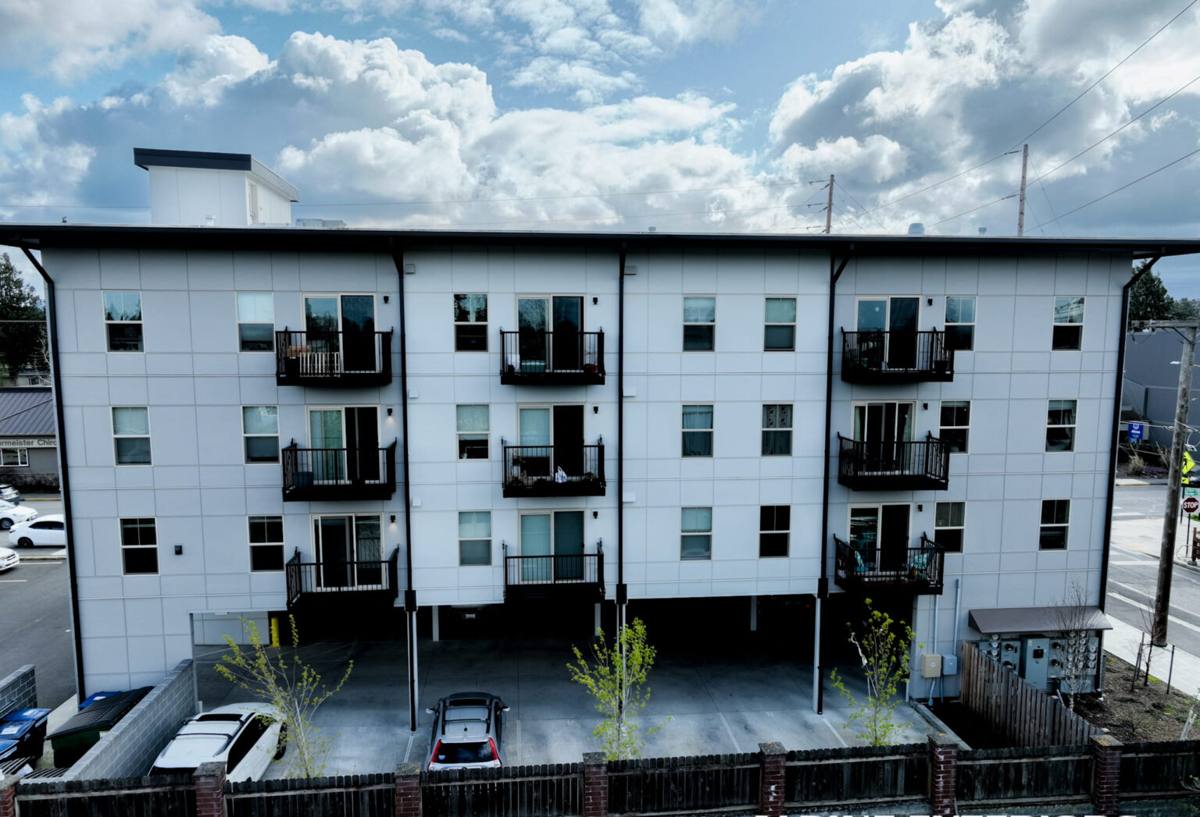
What Correct Siding Replacement Actually Involves
Siding replacement is not a panel swap. If the crew doing the work isn't paying attention to what's underneath the old siding, you're just going to be back here again in ten or fifteen years — possibly sooner, given this climate. A correct job on a Nooksack-area home covers several things that don't show up in a quick estimate but matter enormously to how the house performs afterward.
Tear-Off and Substrate Inspection
Once the old siding comes off, that's the one time anyone gets an honest look at the sheathing, framing, and window openings underneath. In a damp climate like this one, it's common to find soft or water-stained OSB or plywood, especially near ground level, around old penetrations, or wherever the previous siding was face-nailed without proper clearance. Any compromised sheathing gets replaced before a single new panel goes up — covering rot with new siding just hides the problem for the next owner to find.
Weather-Resistive Barrier and Flashing
Behind every new siding installation is a drainage plane: a weather-resistive barrier, properly lapped and taped, with flashing at every window, door, deck ledger, and roof-to-wall intersection. This is where driving rain either gets managed and shed away from the wall assembly, or gets trapped behind the cladding. Given how much wind-driven rain this area sees, we treat flashing details as non-negotiable, not an upsell.
Fastening, Clearances, and Ventilation
Fiber cement siding has specific fastening patterns, nail penetration depths, and minimum clearances from grade, roofing, and decks that are easy to get wrong if a crew is used to installing vinyl or a softer product. Getting the clearances right keeps splash-back and standing moisture away from the bottom edge of the siding — one of the most common failure points we see on older homes in this area.
Our Process for a Nooksack Siding Replacement Project
- Walkthrough and assessment — we look at the existing siding, trim, and any visible moisture damage, and talk through what you're seeing from the inside (drafts, stains, soft trim) as well as the outside.
- Written scope and product selection — you get a clear description of what's being torn off, what's being repaired, and which James Hardie product line and profile fit the house.
- Tear-off and substrate repair — old siding comes off, sheathing and framing get inspected, and anything compromised is documented and replaced.
- Weather barrier and flashing installation — the drainage plane goes in correctly before any new siding is hung.
- Siding installation to manufacturer spec — correct fastening, clearances, and joint treatment, not just "close enough."
- Final walkthrough — we go around the house with you before calling the job done.
Because this is a crew that already works Nooksack, Custer, and the surrounding parts of Whatcom County regularly, we're not guessing at how this climate treats a house — we're seeing it on jobs in the same few square miles on a routine basis.
Comparing Siding Materials for This Climate
We only install James Hardie fiber cement, but it's fair to explain why, especially against the other products homeowners in this area commonly ask about.
| Factor | James Hardie Fiber Cement | Vinyl | Wood / Primed Spruce / LP-Type Products |
|---|---|---|---|
| Moisture behavior in damp, salt-air climates | Non-combustible fiber cement core resists moisture-driven swelling and rot when installed correctly | Doesn't absorb moisture itself, but can warp or crack in temperature swings and rarely seals well at penetrations long-term | Wood fibers are vulnerable to moisture intrusion and rot, especially where moss holds dampness against the surface |
| Moss and algae resistance | Factory ColorPlus finish holds up well and cleans without stripping the finish | Sheds moss reasonably well but can look chalky or faded over time | Porous surfaces give moss and algae more to grip, accelerating buildup |
| Salt air / coastal exposure | Engineered specifically for damp climates through Hardie's HZ product lines | Generally stable but can become brittle with age and UV exposure | More prone to surface breakdown and finish failure under sustained salt exposure |
| Maintenance burden | Repaint cycles are long; factory finish reduces upkeep | Low maintenance but limited repair options if damaged | Requires more frequent repainting/sealing to keep moisture out |
| Fire performance | Non-combustible material | Combustible | Combustible |
| Typical lifespan when installed to spec | Multiple decades with a strong transferable warranty | Variable; shorter in high-UV or high-wind exposure | Shorter without diligent maintenance |
Vinyl siding isn't a bad product on its own terms — it's inexpensive, low-maintenance in mild conditions, and easy to source. Where it struggles in this kind of climate is impact resistance, long-term color stability, and the fact that damaged panels are hard to blend-repair invisibly. Wood-based and primed-spruce products can look great initially, but they ask a lot of the paint film and caulk joints to keep moisture out year after year, and this area's rain and moss season doesn't give those joints much of a break. That combination of trade-offs is why we standardized on James Hardie rather than offering multiple product lines.
Signs a Nooksack Home Needs Siding Replacement, Not Just Repair
- Soft or spongy siding when pressed, especially at the bottom courses or below windows
- Paint that's bubbling, peeling, or failing faster than a normal repaint cycle would suggest
- Persistent moss or dark staining that returns within weeks of cleaning
- Visible warping, cupping, or gaps opening up between panels
- Rising energy bills alongside noticeable drafts near exterior walls
- Siding that's original to a home built more than 20-25 years ago, particularly wood-based products
- Rot or discoloration visible around window and door trim
Any one of these on its own might be a repair. Several of them together, especially on a home that's had multiple wet seasons to work on it, usually points toward full replacement being the more honest recommendation.
What Drives the Cost of Siding Replacement Here
Every home is different, but the main cost factors on a Nooksack-area siding replacement tend to be the same handful of things:
| Cost Factor | Why It Matters |
|---|---|
| House size and wall complexity | More square footage and more corners, gables, and dormers mean more cutting, flashing, and labor time |
| Condition of the sheathing underneath | Rot discovered during tear-off has to be repaired before new siding goes on — this is often the biggest variable |
| Siding profile and trim details | Lap siding, board-and-batten, and shingle-style Hardie profiles each carry different material and labor costs |
| Number of window and door openings | Every opening needs proper flashing and trim work, which adds time regardless of siding material |
| Access and site conditions | Steep grades, tight setbacks, or limited equipment access can add labor time |
We'd rather walk your specific house and give you real numbers than throw out a broad range that doesn't mean much until someone's actually looked at your walls.
Why Hiring a Crew That Already Works This Area Matters
A siding contractor who mostly works somewhere with a different climate — say, drier or less coastal-influenced parts of the state — isn't necessarily doing anything wrong, but they may not default to the flashing details, clearances, and moisture management habits that this specific combination of salt air, driving rain, and moss really demands. A crew that works Nooksack, Custer, and the rest of Whatcom County routinely has seen what happens to siding here over ten and twenty years, not just what a spec sheet promises. That shows up in small decisions — how much clearance is left at grade, how carefully a deck ledger is flashed, whether the crew treats moss staining as a warning sign or a cosmetic issue — that add up to whether the siding is still doing its job in year fifteen.
What to Ask Before You Hire Anyone for This Job
- Will you inspect and document the sheathing condition once the old siding is off, before covering anything up?
- What weather-resistive barrier and flashing details do you use at windows, doors, and roof-to-wall intersections?
- Are you a certified or experienced James Hardie installer, and can you explain the fastening and clearance requirements for this house?
- What does your warranty cover, and is it transferable if the home is sold?
- Can you give me a written scope that specifies the exact product line and profile, not just "siding replacement"?
If your Nooksack-area home is showing any of the wear signs above, or you're just tired of fighting moss and moisture every year, we're happy to walk the property and give you a straight assessment. There's no pressure and no obligation — fill out the form below and we'll set up a free estimate.