 Custer
 Everson's Weather Is Harder on a Roof Than It Looks
Everson doesn't get the dramatic storms you see further south or the heavy snow loads of the mountain passes, but that's part of the problem. What it gets instead is months of steady, low-intensity moisture — drizzle that never quite stops, wind-driven rain that finds its way under poorly lapped shingles, and long stretches of grey, damp weather that never gives a roof surface time to fully dry out. Add in the salt-laden air that moves through this part of Whatcom County off the Strait of Georgia and Puget Sound, and you've got a climate that's quietly aggressive on roofing materials even when it never produces a single dramatic storm.
A roof built for a drier climate — thin underlayment, minimal flashing, tight ventilation gaps — will survive a few winters here before problems start showing up as stains on the ceiling, soft spots in the decking, or a green-black carpet of moss creeping up from the eaves. A roof built correctly for this specific climate handles all three of those pressures without drama, for decades.
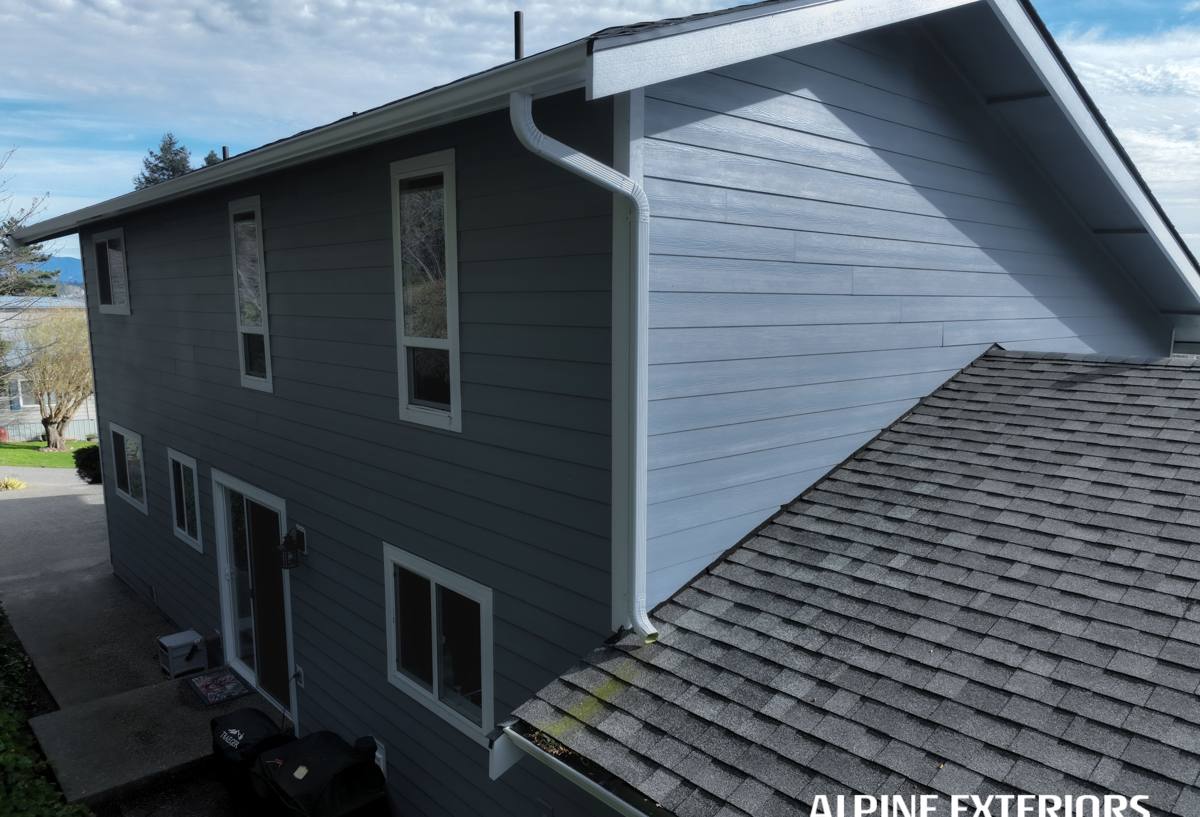
Signs an Everson Roof Needs Full Replacement, Not Another Patch
Not every roof problem calls for a full tear-off. But there's a point where repairs stop being cost-effective and start being a way of throwing money at a roof that's already failing underneath. Some signals worth taking seriously:
- Shingles that are cupping, curling at the edges, or losing their granules in handfuls when it rains
- Moss that keeps coming back within a season or two of being cleaned off, especially on north-facing slopes
- Dark streaking or soft, spongy decking felt underfoot in the attic
- Daylight visible through the roof deck from inside the attic
- A roof already past 20-25 years old on asphalt shingle, regardless of how it looks from the ground
- Two or more layers of shingles already on the roof (a sign a prior job cut corners by not tearing off the old layer)
If you're only seeing one or two isolated issues, a repair may genuinely be the right call. We'll tell you that honestly during an inspection rather than push a full replacement you don't need yet.
What a Correct New Roof Installation Actually Involves
A new roof is more than shingles nailed to plywood. In a wet, moss-prone climate like this one, most of what determines whether a roof lasts 15 years or 35 years happens in layers you never see once the job is done.
Tear-Off and Deck Inspection
We remove the old roofing down to the deck rather than layering over it. That's the only way to actually see the plywood or OSB underneath — soft, delaminated, or water-stained sections get replaced before anything new goes down. Roofing over rotten decking just hides the problem under a new warranty period.
Underlayment and Ice-and-Water Protection
Given how much sustained rain this area sees, we don't treat underlayment as an afterthought. Synthetic underlayment across the full deck, with self-adhering ice-and-water membrane at eaves, valleys, and around every penetration, gives the roof a second line of defense in exactly the spots where wind-driven rain and ice damming are most likely to force water backward under the shingles.
Flashing
Flashing around chimneys, skylights, sidewalls, and roof-to-wall transitions is where the majority of leaks in this region actually start — not the shingle field itself. We install new flashing rather than reusing old, bent, or rusted pieces, and we step-flash sidewalls properly instead of relying on caulk to do a metal detail's job.
Ventilation
Balanced intake and exhaust ventilation keeps the underside of the deck dry and close to outside temperature. That matters twice over here: it prevents condensation from building up in the attic during our long damp stretches, and it keeps the roof surface from staying warm and wet longer than it needs to — one of the biggest drivers of moss growth.
Choosing a Roofing Material for This Climate
There's no single "best" roofing material — there's the right material for your home, your budget, and how much long-term maintenance you're willing to do. Here's how the common options actually compare for a house in Everson's climate:
| Material | How It Handles This Climate | Maintenance | Typical Lifespan |
|---|---|---|---|
| Architectural asphalt shingle | Good moisture resistance with correct underlayment and flashing; algae-resistant granules slow moss/moss-staining | Periodic moss and debris removal | 25-30 years |
| Standing seam metal | Sheds water and moss growth very well; minimal seams for wind-driven rain to exploit | Low | 40-50+ years |
| Cedar shake | Traditional look but absorbs moisture and is naturally hospitable to moss in a damp, shaded climate | High — regular treatment and cleaning required | 20-30 years with upkeep |
| Synthetic composite shingle/shake | Mimics cedar or slate appearance without the moisture absorption | Low to moderate | 40-50 years |
We install architectural asphalt and metal roofing most often on Everson homes because both hold up well against the specific combination of moss, sustained rain, and salt air common here. We're honest with clients about cedar shake: it looks great, but it's the highest-maintenance option in a climate that's actively working to grow moss on any organic, moisture-retentive surface — that's a trade-off worth knowing before you commit, not a reason to rule it out if you're prepared for the upkeep.
The Long Moss Season and How Roof Design Fights It
Moss isn't just cosmetic. Once established, it holds moisture directly against the shingle surface, works its root structure under shingle edges, and accelerates granule loss. In a climate where roofs rarely get a long enough dry stretch to fully bake moss spores off, prevention has to be built into the installation rather than left to occasional cleaning.
A few things we build into every Everson roof installation specifically to fight moss:
- Algae-resistant shingles where the material option supports it
- Zinc or copper strips near the ridge on request, which release trace metal ions in rainwater that inhibit moss regrowth down-slope
- Correct ventilation so the deck and shingle underside dry out between rain events instead of staying damp
- Trimmed sightlines discussed with the homeowner for overhanging branches that shade the roof and keep it wet longer than necessary
None of these eliminate moss entirely — nothing does in this climate — but together they meaningfully extend the time between cleanings and slow the rate at which moss re-establishes.
Our New Roof Installation Process
- On-site inspection and estimate. We look at the existing roof, decking condition where visible, attic ventilation, and any problem areas you've noticed, then give you a written estimate with no pressure to sign on the spot.
- Material selection. We walk through the options that make sense for your home's style, budget, and how much long-term maintenance you want to take on.
- Scheduling around the weather. Roofing in this climate means watching forecasts closely and protecting the deck with dry-in materials the same day tear-off happens — we don't leave a house open to the weather overnight.
- Tear-off, deck repair, and dry-in. Old roofing comes off, damaged decking gets replaced, and underlayment goes down the same day whenever possible.
- Flashing, ventilation, and final roofing installation. Every detail piece is installed new; the field roofing goes down to manufacturer specifications for the material chosen.
- Cleanup and final walkthrough. Magnetic sweep for nails, debris haul-away, and a walkthrough so you can see the finished work and ask questions before we consider the job done.
What Drives the Cost of a New Roof
Every roof is different, so we don't quote sight unseen — but these are the main factors that move the price up or down on most Everson jobs:
| Factor | Why It Matters |
|---|---|
| Roof size and complexity | More squares, valleys, and dormers mean more material and more labor-intensive flashing work |
| Pitch and access | Steeper roofs and homes with limited ground access require more safety equipment and time |
| Number of existing layers | Removing two layers of old shingles instead of one adds disposal cost and labor |
| Decking condition | Rotted or delaminated plywood found during tear-off needs replacement before roofing can proceed |
| Material choice | Standing seam metal and synthetic composites cost more upfront than architectural asphalt but need less long-term maintenance |
| Ventilation upgrades | Adding proper intake/exhaust venting where a home currently has none is a worthwhile add, not just an expense |
Questions Worth Asking Before You Hire Anyone
A new roof is a significant investment and a lousy one is expensive to fix twice. Before you sign with any contractor in this area, it's worth asking:
- Are you licensed and insured to do roofing work in Washington State, and can I see proof?
- Will you tear off the old roof completely, or are you proposing to roof over the existing layer?
- What underlayment and ice-and-water shield do you use, and where specifically will it go?
- Will decking replacement be priced as a line item if rot is found, or is it a vague allowance?
- What's your plan if it starts raining mid-project?
- What's covered under workmanship warranty versus manufacturer material warranty, and for how long?
Why a Crew That Already Works in Everson Makes a Difference
Roofing crews unfamiliar with this part of Whatcom County sometimes default to specs built for drier regions — lighter underlayment, minimal ice-and-water coverage, ventilation sized for a climate that dries out faster than this one does. That shortfall doesn't show up on inspection day. It shows up two or three winters later as a leak, a moss problem that never really goes away, or decking that's soft again faster than it should be.
Working in and around Everson and greater Whatcom County day in and day out means we already know which details matter here: where wind-driven rain tends to find weak flashing, how much ice-and-water coverage actually makes sense given our winters, and which ventilation setups keep attics dry through a long, damp season instead of trapping moisture inside. It also means we're not guessing at permitting requirements or disappearing after the invoice is paid — we're working in this area on an ongoing basis and stand behind what we install here.
If your roof is showing its age or you just want an honest read on whether repair or replacement makes more sense for your home, we're happy to take a look. Reach out for a free, no-pressure estimate using the form below.