 Custer
 Siding Repair in Meridian: Why Location Changes the Job
Meridian sits in the corridor of homes around Custer, in Whatcom County, close enough to the Salish Sea that salt air is part of daily life whether you notice it or not. Add in the driving rain that comes off the water most of the year and a moss season that can run from fall through spring, and you have a set of conditions that wears on exterior siding differently than it would fifty miles inland. Siding repair here isn't just patching a hole or replacing a cracked board — it's addressing what caused the damage in the first place, because the same conditions that caused it once will cause it again if the repair doesn't account for them.
We've worked enough homes in this area to know the patterns: which elevations take the worst of the wind-driven rain, where moss builds up fastest, and which older siding jobs are starting to fail in predictable ways. That local pattern-recognition is worth more than it sounds like — it's the difference between a repair that lasts and one you're calling about again in two years.
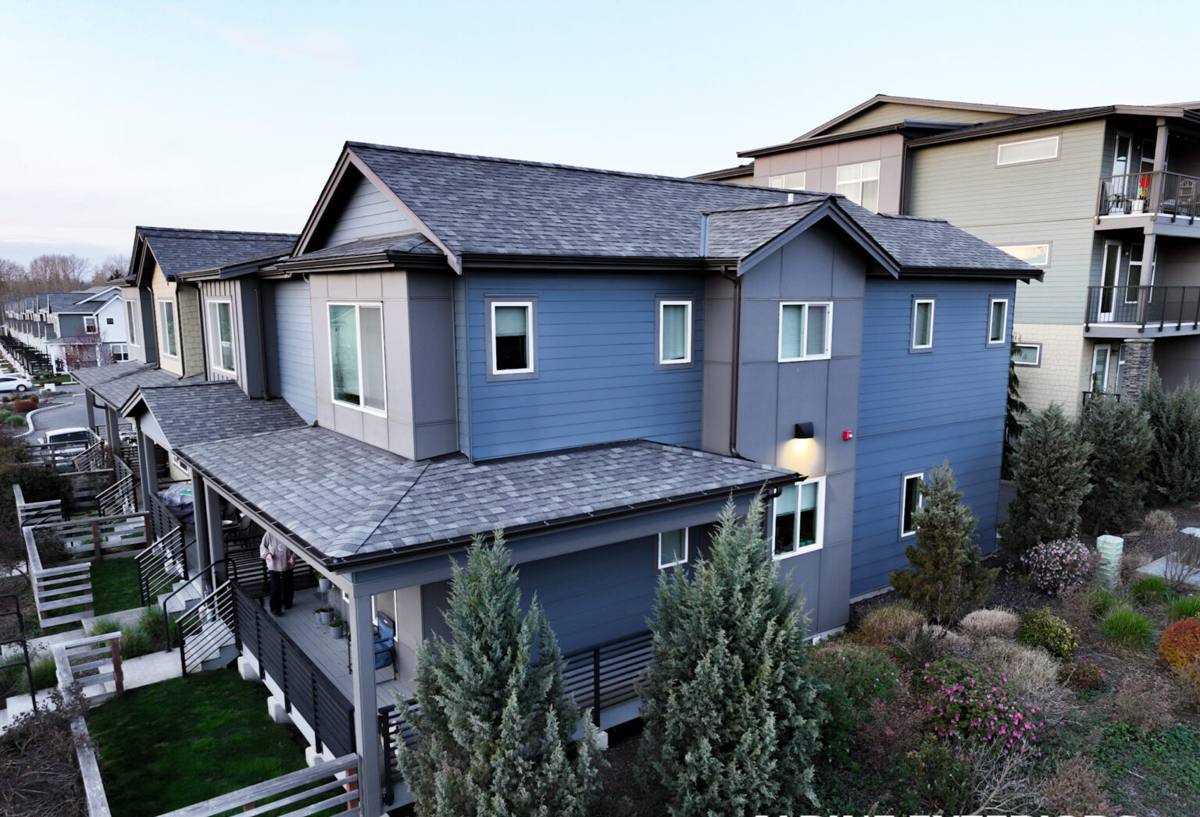
What Salt Air, Rain, and Moss Actually Do to Siding
Salt-laden air and metal fasteners
Homes near the water pull in air carrying fine salt particles, and that salt settles on every exterior surface, including the fasteners and trim flashing holding your siding together. Over years, that accelerates corrosion in fasteners and metal components that aren't rated for coastal exposure. When we open up a section of siding for repair, corroded or failing fasteners are one of the most common root causes we find — not the siding material itself.
Wind-driven rain and water intrusion
Whatcom County doesn't just get rain — it gets rain pushed sideways by wind off the water, which finds its way into joints, laps, and butt seams that would stay dry in a calmer climate. Once water gets behind siding, it doesn't just sit there; it wicks into house wrap seams, sheathing, and framing, and the damage shows up as soft spots, staining, or bulging siding long before anyone notices a leak.
Moss, algae, and trapped moisture
The long moss season in this region isn't just a cosmetic problem. Moss and algae hold moisture directly against the siding surface for extended periods, which keeps the material wetter, longer, than it would be if it dried between rain events. On wood-based or improperly finished siding, that constant damp cycle is what drives rot. On any siding, it's what allows caulk joints and paint films to fail early.
Signs Your Meridian Home May Need Siding Repair
Most siding problems in this area start small and stay hidden behind the siding face for a while before they show up visibly. Here's what we tell homeowners to watch for between inspections:
- Dark streaking or persistent moss growth in the same spots after cleaning
- Soft or spongy areas when you press on the siding, especially near the bottom courses or around windows
- Visible gaps, cracks, or separation at butt joints and corner trim
- Bubbling, peeling, or chalking paint concentrated in one area rather than spread evenly
- Rust streaks running down from fastener heads or flashing
- Warping or bowing panels, particularly on walls that face prevailing wind and rain
- Interior signs — musty smell, discoloration on interior drywall, or a spike in a specific room's humidity — near an exterior wall
Any one of these on its own might be minor. Several together, especially clustered on one wall, usually means water has been getting behind the siding for a while.
What a Correct Repair Actually Involves
Diagnosing the cause, not just the symptom
Replacing a damaged board without figuring out why it failed just resets the clock on the same problem. A proper repair starts by opening up the affected area enough to see the house wrap, flashing, and sheathing underneath. If the water intrusion point is a failed flashing detail or a gap in the weather-resistive barrier, that gets corrected as part of the repair — not left in place under new siding.
Matching materials so patches don't stand out
Siding that's a few years old has weathered and toned slightly differently than it did on install day, and factory-finished products in particular can be tricky to match perfectly with off-the-shelf material. Good repair work accounts for this — selecting compatible profiles and finishes, and being upfront with the homeowner about where a seam or slight color difference may be visible, rather than pretending it won't happen.
Getting the water management details right
The visible siding is the last layer of a system that includes house wrap, flashing at every penetration and horizontal transition, and proper lap and gap spacing to let any incidental moisture drain and dry out. In a climate that sees as much wind-driven rain as this one does, skipping or shortcutting these details is exactly how a repair fails again within a couple of seasons.
Repair or Replace? How We Help You Decide
Not every damaged section needs a full re-side, and not every "just patch it" request is the right long-term call either. Here's how we generally think through it:
| Factor | Leans toward repair | Leans toward replacement |
|---|---|---|
| Extent of damage | Isolated to one wall or a few boards | Recurring issues across multiple elevations |
| Age of existing siding | Siding is relatively young and otherwise sound | Siding is near or past its expected service life |
| Underlying structure | Sheathing and framing are dry and intact | Rot has spread into sheathing or framing |
| Material match | Compatible replacement material is available | Discontinued profile or finish, poor match likely |
| Root cause | Cause is localized and fixable in place | Cause points to systemic water management failure |
We walk through this with you on site, and we'll tell you honestly when repair is the sensible answer — it usually is, for isolated problems caught early.
Why We Only Repair and Rebuild With James Hardie
We install James Hardie fiber cement siding exclusively, and that standard carries through to repair work too. When a repair calls for new material, we use Hardie panels and trim rather than mixing in vinyl, LP SmartSide, or other products, even for a small patch. There are practical reasons for that beyond consistency: Hardie's HZ5 product line is engineered for climates like this one, with moisture and impact performance suited to sustained wet-weather exposure. It's non-combustible, which matters for long-term risk regardless of the immediate repair. And the factory-applied ColorPlus finish is formulated to hold color and resist the kind of chalking and fading that salt air and UV accelerate on field-painted materials.
Mixing siding brands or types on one wall also complicates warranty coverage and future maintenance — you end up with different care requirements, different repaint schedules, and different failure points on the same house. Keeping repairs within the Hardie system avoids that, and it's a big part of why homes we've worked on hold up more evenly over time.
Maintaining Siding Between Repairs in a Wet, Salty Climate
A good repair buys you years, not decades of zero maintenance — especially in a climate that stays damp and shaded for long stretches. A few habits go a long way toward stretching the time between repair calls:
- Rinse siding once or twice a year to clear salt residue and organic buildup before it embeds in the surface
- Trim back vegetation and tree cover that keeps a wall shaded and slow to dry after rain
- Keep gutters clear so overflow isn't running down the siding face directly
- Check caulking at trim and penetrations annually, since it's usually the first thing to fail
- Address small issues — a loose piece of trim, a hairline crack — before the next wet season, not after
None of this requires a contractor visit every year. It's mostly about not letting water and organic growth sit against the siding longer than they have to, which is the single biggest factor in how long any repair holds up here.
Our Process for a Meridian Siding Repair Call
- On-site assessment. We look at the damaged area and the surrounding siding, and where needed we open up a section to check house wrap, flashing, and sheathing condition.
- Honest diagnosis. We tell you what caused the damage, whether it's isolated or a sign of a broader issue, and what repair or replacement options actually make sense.
- Clear scope and pricing. You get a written scope of work before anything starts, so there's no ambiguity about what's included.
- Correct repair, not a cosmetic patch. We fix the water management detail that failed, not just the visible board, and we match materials as closely as the situation allows.
- Cleanup and walkthrough. We review the finished work with you before we consider the job done.
Why a Crew That Already Works Meridian Matters
A contractor who works this part of Whatcom County regularly has already seen how salt air, driving rain, and moss season play out on dozens of homes with similar exposure to yours. That experience shows up in small but important ways — knowing which wall orientations to check first, recognizing an early-stage moisture problem before it's obvious, and having a realistic sense of how long a given repair should hold up given the microclimate here. It also means shorter lead times for a return visit if something needs a follow-up look, and a crew that isn't learning the region's quirks on your dime.
If you're seeing early signs of trouble on your siding, or you just want a second, honest opinion on whether a repair or a larger fix is the right call, we're happy to take a look. Reach out for a free, no-pressure estimate using the form below.