 Custer
 Why Meridian Homes Need a Roofing Approach Built for This Corner of Whatcom County
Meridian sits close enough to the water and open farmland that homes here take a different kind of weather beating than roofs twenty miles inland. Salt-laden air off the Strait of Georgia and Puget Sound corrodes exposed metal faster than dry-climate roofs ever see. Driving rain, pushed sideways by wind off the water, finds every weak seam and under-lapped shingle within a few winters. And the shoulder seasons here are long, damp, and shaded enough in places that moss gets a real foothold on any roof that isn't detailed to shed it. A new roof installation in Meridian isn't just "put shingles on a house" — it's a set of decisions about materials, fasteners, ventilation, and flashing that either hold up to this specific climate or start failing quietly within a few years.
We install roofs across Custer and the surrounding Whatcom County communities, and Meridian jobs get the same attention: we look at the site, the tree cover, the roof's exposure to prevailing wind and rain, and we build the roof to match those conditions rather than installing the same generic system everywhere.
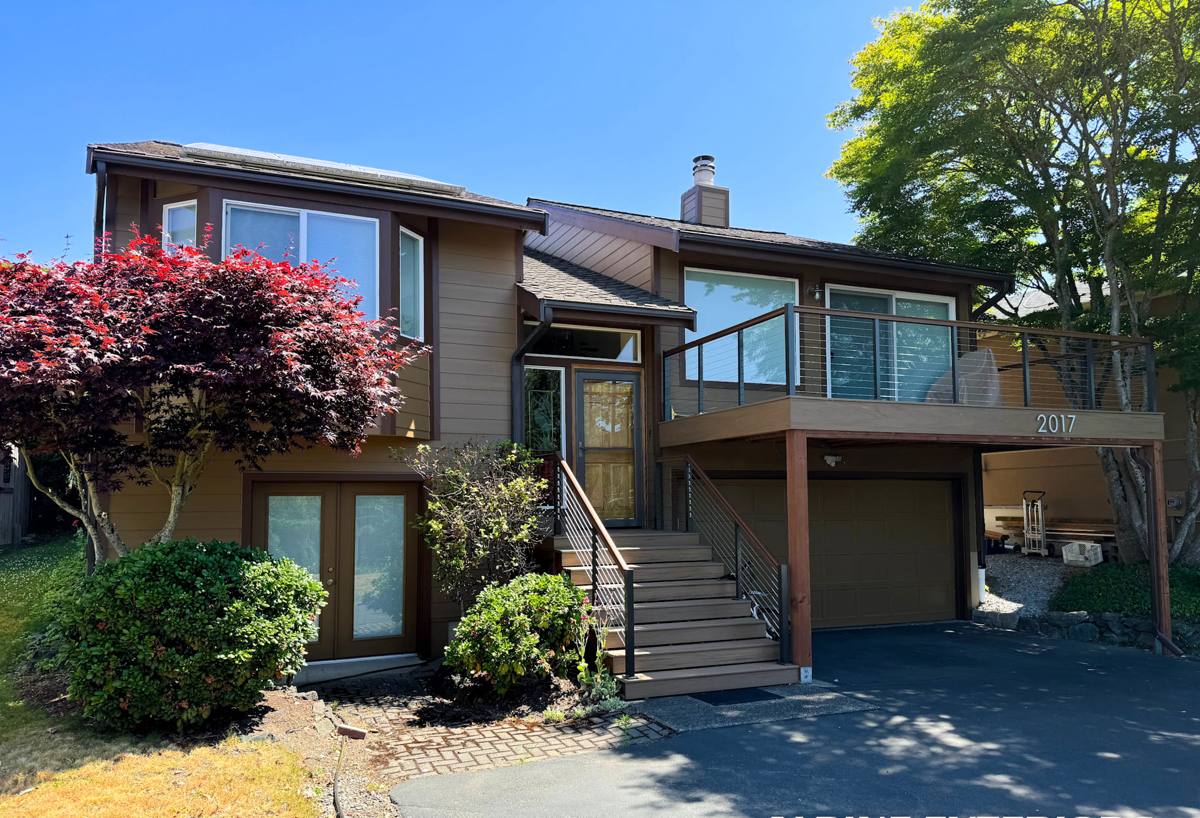
The Local Climate Factors That Actually Change a Roofing Job
Salt Air and Corrosion
Homes closer to the water deal with airborne salt that accelerates corrosion on unprotected fasteners, flashing, and exposed metal edges. Cheap electro-galvanized nails and low-grade flashing corrode faster here than they would further inland, and once a fastener starts rusting, it loses grip and can telegraph a stain straight through the shingle above it. We spec corrosion-resistant fasteners and flashing on every job, and it matters more here than it would on a roof in eastern Washington.
Driving Rain
Whatcom County storms often come in sideways, not straight down. That changes how a roof has to be built at the details — the laps, the valleys, the edges — because wind-driven rain can push water uphill under a shingle course that would be perfectly fine in a calm, straight-down rain. Underlayment choice and lap direction matter more here than in drier, calmer regions.
The Long Moss Season
Cool, damp weather here runs long, and shaded roof sections — north-facing slopes, areas under overhanging trees — stay wet for days after a storm. That's exactly the environment moss needs to establish. Moss isn't just a cosmetic problem: as it grows, it lifts shingle edges, holds moisture against the roof deck, and shortens the life of the roofing system underneath it. A roof that isn't detailed and ventilated with this in mind will grow moss faster than one that is.
What a Correct New Roof Installation Actually Involves
A new roof is more than the visible shingle layer. The parts nobody sees from the ground are usually what determine whether a roof lasts 15 years or 30.
- Full tear-off to the deck — installing over an old roof hides deck damage and voids most manufacturer warranties
- Deck inspection and repair — soft, rotted, or delaminated sheathing gets replaced before anything new goes down
- Ice-and-water shield at eaves, valleys, and around penetrations, where wind-driven rain and ice damming are most likely
- Synthetic underlayment across the field for a consistent water barrier under the shingles
- Corrosion-resistant flashing at all walls, chimneys, skylights, and valleys
- Proper nailing pattern — correct nail count, placement, and depth per manufacturer specification, not just "close enough"
- Balanced intake and exhaust ventilation so the attic can dry out between storms
- Ridge and hip caps installed to shed water at the roof's most exposed lines
Skip any one of these and the roof might look right for a year or two before a problem shows up — usually as a leak, a soft spot, or moss taking hold in a spot that never dries out.
Choosing a Roofing Material for Meridian's Conditions
There's no single "best" roofing material for every house — it depends on the roof's exposure, the home's structure, and the owner's budget and maintenance expectations. Here's how the common options generally compare for a coastal Whatcom County property:
| Material | Salt Air / Corrosion | Driving Rain Performance | Moss Resistance | Typical Lifespan |
|---|---|---|---|---|
| Architectural asphalt shingle | Good, with corrosion-resistant fasteners and flashing | Good when properly lapped and sealed | Moderate — benefits from zinc/copper strips and good airflow | 25–30 years |
| Standing seam metal | Very good with proper coatings; raw or low-grade metal corrodes faster | Excellent — few horizontal laps for water to work into | Good — sheds water fast, harder for moss to grip | 40–50+ years |
| Synthetic/composite shingle | Good | Good | Moderate | 30–40 years |
| Wood shake | Fair — needs more upkeep in damp coastal air | Fair — more maintenance-sensitive to prolonged wetting | Poor without regular treatment | 20–25 years with maintenance |
For most Meridian homes, a well-installed architectural asphalt shingle system with the right underlayment and ventilation is a solid, cost-effective choice. Homeowners who want the longest possible service life and don't mind the higher upfront cost often lean toward standing seam metal, especially on simpler roof shapes where its water-shedding advantage really shows.
A Note on Wood Shake and High-Maintenance Materials
We're honest with homeowners about wood shake in this climate: it can look great, but it demands real, ongoing maintenance — cleaning, treatment, and inspection — to hold up against the moisture and moss pressure this area produces. If a homeowner wants that look and is prepared for the upkeep, we'll install it correctly. But our default recommendation for a low-maintenance, long-term roof here is a material that sheds water fast and doesn't hold moisture against the deck.
Our Installation Process, Start to Finish
1. On-Site Assessment
We walk the roof, check the attic for existing ventilation and moisture signs, and look at exposure — which slopes take the most wind-driven rain, which stay shaded and damp longest, and where the current roof is already showing wear.
2. Written Scope and Material Selection
We put the recommended system in writing — material, underlayment, flashing details, ventilation plan — so there's no ambiguity about what's being installed and why.
3. Tear-Off and Deck Prep
Old roofing comes off down to the deck. Any damaged sheathing gets replaced before new materials go on — this is the step that gets skipped on corner-cut jobs and causes problems years later.
4. Underlayment and Flashing
Ice-and-water shield goes in at the vulnerable spots first, then synthetic underlayment across the field, then new flashing at every wall, valley, and penetration.
5. Roofing Installation
Shingles, panels, or shakes go on per manufacturer spec, with attention to nailing pattern and lap direction suited to this area's wind-driven rain.
6. Ventilation Check and Final Details
We confirm intake and exhaust venting are balanced, install ridge caps, and do a final walk of every flashing point and penetration.
7. Cleanup and Walkthrough
Full site cleanup, including a magnetic sweep for stray nails, followed by a walkthrough so the homeowner knows what was done and what to watch for.
Ventilation and Moss: Prevention Beats Cleaning
A roof that vents properly dries out faster after every storm, which is the single biggest factor in whether moss gets a foothold. We check for balanced intake (usually soffit vents) and exhaust (ridge or box vents) on every installation, because an attic that traps humid air keeps the underside of the roof deck damp longer than it should be — and that dampness works its way toward the surface over time. On roofs with heavy shade or a history of moss, we'll also discuss zinc or copper strips near the ridge, which release trace metal ions with each rain that inhibit moss growth on the courses below. It's a small addition during installation that saves a lot of maintenance later.
What Drives the Cost of a New Roof
| Factor | Why It Matters |
|---|---|
| Roof size and complexity | More valleys, dormers, and penetrations mean more flashing and labor time |
| Material choice | Asphalt shingle, synthetic, and standing seam metal carry different material and labor costs |
| Deck condition | Rotted or delaminated sheathing found at tear-off adds replacement cost, but skipping it isn't an option |
| Ventilation upgrades | Adding or correcting intake/exhaust venting where the existing system is inadequate |
| Access and pitch | Steep or hard-to-access roofs take longer and require more safety setup |
Most new roof installations for a typical single-family home in this area land in the broad range of a solid mid-five-figure investment for an asphalt shingle system, with metal roofing running higher due to material and labor costs. Exact numbers depend entirely on the roof's size, pitch, and condition — which is why we walk every roof in person before giving a number.
What to Check Before Hiring a Roofing Crew
A new roof is a major investment, and the installation quality matters more than almost anything else to how long it lasts. Before hiring anyone for a Meridian-area roof, it's worth confirming:
- Current Washington contractor license and liability insurance, verifiable through the state
- Manufacturer certification for the specific roofing system being installed, if a manufacturer warranty is part of the deal
- A written scope of work detailing underlayment, flashing, and ventilation — not just "new roof" as a line item
- Experience with coastal Whatcom County conditions specifically, not just general roofing experience
- A clear explanation of how they'll handle deck repairs if rot is found during tear-off
- References or completed work in the local area
Any contractor unwilling to put the details in writing, or who wants to install over the existing roof without a full tear-off, is worth a second look before signing anything.
Why Local Experience in Meridian Matters
A crew that already works this stretch of Whatcom County has already seen how homes here weather — which slopes hold moss, which flashing details fail first in wind-driven rain, and how salt air affects fastener life over a decade rather than a season. That experience shows up in the small decisions during installation: where to add an extra course of ice-and-water shield, whether a roof's shade pattern calls for moss-inhibiting strips, how to detail a valley that catches more water than most. Those aren't things a crew unfamiliar with the area tends to think about upfront, and they're exactly the details that separate a roof that lasts its full rated life from one that starts showing problems early.
If you're considering a new roof for a home in Meridian or elsewhere around Custer, we're happy to walk the roof, answer questions honestly, and put together a straightforward, no-pressure estimate — no obligation, just a clear look at what your roof actually needs. The form below gets you started.