 Custer
 Building New in Meridian? Windows Are One of the First Weather Decisions You Make
If you're framing a new home or an addition in the Meridian area near Custer, the window install happens before the siding, before the trim, and often before you've finalized paint colors — but it sets up how the whole building envelope performs for the next 20-plus years. A new-construction window opening is a blank slate. Done right, it's the easiest stage to get flashing and drainage correct. Done wrong, it's a callback waiting to happen the first time a real Whatcom County storm rolls off the Strait.
This page is specifically about new-construction window installation for homes going up in Meridian, not about swapping windows in an existing wall. The two jobs share some skills but are different trades in practice, and mixing up the details is where a lot of avoidable water problems start.
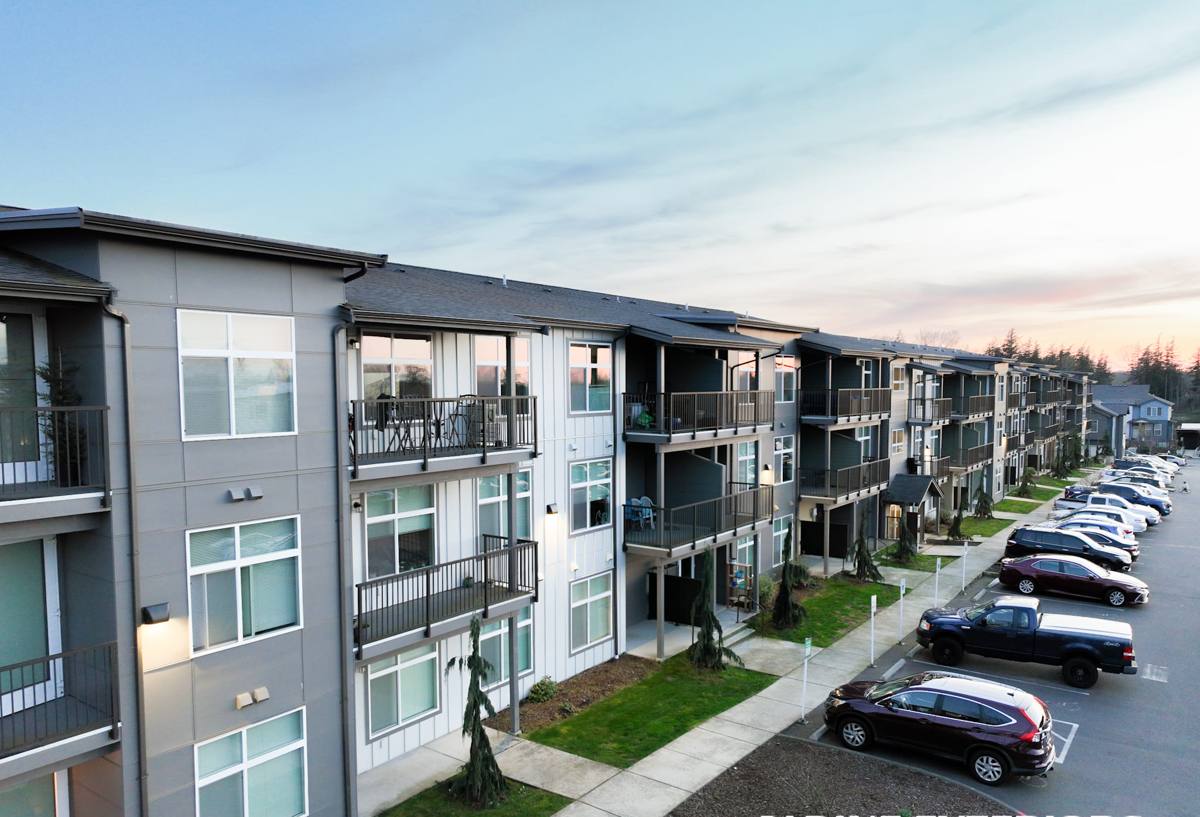
What Whatcom County's Climate Actually Demands From These Windows
Meridian sits close enough to Puget Sound and Georgia Strait that salt-laden air, wind-driven rain, and a long stretch of damp, low-light months are just part of the build conditions. None of this is exotic weather — it's the Pacific Northwest doing what it does — but it does mean a "good enough" install somewhere drier wouldn't hold up the same way here.
Salt Air and Coastal Exposure
Salt-bearing air corrodes unprotected fasteners, cheap flashing metals, and lower-grade hardware faster than inland installs ever see. On new construction this mostly shows up years later as streaking, pitting, or a window that starts operating stiffly. The fix isn't complicated — it's choosing corrosion-resistant fasteners and flashing materials at install time, when it costs nothing extra to specify correctly.
Wind-Driven, Not Just Falling, Rain
A lot of window failures blamed on "bad windows" are actually bad flashing. When rain comes in sideways during a windstorm, water gets pushed up and under trim, not just down the face of the wall. A new-construction opening has to be built with a drainage plane and sill pan that assumes wind-driven rain will reach the opening — because here, it will, repeatedly, every winter.
A Long Moss and Damp Season
Whatcom County's wet season runs long, and constant moisture pressure on a building envelope means any gap in the weather-resistive barrier or any reverse-lapped flashing detail eventually shows up as trapped moisture, mold at the framing, or moss and algae growth on nearby siding and trim. New construction is the one point in a home's life where you can build in enough drainage and drying capacity that this never becomes an issue.
New-Construction vs. Replacement Windows — Why the Distinction Matters
Homeowners and even some builders use "new windows" loosely, but the hardware and the install method are genuinely different products.
| Factor | New-Construction (Nail-Fin) Windows | Replacement/Retrofit Windows |
|---|---|---|
| Frame type | Full nailing flange, installed into an open stud bay before siding | Block-frame, installed into an existing finished wall |
| Flashing access | Full access to sheathing, WRB, and sill pan | Limited — flashing works around existing trim/siding |
| Best used when | Framing is open, as in Meridian new builds and additions | Wall and exterior finish already exist |
| Long-term drainage | Can be built to best-practice standards from scratch | Constrained by what's already there |
For a Meridian new build, nail-fin, new-construction windows are almost always the right call — the opening is open, so there's no reason to compromise on the flashing sequence.
What a Correct New-Construction Install Actually Involves
The window unit itself is only part of the job. The sequence around it — sill pan, weather-resistive barrier (WRB) integration, flashing tape, and the nailing fin — is what determines whether water sheds away from the framing or finds its way in.
- Rough opening checked for square, level, and correct dimensions before the window ever shows up on site
- Sloped or pre-formed sill pan installed so any water that reaches the sill drains back outward, not into the wall cavity
- WRB (housewrap or building paper) integrated in proper shingle-lap order — bottom layers overlapped by layers above, never the reverse
- Flashing tape at jambs and head, lapped correctly with the WRB so water is directed down and out at every layer
- Nailing fin fastened per the manufacturer's schedule, with corrosion-resistant fasteners appropriate for near-coastal exposure
- Head flashing or drip cap installed above the unit before siding closes in around it
- Interior and exterior sealant lines placed correctly — sealed where it should be sealed, left open where the assembly needs to drain or vent
- Final check for operation, square, and even reveal before trim goes on
Every one of those steps is easy to skip and invisible once the siding is on. That's exactly why it matters who's doing the work while the wall is still open.
Choosing the Right Window for Meridian's Exposure
Frame material and glass package both affect how a window holds up to salt air and constant moisture, not just how it looks.
| Frame Material | How It Handles This Climate | Trade-Off to Know |
|---|---|---|
| Vinyl | Doesn't corrode, low maintenance, good value | Can be less rigid in very large openings |
| Fiberglass | Very stable, holds paint well, strong moisture resistance | Higher upfront cost than vinyl |
| Wood or wood-clad | Classic look, good insulator | Needs disciplined maintenance in a wet, salt-air climate — we're upfront about that maintenance burden before recommending it here |
On glass, a dual-pane, low-E package is the practical standard for this region — it manages both the marine-layer damp cold and the summer glare without over-specifying for a climate that isn't extreme heat. We'll walk through specific manufacturer options and warranty terms once we know the size and style of openings your plans call for, rather than pushing one brand as a default.
Our Process for New-Construction Windows in Meridian
- Plan review — we look at your window schedule, rough opening sizes, and elevations before anything is ordered, so sizing and swing/slide direction are right the first time.
- Rough opening verification on site — framing gets checked for square and correct dimension against the actual units ordered, catching framing errors before they become install-day problems.
- Sill pan, WRB, and flashing installation — done in the correct lap sequence for this climate, with attention to wind-driven rain paths at heads and jambs.
- Window setting and fastening — units are set, shimmed, and fastened to the manufacturer's schedule with corrosion-appropriate hardware.
- Sealant and trim coordination — we coordinate sealant lines and drainage gaps with whoever is handling siding and trim so the two trades don't undo each other's water management.
- Final walkthrough — every unit is operated, checked for square reveal, and confirmed against the plan before we call it done.
Why Hire a Crew That Already Works Meridian
New-construction window flashing isn't complicated in theory, but it's the kind of work where the details that matter are exactly the details that get hidden once the wall is closed up. A crew that already installs siding and windows around Custer and the broader Whatcom County area has seen how this specific climate — salt air, driving rain, and that long moss season — actually treats a building envelope over time, not just on install day. That's the difference between building to a generic spec sheet and building for what this coastline actually does to a house.
It also matters for coordination. New-construction windows and siding are installed in sequence, and the two trades have to agree on where the WRB laps, where flashing tape goes, and where sealant is or isn't appropriate. A contractor who handles both, or who regularly coordinates with the builder on-site, avoids the finger-pointing that happens when a leak shows up two winters later and two separate trades each assume the other handled the flashing detail.
Cost Factors for New-Construction Window Installs
We don't quote pricing sight unseen, but these are the main factors that move the number on a Meridian new-build window package:
| Factor | Why It Affects Cost |
|---|---|
| Number and size of openings | More units and larger spans mean more material, labor, and structural coordination |
| Frame material chosen | Vinyl, fiberglass, and wood-clad sit at different price points |
| Glass package | Upgraded low-E coatings, tempered glass at required locations, or specialty glazing add cost |
| Window style | Casement, awning, and larger sliders/fixed units vary in unit cost and install labor |
| Site access and stage of construction | Coordinating with framers and siding crews on a tight build schedule can affect scheduling and labor |
| Flashing and drainage detailing | Doing the sill pan and flashing sequence correctly takes time — it's not a place we cut corners to save labor |
Broad ranges are only useful once we know your window schedule and plans — a two-window addition and a full new build with a dozen openings aren't comparable jobs.
If you're framing a new home or addition in the Meridian area, we're happy to look at your window schedule and rough openings and walk you through what a correct install looks like for this climate. Reach out through the form below for a free, no-pressure estimate.