 Custer
 Window Replacement Built for Marietta's Coastal Conditions
Marietta sits close enough to the water that homes here take a different kind of weathering than houses just a few miles inland in Custer or elsewhere in Whatcom County. Salt-laden air, wind-driven rain off the Strait, and a moss season that can run half the year all work on window frames, sills, and seals in ways that shorten the useful life of a window system if it wasn't built or installed with that exposure in mind. We've replaced windows on plenty of homes in this stretch of the county, and the failures we see are consistent: swollen wood sashes, corroded aluminum hardware, fogged double-pane glass from broken seals, and rot at the sill where water sat too long instead of draining away.
This page is specifically about window replacement for Marietta homes — not a general overview of every siding or exterior service we offer. If you're noticing drafts, sticking sashes, condensation between panes, or soft wood around your window frames, this is the service that addresses it.
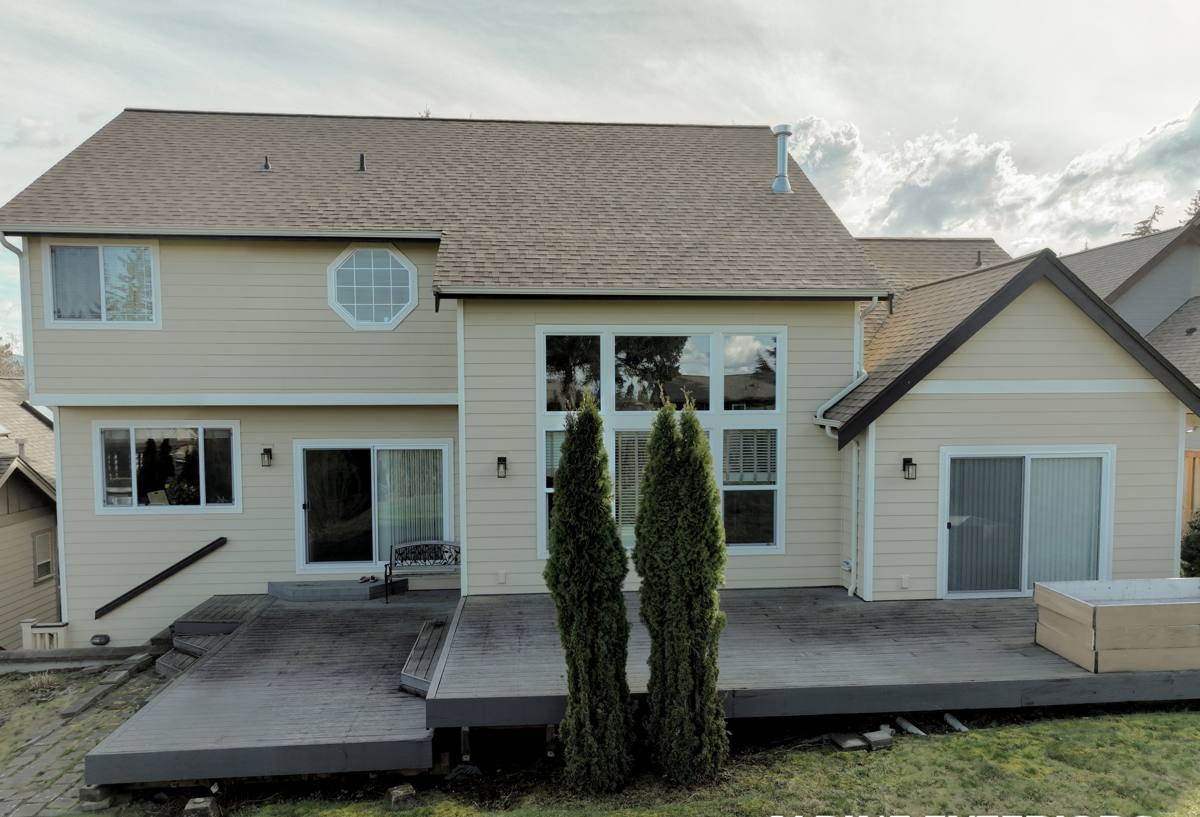
Why Marietta's Climate Is Hard on Windows
Salt Air and Metal Components
Homes near the water deal with airborne salt that settles on window hardware, screen frames, and any exposed metal fasteners. Over years, that accelerates corrosion on hinges, cranks, and locking mechanisms — especially on older aluminum-frame windows that weren't finished with a marine-grade coating. Once hardware starts seizing up, windows get harder to open and close properly, which also compromises how well they seal.
Driving Rain and Water Intrusion
Wind-driven rain doesn't fall straight down — it gets pushed sideways into wall assemblies, and window openings are one of the most common places water finds its way in. A window that was installed without proper flashing, or with flashing that's failed over time, will let water track down behind the siding and into the wall cavity long before you see a stain on the interior drywall. By the time you notice it inside, there's often already damage you can't see.
Moss, Shade, and Prolonged Moisture
Whatcom County's long wet season keeps north-facing and shaded window areas damp for extended stretches. Moss and algae don't just grow on roofs — they take hold on window sills, trim, and the caulk lines around frames, holding moisture against the wood or composite material and slowing evaporation. That constant dampness is what leads to soft, rotting sills and paint failure well before a window would otherwise need replacing.
Signs a Marietta Home Needs Window Replacement
- Visible fog, haze, or moisture trapped between panes of glass (a failed seal on double-pane units)
- Sashes that stick, won't stay open, or are hard to lock
- Soft or spongy wood at the sill, jamb, or trim when pressed with a screwdriver
- Noticeable draft or cold air near the window even when it's shut
- Paint or finish that's peeling, bubbling, or repeatedly failing around the frame
- Visible moss, algae, or dark streaking building up on the sill or lower trim
- Higher heating bills without another clear explanation
- Condensation forming on the inside of the glass regularly during colder months
Not every one of these means a window is beyond saving — some are fixable with resealing or hardware repair. Part of our job on an estimate is telling you honestly which is which, rather than defaulting to "replace everything."
What a Correct Window Replacement Involves
Window replacement is often sold as a simple swap — old window out, new window in. Done correctly, especially in a coastal-influenced climate like Marietta's, it's more involved than that, and the steps that get skipped are exactly the ones that determine whether the new window lasts.
Assessing the Opening, Not Just the Window
Before anything is ordered, we check the condition of the rough opening — the framing, the sill, and whatever sheathing and weather barrier are behind the existing window. If there's rot or old water damage, that needs to be addressed before a new window goes in. Installing a new window into a compromised opening just sets up the same failure again, sooner.
Flashing and Water Management
Proper flashing at the head, jambs, and sill is what actually keeps wind-driven rain from tracking behind the siding. This is the step most prone to being rushed on a fast install, and it's the one that matters most in a location like Marietta. We integrate flashing with the existing weather-resistive barrier so water sheds outward and down, not into the wall.
Air Sealing and Insulation
The gap between the new window frame and the rough opening needs to be sealed and insulated correctly — not overpacked with expanding foam (which can bow a frame) and not left with gaps that create drafts and cold spots. Getting this right affects both comfort and your energy bills.
Interior and Exterior Finish Work
Trim, caulking, and touch-up work need to be done cleanly so the window looks finished and the seal lines are continuous, without gaps where moisture can start working its way in again.
Choosing the Right Window for a Marietta Home
We install a range of window products, and the right choice depends on your home's exposure, your budget, and how much maintenance you want to take on. A few honest trade-offs worth knowing:
| Frame Material | Performance in This Climate | Maintenance Consideration |
|---|---|---|
| Vinyl | Handles moisture and salt air well; won't corrode or rot | Low maintenance; limited color/finish options compared to other materials |
| Fiberglass | Strong dimensional stability, holds up well to temperature and moisture swings | Higher upfront cost; very low long-term maintenance |
| Wood (clad exterior) | Good insulating properties; exterior cladding protects the wood from weather | Interior wood may still need periodic finishing; exterior clad reduces but doesn't eliminate upkeep |
| Bare Aluminum | Prone to corrosion from salt air over time without marine-grade treatment | We're cautious about recommending this in Marietta's coastal exposure specifically because of long-term hardware wear |
Glass selection matters too — a good low-E, dual-pane (or triple-pane in more exposed spots) unit rated for the Pacific Northwest's temperature and moisture swings will perform noticeably better than a builder-grade window, especially on walls that take direct wind and rain.
Our Process for Marietta Window Replacement Projects
- On-site assessment — We look at the actual window openings, check for hidden moisture or rot, and talk through what's driving the need for replacement.
- Honest recommendation — We tell you which windows need replacing now, which can wait, and which might just need repair. No upselling a full-house replacement when it's not warranted.
- Clear written estimate — Materials, scope, and cost factors laid out plainly before any work starts.
- Proper removal and opening prep — Old windows come out carefully, and we address any framing or moisture issues found underneath.
- Correct flashing and installation — Integrated with your home's existing weather barrier so water is directed out, not in.
- Finish work and walkthrough — Trim, caulking, and a final check with you before we consider the job done.
Why Local Installation Experience Matters
A window installed correctly in a dry inland climate can still fail early if that same technique is used on a home exposed to salt air and driving rain. Flashing details, caulk selection, and hardware choices that work fine elsewhere in Washington don't always hold up the same way this close to the water. A crew that's worked on homes in Marietta and the surrounding Custer area already knows which details need extra attention here — where water tends to collect, how much moss buildup to expect on north-facing trim, and which materials hold up versus which ones start showing wear within a few seasons.
That local knowledge doesn't replace good installation practice — it adds to it. The fundamentals of a correct window install don't change by zip code, but knowing this area's specific stressors helps us make better material recommendations and catch problems (like hidden sill rot) that a crew unfamiliar with the region might miss.
What Affects the Cost of Window Replacement
Every home is different, but a few factors consistently move the price up or down:
| Factor | How It Affects Cost |
|---|---|
| Number of windows | More windows generally lowers the per-unit cost through efficiencies in labor and scheduling |
| Frame material | Vinyl is typically the most budget-friendly; fiberglass and clad-wood cost more upfront |
| Hidden damage | Rot or moisture damage found in the opening adds repair work before the new window can go in |
| Window size and style | Larger units, custom shapes, or specialty operating styles (casement, awning) cost more than standard double-hung |
| Access and height | Second-story or hard-to-reach windows take more time and equipment |
We'll always walk through these factors with you specifically so there are no surprises once work begins.
Get a No-Pressure Estimate for Your Marietta Home
If your windows are showing signs of wear, letting in drafts, or you're just not sure whether repair or replacement makes sense, we're happy to take a look and give you a straight answer. Use the form below to request a free estimate — there's no pressure and no obligation, just a clear picture of what your home actually needs.