 Custer
 Deck Repair Built for Marietta's Weather, Not a Generic Climate
Marietta sits close enough to the water that homes here take a different kind of beating than decks twenty miles inland in Whatcom County. Salt-laden air corrodes fasteners and hardware faster than fresh air ever would. Driving rain off the Strait pushes moisture sideways into places a deck was never designed to shed water from — end grain, ledger connections, the underside of rail posts. And then there's moss season, which around here isn't really a season so much as most of the year: damp, shaded, and mild enough that spores never fully stop growing. A deck repair approach that works fine in a drier climate can miss all three of these problems. Ours doesn't, because we've been fixing decks in this exact environment for years.
This page is specifically about deck repair for homes in and around Marietta — what tends to go wrong here, what a correct repair actually involves, and how we run the job from first look to final walkthrough.
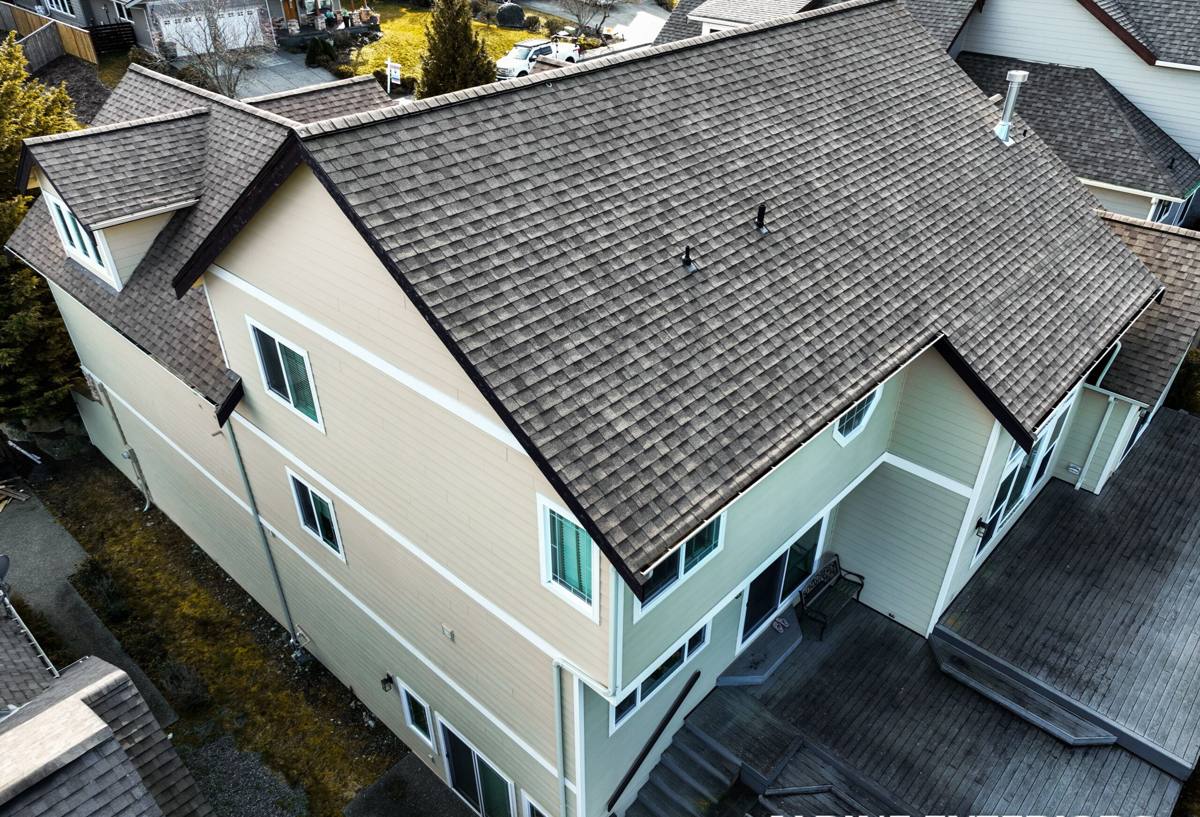
What Marietta's Climate Does to a Deck Over Time
Salt Air and Metal Fatigue
Every deck depends on metal to hold it together — joist hangers, structural screws, bolts, post bases. In a salt-air environment, standard hardware corrodes faster than the wood around it, sometimes years before the wood itself shows real wear. A hanger that's rusted through can still look fine on the outside while it's lost most of its holding strength underneath. This is one of the most common things we find on Marietta deck inspections that the homeowner had no idea about, because the failure is happening below the decking, out of sight.
Driving Rain and Water Intrusion
Wind-driven rain off the water doesn't fall straight down — it gets pushed under rail caps, into post-to-beam connections, and along the ledger board where the deck attaches to the house. That ledger connection is one of the highest-consequence spots on any deck; if flashing there fails and water gets behind it, you get slow rot in a structural connection that's holding a significant share of the deck's weight. It's rarely visible until the damage is well established.
Moss, Algae, and Surface Decay
Whatcom County's long damp stretch gives moss and algae months to colonize any horizontal wood surface that doesn't dry out quickly — decking boards, stair treads, the tops of rail caps. Beyond looking bad, moss holds moisture against the wood surface, which accelerates cupping, splitting, and eventually rot. On composite decking it's mostly cosmetic and a slip hazard; on wood decking, left untreated, it shortens the life of the boards.
Signs a Marietta Deck Needs Repair, Not Just Cleaning
- Boards that feel spongy, springy, or noticeably softer underfoot in one area
- Visible rust streaking below hardware, hanger straps, or bolt heads
- Gaps or movement where the deck meets the house (ledger board pulling away)
- Railings or posts that wiggle or flex when pushed
- Persistent dark or green staining that comes back within weeks of cleaning
- Stair stringers or treads that flex, creak, or feel uneven
- Fasteners backing out or leaving raised heads above the board surface
- Gaps between decking boards that have closed up or widened unevenly
Any one of these on its own might be minor. Two or three together, especially near the ledger or stairs, usually means it's time for a real inspection rather than a pressure wash.
What a Correct Deck Repair Actually Involves
A lot of "deck repair" quotes amount to replacing whatever board looks worst and calling it done. That approach tends to miss the actual cause, which means the same spot fails again in a year or two. Here's what we check and address on a proper repair:
1. Structural Framing First
Before touching decking boards, we look at what's holding the deck up: joists, beams, posts, and especially the ledger connection to the house. If there's soft or rotted framing, replacing surface boards over it just hides the problem temporarily.
2. Hardware Condition
Given how hard salt air is on fasteners here, we check joist hangers, structural screws, and post hardware for corrosion — not just rust color, but actual metal loss. Compromised hardware gets replaced with fasteners rated for coastal exposure, not standard interior-grade hardware.
3. Flashing and Water Management
Where the deck meets the house, proper flashing needs to direct water away from the ledger and wall framing, not let it pool or wick in. This is one of the most commonly skipped steps in a quick patch job, and it's the one most likely to cause a repeat failure.
4. Decking and Rail Surfaces
Once the structure is sound, we address the visible surfaces — replacing split or cupped boards, resecuring loose ones, and dealing with moss and algae staining at the source rather than just cleaning the surface.
5. Drainage and Airflow Underneath
A deck that can't dry out between rain events will always have a shorter life here. Where it's practical, we improve airflow and drainage under the deck so moisture doesn't just sit trapped against the framing.
Repair Options: Comparing Your Approach
| Approach | What It Fixes | Typical Lifespan of Fix | Best For |
|---|---|---|---|
| Spot board replacement | Individual damaged or rotted boards | Several years, if framing underneath is sound | Isolated damage, otherwise healthy deck |
| Hardware upgrade | Corroded hangers, bolts, fasteners | Long-term, matched to coastal exposure | Decks with visible rust or structural looseness |
| Ledger/flashing repair | Water intrusion at the house connection | Long-term if done correctly | Any deck showing moisture damage near the house wall |
| Full resurfacing | Widespread board wear, moss staining, cupping | Refreshes the deck without rebuilding structure | Decks with sound framing but tired-looking surface |
| Full rebuild | Structural failure throughout | New deck lifespan | Decks with extensive rot in framing and ledger |
Most Marietta repairs we're called out for land in the first three categories. Full rebuilds are less common than homeowners fear, but only if problems get addressed before framing damage spreads.
How Our Process Works
Step 1: On-Site Inspection
We walk the deck, check underneath where accessible, probe suspect boards and framing, and look closely at the ledger connection and hardware. This is a straightforward visual and physical inspection — no guesswork, no upselling based on assumptions.
Step 2: Honest Findings and a Written Estimate
We tell you what we found, what's cosmetic versus structural, and what we'd recommend fixing now versus what can reasonably wait. The estimate reflects that — not a flat "replace everything" number.
Step 3: The Repair Itself
We do the structural work first, then hardware, then surface repairs, in that order. Materials and fasteners are chosen with this climate in mind, not generic hardware-store defaults.
Step 4: Final Walkthrough
Before we consider the job done, we walk it with you, point out what was fixed, and flag anything worth keeping an eye on going forward — a maintenance note, not a sales pitch for another job.
Maintenance That Actually Extends a Marietta Deck's Life
- Clean moss and algae off decking and stairs at least once a year, ideally before the wet season sets in
- Check hardware for rust or looseness annually, especially anything near the ground or exposed to direct weather
- Keep gutters and downspouts clear so runoff isn't dumping extra water directly onto or near the deck
- Reseal or refinish wood decking on the manufacturer's recommended schedule — skipping a cycle in this climate costs more later
- Address small issues (a loose board, a hairline gap at the ledger) before they become bigger repairs
Why a Crew That Already Works Marietta Matters
Deck repair isn't just carpentry — it's carpentry that has to hold up against a specific set of conditions. A crew that mostly works drier, inland climates may not think twice about standard interior-grade hardware or skip the extra flashing detail at the ledger, because in their usual environment it doesn't fail as fast. Working Marietta and the surrounding Custer area regularly means we've already seen which shortcuts don't survive this climate and which details actually matter. That's not a marketing line — it's the difference between a repair that lasts and one you're paying for again in two years.
We're also just easier to reach when something comes up after the fact. Being local to Whatcom County means a follow-up visit isn't a half-day trip for us, and we're not disappearing after the invoice is paid.
Get a Straightforward, No-Pressure Estimate
If your deck in Marietta is showing any of the signs above — soft spots, rust streaks, moss that won't quit, or a wobble in the railing — it's worth having someone take an honest look before it turns into a bigger repair. Fill out the form below and we'll set up a time to come inspect it and give you a straight answer on what it needs.