 Custer
 Decks in Laurel Face a Different Climate Than the Rest of the Country
Laurel sits close enough to the water and far enough into the Pacific Northwest's wet-season pattern that a deck built to a generic national spec will start showing problems within a few years. The combination that matters here is salt-tinged marine air, long stretches of driving rain off the Strait, and a moss season that can run from fall through spring. None of these are dramatic on their own, but together they attack fasteners, framing, and decking surfaces from three directions at once. A deck built for this neighborhood needs to be designed around that reality from the footings up, not treated the same as a deck we'd build somewhere drier and further inland.
This page is about deck building specifically for homes in and around Laurel, part of our broader service area around Custer and Whatcom County. If you're comparing bids or just trying to understand what a correct build looks like here, this is meant to be a genuinely useful reference, not a sales pitch.
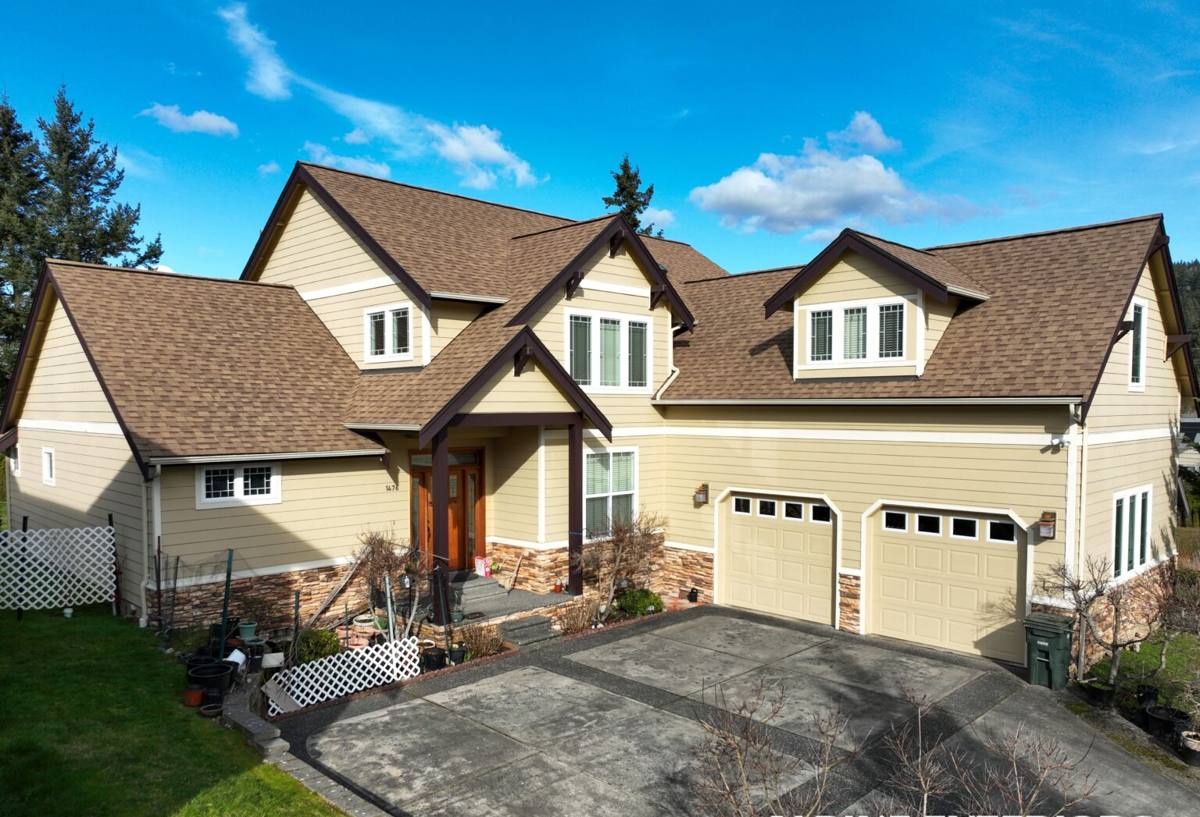
The Three Climate Factors That Drive Every Decision
Salt Air and Corrosion
Proximity to Puget Sound and the Strait of Georgia means the air carries fine salt particulate that settles on exposed metal. Over time, that accelerates corrosion on anything that isn't rated for a marine or coastal environment — cheap deck screws, standard joist hangers, and mild-steel bolts are the usual failure points. Corrosion doesn't announce itself; it works quietly inside joist hangers and post bases where you can't see it until a connection has already weakened. This is the single biggest reason a "deck problem" in this area often turns out to be a hardware problem.
Driving Rain and Moisture Management
Whatcom County doesn't just get a lot of rain — it gets wind-driven rain that hits structures at an angle, which pushes water into joints, ledger connections, and end grain that a straight-down rain wouldn't reach. A deck that isn't detailed for driving rain will trap moisture at the ledger board (where the deck attaches to the house), at post bases, and in any spot where two boards meet without a gap or flashing. Trapped moisture is what leads to rot, not rain itself — a well-drained deck can handle plenty of rain and be fine for decades.
The Long Moss Season
Moss and algae growth on decking surfaces, railings, and shaded framing members is close to constant here for much of the year, especially on decks with any tree cover or north-facing exposure. Beyond being a slip hazard, moss holds moisture against the wood surface far longer than open air would, which is exactly the condition that speeds up decay in untreated or under-treated lumber. A deck design that ignores airflow and sun exposure is signing up for a moss problem before it's even finished.
What a Correctly Built Deck Involves Here
A deck that's going to hold up in Laurel's conditions isn't built differently in a dramatic way — it's built with more attention to the details that matter in this specific climate. That includes:
- Stainless steel or coated (ACQ-compatible, corrosion-resistant) fasteners and hardware throughout, not standard galvanized
- Proper ledger flashing where the deck meets the house, with a drainage gap rather than a sealed, trapped joint
- Post bases set above grade and away from standing water, with concrete footings sized for our frost depth and soil conditions
- Joist tape or a moisture barrier on top of framing members to slow water intrusion at fastener penetrations
- Decking gaps sized correctly for the specific material to allow airflow and drainage between boards
- Layout that accounts for sun exposure and airflow, reducing the shaded, damp pockets where moss takes hold fastest
None of this is exotic. It's standard good practice — but it's also exactly what gets skipped when a crew is used to building in a drier climate or is pricing a job to hit a low number.
Choosing a Decking Material for This Climate
Every decking material has trade-offs, and the right choice depends on your budget, how much maintenance you're willing to do, and how much shade your lot gets. We'll walk through the honest pros and cons rather than push one product — it's your deck and your maintenance schedule.
| Material | Typical Cost Range | Moisture/Salt Behavior | Maintenance | Notes for This Climate |
|---|---|---|---|---|
| Pressure-treated lumber | Lowest | Resists rot when properly finished; fasteners must be corrosion-rated | Needs re-staining/sealing every 1-3 years | Budget-friendly, but moss and mildew show fastest on untreated surfaces |
| Cedar | Mid-range | Naturally rot-resistant, but still needs sealing near salt air | Periodic cleaning and re-oiling | Good look, but softer surface can hold moss if shaded |
| Composite decking | Higher | Doesn't rot; some early composite products had moisture-absorption issues | Low — occasional wash to remove surface algae | Good option for shaded, damp Laurel lots if you want less upkeep |
| PVC/capped polymer | Highest | Fully moisture-resistant surface | Lowest — rinse off moss/pollen | Best long-term for heavy moss exposure, at a higher upfront cost |
We install all of these. Our job is to tell you honestly which one fits your situation — a heavily shaded lot near the tree line behaves very differently than an open, sun-exposed yard, even within the same neighborhood.
Our Deck Building Process
We run the same disciplined process on every deck, whether it's a full rebuild or new construction:
- Site assessment — we look at drainage, sun/shade exposure, soil conditions, and how the deck will tie into the house before we design anything.
- Design and material selection — layout, railing style, and decking material chosen based on your budget and how much maintenance you want to take on.
- Permitting — deck permits are typically required through Whatcom County for structures over a certain height or attached to the home; we handle this so it's not on you to track down.
- Footings and framing — footings sized for local frost and soil conditions, framing built with corrosion-rated hardware and proper ledger flashing from the start.
- Decking and railing installation — boards and railing installed to the manufacturer's spec for gap and fastening, which matters as much for warranty coverage as for looks.
- Final walkthrough — we go over drainage, maintenance expectations, and anything specific to your site (shade patterns, nearby trees) that affects long-term care.
What Owning a Deck in This Climate Actually Takes
A well-built deck still needs some ongoing attention here — that's the honest trade-off of living this close to the water. Here's a realistic maintenance checklist we give homeowners:
- Sweep off leaves and debris regularly, especially in fall — trapped organic matter is what feeds moss growth
- Rinse or scrub visible moss and algae before it gets a foothold, rather than waiting for a heavy buildup
- Check and clear gaps between deck boards so water and debris keep draining properly
- Inspect visible fasteners and hardware yearly for rust staining, which can signal a fastener starting to fail
- Re-seal or re-stain wood decking on the schedule appropriate to the product (usually every 1-3 years)
- Keep nearby vegetation trimmed back to improve airflow and sun exposure on shaded sections
None of this is heavy work if you stay ahead of it. Most of the deck failures we get called out to inspect are the result of small maintenance items being skipped for years, not a single big event.
Common Problems We Find on Existing Laurel-Area Decks
When we're called out to repair or replace an older deck in this area, the same handful of issues come up repeatedly:
- Standard galvanized hardware that's corroded well ahead of the wood around it
- Ledger boards attached without proper flashing, leading to hidden rot at the house connection
- Decking installed with gaps too tight for the material, trapping moisture and speeding up moss growth
- Post bases sitting directly on grade or in a low spot that holds water after heavy rain
- No consideration for airflow underneath the deck, creating a permanently damp crawlspace below
Most of these trace back to a build that wasn't detailed for this specific climate — often a design or hardware choice that would be fine somewhere drier but doesn't hold up here.
Why Local Experience Matters for This Job
Deck building looks straightforward from a distance, but the details that make a deck last in Laurel's climate — fastener selection, ledger flashing, drainage layout, material choice for shaded lots — are exactly the details that get missed by a crew that doesn't build here regularly. A contractor who already works this part of Whatcom County has seen which decks in this area hold up and which ones don't, and builds accordingly from day one rather than learning it the hard way on your project.
If you're planning a new deck or replacing one that's showing its age, we're happy to take a look and talk through what makes sense for your specific lot — sun exposure, shade, and drainage all vary even within the same neighborhood. Reach out for a free, no-pressure estimate using the form below.