 Custer
 Custom Windows Built for Laurel's Coastal Climate
Laurel sits close enough to Puget Sound and Birch Bay that homes here take a different kind of weather beating than houses ten miles inland in Bellingham or Ferndale. Salt-laden air moves through on the west wind, driving rain comes in sideways for days at a stretch, and a long, damp moss season sets in every fall and doesn't fully let go until late spring. Windows are one of the first places that shows up. Frames corrode faster, wood sashes hold moisture longer, and cheap seals give out years before they should. When we talk about "custom windows" for a Laurel property, we mean windows sized, built, and installed to hold up specifically to that combination, not a generic product pulled off a shelf and squeezed into an opening.
This page covers what that actually means in practice: what local homes need, what a correct installation involves, how our process runs from estimate to final walkthrough, and why it matters that the crew doing the work already knows this stretch of Whatcom County.
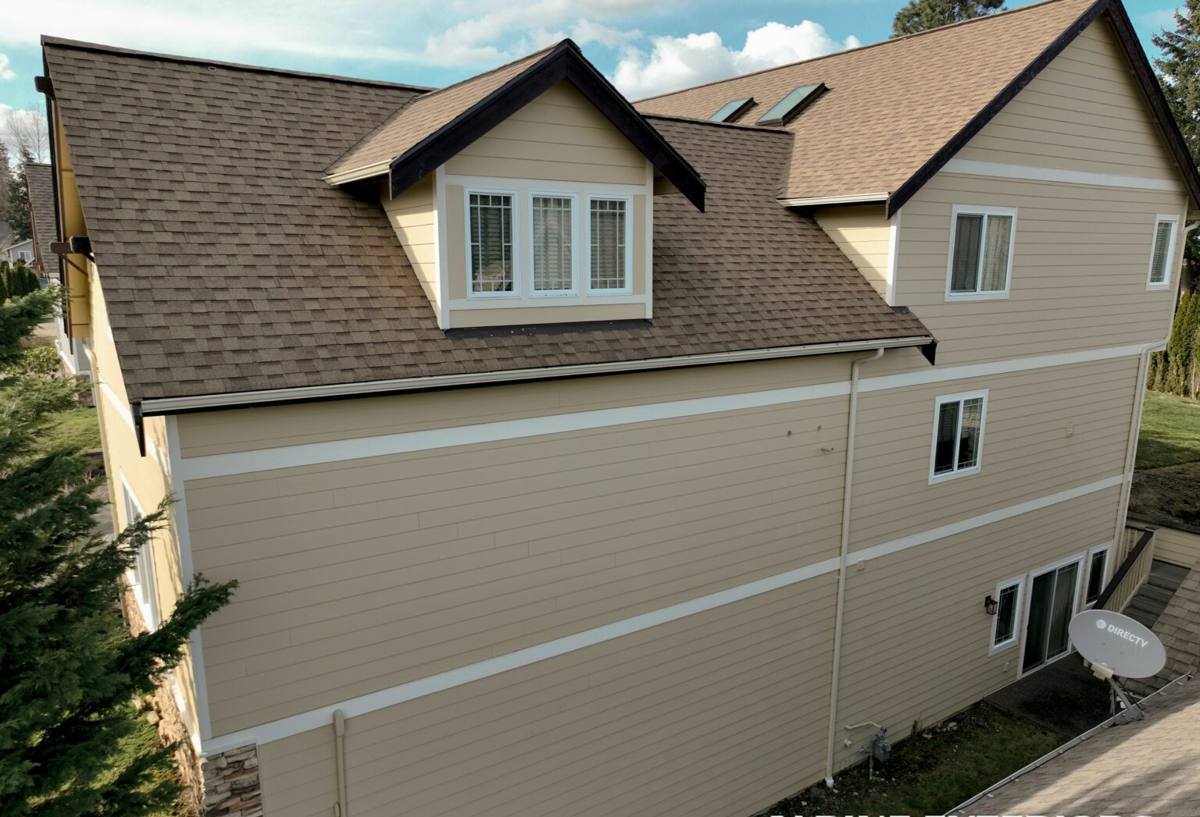
What "Custom" Actually Means Here
Custom doesn't just mean an unusual shape or an oversized picture window, though we do plenty of both. It means the window is built to the exact dimensions of your opening rather than forcing your opening to fit a stock size, and it means the frame material, glass package, and flashing detail are chosen for how this specific wall faces the weather.
Common reasons Laurel homeowners go custom instead of stock
- Older homes with openings that don't match modern standard sizes, especially farmhouses and homes built before the area saw much production housing
- Additions or remodels where the wall opening was framed for a look, not a catalog size
- West- and south-facing walls that take the brunt of wind-driven rain and need a stronger sealing detail
- Homeowners replacing failed wood windows who want a low-maintenance frame material without changing the exterior look of the house
- Larger openings — sliders, picture windows, bay configurations — where structural support and glass weight both need to be engineered, not guessed at
Why the Local Climate Changes the Job
Salt air and hardware corrosion
Being close to saltwater doesn't mean a home in Laurel gets treated like a beachfront property in a warmer climate, but it does mean hardware and fasteners see more corrosion pressure than a house forty miles east. Cheap cam locks, hinges, and screws pit and seize faster near the water. We spec corrosion-resistant hardware and fasteners as standard on jobs out here, not as an upsell.
Driving rain and water management
Whatcom County storms don't just fall straight down — wind pushes rain horizontally into the wall, and that's exactly the condition where a poorly flashed window leaks. The window itself can be excellent and still fail if the flashing, sill pan, and sealant details underneath it are done wrong. Most of the water problems we get called out to fix on other contractors' installs trace back to this, not to the window unit itself.
Moss, moisture, and rot at the frame
Long wet seasons keep wood surfaces damp for extended stretches, which is exactly what moss and rot organisms need. Wood window frames and sills in shaded, north-facing, or tree-covered spots in Laurel are especially prone to this. That's a major reason so many homeowners here move to vinyl, fiberglass, or clad-wood frames when it's time to replace — less upkeep, less rot risk, without necessarily changing the interior wood look if that matters to you.
Choosing the Right Frame Material
There's no single "best" window material for every home — it depends on your budget, your home's style, and how much maintenance you're willing to keep up with. Here's how the common options actually compare for a Laurel property.
| Frame Type | Moisture/Salt Resistance | Maintenance | Typical Fit |
|---|---|---|---|
| Vinyl | Very good — won't rot or corrode | Low — occasional cleaning | Most replacement projects, budget-conscious remodels |
| Fiberglass | Excellent — very stable in wet, salty air | Low | Larger openings, higher-end remodels, long-term durability priority |
| Aluminum | Fair — needs quality coating to resist corrosion near salt air | Moderate | Modern/contemporary styles, larger glass spans |
| Wood (clad exterior) | Good on the exterior face if properly clad; interior wood still needs care | Higher — clad exterior low, interior wood moderate | Historic-style homes, homeowners who want real wood interior trim |
| Solid wood | Poor in this climate without diligent upkeep | High — regular painting/sealing required | Restoration projects where original wood must be preserved |
We'll walk you through this table in person and point out where your specific exposure — sun, shade, wind direction — pushes the decision one way or the other. We don't push a single brand or material on every job; we frame it as trade-offs, because that's what it actually is.
Glass Packages and Performance
Frame material gets most of the attention, but the glass package matters just as much for comfort and condensation control in a marine climate like this one.
What to look at
- Double vs. triple pane: Double-pane low-E glass is standard and performs well for most Laurel homes; triple-pane adds cost but helps on north-facing rooms or homes right along exposed wind corridors
- Low-E coatings: Reduce heat loss in winter and help cut down on condensation forming on the interior glass during cold, damp stretches
- Argon or krypton gas fill: Improves insulation value between panes; argon is the practical standard for most residential jobs
- Warm-edge spacers: Reduce the cold spot at the edge of the glass where condensation and eventually seal failure tend to start
Condensation on the inside of a window in winter is one of the most common complaints we hear, and it's usually a glass package or ventilation issue rather than a sign the window is defective.
What a Correct Installation Actually Involves
The window unit itself is maybe half the job. The other half is how it's set into the wall, and that's where most long-term problems either get prevented or get baked in.
Our installation sequence
- Remove the old window and inspect the framing, sill, and sheathing underneath for rot or water damage before anything new goes in
- Repair or replace any damaged framing — installing a new window over a soft or rotted sill just hides the problem, it doesn't fix it
- Install a sloped sill pan so any water that gets past the window drains back outside instead of pooling in the wall
- Set the window level, plumb, and square, then fasten per the manufacturer's specification
- Apply flashing tape and integrate it correctly with the house wrap or building paper, in the right shingle-lap order so water sheds down and out
- Seal and insulate the gap between the frame and rough opening without over-packing it, which can bow the frame
- Finish exterior trim and caulking with a sealant rated for this climate's temperature swings and constant moisture exposure
- Test operation, check for square and smooth function, and walk the homeowner through care and warranty details
Skipping the sill pan step or reusing old, compromised flashing is the single most common shortcut that causes leaks two or three years down the road — well after the installer has moved on. It's also invisible once the trim goes back on, which is exactly why it's worth asking a contractor directly how they handle it.
Signs a Laurel Home Needs Window Attention
- Fogging or moisture trapped between panes — a sign the seal has failed and the insulating gas has escaped
- Soft or discolored wood at the sill or frame corners
- Drafts you can feel near the frame even when the window is fully latched
- Difficulty opening, closing, or locking — often a sign the frame has shifted or swollen
- Visible gaps in caulking or trim, or paint that's cracking and peeling faster than the rest of the house
- Moss or dark staining building up on the sill or nearby siding, pointing to a moisture path that isn't draining correctly
Our Process, Start to Finish
1. On-site assessment
We come look at the actual openings, check the condition of the surrounding wall and trim, and talk through what you want out of the project — matching the existing look, improving comfort, cutting maintenance, or all three.
2. Measuring and product selection
Every opening gets measured individually; older Laurel homes especially are rarely perfectly square or uniform from window to window. We go over frame material and glass options against your budget and priorities using the same kind of comparison shown above.
3. Written estimate
You get a clear, itemized estimate before any commitment — no vague lump-sum guessing.
4. Installation
Most residential window replacement jobs run one to a few days depending on the number of openings and whether framing repairs are needed. We keep the work area protected and cleaned up daily.
5. Final walkthrough
We check every window with you before calling the job done, and go over warranty coverage and basic care.
Why a Crew That Already Works Laurel Matters
A lot of window problems in this area aren't really window problems — they're wall problems, flashing problems, or framing problems that a window replacement either exposes or covers up. A crew that's worked houses throughout Whatcom County knows the difference between normal wear on an older Laurel home and a sign of a bigger moisture issue behind the wall. We're not learning the local weather pattern on your project; we already know how wind-driven rain behaves against a west-facing wall out here, and we build the installation around that instead of treating every job like it's in a dry inland climate.
We also know that Laurel isn't one uniform lot type — some homes are more exposed to open wind, others are tucked back with more tree cover and shade, which shifts the moss and rot risk. That local context shapes real decisions on your job, from sealant choice to how aggressively we flash a north-facing opening.
Get a Free, No-Pressure Estimate
If your windows are drafty, fogging, hard to operate, or just original to a house that's due for an upgrade, we're happy to come take a look. There's no obligation and no pressure — just a straight assessment of what your home actually needs and honest options at a few different price points. Use the form below to get started.