 Custer
 Sumas Homes Face a Long, Wet Whatcom County Climate
Homes in Sumas and the surrounding Custer service area sit inside one of the wettest, most moisture-persistent climate bands in Washington. Marine air pushes in off the Salish Sea and settles into the Nooksack valley for days at a time, driving rain comes in sideways more often than straight down, and a heavy tree canopy keeps north- and shade-facing walls damp long after a storm has passed. Add a moss season that can run from early fall through late spring, and you have a climate that is genuinely hard on exterior building materials — not because any one storm is severe, but because the wall assembly rarely gets a real chance to fully dry out.
Siding in this area isn't decorative. It's the first and most exposed line of defense against a slow, cumulative kind of water damage that shows up as swelling, delamination, paint failure, and eventually rot in the sheathing behind it. The material you choose and how it's installed matter more here than they would in a drier part of the state.
Why We Standardized on James Hardie Fiber Cement
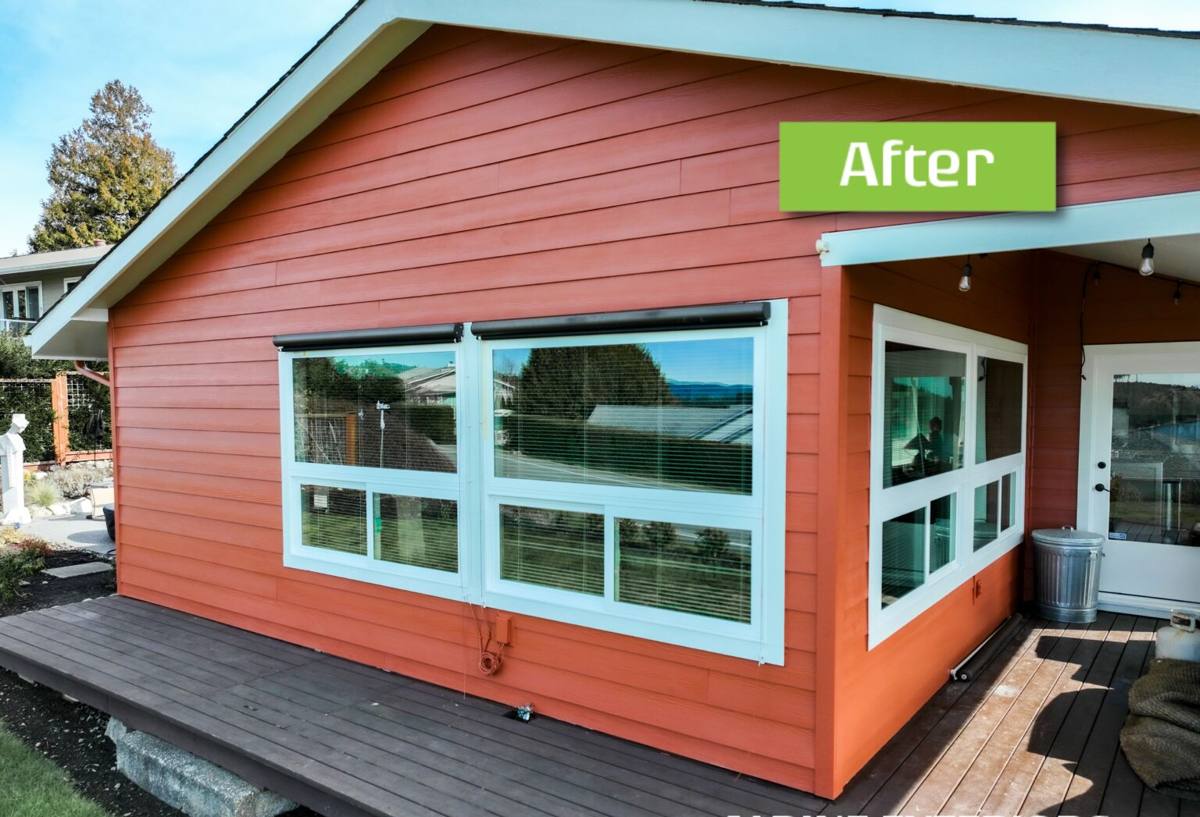
We install James Hardie fiber cement siding exclusively. We don't carry vinyl, LP SmartSide, Cemplank, Allura, primed spruce, or cedar, and that's a deliberate standard, not a lack of options. Each of those alternatives has a real place in the market — but none of them handle sustained moisture, temperature swings, and organic growth the way fiber cement does over a 20- or 30-year ownership window, which is the window that actually matters to a homeowner.
Climate-Engineered for the Pacific Northwest
James Hardie builds its HZ product lines around regional climate demands rather than a single national formulation. For the Pacific Northwest, that means a board engineered to resist moisture absorption and hold its shape through repeated wet-dry cycling, rather than one optimized primarily for freeze-thaw or extreme heat. It's a small distinction on paper but a meaningful one after a decade of Whatcom County winters.
ColorPlus Factory Finish vs. Field Paint
Most Hardie siding we install goes on with a ColorPlus factory-applied finish rather than being painted on site after installation. The finish is baked on under controlled conditions, which gives it more consistent coverage and better adhesion than a field-applied coat on a damp job site — and in a region where you can lose good painting weather to rain for weeks at a stretch, that's not a minor convenience, it's a durability advantage.
What Correct Installation Looks Like in This Climate
Fiber cement siding is only as good as the wall assembly behind it. In a high-moisture climate, the installation details matter as much as the board itself — arguably more, since most siding failures we get called out to inspect trace back to how the product was installed, not a defect in the material.
Rainscreen and Drainage Details
A correctly installed Hardie system on a home in this climate should include a drainage plane behind the siding — a gap that lets any moisture that gets past the cladding drain and evaporate instead of sitting against the sheathing. Skipping or shortcutting this detail is one of the most common ways a siding job that looks fine on day one causes hidden rot five years later.
Flashing, Caulking, and Fastening
Every penetration — windows, doors, hose bibs, light fixtures, vents — needs proper flashing integrated with the weather-resistive barrier, not just a bead of caulk over the gap. Fasteners need to be corrosion-resistant and driven to Hardie's specified depth, and joints need the manufacturer's specified gap and sealant, not whatever happens to close the seam cleanly. None of this is visible once the job is finished, which is exactly why it's worth asking a contractor how they handle it before they start.
Moss, Algae, and the Long Wet Season
Anyone who's owned a home in this part of Whatcom County has fought moss on a roof, a deck, or a north wall. Siding is no exception. Wood and wood-composite products give organic growth something to feed on and a porous surface to root into; painted surfaces on a wood substrate eventually crack and let moisture behind the paint film, which accelerates both rot and growth. Fiber cement doesn't offer the same food source, and a factory finish gives algae and moss less texture to grip. It doesn't make a home immune to moss — nothing does in this climate — but it removes one of the mechanisms that lets moss and mildew actually damage the material underneath, rather than just sitting on the surface where it can be washed off.
How James Hardie Compares to Other Siding Options
We get asked fairly often why we don't offer the lower-cost alternatives. Here's the honest comparison, judged specifically against a wet, moss-prone Whatcom County climate rather than in the abstract:
| Material | Moisture Behavior | Moss/Algae Resistance | Fire Rating | Typical Maintenance |
|---|---|---|---|---|
| James Hardie fiber cement | Engineered to resist swelling and warping in sustained wet conditions | Non-organic surface resists growth better than wood-based products | Non-combustible | Periodic washing; ColorPlus finish holds color for years |
| Vinyl | Doesn't rot, but can warp, crack in cold, and gaps at seams let water behind it | Moderate — smooth surface, but moisture behind panels breeds mold unseen | Combustible, can melt/deform near heat sources | Low, but repairs mean full panel replacement and color matching |
| LP SmartSide | Engineered wood strand product — better than raw wood but still wood-based and moisture-sensitive at cut edges | Lower resistance than fiber cement; edge sealing is critical | Combustible | Requires diligent edge/seam sealing to prevent swelling |
| Cedar | Attractive but absorbs and releases moisture constantly; prone to cupping and checking | Low — organic material, a preferred surface for moss and mildew | Combustible | Regular re-staining/sealing and moss treatment |
Vinyl and engineered wood products both have legitimate uses and loyal buyers elsewhere. In this specific climate, over a full ownership timeline, we've found the maintenance burden and moisture risk aren't worth what homeowners save up front — which is why we build our business around one product we can stand behind completely.
Our Process for a Sumas Siding Project
- On-site assessment: We walk the exterior, check existing siding and sheathing condition where accessible, and look at drainage, roofline, and shade patterns specific to the lot.
- Written, itemized estimate: Scope, product line, color, and trim details spelled out in writing — no verbal ballpark that changes once the crew shows up.
- Tear-off and sheathing check: Old siding comes off and we inspect the sheathing underneath before anything new goes up. Hidden rot gets addressed, not covered.
- Weather-resistive barrier and drainage plane: Installed to spec before a single piece of Hardie goes on the wall.
- Flashing and fastening: Every window, door, and penetration flashed and sealed per manufacturer detail, not shortcut.
- Hardie installation and finish check: Boards installed to Hardie's fastening and clearance specifications, joints and seams finished cleanly.
- Final walkthrough: We go over the finished job with you before calling it done.
Why Local Experience in Sumas and Custer Matters
A crew that already works this part of Whatcom County knows things a traveling contractor has to learn on your job: how much shade a given wall orientation actually gets through the fall and winter, how far moss tends to creep on north-facing siding here, what wind exposure looks like on more open lots versus tree-sheltered ones, and how the local building department expects exterior work to be documented. That knowledge doesn't show up as a line item on an estimate, but it shows up in how few callbacks a job generates two winters later. It also means we're a phone call away if something needs a look after the job is finished — not a crew that's moved three counties over by the time the first real storm season tests the work.
Signs Your Current Siding Is Losing the Fight
If your home currently has wood, vinyl, or an older composite siding, watch for these signs that the material is losing its battle with the climate — catching it early usually means a smaller, cheaper fix than waiting:
- Soft or spongy spots when you press on the siding, especially near the bottom courses
- Paint that's bubbling, peeling, or failing faster than it used to
- Persistent moss or dark streaking that comes back within weeks of cleaning
- Visible gaps, warping, or cupping in individual boards or panels
- Rising energy bills that suggest the wall assembly isn't sealing the way it should
- Musty smell or visible staining on interior walls that back up to exterior siding
If any of that sounds familiar, or you're planning ahead for a home in Sumas or Custer, we're happy to take a look and walk you through what a correct Hardie installation would involve for your specific home — no pressure, no obligation. Use the form below to request a free estimate.